Dirt Bike Wheel Bearing: Diagnosis and Greasing
Contents
A dirt bike wheel bearing goes bad before it ever makes noise: a little play when you rock the wheel by hand, a rough spot as it spins, sometimes a buzz through the handlebars late in a ride. The check takes two minutes on a stand, and greasing it usually doesn’t require pulling the bearing out at all.
Signs of a worn dirt bike wheel bearing
Three signals give away a tired bearing, and you can check all three without removing anything. Play is the clearest one: bike on a stand, wheel unloaded, grab the tire at the top and bottom and rock it side to side. A healthy bearing doesn’t move. A worn one lets you feel movement, even slight, inside the hub.
Noise comes next. Spin the wheel by hand with your ear close to the hub: a bearing in good shape turns almost silently. A grinding, scraping sound, or a series of small catches during rotation, points to marked balls or a damaged cage.
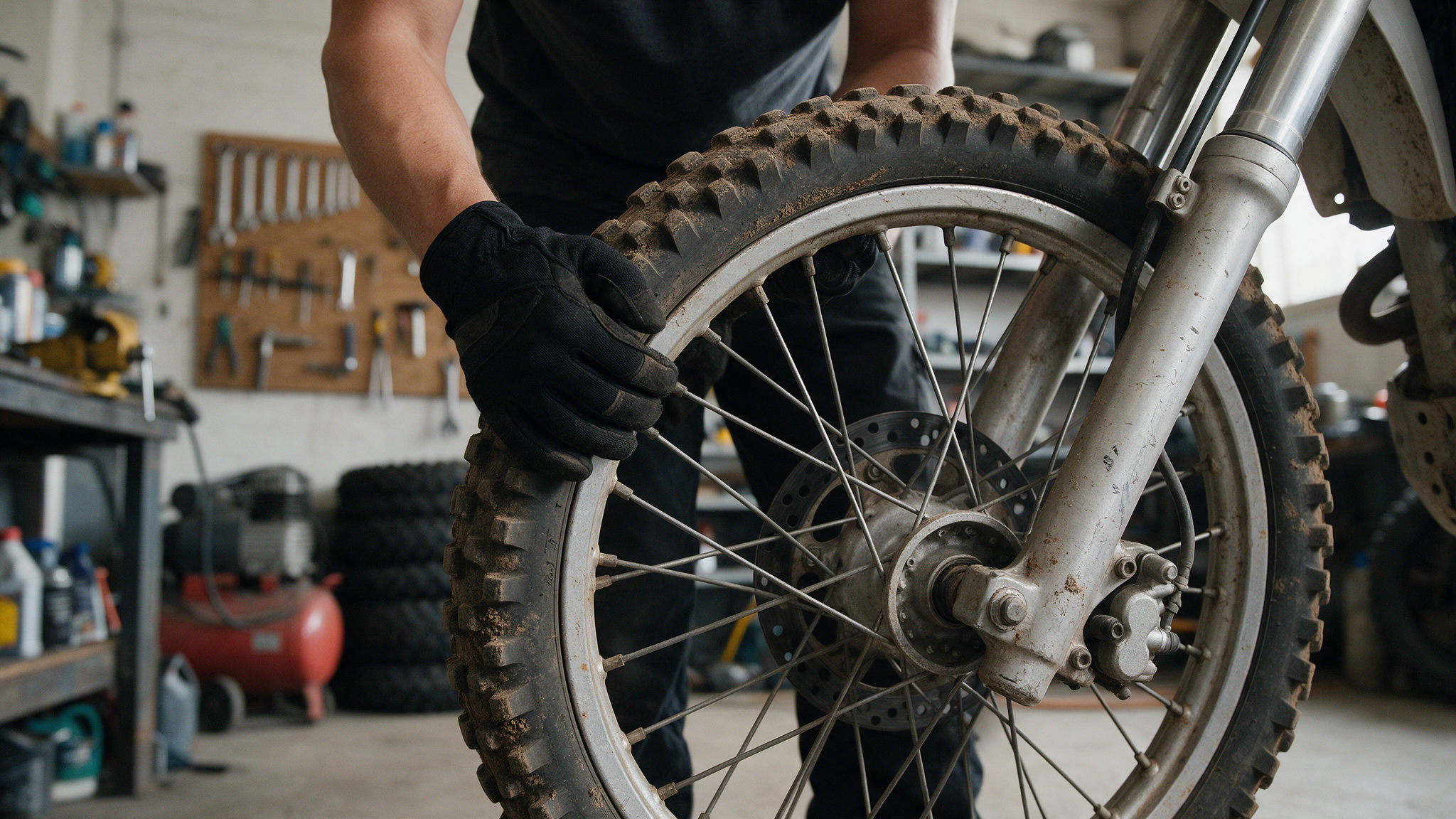
Heat is the last check, and it only works right after a ride. Run a hand over both hubs and compare. One side noticeably hotter than the other means a bearing that’s dragging instead of spinning freely.
These three checks fold easily into washing the bike after a ride on soft terrain: the wheel is already within reach, and you run a hand over the hub while you’re drying it off. Repeated every time, they turn into a habit instead of a one-off check after a suspicious noise.
Checking play, wheel by wheel
Do the check with the bike on a stand, one wheel at a time.
- Fully unload the wheel you’re checking, leaving the other on the ground for stability.
- Grab the tire at twelve and six o’clock, then rock it sharply one way and the other.
- Repeat at three and nine o’clock to catch play that only shows up laterally.
- Spin the wheel slowly through a full turn, without letting go, listening at the hub.
- Repeat on the other wheel for comparison: a healthy hub tells you what the other one should feel like.
Cleaning and greasing a dirt bike wheel bearing
Regular greasing extends a bearing’s life far more than a replacement done in a hurry. It’s done with the wheel off, often without pulling the bearing from its bore at all, as long as you can reach around its open side.
- Pull the wheel and remove the axle following the method specific to your bike.
- Wipe the area around the bearing carefully to clear packed dirt before opening any grease.
- Work a bearing-specific grease in with a small brush, paying extra attention to the seal.
- Spin the bearing by hand while you grease it, so the grease spreads around the whole ball track.
- Wipe off the excess that squeezes out, refit the wheel, then torque the axle to the figure in your bike’s service manual.
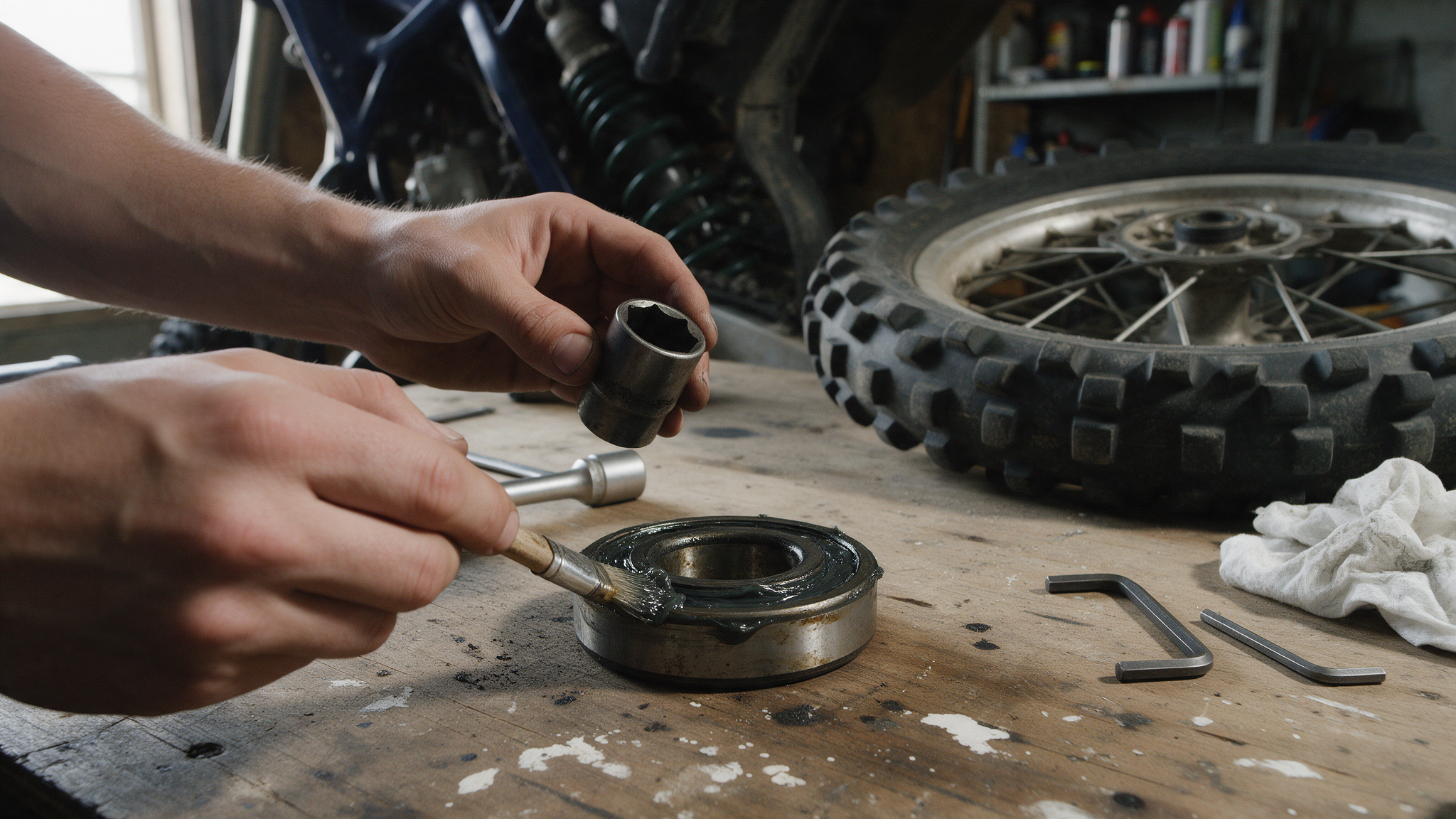
Do this right after a full wash, while the wheel is off anyway for a proper clean. The tools you need, metric sockets, a torque wrench, are already in the basic tool kit every rider ends up putting together.
When to replace it instead of greasing it
Greasing doesn’t save a bearing that’s already marked. If the rough spot or the grinding noise persists after a full clean and a careful re-grease, the bearing is done: it’s not a part that beds in or improves with time.
Play comes back quickly after greasing
Play that reappears after a few rides despite a proper greasing points to a marked cage or balls, not a lack of grease. Replace the whole bearing on that side rather than repeating a greasing job that isn’t holding.
Rear wheel on muddy terrain
The rear wheel takes more water and flung mud than the front on soaked terrain, and its bearings work harder for it. Fold its check into your post-ride routine instead of waiting for a noise to remind you.
While the wheel is off, take the chance to check tire pressure too: both checks happen at the same time, for the same effort.
FAQ
How long do dirt bike wheel bearings last?
It depends mostly on terrain and upkeep, not a universal number. A bike that rides mud often or gets its hubs blasted with a pressure washer wears through bearings far faster than one rinsed gently and greased on a regular schedule. Checking for play stays the most reliable indicator, more useful than any mileage estimate.
Should you grease wheel bearings regularly?
Yes, every time you do a full wash, especially after a muddy ride or a wet stretch of season. A well-greased bearing holds up better against water and dust working past the seal, and the job takes a few minutes once the wheel is already off.
What are the symptoms of a bad wheel bearing?
Noticeable play when you rock the tire by hand, a grinding or scraping noise during rotation, and unusual heat at the hub after a ride. Any one of these three signs is enough to justify a full check before the next ride.
Is it dangerous to ride with a worn wheel bearing?
Yes, especially up front, where a bearing that fails suddenly changes how the bike behaves mid-corner or on a jump landing. Once play is confirmed at the check, the bike stays in the garage until it’s fixed, not until the next ride.
Find the rest of the maintenance guides on the dirt bike maintenance page.
Editorial content. PiloteMX offers no on-site service, no parts or gear sales, no quotes and no bike repairs. Working on a bike and riding it carry risk: what you do with this guide is your own responsibility.