Mechanics
17 guides, numbered in teaching order — from the fundamentals to the advanced.
Dirt bike mechanics starts with one question: what is actually going on inside this thing? Until you know what a clutch does or why a two-stroke has no valves, every strange noise feels like a disaster and every shop quote feels like a surprise. This section explains your bike one system at a time, in plain words, so you understand what’s happening before you pick up a wrench.
No theory for its own sake. Each guide starts with how a part works, then covers the symptoms of a tired component and the checks you can run at home. The goal is simple: diagnose with confidence, know what to ask your mechanic, and know when a job is within your reach.
Two-stroke or four-stroke: where it all starts
Our 2-stroke vs 4-stroke guide compares character, running costs and reliability. A two-stroke is simpler and lighter but needs top-end work more often. A four-stroke has more low-end torque and is easier for a beginner to ride, but a major rebuild costs a lot more. Read it before you buy a bike, not after.
Fuel delivery: carburetor or fuel injection
The engine needs the right mix of air and fuel, and that’s where many throttle problems begin. Start with how a carburetor works: float bowl, jets, needle, slide. Then carburetor jetting will make sense, including why it changes with altitude, temperature and humidity. Newer bikes rely on fuel injection, which adjusts the mixture on its own, with its own sensors and its own failure modes.
Inside the engine: compression, piston, break-in
An engine that feels flat has often lost compression. A compression test is the first check to run, and it costs the price of a gauge. If the reading is low, piston and ring replacement is usually next. On a two-stroke, decarbonizing the exhaust port and power valve can bring the snap back. After any top-end job, the engine break-in decides how long the new parts will last. Don’t rush it.
Ignition and electrics
A bike that won’t start, or cuts out when hot, often has an electrical issue behind it. Our ignition system guide follows the spark from the stator to the plug. The battery basics matter more now that most bikes have electric start, and batteries hate cold and long breaks. When nothing adds up, the electrical fault diagnosis method walks you through it with a multimeter, one step at a time, instead of swapping parts at random.
Drivetrain: clutch and gearbox
The clutch works harder in motocross than on almost any other bike. Learning how a clutch works helps you use it without cooking the plates, and a correct clutch adjustment fixes a surprising number of slipping or vague-lever complaints. The gearbox mostly suffers from rough shifting, and the guide shows how to go easy on it.
Cooling, exhaust and chassis
Three systems you ignore until they cause trouble. The cooling system keeps the engine in its working range, even in slow, muddy sections. The exhaust and silencer affect power as much as noise, and a silencer with worn-out packing costs you both horsepower and sound checks. Last, the frame and chassis guide explains why two bikes with the same engine can handle nothing alike.
Where to start?
New to mechanics? Read in this order: 2-stroke vs 4-stroke, how a carburetor works, how a clutch works, the ignition system. That gives you a picture of the whole bike. Then move to hands-on checks: compression test, clutch adjustment, jetting.
For routine jobs like oil changes or air filter cleaning, head to our dirt bike maintenance section. And if a diagnosis turns up a broken part, the dirt bike repair guides take it from there.
The guides
 Mechanics
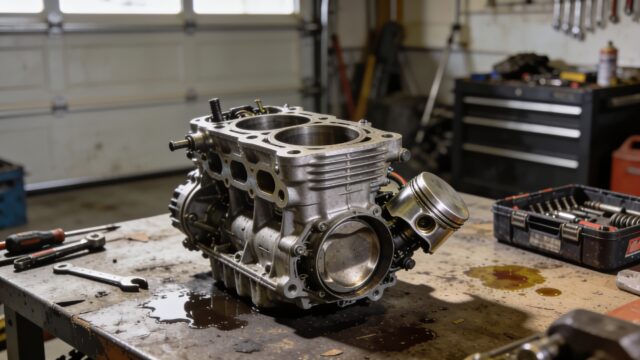
2-Stroke vs 4-Stroke Dirt Bike Engines: What Actually Changes
A 2-stroke fires once every crank revolution instead of every two, giving it a lighter, punchier power delivery than a 4-stroke of…
 Mechanics
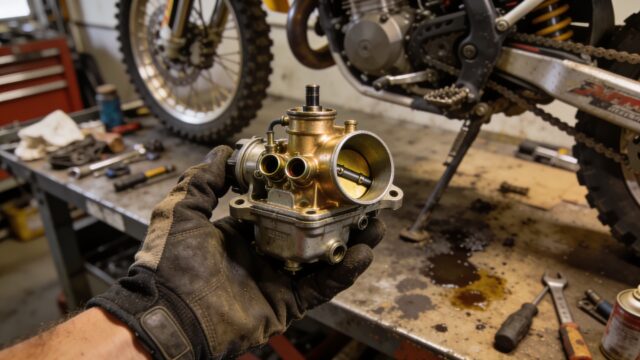
How a Dirt Bike Carburetor Works: Air-Fuel Mixing Explained
A carburetor mixes air and fuel by using engine vacuum to pull fuel into the intake air stream, with several internal circuits…
 Mechanics
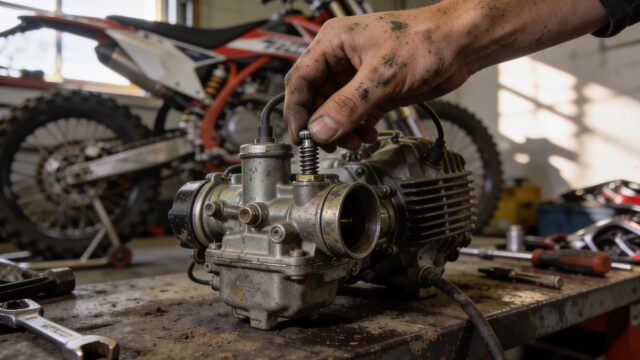
Carburetor Jetting: Finding the Right Air-Fuel Mix
Jetting means adjusting the main jet, needle, and pilot screw to get a correct air-fuel mix at every rpm — and it's…
 Mechanics
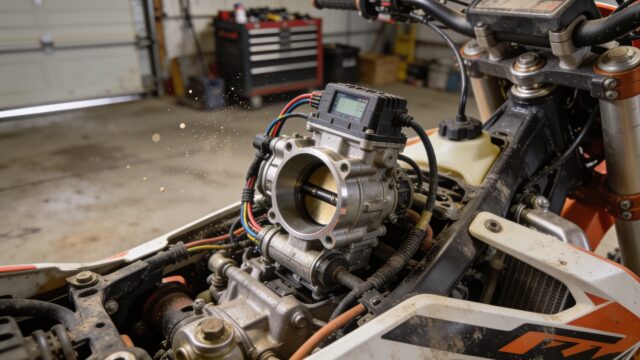
Fuel Injection on Dirt Bikes: How It Replaces the Carburetor
Fuel injection doses the air-fuel mix through an ECU reading pressure, temperature, and throttle sensors in real time — holding a consistent…
 Mechanics
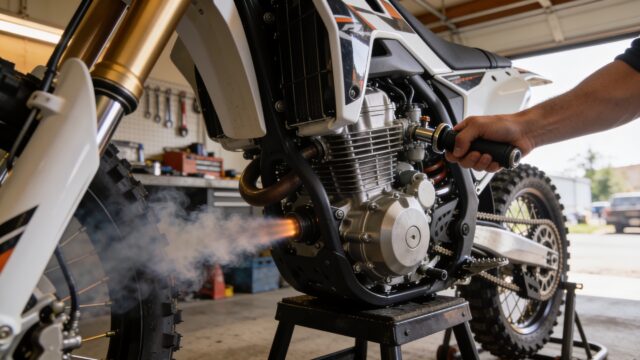
Breaking In a New Dirt Bike Engine: The First Hours Matter
Breaking in a new engine means varying rpm constantly without ever maxing it out for the first 1-5 hours, giving internal parts…
 Mechanics
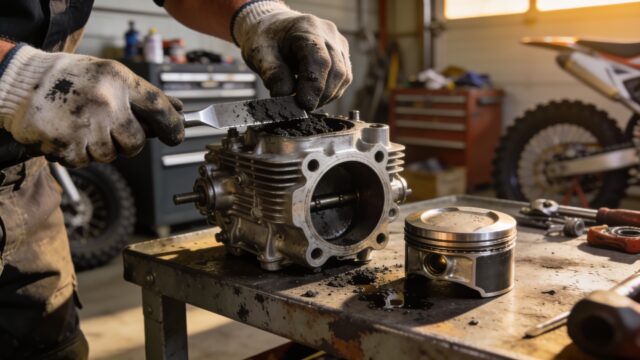
Decarbonizing a 2-Stroke Engine: Cleaning the Combustion Chamber
Decarbonizing a 2-stroke means scraping carbon deposits out of the combustion chamber, cylinder head, and exhaust port every 15-25 hours, since burned…
 Mechanics
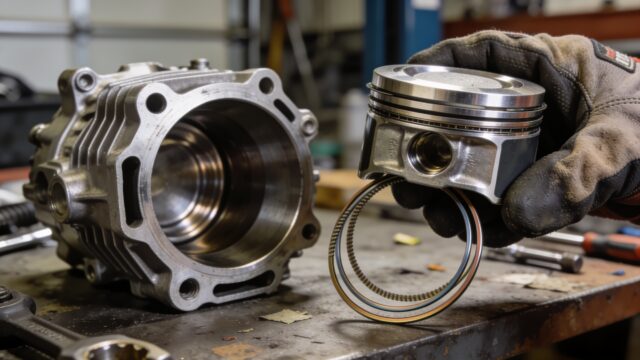
Piston and Rings: When and How to Replace Them
A piston kit typically needs replacing every 40-60 hours on an intensively ridden 2-stroke, far longer on a 4-stroke, as rings wear…
 Mechanics
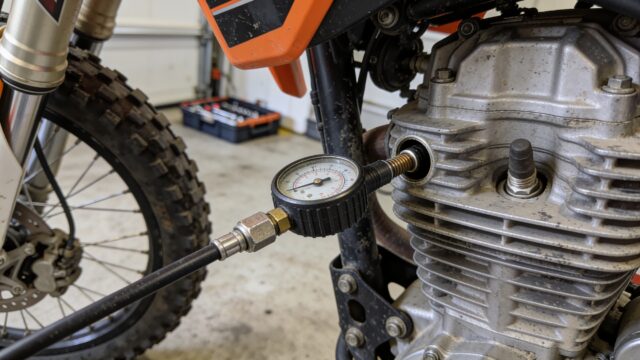
Compression Testing: Diagnosing Real Engine Condition
A compression test screws a gauge into the spark plug hole with the engine warm, revealing the true state of the piston,…
 Mechanics
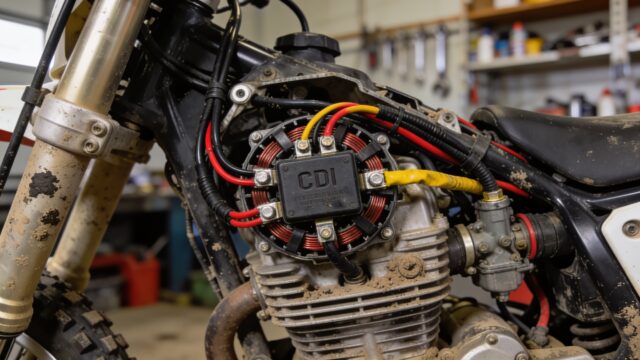
Ignition System: Understanding the Spark That Starts It All
The ignition system fires a high-voltage spark at the plug right as the piston tops out on compression, with timing managed by…
 Mechanics
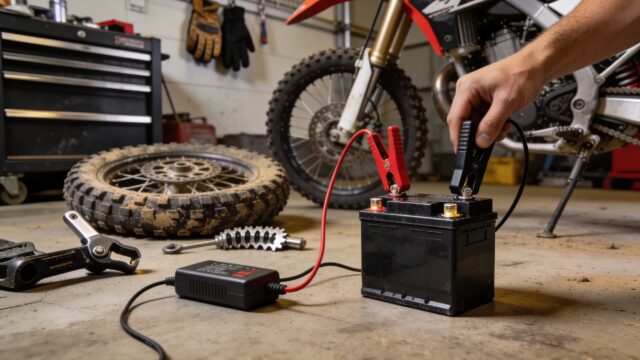
Dirt Bike Battery: What It Does and How to Maintain It
A dirt bike battery powers the electric starter and, on street-legal models, the lighting — but many pure competition bikes skip it…
 Mechanics
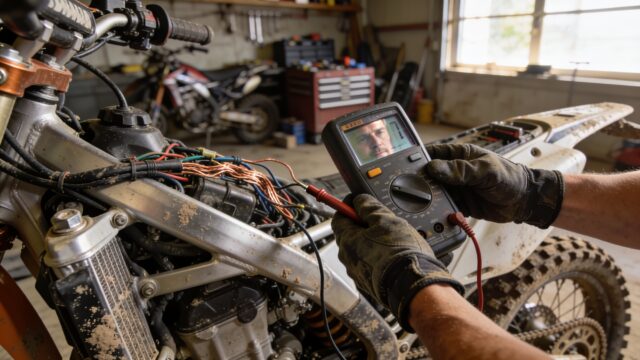
Diagnosing an Electrical Fault: A Step-by-Step Method
Diagnosing an electrical fault starts with a methodical multimeter check from the power source outward — not swapping parts at random and…
 Mechanics
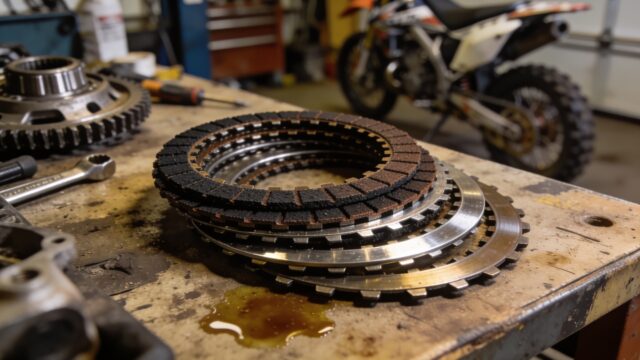
How the Clutch Works: The Link Between Engine and Gearbox
The clutch transmits engine power to the gearbox through a stack of friction and steel plates pressed together by springs — power…
 Mechanics
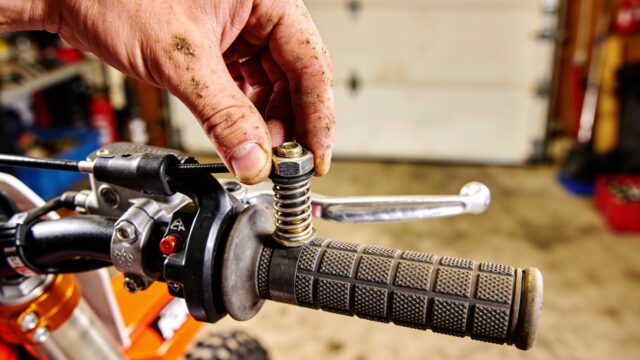
Clutch Lever Free Play: The Adjustment That Prevents Slipping
Clutch lever free play should sit between 2 and 5mm before resistance kicks in — a setting that ensures full disengagement and…
 Mechanics
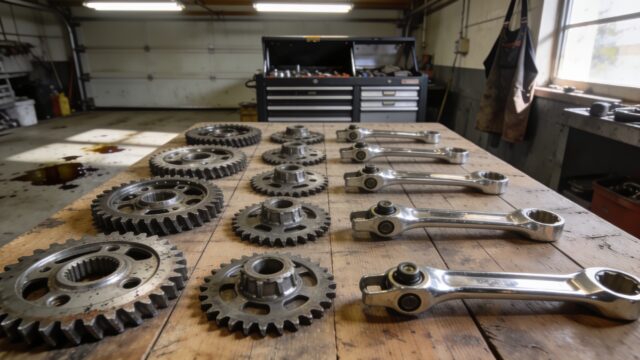
How the Gearbox Works: Understanding the Gear Ratios
A dirt bike gearbox uses gear pairs of different sizes to match engine rpm to the wheel speed you want, with each…
 Mechanics
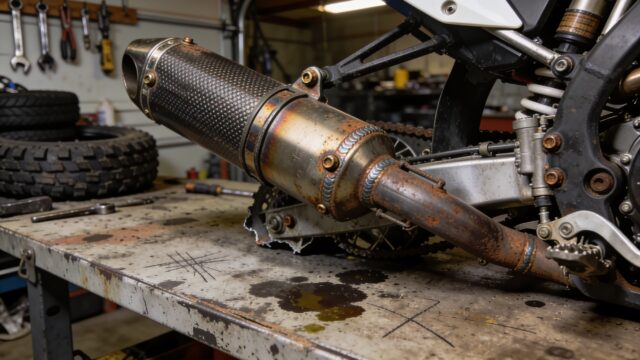
Exhaust and Silencer: Their Real Effect on Power
The exhaust vents burned gases while shaping the engine's power curve through its internal geometry, while the silencer cuts noise without choking…
 Mechanics
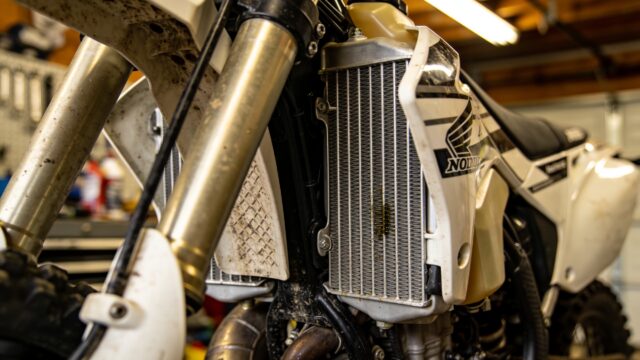
Cooling System: How the Circuit Protects the Engine
Coolant circulates between the engine and two radiators flanking the tank, driven by a water pump that carries away combustion heat before…
 Mechanics
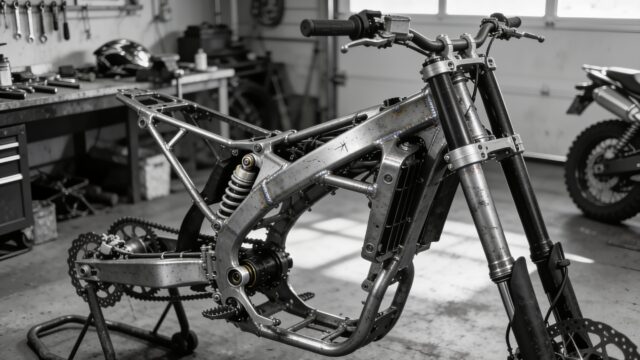
Frame and Chassis: What Holds the Whole Bike Together
The frame, usually steel or aluminum depending on the brand, structures the whole bike and largely determines steering geometry, cornering behavior, and…