The Basic Dirt Bike Tool Kit That Covers Everything
Contents
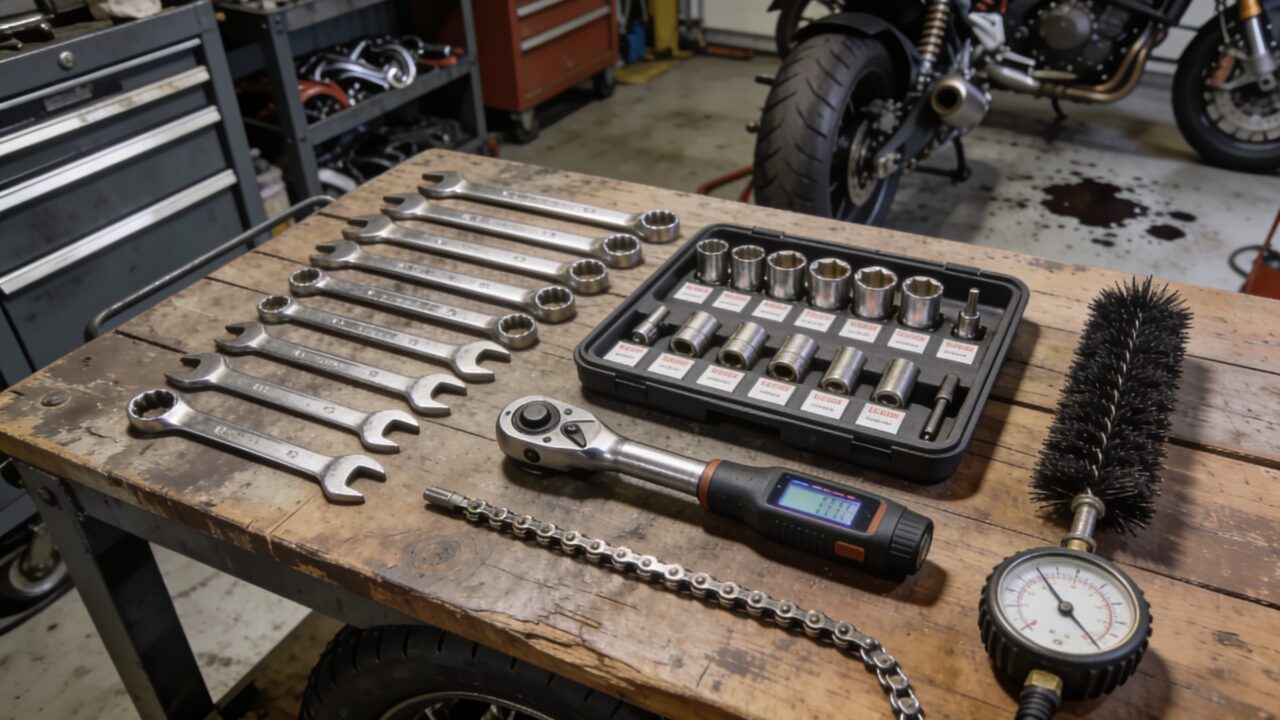
A basic dirt bike tool kit fits in one box: a metric socket and wrench set, a multi-bit screwdriver, a set of hex keys, a chain brush, a low-pressure tire gauge and a torque wrench. That covers nearly all routine maintenance without booking a shop appointment or borrowing from the guy in the next pit.
Why owning your own tools pays off
Every job in this maintenance section, from chain tension to oil changes, assumes the right tool is within reach. Without it, a ten-minute task turns into an afternoon, and usually into a botched one that rounds a bolt head you will curse for years.
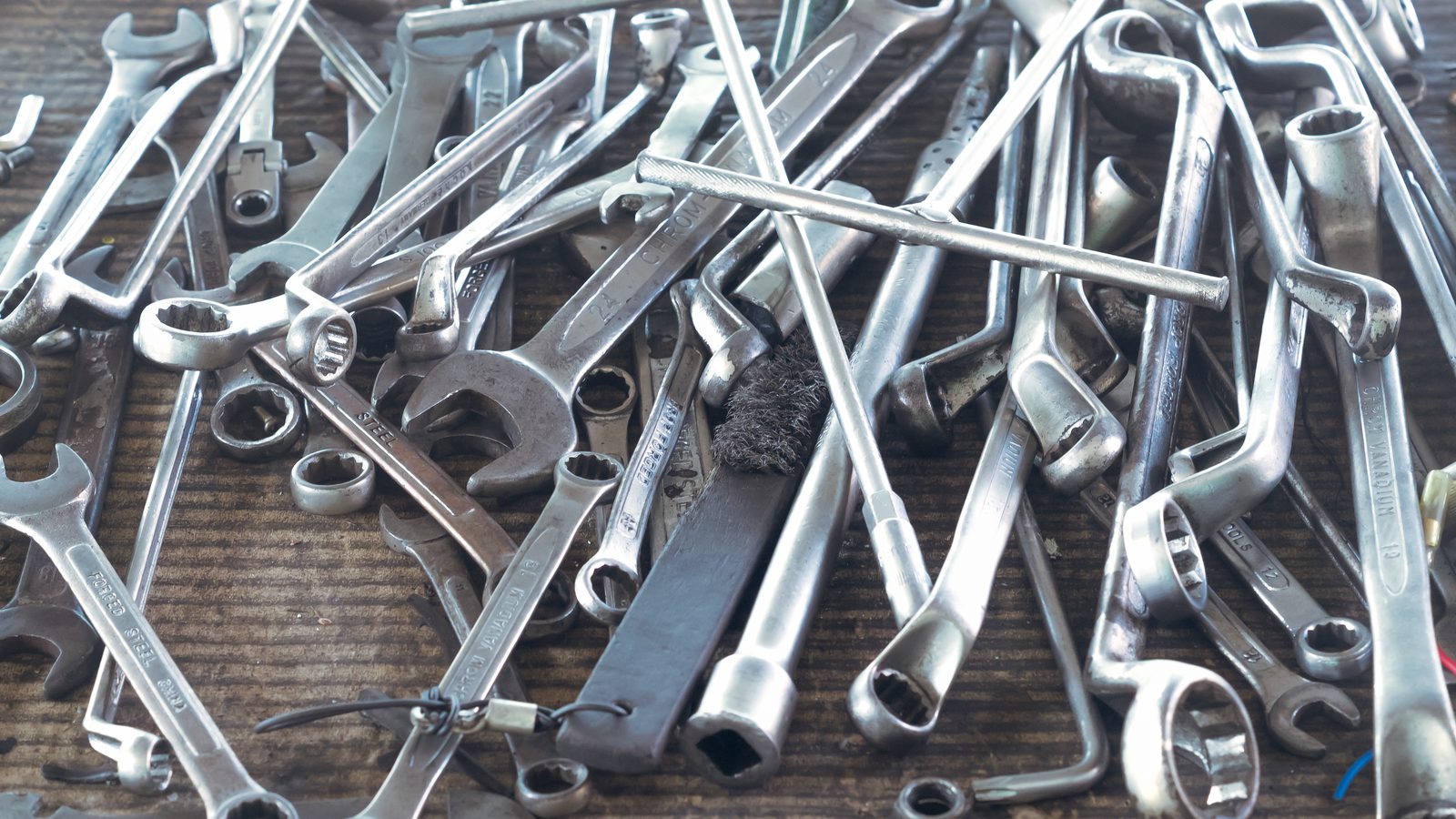
The bigger win is timing. You work on the bike the same evening, while you still remember the odd noise in third gear and the brake lever that came back a little further than usual. Waiting on an appointment lets the diagnosis go cold.
Decent tools also last. Nothing needs to be top shelf for amateur use, but a solid set stays with you for years and pays for itself over the first season of jobs done at home.
The core kit, before anything else
A metric socket and wrench set handles the overwhelming majority of fasteners on a modern dirt bike: axles, plastics, engine mounts. Buy a full set rather than a handful of odd sizes, because you will move between three or four sizes inside a single job.
A multi-bit screwdriver, flat and Phillips in several sizes, covers filters, covers and everything that comes off quickly. Hex keys round out the base, since modern bikes are full of them.
A torque wrench is the tool beginners buy last when it should arrive second. It is what lets you hit the manufacturer’s figures on the axle nuts and suspension fasteners, exactly where guesswork gets paid for in broken parts or a crash.
Quick reference
- Fasteners
- torque wrench, figures taken from the service manual
- Chain
- chain brush and a chain-specific degreaser
- Tires
- low-pressure gauge, not a car gauge
- Lifting
- a proper stand or lift
- Engine
- correct-size plug socket and a feeler gauge
What each tool actually saves you
| Tool | What it lets you do | What happens without it |
|---|---|---|
| Torque wrench | Tighten to the factory figure | A bolt that vibrates loose, or a stripped thread on reassembly |
| Low-pressure gauge | Read dirt bike tire pressures accurately | Guesswork from a car gauge too coarse to resolve them |
| Chain brush | Reach the side plates and the seals | A chain clean on top and wearing out underneath |
| Workshop stand | Work with the wheel free and the bike steady | Adjustments made crooked, and a bike that falls over |
The brush and degreaser make a real difference to chain lubrication, since a household brush misses half the surfaces that matter. The low-pressure gauge earns its place the first time you go hunting for traction on soft ground and need to trust the number you are reading.
What to add next, in order
Start with the weekly jobs: chain, tires, air filter, spark plug. Those alone justify the core kit, and they teach you to handle your tools on jobs where a mistake costs nothing.
A stand comes soon after. It transforms anything involving the rear wheel, the drivetrain, or winter storage. Plenty of riders put it off, then wonder how they ever managed without one.
Specialist gear waits until the job becomes relevant to you: tire irons and rim protectors, feeler gauges for valve clearance checks, and the kit for a fork oil change. A multimeter joins the box the day you first chase an electrical fault. Buying ahead just fills a drawer with tools you never reach for.
Storing and looking after your tools
Give every tool a fixed home, in a box or on a wall panel. This is not fussiness. It is what tells you, before you load the van, that a socket stayed in the grass last weekend.
Clean anything that touched grease, degreaser or fuel before it goes back. A sticky tool contaminates everything it sits next to, and a greasy socket slips on a nut that was already tired.
Treat the torque wrench differently. Store it wound down, never use it to loosen anything, and have it checked if it takes a hard knock. A wrench that has drifted gives you wrong numbers with all the confidence of a precision instrument, which is worse than having no wrench at all. Fold the same care into your post-ride routine.
Mistakes that cost money
Reaching for pliers because the right wrench is at the bottom of the drawer. Two minutes saved, one rounded bolt head, and every future job on that fastener turns into a fight.
Buying an imperial set for a bike built entirely around metric fasteners. A close-enough wrench forced onto a metric head is the fastest way to ruin a bolt, and close enough never is.
Tightening by feel on critical fasteners. An axle or a suspension bolt pulled up too hard fails just as surely as one left loose backs itself out. Either way you find out while riding, which is the worst possible time.
FAQ
Which tool should I buy first?
A full metric socket and wrench set. It touches more jobs than anything else in the box. The torque wrench comes right behind it, because it covers the fasteners where guesswork is not an option. Everything else can wait until you have ridden a few weekends and seen what you actually reach for.
Will the car tools in my garage do the job?
Partly. Metric sockets and wrenches from a decent car set work on plenty of fasteners. What does not carry over is the tire gauge, which cannot resolve the low pressures a dirt bike runs, and any old brush, which never reaches the side plates of a chain. Those are the two purchases you notice immediately.
Do I really need a stand?
Not for your first weekend, but soon after. With the rear wheel free you can set chain tension properly, spin a tire to inspect it, and reach the drivetrain without lying in the dirt. For long storage, a bike on a stand comes out of the winter in far better shape.
Should I buy everything at once?
No. Get the core kit, ride for a few months, and write down every time a missing tool stops you. That list beats any generic recommendation, because it matches your bike, your terrain and the jobs you genuinely end up doing rather than the ones you imagined doing.
Find the rest of the maintenance guides on the dirt bike maintenance page.
Editorial content. PiloteMX offers no on-site service, no parts or gear sales, no quotes and no bike repairs. Working on a bike and riding it carry risk: what you do with this guide is your own responsibility.