Dirt Bike Tire Pressure: The Setting That Changes Your Traction
Contents
Dirt bike tire pressure is set by terrain, usually somewhere between 8 and 15 PSI front and rear. Run it too high and the contact patch shrinks and traction goes with it. Run it too low and the tire pinches against the rim on the first hard hit. It is the cheapest setting on the bike and the one that pays back fastest.
Why pressure decides how much traction you get
A street tire runs several times that pressure, on a hard and even surface. A dirt tire does the opposite job. It has to deform, wrap over the bump, and let the knobs sink into the dirt. That flex is where off-road traction comes from, and it depends directly on running low pressure.
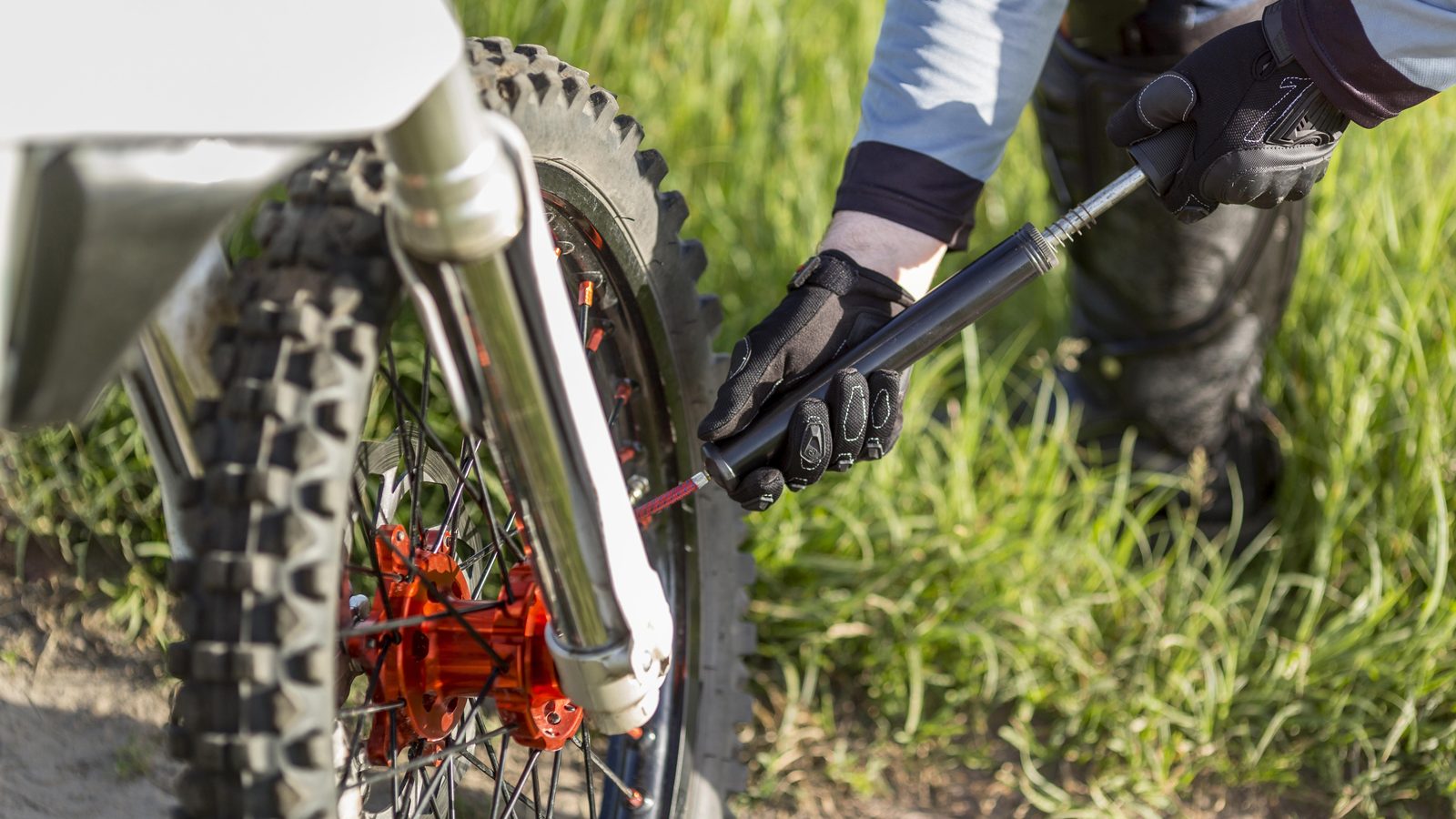
Go too high and the tire firms up, rolls easier, and skips across small bumps instead of absorbing them. The bike feels busy and it lets go earlier in corners, exactly where you needed the knobs to bite. Plenty of riders read that as a suspension fault and spend a weekend chasing clickers when the answer was in the gauge.
Go too low and the failure mode changes. The tire feels vague and wanders under load, and the carcass no longer has enough left to swallow a square-edged hit. The rim takes the impact instead.
Setting pressure by terrain
Treat these as a starting point rather than a rule. The tire you run, your weight, and the state of the track all move the number.
| Terrain | Where to sit in the range | What you gain | What you risk |
|---|---|---|---|
| Hardpack and rocks | Toward the higher end | Rim protection on impacts, sharper steering | Traction falls off as soon as the surface breaks up |
| Sand and soft ground | Toward the lower end | The tire flattens out and floats instead of digging in | A pinch flat on a hit you did not see coming |
| Mud | Close to your standard setting | A workable balance of bite and rim protection | The tire squirming on the rim if you drop too far |
Riders who walk the track before a moto adjust to the dirt they just looked at. Riders who run one pressure all season give away traction almost every time out, and never know it because they have nothing to compare against.
Checking and adjusting without fooling yourself
- Check cold, before you ride, with the bike parked in the shade rather than baking in the sun.
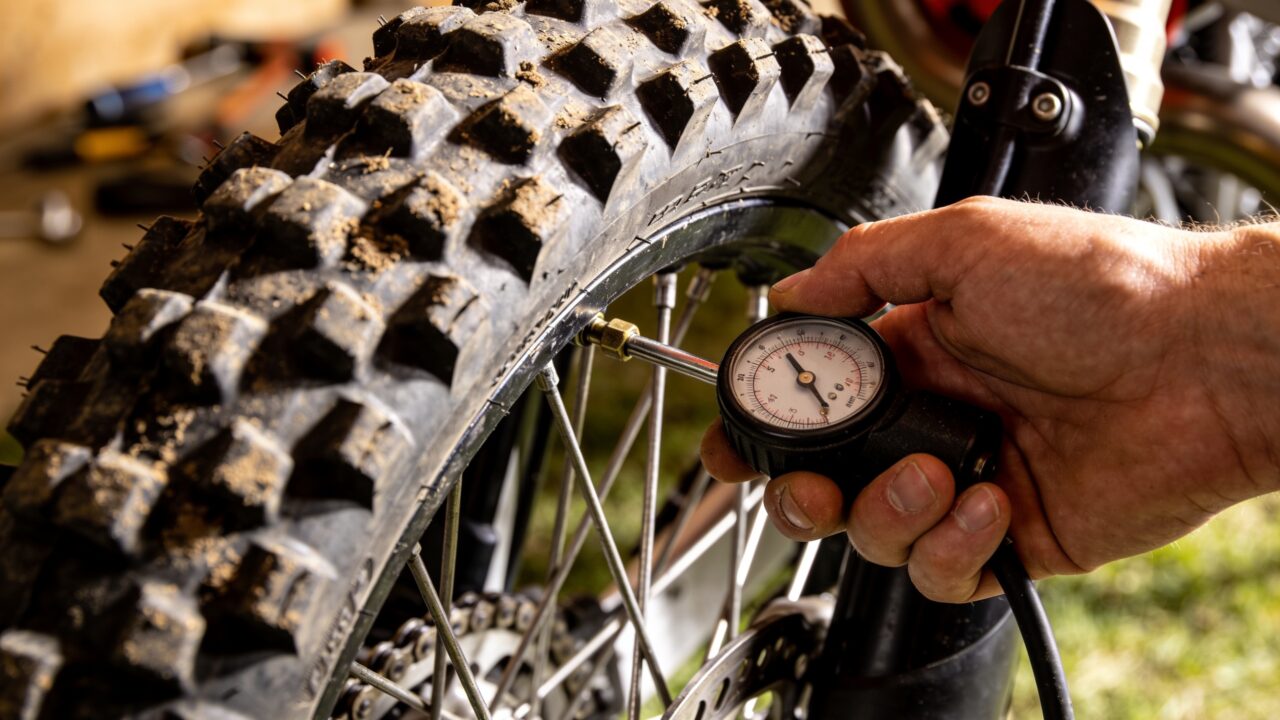
- Take the reading with a low-pressure gauge, valve clear, without letting air escape as you pull the chuck off.
- Write down the starting number before you touch anything. That is your reference for the comparison.
- Move in small steps, and change one wheel at a time when you are genuinely hunting for a setting.
- Ride a few laps, then say out loud what changed: more bite on entry, or a front end that pushed wide.
- Check cold again next time out. Pressure drifts on its own between weekends.
Fold the reading into your pre-ride checklist. An off-road tire loses pressure faster than a street tire, and the temperature swing between two weekends is enough to shift the number on its own.
Pinch flats, wear and mousse
The pinch flat is the loud consequence of running too low. On a square-edged hit, the tube or the tubeless carcass gets crushed between the obstacle and the rim edge. It tears cleanly and the pressure is gone instantly. Nothing warns you, and it rarely happens in an easy section.
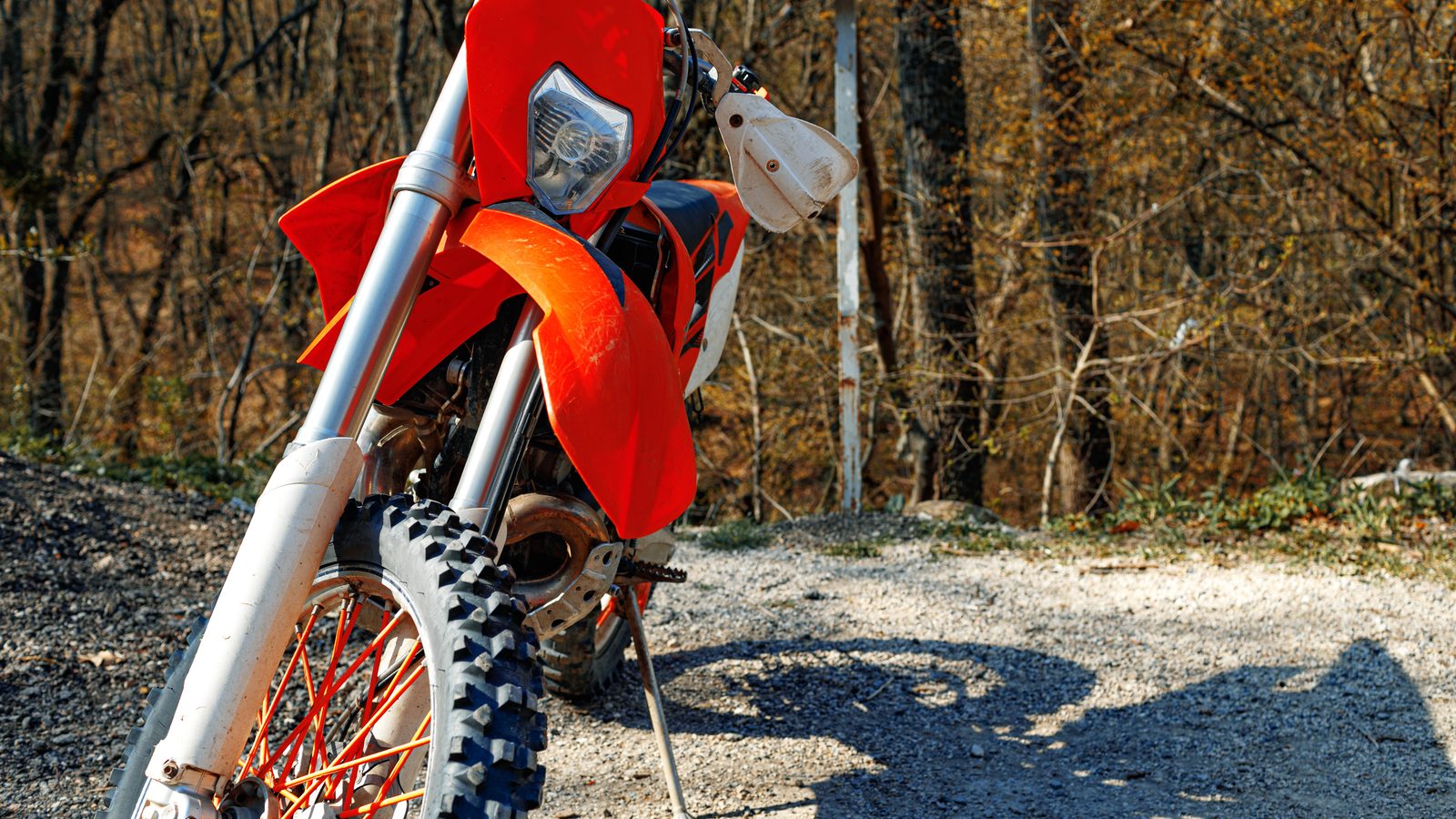
Wear is the quiet one. Chronically low pressure works the sidewalls harder on every corner, and the tire starts deforming unevenly long before the knobs are finished. That whole subject is picked up in the guide on tire wear, including how a worn tire changes what pressure you can safely run.
Some riders fit a mousse instead of a tube to take flats off the table completely. It works, but the feel changes and the weight goes up. That is a usage and budget call, not a free upgrade.
One more thing people miss: pressure changes what you feel from the suspension. A tire run hard sends into the fork what it should have absorbed itself, and you end up chasing a suspension setting that was never the problem.
The mistakes that cost you
Running one pressure all year, whatever the dirt. It is the most common beginner mistake and the most frustrating one, because the fix takes two minutes and you feel it on the first lap.
Pumping it up “so I do not flat”. You lose traction in the soft stuff and you do not remove the pinch risk anyway. A hard enough hit finds the rim regardless.
Reading it hot, straight off the track. Heat raises pressure temporarily, so the number has nothing to do with your cold reference, and you set the next session from a false figure.
Watching the pressure and ignoring the tire. They are two separate things. A finished carcass or torn knobs will not hook up at any pressure. Give the tire a proper look during your post-ride routine, when the bike is clean and the damage actually shows.
FAQ
What is a safe starting pressure for most riding?
Around 12 to 13 PSI front and rear is a reasonable all-around starting point, adjusted from there by terrain and by what you feel. Run a full session on it without touching anything, then move one step in one direction and see what changes. Two honest tests teach you more than ten conflicting opinions on a forum.
Does lower always mean more traction?
Only up to a point. Past a certain threshold the pinch-flat and rim-damage risk outweighs anything you gain, and the tire starts moving around on the rim instead of gripping the ground. The useful range is narrower than most riders expect, which is exactly why an accurate gauge matters more than a bold setting.
Should the front and rear run the same number?
Not necessarily. Some riders run a small split between the two depending on their style and the terrain, but the gap stays small. Start with both ends matched. You will read a change far more clearly when you have only moved one variable, and a split is easier to judge once you know what your baseline feels like.
Find the rest of the maintenance guides on the dirt bike maintenance page.
Editorial content. PiloteMX offers no on-site service, no parts or gear sales, no quotes and no bike repairs. Working on a bike and riding it carry risk: what you do with this guide is your own responsibility.