Riding Technique
18 guides, numbered in teaching order — from the fundamentals to the advanced.
Riding technique does more for your lap times than any new part. Before you think about suspension work, engine mods or fresh tires, it’s your body position, your braking and the way you read the track that separate a clean lap from a lap you just survive. These dirt bike riding tips cover beginners and experienced riders alike, in the order skills are built: fundamentals, corners, jumps, tricky terrain, then starts, racing and rider preparation.
No magazine fluff here. Each guide is built like a session in the pits: the skill to work on, the mistakes that hold you back, and the drills that make it stick. Follow the numbered path plate by plate, or jump to whatever you need today.
The fundamentals: stance, throttle, braking
Everything starts with the riding stance: standing on the pegs, elbows up, eyes far ahead. It decides your balance, how well you soak up hits and how fast you react when the bike moves around. Next comes throttle and clutch control, which is where traction comes from. A smooth, measured roll-on drives forward. A handful of throttle just spins the rear wheel.
Braking is mostly front brake, two fingers on the lever, bike upright and weight back. The rear brake settles the bike and helps place it. Brake hard before the corner, never in it, and ease off as you turn in so the front tire keeps its bite.
Corners: where the time is
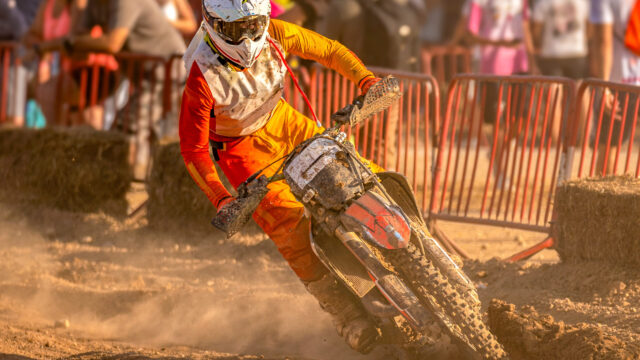
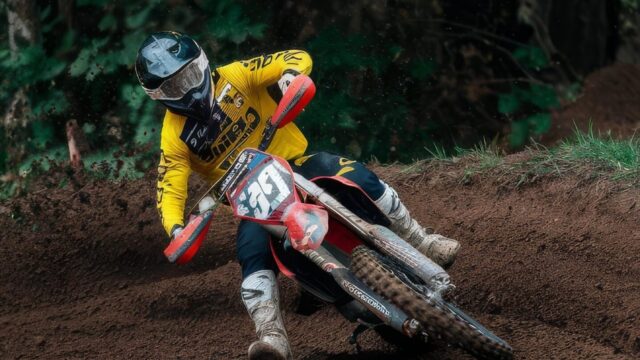
A lap is mostly a string of corners. Cornering position lays the groundwork: sit far forward, outside elbow up, inside leg stretched toward the front axle. Then two kinds of turns call for opposite techniques. Flat turns and berms are ridden differently, and mixing them up costs speed or ends on the ground. Rut cornering is about trusting the line: eyes on the exit, bike leaned, and let the front wheel follow the groove.
Jumps: take off, fly, land
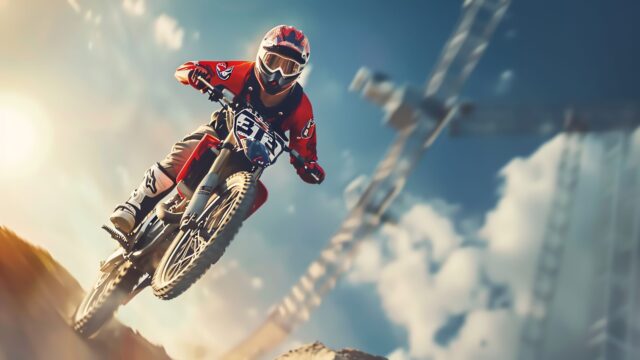
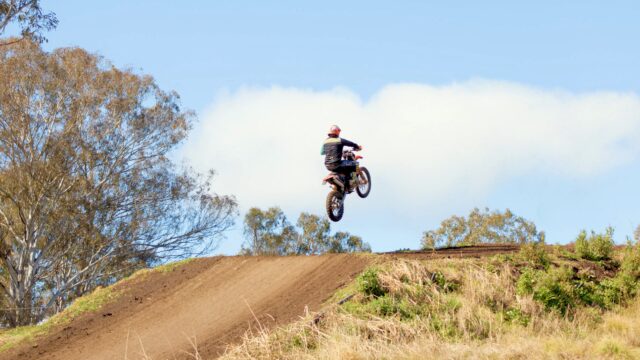
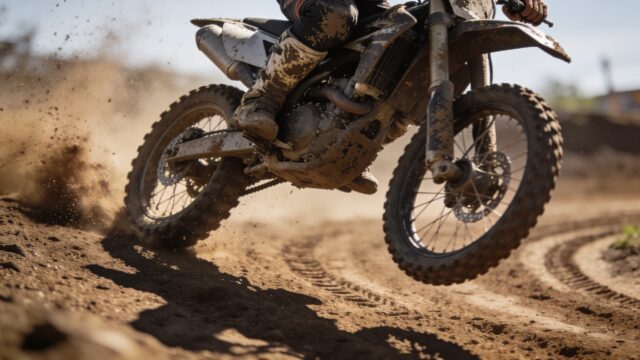
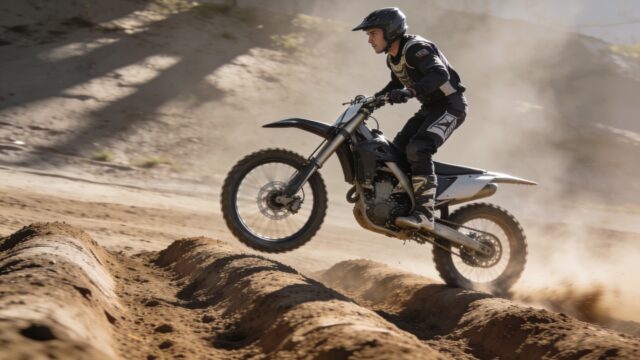
Jumps scare people because the mistakes are always the same: too much throttle at the wrong moment, weight in the wrong place. Our guide on how to jump a dirt bike breaks down the approach, the lip and the time in the air. A good jump landing is decided before takeoff: pick your landing spot and arrive with the wheels in line. Once that’s solid, you can work on back to back jumps by reading the rhythm instead of reacting to it. And whoops, the section everyone hates, get manageable once you learn to skim them.
Reading the terrain: sand, mud, hills
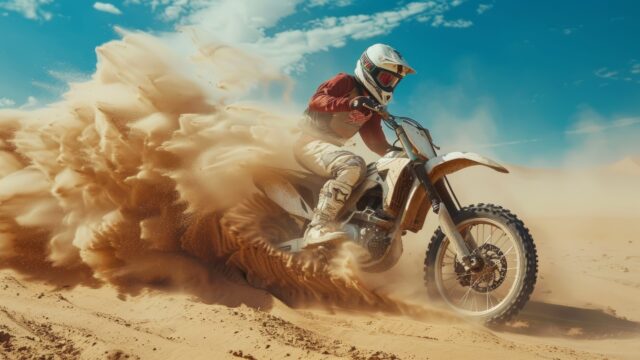
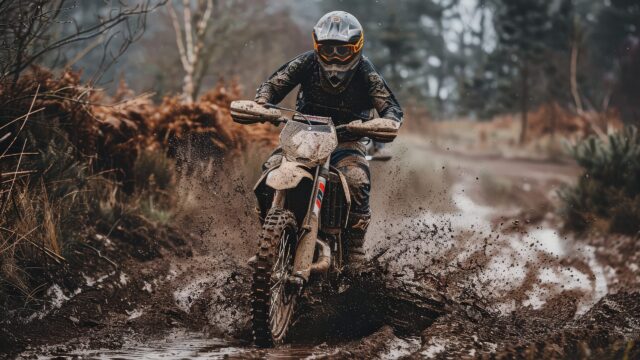
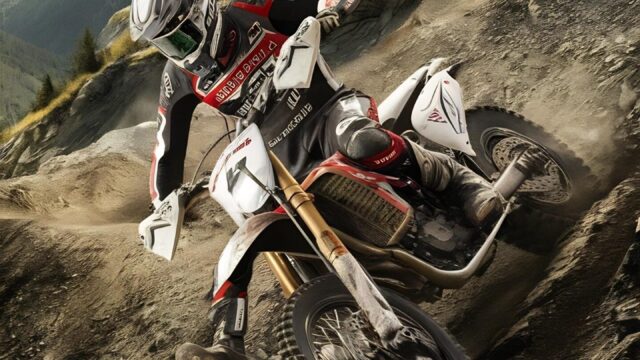
Motocross tracks are loose and they change every lap. Riding sand takes throttle and a rearward weight bias to keep momentum. Riding mud rewards smooth inputs and clean lines. Hill climbs and descents come down to commitment, never hesitation, and they ask for opposite body positions.
Starts and racing
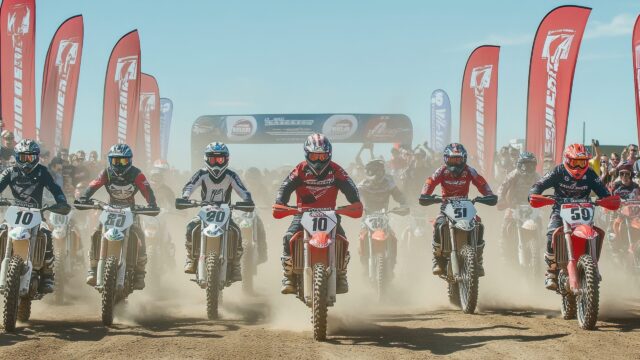
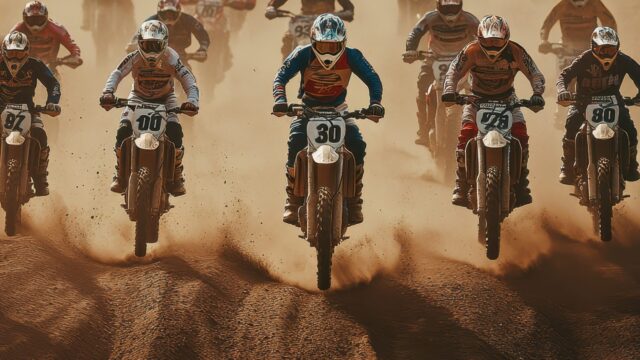
The start is the best return on effort in any race: thirty good meters put you ahead of riders you’ll never have to pass. Once the race is on, passing takes planning: inside lines, clean block passes, and handling lapped traffic. Set the pass up a corner early before you try it.
Rider preparation
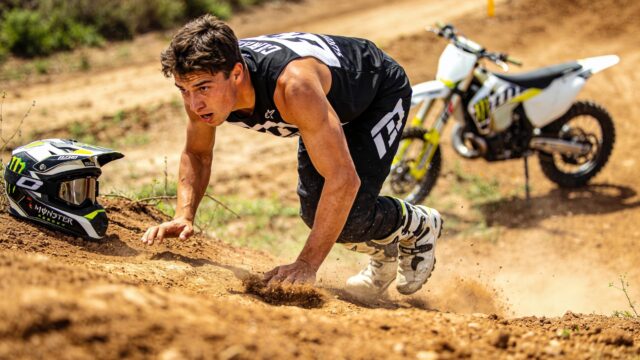
The bike doesn’t get tired. You do. Fitness training built around a structured twelve-week program, mental preparation to manage fear, and a consistent training plan make the difference in the last ten minutes of a moto. Riding a lot isn’t enough. How you ride your practice time is what makes you faster.
Beginners: which guide first?
If you’re new, don’t skip steps. Start with the riding stance, then throttle and clutch control, then braking. Move on to cornering position and flat turns. Jumps come after, once those basics run on autopilot.
One last tip: work on a single skill per session. Three focused laps on your stance beat an hour of riding with no goal. And before you head out, make sure the bike is ready with our dirt bike maintenance guides, and that you’re protected with the right motocross gear.
The guides
 Riding Technique
Cornering Position on a Dirt Bike: The Move That Saves You Time
The right cornering position on a dirt bike is chest low and forward, outside leg locked against the tank, inside leg open…
 Riding Technique
How to Jump a Dirt Bike: Takeoff, Flight, and Landing
To jump a dirt bike well, you accelerate into the base of the jump, ease off the throttle slightly at the face…
 Riding Technique
Back to Back Jumps on a Dirt Bike: Read the Rhythm, Keep Your Balance
Back to back jumps on a dirt bike come down to three habits: read the whole section before you enter it, set…
 Riding Technique
Dirt Bike Fitness: A 12-Week Training Plan That Holds Up
Getting fit for dirt bike riding means building an aerobic base first, then specific strength for forearms, neck, and core, then an…
 Riding Technique
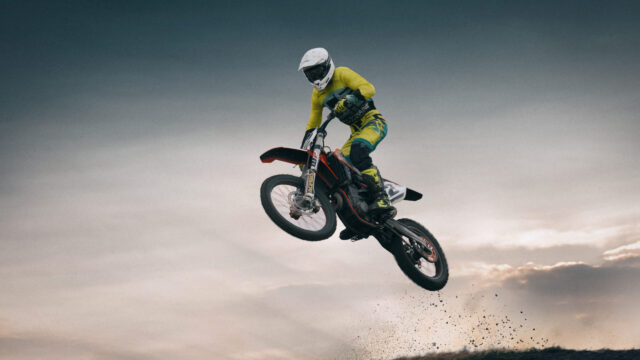
Dirt Bike Riding Stance: The Base Position for Everything Else
The base riding stance on a dirt bike is standing on the balls of your feet on the pegs, knees slightly bent,…
 Riding Technique
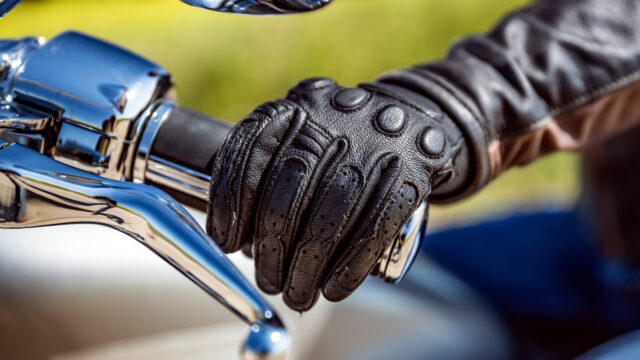
Throttle and Clutch Control on a Dirt Bike: The Hand Coordination That Matters
Throttle and clutch control on a dirt bike is the coordination between a right hand that feeds in power progressively and a…
 Riding Technique
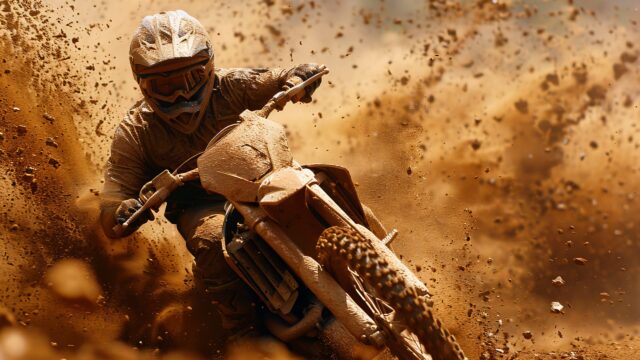
Dirt Bike Braking: Modulating Instead of Grabbing
Good dirt bike braking means using both brakes together, applied progressively, with the front doing most of the work on hard ground…
 Riding Technique
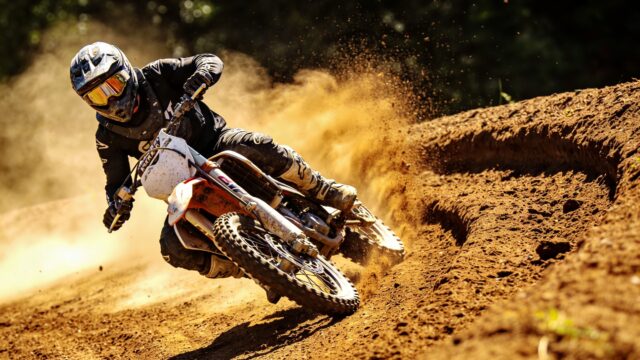
Rut Cornering on a Dirt Bike: Following the Line Instead of Fighting It
In a rutted corner, the front wheel is guided by the walls carved into the ground: your job stops being steering the…
 Riding Technique
Flat Turns vs Berms on a Dirt Bike: Two Opposite Moves
A flat turn forces you to slow down more and work with limited grip since there's no berm to lean on, while…
 Riding Technique
Landing a Jump on a Dirt Bike: Absorbing Without Getting Caught Out
A good jump landing is decided before impact: you read the landing slope from the top of the arc, adjust the bike's…
 Riding Technique
Whoops on a Dirt Bike: Why Speed Stabilizes You Instead of Throwing You Off
Getting through a set of whoops rests on a principle that feels backwards: speed up instead of slowing down. At the right…
 Riding Technique
Riding Sand on a Dirt Bike: Keep the Momentum, Don’t Fight It
Sand rides like deep water: you never stop in it, you keep constant momentum, standing and slightly back, with steady throttle instead…
 Riding Technique
Riding Mud on a Dirt Bike: Finding the Grip That’s Left
Mud doesn't ride like sand. Where sand needs speed to stay stable, mud needs you to find the rare pockets of grip,…
 Riding Technique
Hill Climbs and Descents on a Dirt Bike: Two Opposite Skills
Climbing a hill, you shift your body forward to keep the front planted and transmit power without the bike looping out. Descending,…
 Riding Technique
Dirt Bike Starts: Winning the Race Before the First Turn
A good dirt bike start is set up before the gate even drops: body locked and ready, eyes on the gate rather…
 Riding Technique
Passing on a Dirt Bike: Setting Up the Move Before You Try It
A clean pass on a dirt bike gets set up over several turns before it happens: you spot where your line beats…
 Riding Technique
Mental Prep for Dirt Bike Riding: Managing Fear to Ride Better
Mental preparation for dirt bike riding isn't about eliminating fear — it's about managing it so it doesn't take over your technique.…
 Riding Technique
Dirt Bike Training Plan: Structuring Practice Instead of Just Riding
An effective dirt bike training plan alternates sessions focused on a single technical move, sessions that string everything together on a full…