Repairs
24 guides, numbered in teaching order — from the fundamentals to the advanced.
Dirt bike repair comes with the sport. You’ll snap levers, bend spokes, crack plastics and, sooner or later, watch oil run down a fork tube. The good news is that a lot of these repairs can be done in your own garage, with patience and the right tools. This section helps you diagnose the problem, decide whether to repair or replace, and do the job properly.
Each guide follows the same path: symptoms, likely causes, the repair step by step, and the point where you should hand the bike to a shop. We’ll tell you straight when a repair isn’t worth the effort.
Before you start: tools and safety
Good repairs start with a clean bike and a clear bench. Take photos as you take things apart, bag and label the bolts, and keep the service manual open for torque values. Use a proper stand, wear eye protection when grinding or welding, and never work on a fuel system near a flame or a heater. Rushing is how a one-hour job turns into a weekend.
Repair or replace: the first decision
Before you take anything apart, think about the real cost. Our method for deciding whether to repair or replace a part weighs the price of a new part against your time and the risk of doing the job twice. On safety parts (brakes, steering, frame), any doubt ends in replacement.
Trailside: fix it well enough to get home
Some failures can be sorted out on the spot. A well-packed trailside repair kit fits in a fanny pack and keeps you from ending the day at the truck. A broken chain is the classic case: with a master link and a chain breaker, it’s a ten-minute job.
Suspension and steering
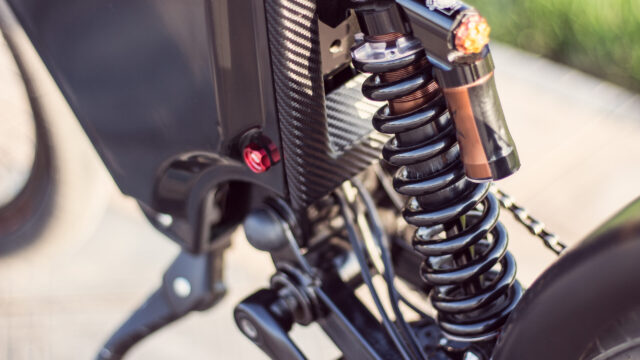
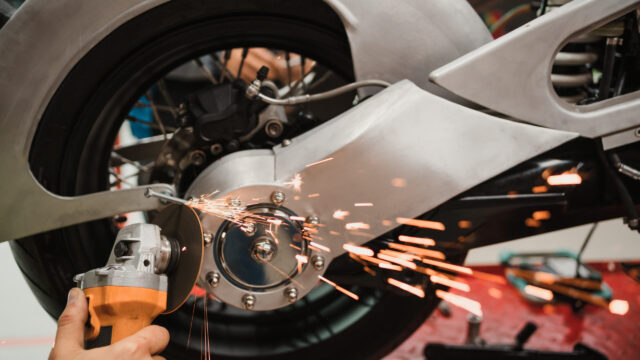
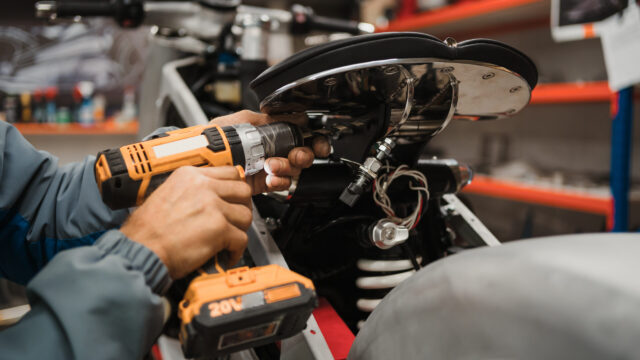
A leaking fork won’t fix itself. Our fork seal leak guide shows you how to clean the seal first, then replace it if needed. At the rear, a leaking shock usually needs a suspension specialist, and the guide explains why. Bearings wear quietly until they develop play: check your steering bearings and swingarm bearings by hand with the bike on a stand.
Wheels and brakes
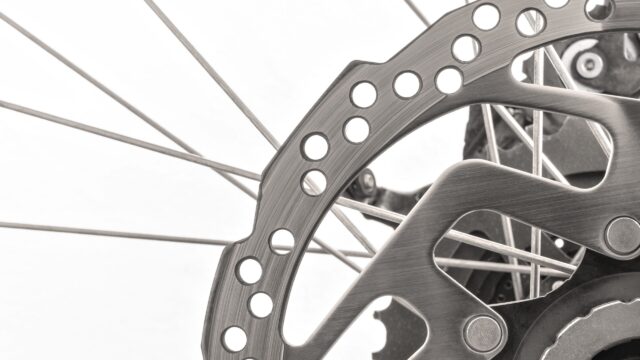
One bad landing is enough to bend a rim. The warped rim and broken spoke guide helps you judge whether truing will do. On the braking side, a warped brake disc shows up as a pulsing lever, a stuck caliper as a pad that drags all the time, and a tired master cylinder as a soft lever that returns slowly.
Engine and drivetrain
This is the most technical part of the section. A top-end rebuild is the most common engine job, especially on two-strokes. Crank bearing replacement goes deeper and means splitting the cases. A cracked engine case from a rock strike can sometimes be repaired, and the guide tells you when.
In the drivetrain, worn clutch plates can be swapped without special tools, a bent shift fork explains gears that pop out, and kickstart spring replacement is simple once the side cover is off.
Electrics, bodywork and frame
When the bike won’t fire, suspect a stator or CDI failure, or a damaged wiring harness after water or rubbing. For bodywork, broken plastics and a cracked fuel tank can often be welded, with the extra care any fuel tank demands. Our plastic and aluminum welding guide covers the equipment. A dented silencer can sometimes be straightened. A bent frame, on the other hand, means a frame specialist or a replacement.
When should a pro take over?
If the repair involves a safety part and you lack the tools or the experience, let a shop handle it. Same for anything that needs a press, precision measuring or a suspension dyno. There’s no shame in that.
To understand a part before you fix it, read our dirt bike mechanics section. And to keep the same failure from coming back, the dirt bike maintenance guides are still the best prevention.
The guides
 Repairs
Repair or Replace a Dirt Bike Part: How to Decide
Repair a part when the fix fully restores its original mechanical strength, and replace it once the damage touches a structural safety…
 Repairs
The Trailside Repair Kit Every Dirt Bike Rider Should Carry
A minimal trailside repair kit for dirt biking fits in a small fanny pack: a master link matched to your chain, wire…
 Repairs
Bent Frame After a Dirt Bike Crash: What to Do
A slightly warped dirt bike frame after a crash can sometimes be straightened by a professional with an alignment table, but a…
 Repairs
Repairing Broken Plastics on a Dirt Bike
Cracked or broken dirt bike plastics repair most of the time by plastic welding with a hot iron or hot air, an…
 Repairs
Cracked Dirt Bike Fuel Tank: Repairing a Fuel Leak
A cracked dirt bike fuel tank repairs differently by material: a plastic tank gets welded or glued with a fuel-compatible resin, while…
 Repairs
Repairing a Dented Dirt Bike Silencer
A dented dirt bike exhaust silencer repairs by hammering the dent out on a dolly for aluminum, or pushing it back out…
 Repairs
Chain Break Mid-Ride: Trailside Repair
A chain that breaks mid-ride repairs on the spot with a master link matched to your chain's exact pitch: remove the damaged…
 Repairs
Fork Seal Leak on a Dirt Bike: Diagnosis and Repair
A leak on a dirt bike fork tube almost always comes from a worn oil seal scored by dirt trapped under the…
 Repairs
Leaking Dirt Bike Shock: Diagnosis and Repair
A leaking dirt bike shock almost always needs a full rebuild at a specialist shop with a nitrogen charging station, since the…
 Repairs
Replacing Dirt Bike Steering Head Bearings
Dirt bike steering head bearings need replacing as soon as play or a tight spot appears while turning the bars lock-to-lock, engine…
 Repairs
Replacing Dirt Bike Swingarm Bearings
Dirt bike swingarm bearings need replacing as soon as lateral play appears when shaking the rear wheel side to side, bike on…
 Repairs
Warped Rim or Broken Spoke on a Dirt Bike: Repairing the Wheel
A broken spoke gets replaced individually and the wheel retensioned on a truing stand, while a warped rim gets corrected through progressive…
 Repairs
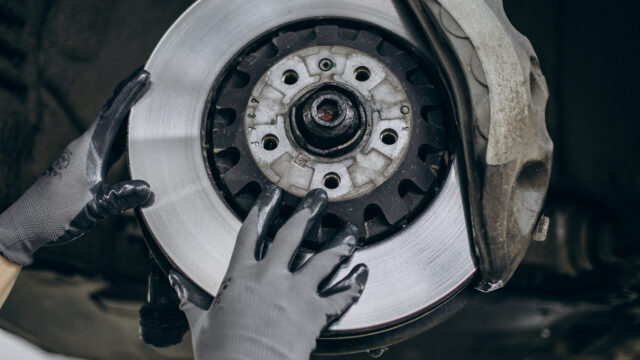
Stuck Dirt Bike Brake Caliper: Freeing It and Repairing It
A stuck dirt bike brake caliper almost always comes from a piston corroded by moisture and mud that got past a fatigued…
 Repairs
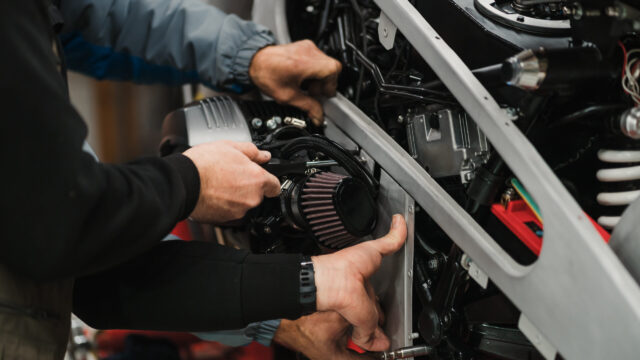
Repairing a Dirt Bike Brake Master Cylinder
A spongy dirt bike brake master cylinder, or one losing pressure, most often repairs with a rebuild kit for the internal seals…
 Repairs
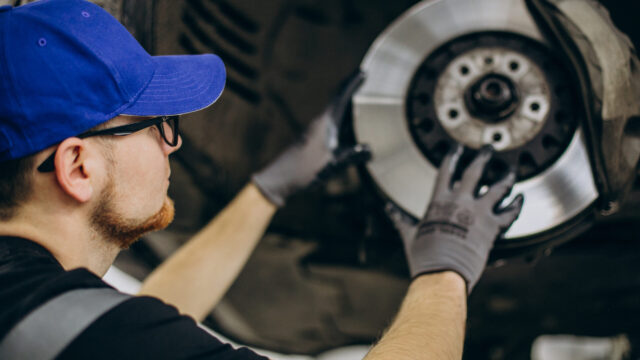
Warped Dirt Bike Brake Disc: Diagnosis and Replacement
A warped dirt bike brake disc gets replaced systematically rather than straightened, since the disc's thin section and hardened steel don't tolerate…
 Repairs
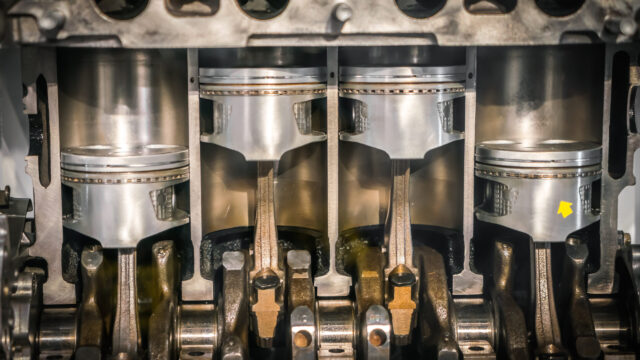
Dirt Bike Top-End Rebuild: When and How
A dirt bike top-end rebuild becomes necessary when a compression test drops well below stock values, or when progressive power loss comes…
 Repairs
Cracked Dirt Bike Engine Case: Repairing Without a Full Teardown
A superficially cracked dirt bike engine case, away from a bearing or seal, repairs with metal epoxy resin for casual use, or…
 Repairs
Replacing a Dirt Bike Crankshaft Bearing
A worn dirt bike crankshaft bearing shows up as a dull, regular metallic noise at idle, often paired with abnormal vibration, and…
 Repairs
Replacing Worn or Stuck Dirt Bike Clutch Plates
Worn clutch plates show up as progressive slipping under load despite correct free-play adjustment, and get replaced as a complete set (friction…
 Repairs
Broken Dirt Bike Shift Fork: Symptoms and Repair
A broken or worn dirt bike shift fork shows up as gears popping out unexpectedly, often mid-acceleration, and requires fully opening the…
 Repairs
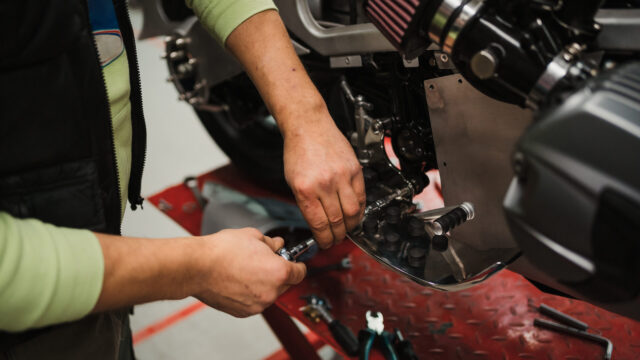
Broken Dirt Bike Kickstart Spring: Diagnosis and Replacement
A broken kickstart spring is immediately recognizable: the pedal no longer returns to its raised position after use, or it falls back…
 Repairs
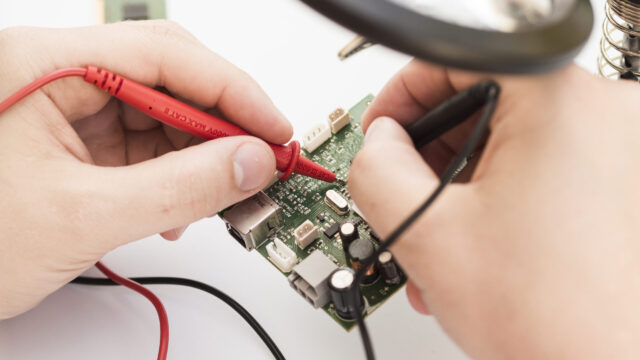
Failed Stator or CDI on a Dirt Bike: Diagnosis and Replacement
A failing stator or CDI box is diagnosed with a multimeter by measuring stator coil resistance against manufacturer values: a stator out…
 Repairs
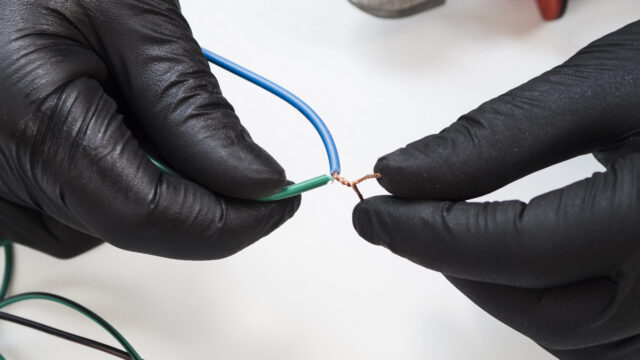
Repairing a Damaged Dirt Bike Wiring Harness
A damaged dirt bike wiring harness repairs by cleanly stripping the affected wires, soldering them back together with staggered connections to avoid…
 Repairs
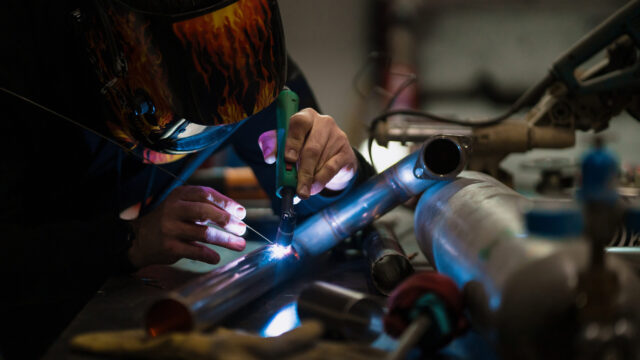
Plastic and Aluminum Welding for Dirt Bikes: The Basics for DIY Repair
Hot-iron plastic welding and TIG aluminum welding answer different needs in dirt bike repair: the first quickly fixes a cracked fairing or…