Dirt Bike Oil Change Interval: How Often to Really Do It
Contents
A hard-ridden dirt bike needs an oil change every 5 to 10 hours of riding, where a street bike goes thousands of miles between changes. The engine lives near the top of the rev range, heat never really drops between laps, and on most four-strokes the same oil also feeds the gearbox and the clutch. Oil ages in hours here, not in miles.
Why oil ages so fast off-road
A road engine spends its life at half throttle. A motocross engine spends its life pinned, with heat that never fully backs off between laps. The anti-wear additives cook out under that load, and the oil film gets thinner exactly when the engine needs it thickest.
Then there is the sump. Most four-stroke dirt bikes share one oil between the engine, the gearbox and the clutch. Every clutch slip sheds material into it, every gear tooth leaves its own metallic dust. Oil doing three jobs in a small sump gives up faster than oil that only has to lubricate an engine.
Dust is the third factor. Even behind a clean air filter, some fines get through. Behind a badly oiled or badly seated filter it is not some, it is a steady feed, and the oil turns into lapping paste. That is when the sensible interval collapses.
What tired oil is telling you
Colour says very little. Dirt bike oil goes dark quickly and still works fine, while oil that still looks amber can be finished. Judge by how the bike behaves instead.
A clutch that starts slipping in a tall gear, wide open, when it hooked up fine last session: that is usually the oil before it is the plates. A gearbox that snags on upshifts, a neutral you cannot find with a hot engine, a burnt smell when you crack the filler cap open, all point the same way. Plenty of riders pull a clutch basket apart for a problem an oil change would have solved.
The magnet on the drain plug is the honest one. A fine grey film every time is a normal gearbox living its life. Bright flakes you can pick out with the naked eye, or a quantity that grows from one change to the next, is a signal worth tracking and worth showing to a mechanic before you ride again.
Quick reference
- Interval
- every 5 to 10 hours of hard riding
- Engine temperature
- warm, never hot
- Tools
- drain plug wrench, torque wrench, drain pan, funnel
- Also have ready
- new sealing washer, oil filter if the engine uses one
- Torque figure
- the one in your workshop manual, not the one your arm guesses
The oil change, step by step
- Run the engine for a few minutes, just enough to thin the oil, then shut it off. Hot oil burns your hand, cold oil leaves half the residue in the sump.
- Set the bike level on a stand, engine upright: leaned over, it keeps a reserve trapped in one corner of the case.
- Wipe the area around the drain plug before you open it, so no sand drops into an open sump.
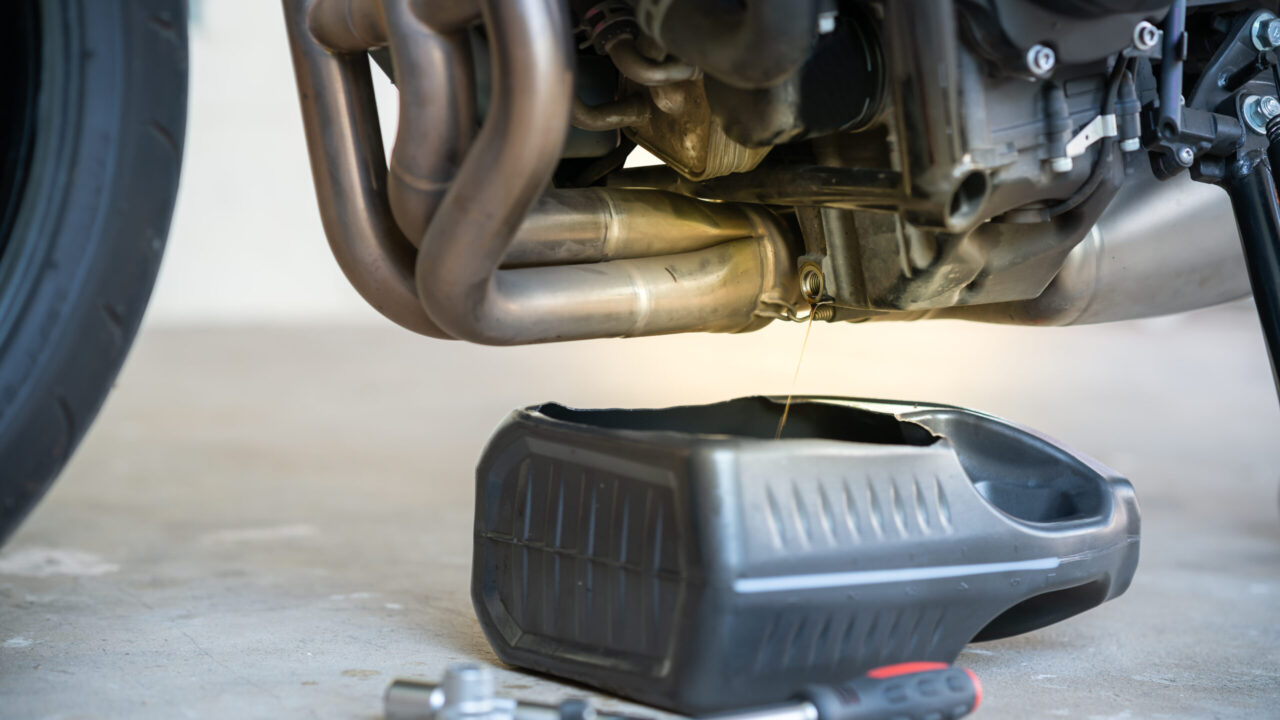
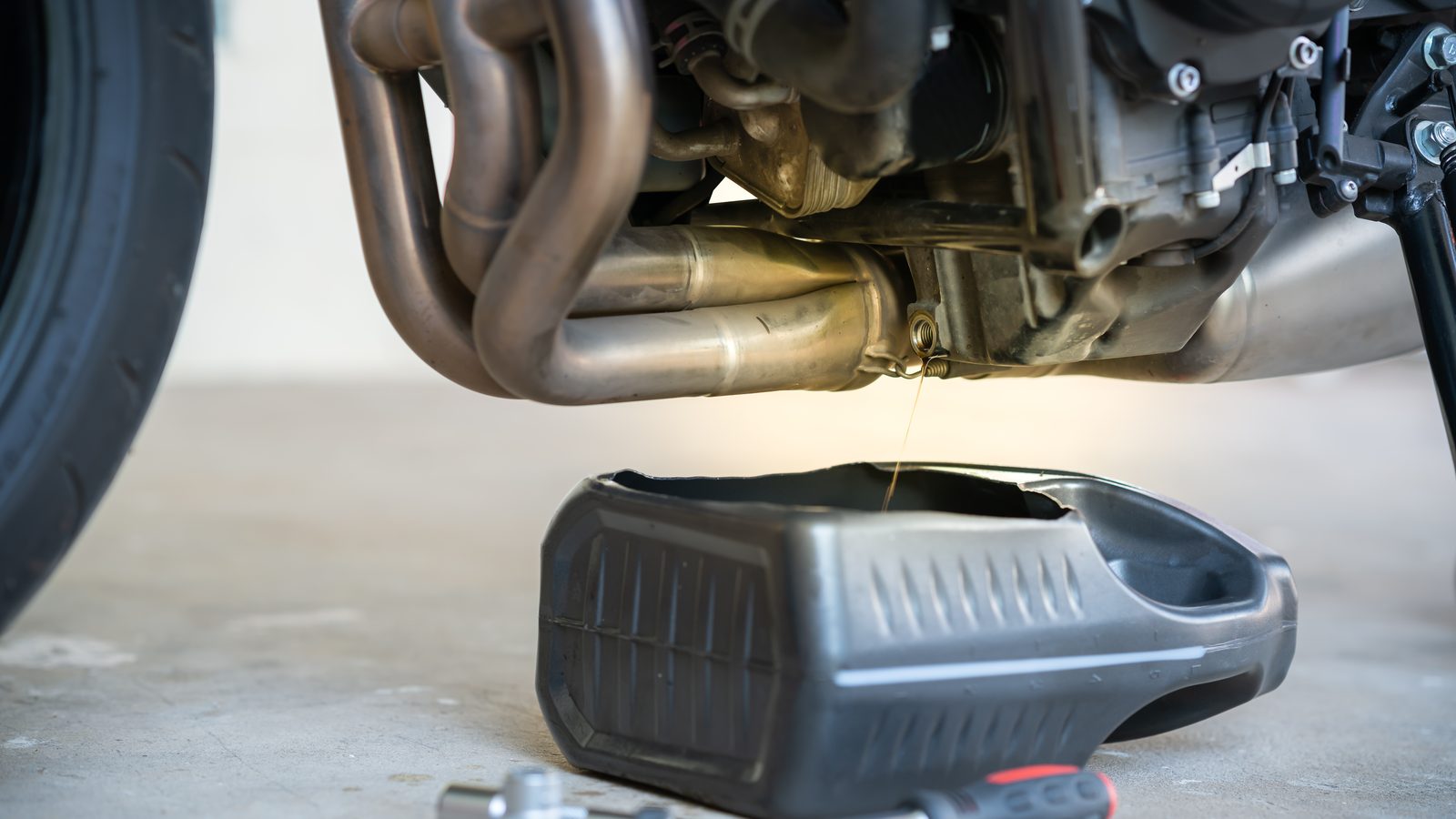
- Pull the plug with the pan underneath and let it run until the stream turns to drips. This is the step everyone cuts short.
- Look at the plug magnet before you wipe it, and compare it mentally with the last change.
- Fit a new oil filter if your bike uses one, with its O-ring lightly oiled.
- Refit the drain plug with a fresh sealing washer, torqued to the manual figure, never muscled.
- Pour the new oil in, then check the level the way your manual specifies: warm or cold, upright or on the stand, it differs from model to model.
- Start it, let it idle, shut it off, wait for everything to settle and check the level again. A new filter always soaks up part of the fill.
A decent torque wrench belongs in your basic tool kit for this job. The drain plug threads into an alloy case, and alloy does not forgive.
Choosing the right oil
Two-stroke and four-stroke oils are never interchangeable. They do different jobs with different chemistry. On a two-stroke the engine oil burns with the fuel, but the gearbox has its own oil and its own interval, and that one gets forgotten constantly.
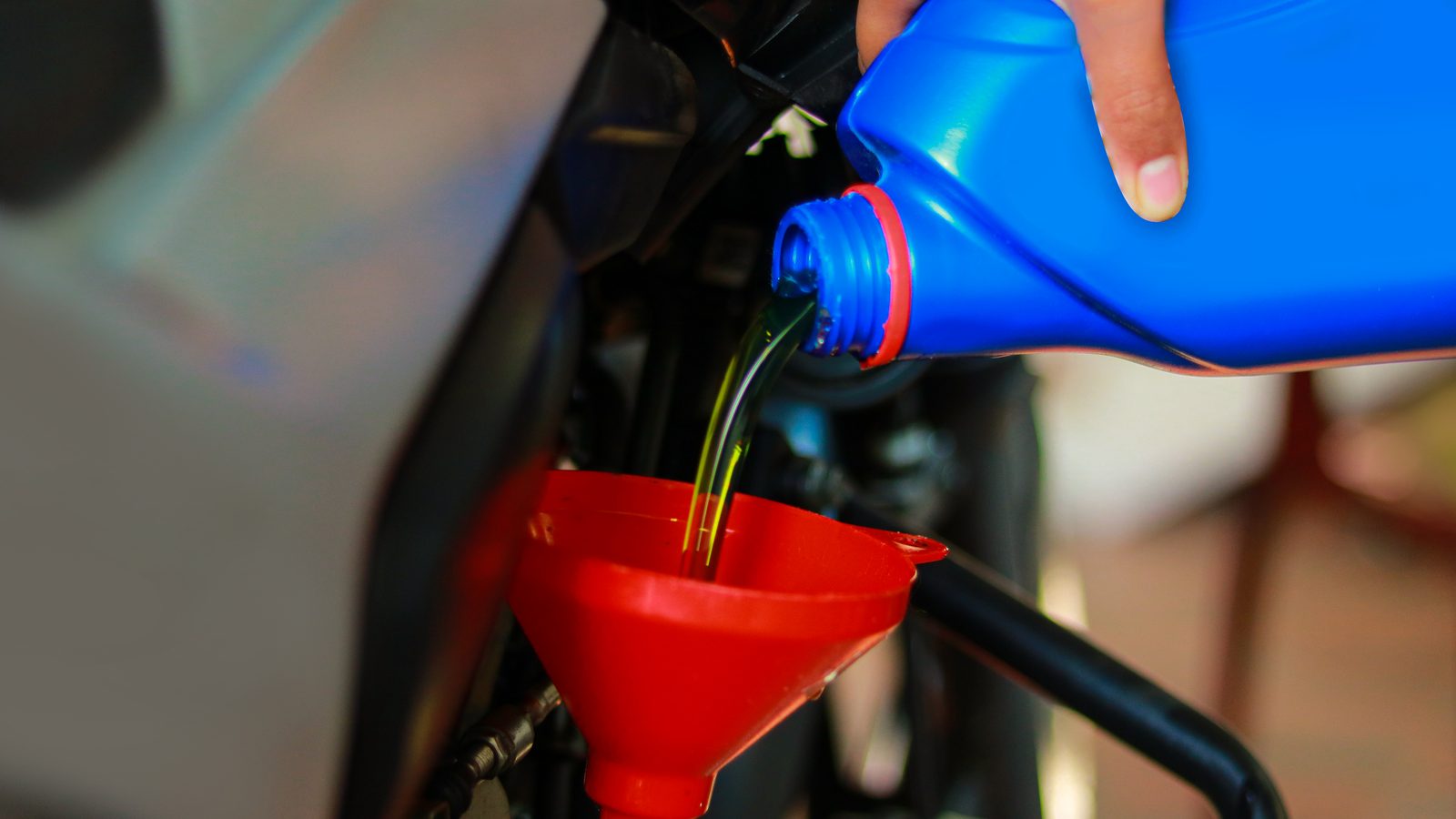
On a four-stroke with a wet clutch, leave car oils on the shelf. Their friction modifiers are designed for a car engine and make clutch plates slide instead of bite. The motorcycle rating that guarantees wet-clutch compatibility is printed on the bottle, so read that before you read the price.
For viscosity, follow your manufacturer. Too thin and the film breaks down when things get hot. Too thick and it takes longer to reach the bearings on start-up, which is where a good share of engine wear actually happens.
What shortens the interval
The manual figure assumes average use. Ride sand in high heat, ride slow technical trails where the engine cooks with no airflow, or train with a lot of clutch slip, and the oil takes several sessions’ worth of abuse in one. Shorten the interval rather than argue with it.
Same logic after any overheating episode: check the cooling system and change the oil without waiting for the interval. Change it before winter storage too. Acid-loaded oil spends the whole layup attacking bearing surfaces, while fresh oil just sits there.
The mistakes that cost engines
Stretching the interval to save a bottle is the worst maths in bike maintenance. Oil costs about what a tank of fuel costs. A clutch, a gearbox or a crank costs a season.
Torquing the drain plug like a gorilla comes next. Fear of a leak strips case threads in paddocks every weekend, and repairing a thread in a crankcase is not a small job.
Last, refilling without rechecking. The volume differs between a plain change and a change with a filter. Too high and the oil foams, too low and the pump starts pulling air. A glance at the level during your pre-ride check and another during the post-ride cleanup beats any reminder.
FAQ
Do two-strokes need an oil change?
No engine oil to drain, it burns with the fuel mix. But the gearbox has its own oil in its own case, and that gets changed regularly. It is the classic oversight for a rider moving from a four-stroke to a two-stroke: they assume less maintenance, and leave the gearbox oil cooking all season.
My clutch slips. Is it always the oil?
Not always, but start there. Cooked oil, car oil, or a low level will all make a wet clutch slip long before the plates are genuinely worn. Change the oil for one with the right rating, ride it a few sessions, and see whether the slip comes back before you take anything apart.
What do I do with the used oil?
Never down a drain, never on the back of the property. Pour it back into the empty bottle, seal it, and take it to a recycling centre or a shop that collects it, which is usually free for a private owner. The old filter goes to the same place once drained, not into the garage bin.
Does the filter need changing every time?
Follow your manual first, because some models require it every time and others do not. When in doubt, a filter costs little and removes the question entirely. A clogged filter restricts the flow of the fresh oil and throws away part of the benefit of the change you just made.
Find the rest of the maintenance guides on the dirt bike maintenance page.
Editorial content. PiloteMX offers no on-site service, no parts or gear sales, no quotes and no bike repairs. Working on a bike and riding it carry risk: what you do with this guide is your own responsibility.