Maintenance
18 guides, numbered in teaching order — from the fundamentals to the advanced.
Dirt bike maintenance is what keeps a Saturday at the track from ending in the pits with a dead bike. Most failures don’t come out of nowhere: a chain that was never adjusted, an air filter left dirty for three rides, oil pushed well past its interval. This section covers the jobs you can do yourself in a garage, with basic tools and a bit of method.
Every guide follows the same logic: what the job does, how to do it step by step, the mistakes that cost money, and how often to repeat it. Your owner’s manual stays the reference for torque values and intervals. We explain the reasons behind them, so you can adapt when you ride more often, in sand or in the wet.
Start with a routine, not a repair
The two checklists are the backbone of this section. The pre-ride checklist takes ten minutes and catches loose bolts, low tire pressure and a slack chain before they turn into a crash or a DNF. The post-ride checklist is where you spot wear early, while the bike is still dirty enough to show leaks. Pair it with a proper wash: pressure washer held at a distance, air box sealed, and never aimed straight at bearings or seals.
Engine care: oil, air filter, spark plug, coolant
A motocross engine spends its life at high rpm, and it depends on clean oil and clean air far more than a road bike does. Our guide on oil change intervals explains why engine hours matter more than miles on a dirt bike. The air filter is the cheapest insurance you can buy. One dusty ride can clog it, and the dirt that gets past it wears the top end fast.
Then come the spark plug, which tells you a lot about how the engine runs once you know how to read it, and the coolant level. Nobody thinks about coolant until the bike boils over halfway through a long moto.
Drivetrain: chain and sprockets
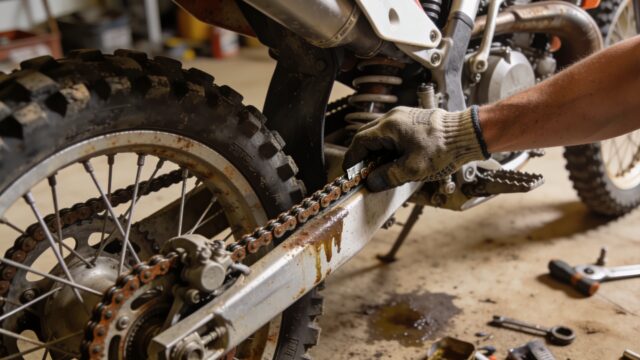
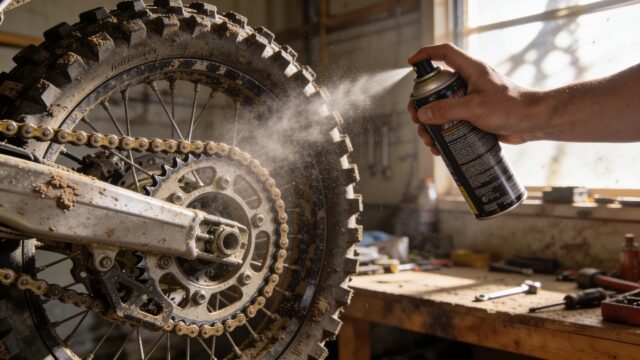
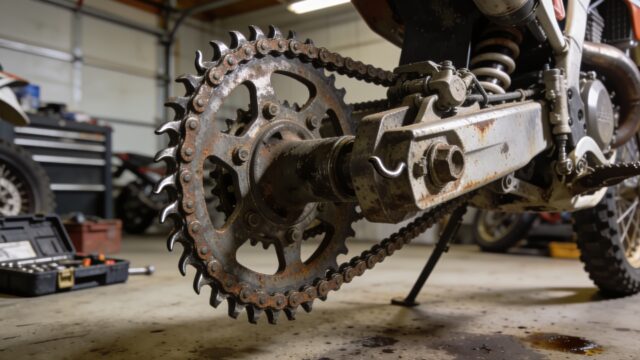
The chain takes a beating from mud, sand and hard landings. Set the chain tension with the swingarm travel in mind, lube the chain after washing rather than right before a ride, and learn to read sprocket wear. Hooked teeth mean you replace the chain and both sprockets together. A new chain on worn sprockets won’t last long, and you’ll pay twice.
Brakes, tires and suspension
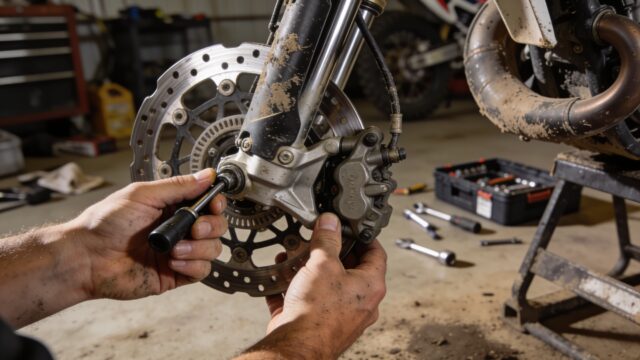
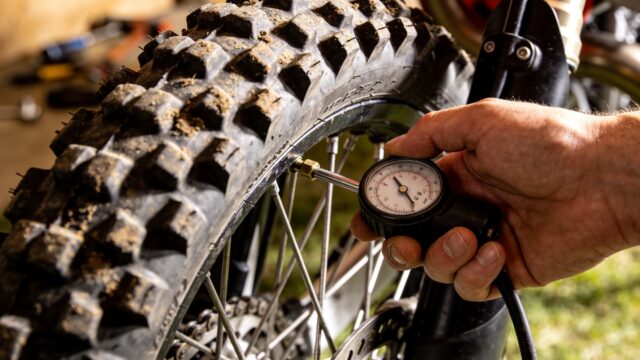
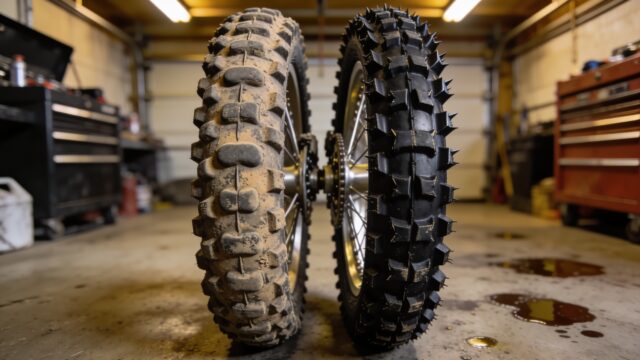
This is where grip and control live. Brake maintenance covers pads, fluid and the checks that keep a lever from going soft mid-race. For tires, pressure is the setting riders change least and should change most, depending on the dirt. Tire wear shows you when rounded knobs are costing you drive out of corners.
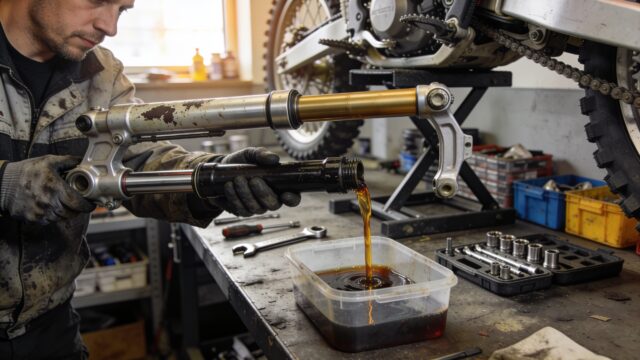
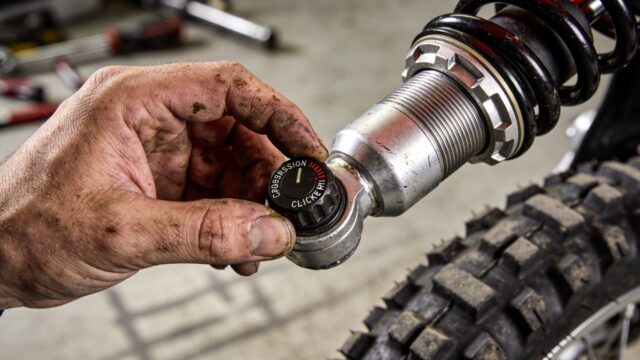
On the suspension side, respect the fork oil change interval, because tired oil makes the front end dive and pack. Then work through a basic suspension setup: sag first, clickers after, one change at a time, with notes.
Tools and off-season storage
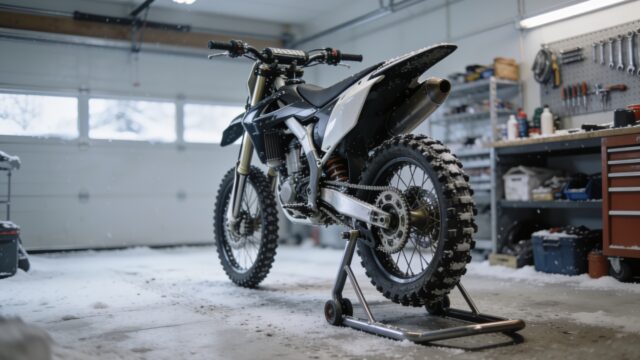
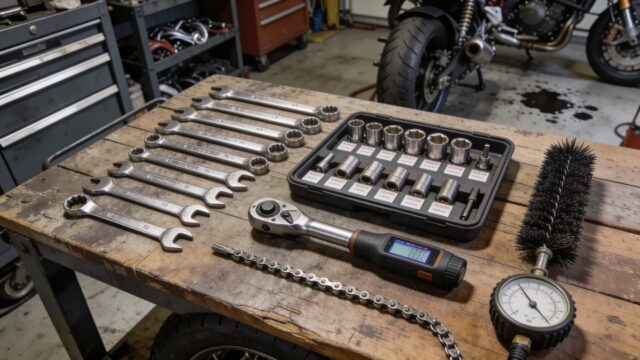
You don’t need a pro workshop. A well-chosen dirt bike tool kit handles most of the jobs in this section, and a stand plus a torque wrench are the two purchases that change everything. When the season ends, winterizing your dirt bike properly (fuel, battery, chain, seals) saves you a spring spent chasing a bike that refuses to start.
How often? A simple rhythm
Think in layers. Before every ride: the pre-ride checklist, tire pressure, chain slack. After every ride: wash, dry, lube the chain, and clean the air filter if the day was dusty. Every few rides, depending on engine hours: oil change, brake pad check, a look at the plug and the coolant.
Bigger jobs like fork oil or wheel bearings come around less often, which is exactly why they get forgotten. Log your engine hours in a notebook or on a strip of tape under the seat. Old school, but it works, and it turns maintenance into a schedule instead of a guess.
Where should a beginner start?
If you just bought your first bike, go in this order: learn the pre-ride checklist, clean the air filter, set the chain tension, check tire pressure, then change the oil. Those five jobs prevent most of the breakdowns riders cause themselves. Once they feel automatic, move on to brakes and suspension.
When a job goes beyond maintenance, like a leaking fork seal or a worn clutch, our dirt bike repair guides and the dirt bike mechanics section pick up where this one stops.
The guides
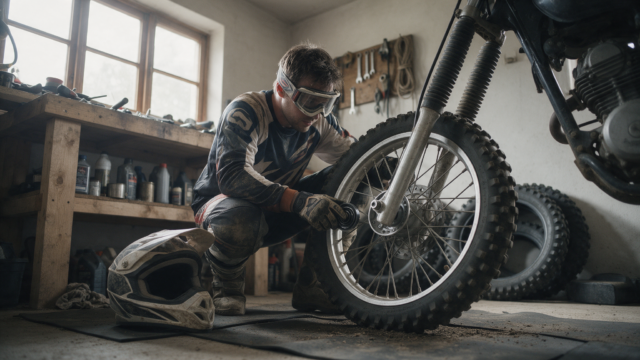 Maintenance
Dirt Bike Wheel Bearing: Diagnosis and Greasing
A dirt bike wheel bearing goes bad before it ever makes noise: a little play when you rock the wheel by hand,…
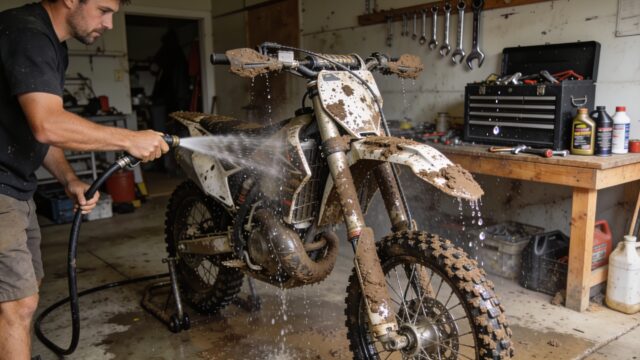 Maintenance
Washing a Dirt Bike: The Routine That Protects the Mechanics
Washing a dirt bike after every ride means rinsing top to bottom with warm or cool water, never a high-pressure jet aimed…
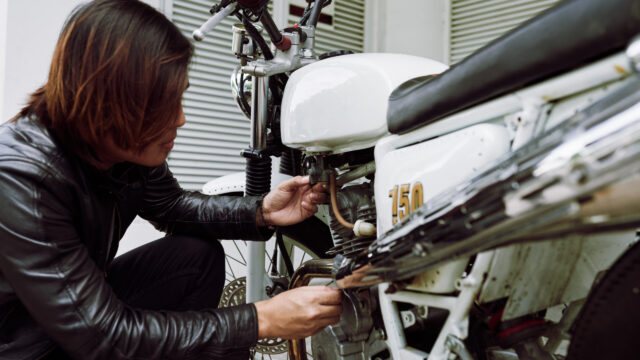 Maintenance
Pre-Ride Checklist: Five Minutes That Prevent Breakdowns
Five minutes before every ride is enough to check the points that can leave you stranded or cause a crash: tire condition…
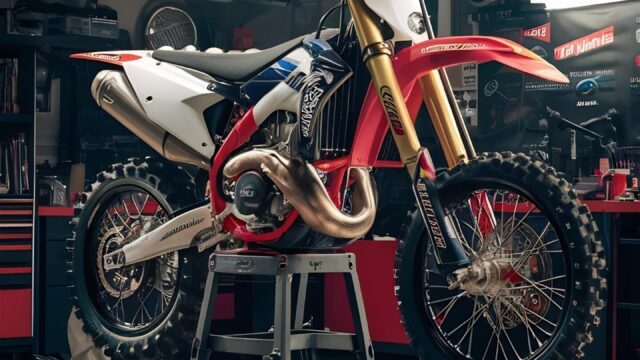 Maintenance
Post-Ride Checklist: What to Do Within the Hour
Within the hour after a ride, three quick steps prevent most avoidable damage: a fast rinse before mud dries hard, a visual…
 Maintenance
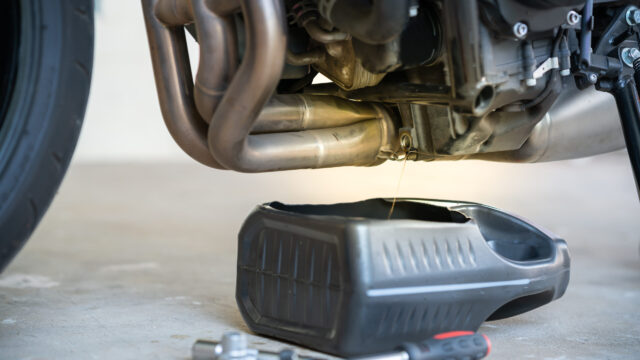
Dirt Bike Oil Change Interval: How Often to Really Do It
Engine oil on a dirt bike should be changed every 5 to 10 hours of riding, whether two-stroke premix aside or a…
 Maintenance
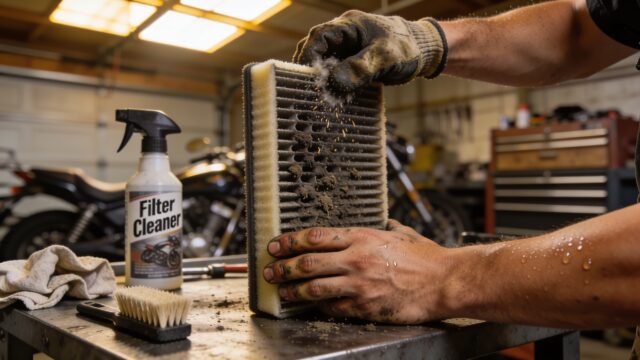
Cleaning a Dirt Bike Air Filter: Protecting the Engine
A dirt bike foam air filter should be cleaned with a dedicated degreaser, fully dried, and re-oiled with filter oil before reinstalling,…
 Maintenance
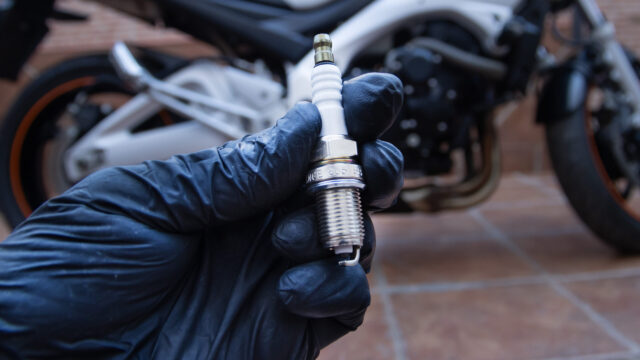
Changing a Dirt Bike Spark Plug: A Small Fix That Solves a Lot
A dirt bike spark plug should be changed far more often than on a street bike, typically every 15 to 25 hours…
 Maintenance
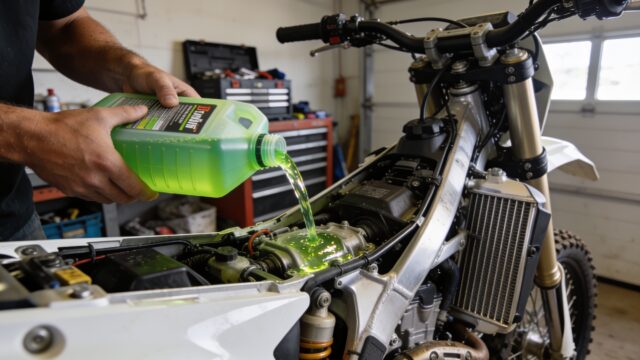
Coolant Level: Avoiding Overheating on a Dirt Bike
Coolant on a liquid-cooled dirt bike should be checked before every ride and fully replaced every one to two years, because a…
 Maintenance
Dirt Bike Chain Tension: Getting the Adjustment Right
Dirt bike chain tension should be checked before every ride and adjusted once slack exceeds the manufacturer's tolerance, typically 5 to 10cm…
 Maintenance
How Often to Lube a Dirt Bike Chain
A dirt bike chain should be lubricated after every ride on wet or muddy terrain, and at minimum every two to three…
 Maintenance
Sprocket Wear: When to Replace the Front and Rear Together
Front and rear sprockets on a dirt bike should be replaced together, along with the chain, as soon as the teeth show…
 Maintenance
Dirt Bike Brake Maintenance: What to Check Before Every Ride
Dirt bike brake pads and fluid should be checked before every ride, because insufficient pad thickness or degraded fluid cuts directly into…
 Maintenance
Dirt Bike Tire Pressure: The Setting That Changes Your Traction
Dirt bike tire pressure should be set based on terrain, typically between 8 and 15 PSI front and rear, because incorrect pressure…
 Maintenance
Dirt Bike Tire Wear: When It’s Time to Replace Them
A dirt bike tire should be replaced once knob height drops below 50% of its original depth, because a worn tire loses…
 Maintenance
Fork Oil Change Interval: How Often You Really Need It
Fork oil on a dirt bike should be changed every 15 to 20 hours of hard riding, because degraded oil loses its…
 Maintenance
Dirt Bike Suspension Setup: Matching Fork and Shock to Your Weight
Dirt bike suspension setup starts with spring sag matched to rider weight, then rebound and compression damping, because suspension left at factory…
 Maintenance
Winterizing a Dirt Bike: Protecting It During Storage
Winterizing a dirt bike before any storage of several weeks or more prevents corrosion, fuel degradation, and flat-spotted tires, the three issues…
 Maintenance
The Basic Dirt Bike Tool Kit That Covers Everything
A basic dirt bike tool kit needs a metric wrench and socket set, a multi-bit screwdriver, a chain brush, a low-pressure gauge,…