Gear
17 guides, numbered in teaching order — from the fundamentals to the advanced.
Motocross gear isn’t about looking the part. It’s what takes the hit when you go down, and everyone goes down, from first-timers to riders with twenty years on the track. It’s also what lets you finish a full moto without blistered hands or fogged goggles on lap three. This guide helps you pick each piece in the right order, without blowing your budget.
Every article answers the same questions: what the piece does, how to pick the right size and protection level, which mistakes to avoid, and how to make it last. We don’t push brands. We tell you what to look for on the label and in the store.
The helmet: the one piece you never compromise on
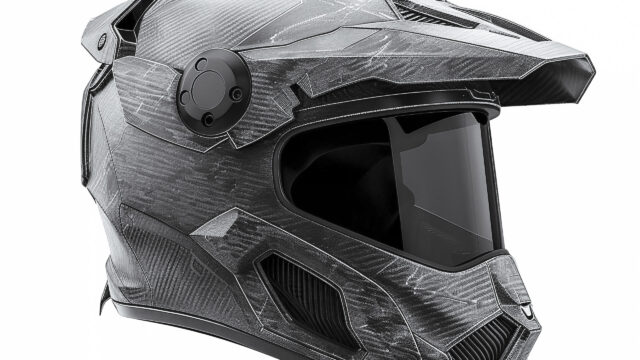
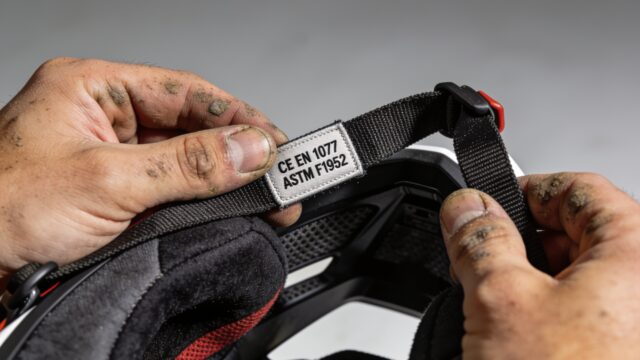
If your budget allows one good purchase, make it this one. Our guide to choosing a helmet covers the shell, peak, ventilation and weight. Helmet sizing matters as much as quality, because a helmet that moves on your head protects poorly in a crash. Check the helmet safety standards too: DOT is the legal minimum in the US, and ECE 22.06 or Snell ratings are worth looking for. After a hard impact, replace it, even if it looks fine.
Boots, gloves, goggles: what keeps you on the bike
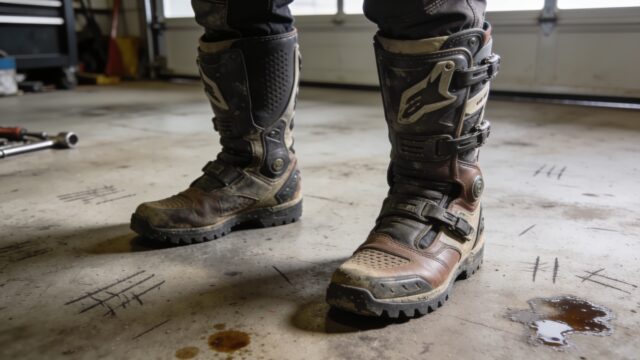
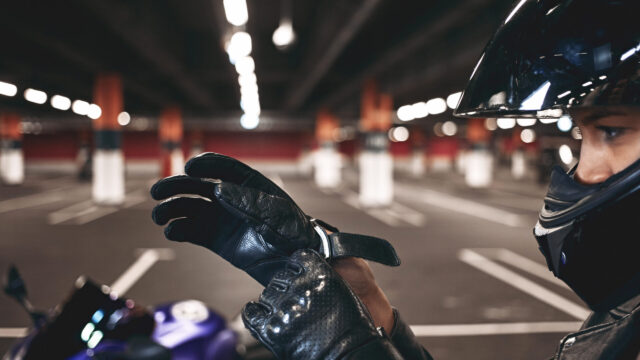
When choosing boots, think ankles and shins. Motocross boots stop the twist that breaks a leg when a foot catches in a rut, which is why hiking or work boots don’t cut it. Choosing gloves is about grip and feel on the controls, not thickness.
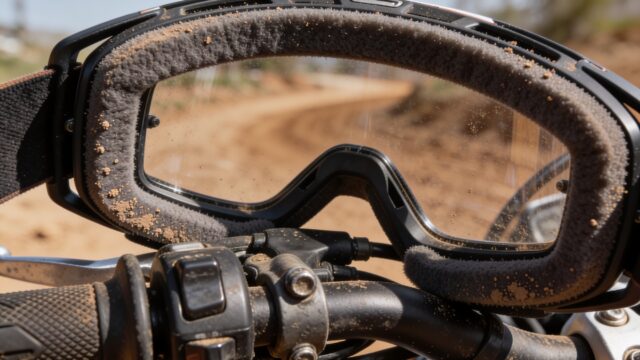
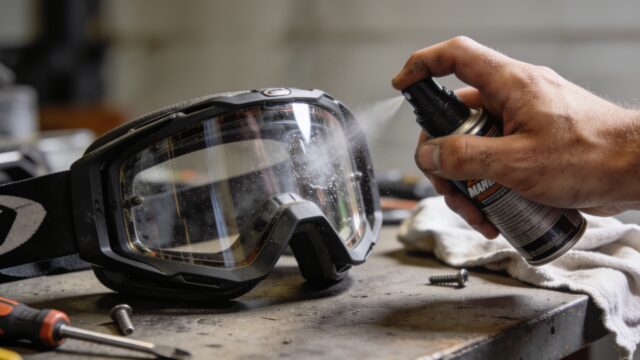
For vision, it comes down to choosing goggles: lens, foam, fit with your helmet. A good goggle anti-fog routine makes all the difference on cool or damp days, especially while you sit on the start gate.
Body armor: knees, chest, neck, elbows
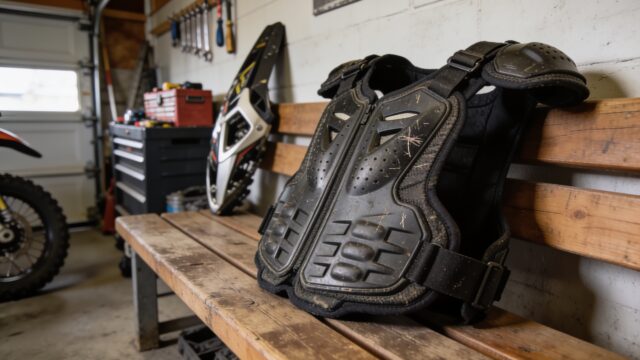
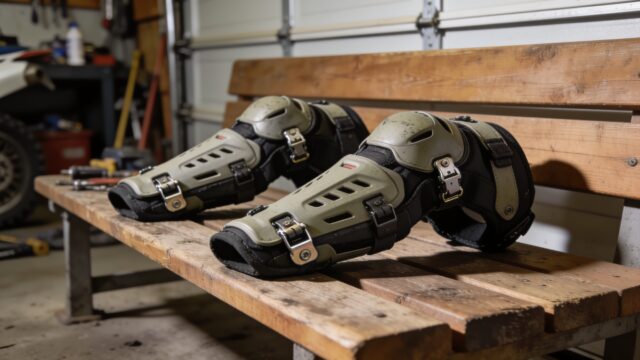
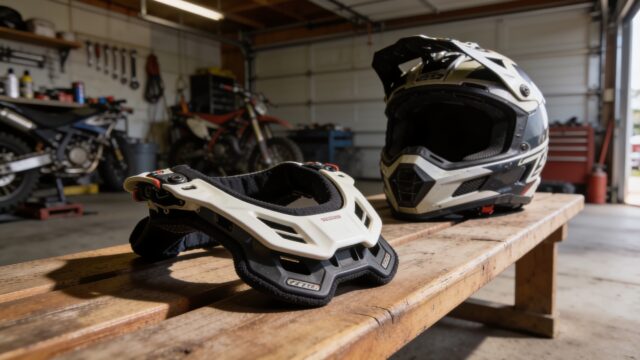
Next come the protectors riders tend to skip. Knee braces range from simple guards to hinged braces that limit knee twisting, and the knee is the joint motocross hurts most. A chest protector takes roost and bar impacts. A neck brace limits extreme head movement in a crash. Its benefit is debated, and our guide lays out both sides honestly. Finally, elbow guards save skin and bone in the slow tip-overs that happen most often.
Riding clothes and base layers
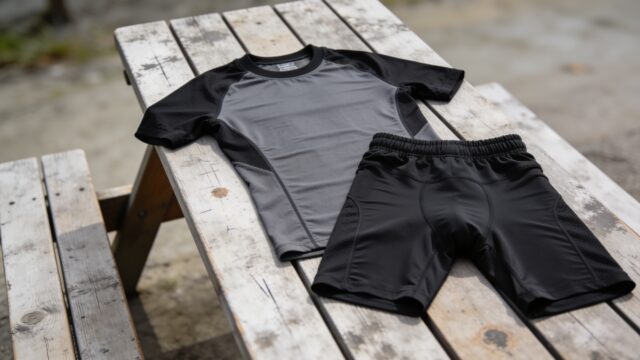
Your jersey and pants need to fit over your armor, resist abrasion and breathe. Underneath, base layers move sweat away and prevent chafing under knee braces. When the weather turns, our rain and cold weather gear guide keeps you dry and warm without losing mobility.
Kids, budget and gear care
A young rider needs the same protection as an adult, just smaller, and kids outgrow gear fast. Our kids motocross gear guide explains when to buy new and when used makes sense. Starting out on a tight budget? The motocross gear on a budget article ranks purchases by priority: helmet and boots first, everything else after.
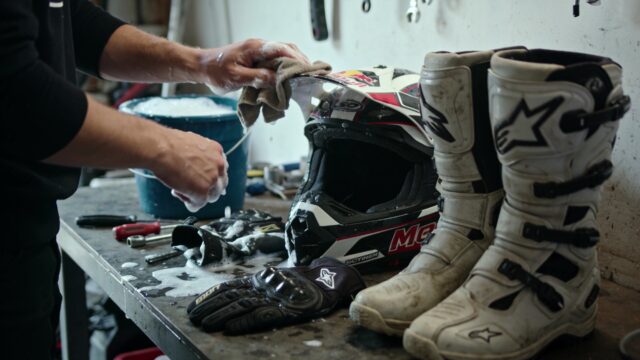
Last, good gear maintenance makes everything last longer: wash your riding clothes properly, clean the helmet liner, and dry boots away from direct heat.
New or used gear?
Some gear buys well used, some doesn’t. A jersey, pants or a chest protector in good shape can save you real money. A used helmet is a gamble, because you can’t see an old impact from the outside, and boots take the shape of their first owner’s feet. Our rule: helmet new, boots new if you can, everything else judged on condition.
What order should you buy in?
Starting from scratch, here’s the order we recommend: helmet, boots, goggles, gloves, knee protection, chest protector, then riding clothes. The first two prevent the serious injuries. The rest prevent the small ones and let you ride longer and more relaxed.
Once you’re geared up, you can focus on our dirt bike riding tips. And remember that well-fitted gear disappears once you’re riding. If something bugs you on the bike, the size or the adjustment is wrong.
The guides
 Gear
GearChoosing a Dirt Bike Helmet: The Criteria That Actually Matter
A dirt bike helmet has to be certified, correctly fitted to your exact head size, and matched to how you actually ride…
 Gear
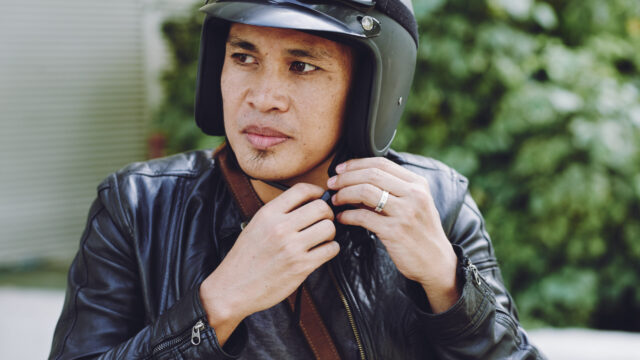
GearGetting Dirt Bike Helmet Sizing Right
Helmet size is set by measuring head circumference at its widest point, just above the eyebrows and ears — a number to…
 Gear
GearHelmet Safety Standards: What They Actually Guarantee
ECE 22.06 is now the reference certification for dirt bike helmets sold in Europe, gradually replacing the older ECE 22.05, with more…
 Gear
GearChoosing Dirt Bike Boots: Protection Starts at the Feet
Dirt bike boots need rigid ankle support, reinforced shin protection, and a sole matched to the footpegs — three criteria that outweigh…
 Gear
GearChoosing Dirt Bike Gloves: Protection and Feel at the Controls
Dirt bike gloves need to protect knuckles and palm from impact and abrasion while keeping enough feel at the controls — a…
 Gear
GearChoosing Dirt Bike Goggles: Seeing Well to Ride Well
Dirt bike goggles need a wide field of view, a good seal against dust and mud, and ventilation that limits fogging —…
 Gear
GearBeating Fog on Your Dirt Bike Goggles: What Actually Works
Fog on a dirt bike goggle lens forms when sweat and breath moisture condenses against a colder surface — a phenomenon a…
 Gear
GearChest Protectors and Roost Guards: Protecting Your Torso Without Restricting Movement
A roost guard mainly protects against thrown dirt and rocks, while a chest protector adds rigid protection against direct impacts to the…
 Gear
GearDirt Bike Knee Guards: Simple Protection vs Articulated Braces
A dirt bike knee guard ranges from a simple impact shell to an articulated brace that stabilizes the ACL — a choice…
 Gear
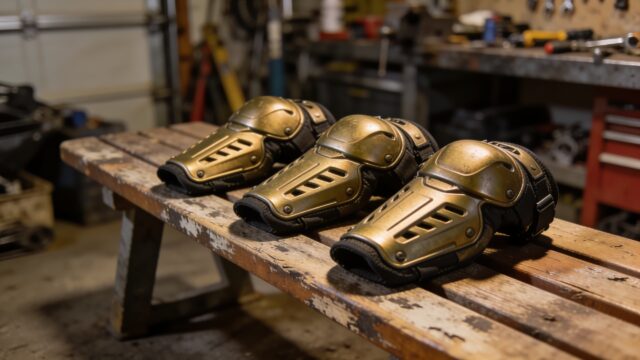
GearDirt Bike Elbow Guards: Protection Too Often Overlooked
An elbow guard protects against direct impact in a crash — a joint talked about far less than the knee or head…
 Gear
GearThe Neck Brace: Protecting Your Neck Without Sacrificing Mobility
A neck brace limits extreme head and neck movement in a violent crash — especially forward flexion and axial compression — without…
 Gear
GearDirt Bike Jersey and Pants: Technical Gear That Moves With You
A dirt bike jersey and pants need full freedom of movement, effective sweat management, and abrasion resistance — three technical criteria that…
 Gear
GearBase Layers for Dirt Bike Riding: The Invisible Layer That Changes Everything
A technical base layer moves sweat away from the skin and reduces rubbing under the rest of your kit — an often…
 Gear
GearGearing Up a Kid for Dirt Biking: What Really Changes vs an Adult
Kids' dirt bike gear needs choosing to their exact current size, never ahead of growth, with fit rechecked every few months —…
 Gear
GearDirt Bike Gear for Rain and Cold: Riding Without Suffering the Weather
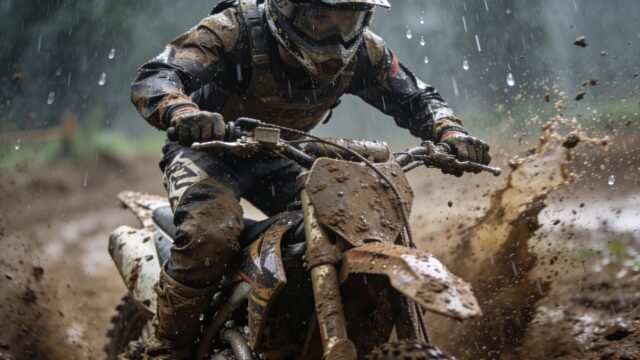
Riding in rain or cold calls for a layered approach, from insulating base layers to a waterproof outer shell, rather than one…
 Gear
GearMaintaining Your Dirt Bike Gear: The Routine That Extends Protection
Well-maintained dirt bike gear holds its protective properties longer than neglected gear — maintenance built on regular cleaning after every ride, proper…
 Gear
GearGearing Up for Dirt Biking on a Budget: Priorities That Actually Matter
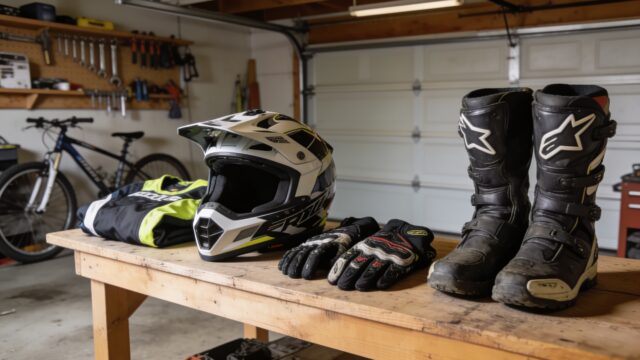
On a tight budget, prioritize the helmet and boots first — two pieces where protection depends directly on quality and certification —…