Dirt Bike Fitness: A 12-Week Training Plan That Holds Up
Contents
Getting fit for dirt bike riding means building an aerobic base first, then specific strength for forearms, neck and core, then an intensity block that mirrors real race effort. Twelve weeks is enough to hold your form through a full moto without fading — and fading late is where most riders end up on the ground.
What fatigue breaks first
Riding hits areas few other sports load the same way: forearms and hands from constant grip on the bars, neck from the weight of the helmet under repeated impacts, core from standing balance on the pegs. When those give out, your position degrades before you consciously notice anything.
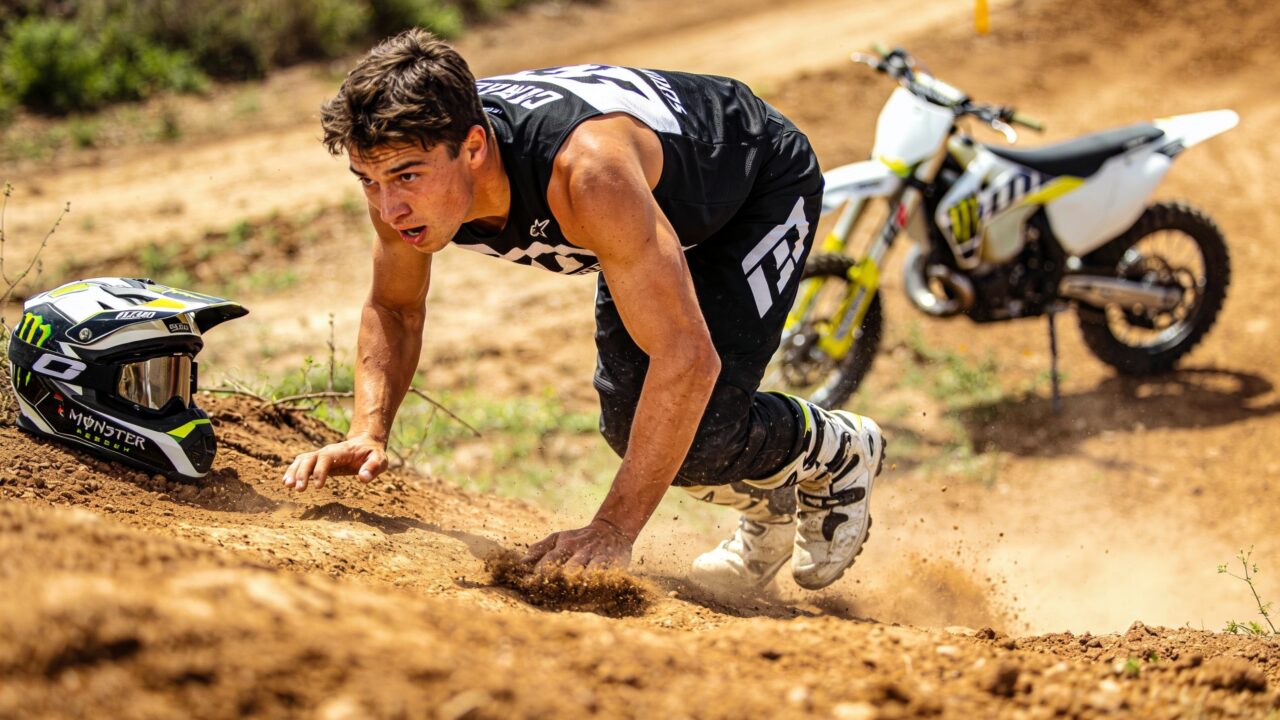
The sequence is always the same. A tired rider lets the chest drift back to save the arms. Weight moves rearward, the front washes out, and you land squarely on the mistake described in the cornering position guide. At that point it isn’t a technique problem anymore — it’s an endurance problem wearing a technique costume. You can drill the move a thousand times and it will still collapse on lap fifteen.
So fitness work isn’t about “being in shape” in the general sense. It’s about your riding stance still standing up when the checkered flag takes its time.
The 12-week plan
Three four-week blocks, in this order. The order matters more than the contents of any single session.
| Block | Goal | Main content |
|---|---|---|
| Weeks 1 to 4 | Aerobic base | Steady cardio and general core |
| Weeks 5 to 8 | Specific strength | Forearms, neck, legs |
| Weeks 9 to 12 | Intensity and specificity | Intervals and circuits under fatigue |
Weeks 1 to 4: build the base
Purely aerobic. Three moderate cardio sessions a week — running, cycling or rowing — for 30 to 40 minutes, at a pace where you can still hold a conversation. Alongside that, two general core sessions: plank, side plank, superman, 3 sets of 30 to 45 seconds each. This block looks boring and gets skipped constantly. Skipping it is exactly what ruins the eight weeks that follow.
Weeks 5 to 8: specific strength
Two sessions a week on the areas race riding actually loads. Forearms: dead hangs, grip trainer work, wrist curls. Neck: isometric holds against manual resistance in four directions, light load, frequent reps. Legs: squats, lunges, dynamic core work to prepare for standing on the pegs. Keep one cardio session in the week so the base doesn’t drain away.
Weeks 9 to 12: intensity
Swap part of your steady cardio for intervals: 30 seconds hard, 30 to 60 seconds recovery, repeated 10 to 15 times. That format matches a moto far better than a long steady run. Add one weekly circuit that runs core, forearm and leg work back to back with no rest between exercises — that’s where you learn to produce a clean movement while everything already burns.
In the last two weeks before the event, cut volume by about 30% and keep the intensity. You show up fresh without having given anything back.
The session that feels most like a race
- Warm up properly: ten minutes of easy cardio, then shoulder, hip and neck mobility. A circuit started cold ends in tendon trouble.
- Dead hang from the bar, arms straight, until your grip lets go. Write the time down — it becomes your reference four weeks later.
- Go straight into a set of squats with no pause. Legs work while the forearms are still pumped.
- Plank, then side plank both sides. Don’t chase a maximum hold: chase a flat back while you’re shaking.
- Neck isometrics in four directions, hand against forehead, back of the head and each temple. Steady pressure, never a jerk.
- Short rest, then go round again. Two or three rounds is plenty — the quality of the last one is what counts, not how many you did.
Mistakes that break progress
The most common one: training cardio only. A rider with real endurance who never worked the forearms still gasses out inside ten minutes, because gripping the bars fatigues through a different mechanism than running does.

The reverse happens too. General strength work with no aerobic base gives you strong arms and terrible recovery between efforts. On track that shows up by the second drive out of a corner.
Skipping the first block to jump straight to intervals is the impatient rider’s classic shortcut. A body without a base handles intensity badly and picks up tendon injuries.
The last mistake is sneakier: stopping everything the week before out of fear of showing up tired. Cut the volume, don’t cut the work. A body switched off for seven days wakes up badly on Sunday morning on the start gate.
Knowing whether it’s working
The best test is still the track. If your position holds through the last ten minutes of a session — chest forward, inside leg out when it needs to be — the work is paying. If it degrades at the same point every time, look at which area gives out first and go back to the matching strength block.
Two simple markers are worth tracking month to month: your dead hang time, and your resting heart rate first thing in the morning. Neither tells the whole story, but both move the right way when preparation is going well. Line those checks up with your riding training plan, otherwise you’re comparing nothing.
FAQ
How long should you train before a race?
Twelve weeks allows a full progression, aerobic base included. For a rider who’s already active, 6 to 8 weeks works by tightening the phases. Under 4 weeks you’re maintaining, not progressing. At that point sleep and hydration will do more for you than hammering hard sessions right before the gate drops.
Which muscles matter most for dirt bike riding?
Forearms and hands for grip, full core for standing balance, neck for absorbing impacts, legs for absorption and drive out of corners. Those four areas decide how you hold up late in a moto, far more than raw upper-body strength. A big bench press has never won anyone a lap.
Cardio or strength first?
Both, in this order: aerobic base first, specific strength second. Cardio alone prepares you for neither grip nor impacts. Strength alone doesn’t prepare you for the endurance of a 15-to-20-minute moto. That order is exactly what the three blocks are built around.
Is riding enough on its own?
No, because you rarely ride long enough and never at a steady intensity. Riding sharpens the moves and your reading of the dirt; work off the bike pushes back the moment those moves fall apart. The two go together, and mental preparation is the third leg of the stool.
Find all the riding fundamentals on the riding technique page.
Editorial content. PiloteMX offers no on-site service, no parts or gear sales, no quotes and no bike repairs. Working on a bike and riding it carry risk: what you do with this guide is your own responsibility.