Cornering Position on a Dirt Bike: The Move That Saves You Time
Contents
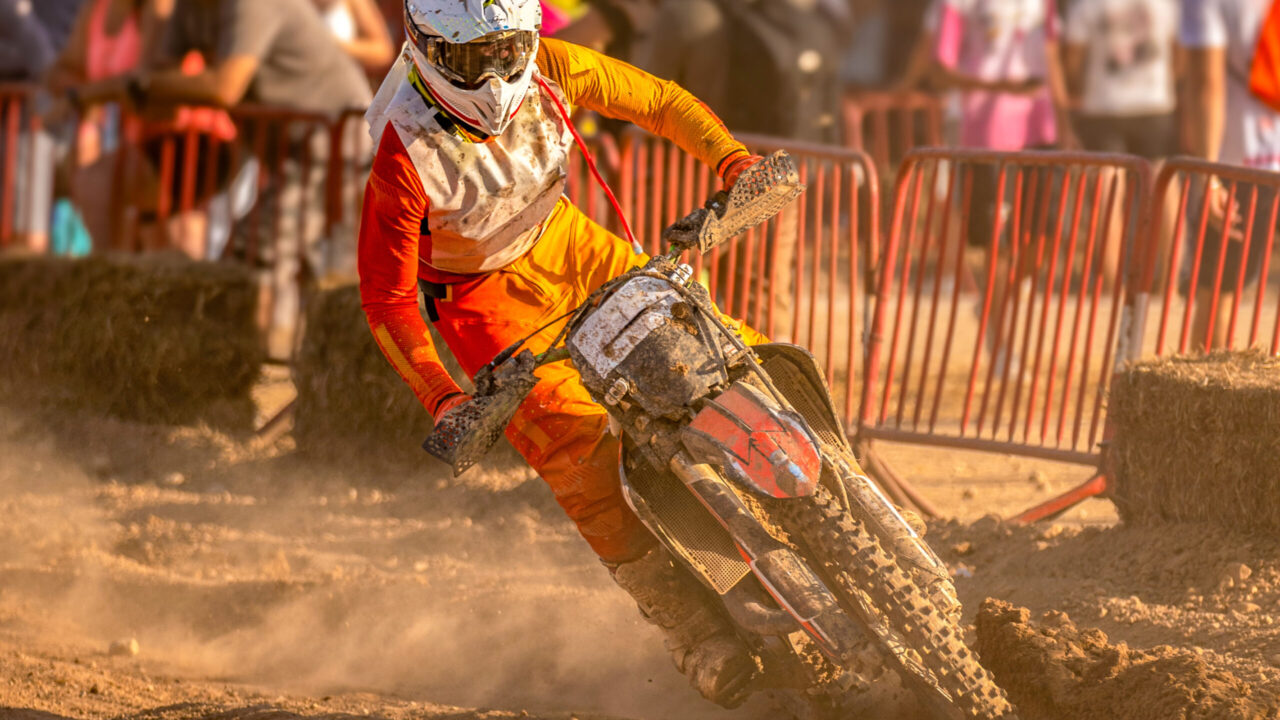
The right cornering position on a dirt bike is chest low and forward, outside leg locked against the tank, inside leg open and ready to touch down, eyes planted on the exit long before you get there. That position gives you the grip to carry speed through the turn instead of surrendering it.
The corner is won before you turn in
Everything that matters happens in the meters before the corner. By the time you lean, the braking should be done, you should be standing or transitioning, and your line should be picked. From there your job isn’t to correct anymore — it’s to hold the position and roll on the throttle, which leans straight on your throttle and clutch control.
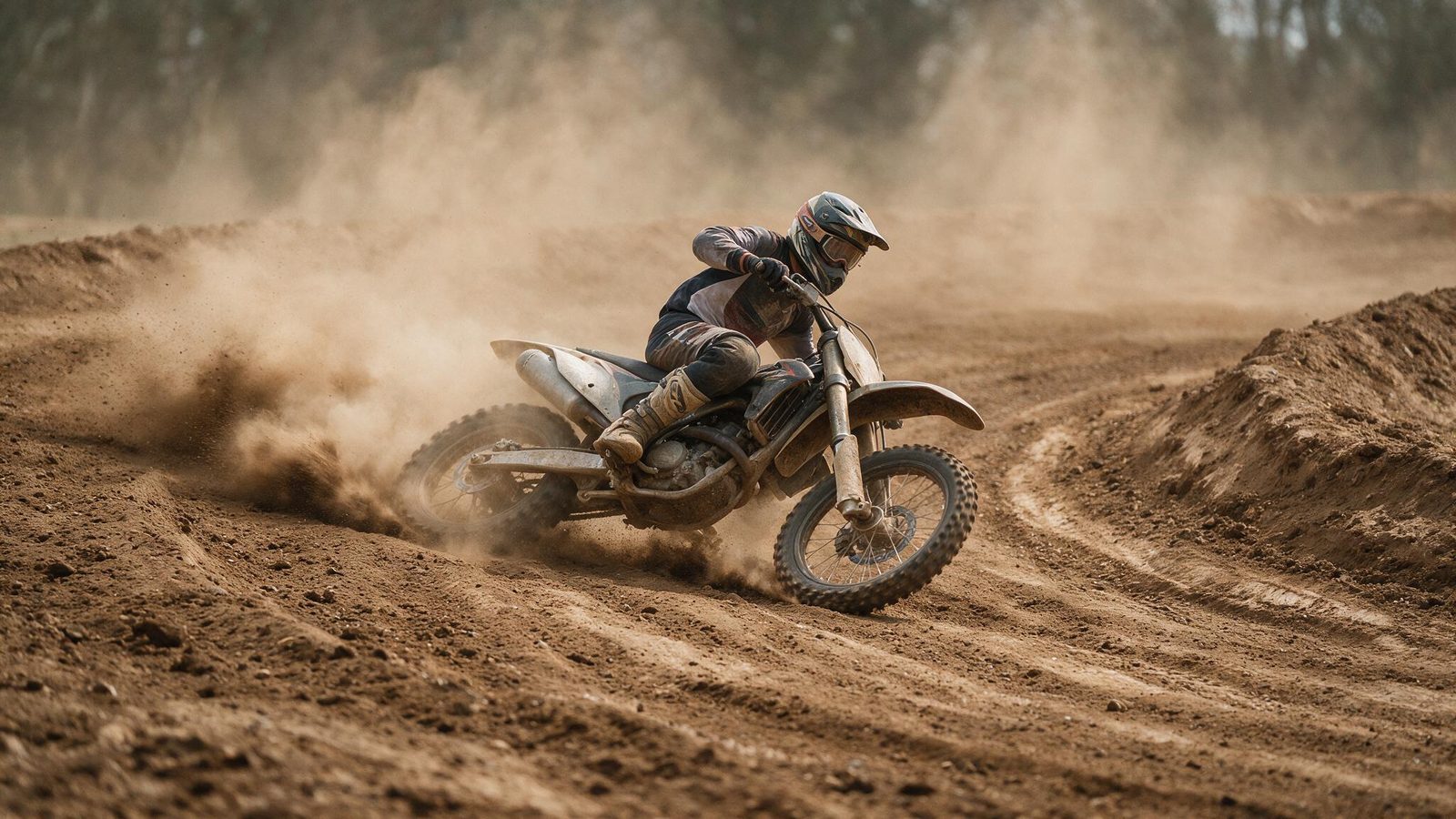
If you find yourself braking mid-corner, that’s not a cornering problem, it’s an entry problem. Braking has to be finished before the lean. A front tire that brakes and turns at the same time is stacking two demands on one contact patch, and the second one is what puts you down.
The four points of the position
Cornering position is a variation on your riding stance: chest further forward, inside leg open, weight loaded onto the outside leg. You move between the two constantly, without thinking, once it’s wired in.
Chest: forward, always
It goes forward and toward the inside of the turn, never back. Lean back and you unload the front, the wheel washes out, and that’s the number-one cause of corner crashes. The instruction is counterintuitive and you have to take it at face value — the more nervous you are, the further forward you need to be.
Outside leg: the real lever
Knee and calf pinned to the bike, foot driving into the peg. That lock is what transfers your weight into the chassis instead of letting it float. A rider who holds the outside leg properly stops hanging onto the bars, and the arms go back to steering rather than surviving.
Inside leg: open early
It goes forward, foot up or lightly skimming the ground depending on the turn. It isn’t there to catch a fall. It’s there to balance you and to push off if the rear steps out. Most riders bring it out late, reacting to a slide. It should already be open at turn-in.
Eyes: they run everything else
Look at the exit, not the front wheel, not the spot you’re afraid of. Your body follows your eyes almost against your will. It’s the easiest of the four to fix and the one that pays back fastest.
Match the position to the turn
The classic mistake is riding every corner the same way. A fast turn taken like a tight one costs you time. A tight turn taken like a fast one puts you on the ground.
| Type of turn | Body position | Inside leg |
|---|---|---|
| Big, fast, low-lean sweeper | Seated or half-seated, chest forward but not as low | Barely open, more as insurance than as support |
| Tight, banked corner | Standing on the outside, chest diving well toward the inside | Wide open, sometimes skimming the ground |
| Deep rut | Chest forward, hard load on the outside peg, arms loose | Kept up alongside the bike — sticking it out catches the rut wall |
On soft ground, add one instruction: smooth out your throttle hand. A steady flow keeps traction constant, while snapping it open and shut breaks the drive every time. It shows up most clearly in sand, where every jerky input gets paid back in drift.
Mistakes that cost you grip
Upright or rearward chest tops the list, nearly always out of apprehension. The instinct to sit up is precisely the one that makes the front let go.
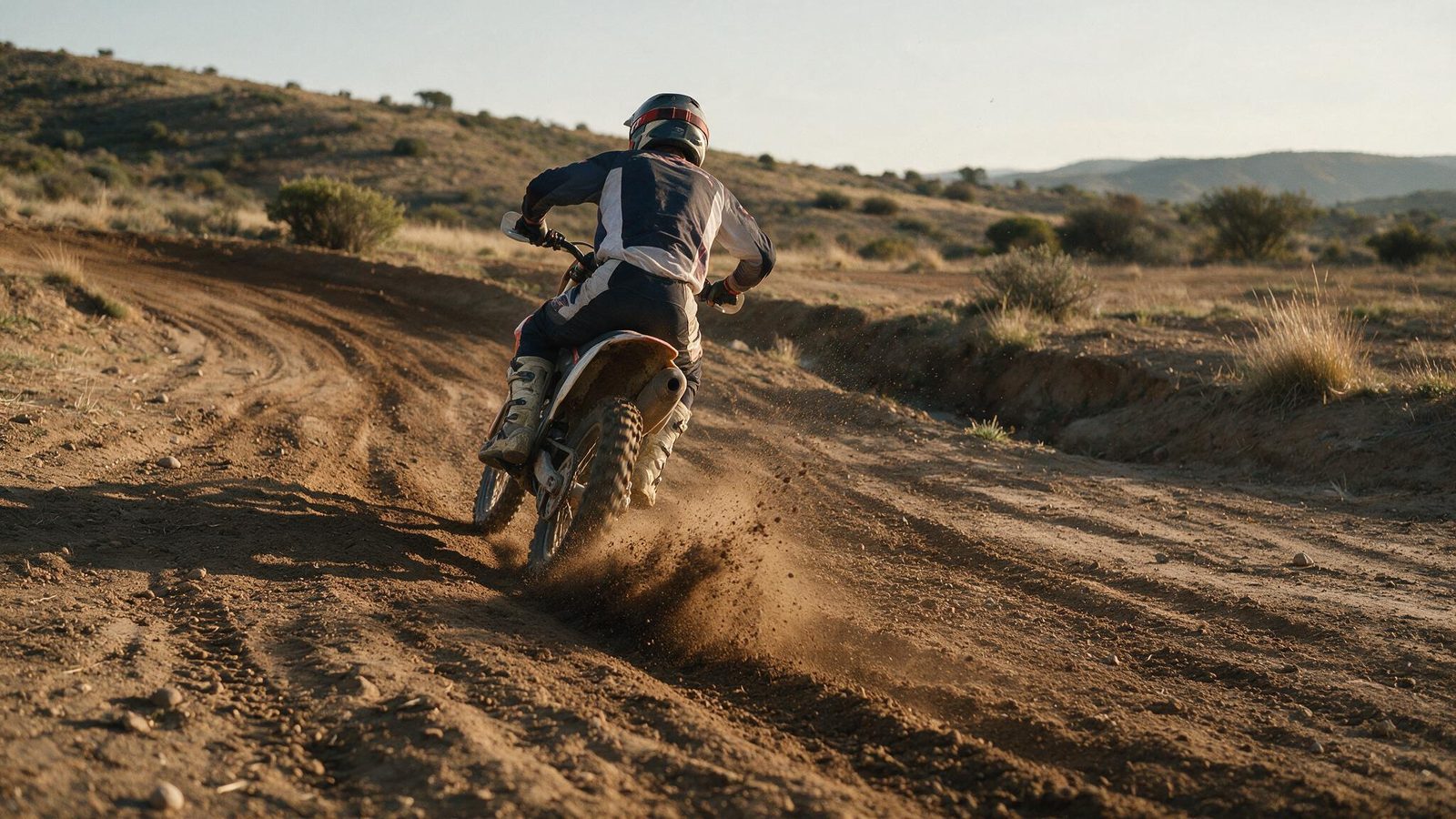
The inside leg glued to the bike is right behind it. Without it you lose your backup contact point, you compensate with your arms, you clamp onto the bars, and the smoothness goes with it.
Choppy throttle spins the rear and breaks your line. Snapping it wide open and then shutting it out of fear is two mistakes for the price of one.
Eyes down on the front wheel, finally, comes straight from careful road habits and produces the opposite of what you want: your body carries you straight on instead of around to the exit.
Three drills to wire it in
The position doesn’t come from thinking about it. It comes from repeating it until it runs itself. Do these in order, somewhere with nothing at stake.
- One corner, very slow. Pick a wide turn and loop it at walking pace, focused only on the four points. Ignore speed, ignore the clock. Give it ten passes before you add any pace.
- One corner, throttle only. Same turn, but now the only thing you work is your right hand: enter closed, then reopen in one continuous thread as soon as the bike settles onto its load. You’re hunting for the difference in grip between a snap and a roll.
- Left then right. Once the position holds through a single corner, link a left into a right to train the switch from one side to the other. That’s where old habits come back as soon as you get tired. Slow down the moment the position falls apart instead of pushing through.
Once the base holds, move on to the turns that need their own adjustments: rut cornering, and flat turns and berms. It’s also the position that makes an inside pass possible, because it leaves you the margin to tighten your line without losing the front.
FAQ
Do I always need to stick my inside leg out?
In the large majority of turns, yes, and from entry rather than in reaction to a slide. It’s a balance point and a safety net. Two exceptions: fast, low-lean turns where both feet stay on the pegs, and deep ruts, where putting a foot out against the wall unsettles you more than it helps.
Why do I keep crashing in corners?
Almost always the same pair: a chest that drifts back as you lean, and eyes still locked on the front wheel. Fix those two before you look anywhere else. They account for most corner crashes among riders still developing, well ahead of tires, suspension settings, or how much power the bike makes.
Sit or stand through a corner?
Sit in tight, slow turns where you need to weight the front so it bites. Stand through fast sweepers and choppy corners where your legs have to absorb the ground. In between sits the transition position, hips just off the seat, and that’s the one you actually use most of the time.
Should I brake in the corner to adjust my speed?
No, except in an emergency. Speed gets set before entry. If you’re braking at full lean, you came in too hot: next lap, brake harder earlier instead of fixing it mid-corner. A light drag of rear brake can help tighten your line, but never the front.
Find all the riding fundamentals on the riding technique page.
Editorial content. PiloteMX offers no on-site service, no parts or gear sales, no quotes and no bike repairs. Working on a bike and riding it carry risk: what you do with this guide is your own responsibility.