Dirt Bike Starts: Winning the Race Before the First Turn
Contents
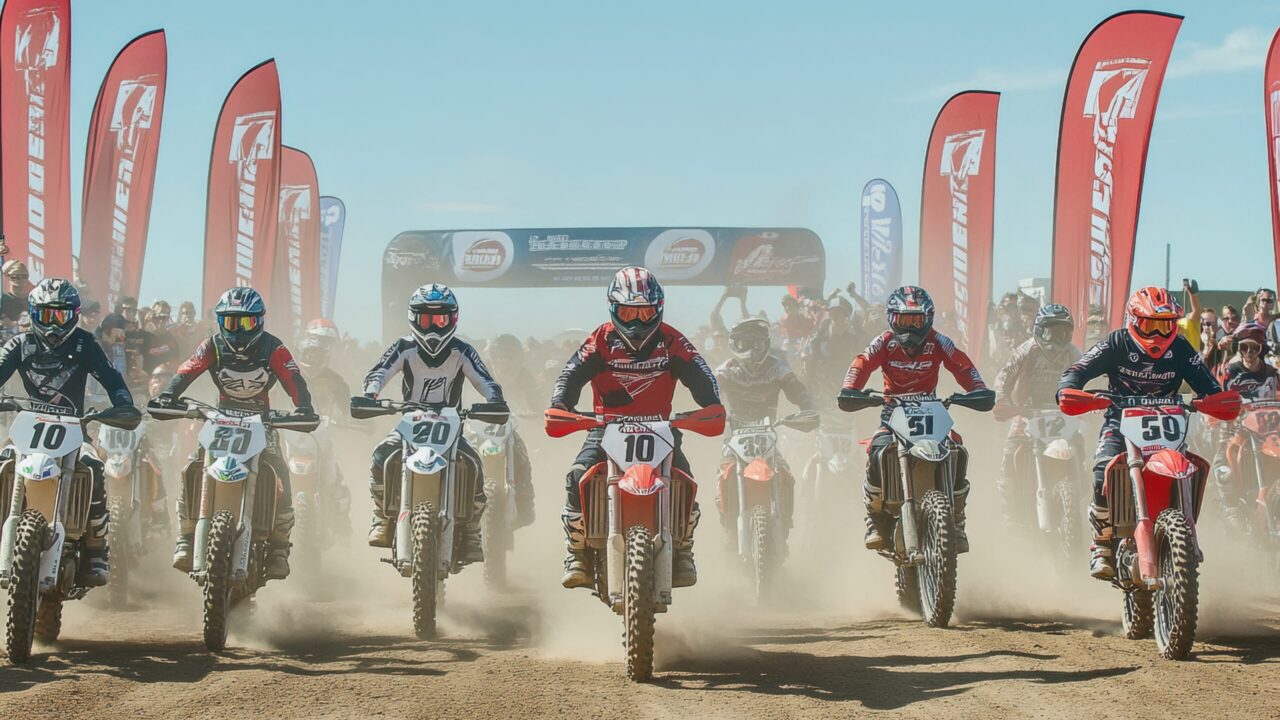
A good start is built before the gate drops: body locked and ready, eyes on the gate instead of the riders beside you, gear picked in advance, and a clutch release that puts power down without spinning or stalling. The rest of the race can be clawed back. Places lost at the gate, much less often.
Your gate pick and the dirt under your wheel
Gate choice already decides part of the result. When you get to pick, take the one that lines you up toward the inside of turn one rather than the outside — unless you know an alternative line that works on that specific track. An outside gate with clean dirt sometimes beats an inside gate that’s been torn apart.
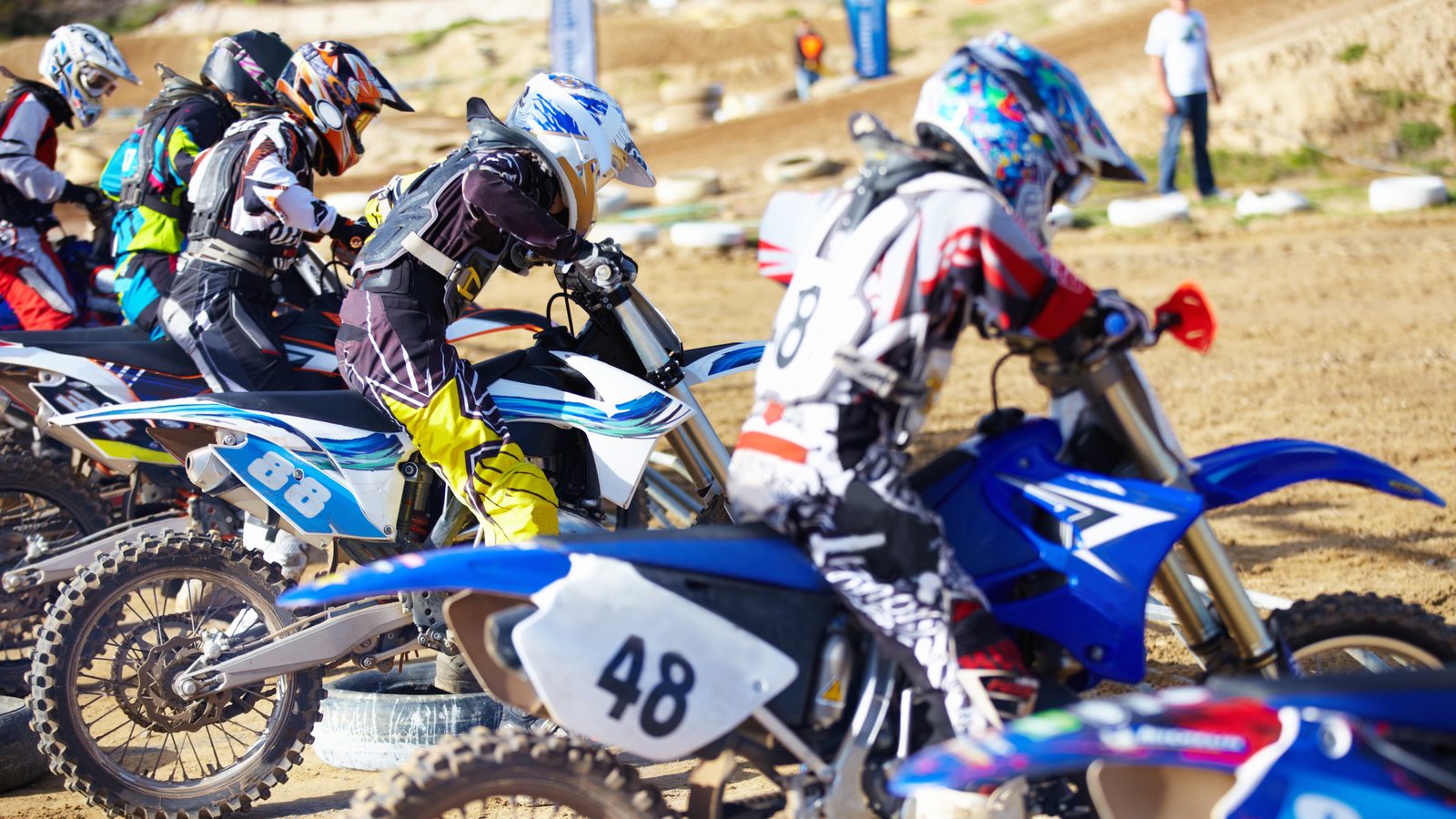
Look at the ground before you commit. Dirt freshly churned by the previous moto has no traction left, and a rut left by someone else’s rear wheel will steer your bike whether you want it to or not. If the club allows it, prepare your launch area: clear the loose clumps, level it, and find the firmest strip over the first few meters.
On soft ground, the traction available at the gate is already reduced before you’ve touched the clutch. That’s where a violent input costs you the most.
Gear and body position: two choices locked before the signal
Gear gets chosen from the distance to turn one and the terrain. Too short and you’re forced to shift at the worst possible moment, while the bike is still hunting for grip. Too tall and you lose the initial drive and get swallowed by the riders who launched better. That call is made before the start, never in the split second after the gate moves.
Body position gets set at the same time: chest forward, weight placed so the front doesn’t lift, feet locked on the pegs. Once it’s set, it doesn’t move. Every readjustment while you wait costs you reaction time at the moment everything happens. If you can’t hold that position without effort, the thing to fix is your riding stance, not your start.
Key points
- Eyes
- the gate in front of your wheel, never the starter or your neighbor
- Gear
- chosen and engaged before the drop, matched to the run to turn one
- Position
- locked once it’s set, chest forward, feet planted
- Practice block
- ten to fifteen starts, with nothing on the line
- Check first
- the state of the dirt in your gate and over the first five meters
The move as the gate drops
Eyes stay on the gate itself. Not the starter, not the rider next to you. That detail is worth several tenths between the rider who leaves with the gate and the one who reacts to it afterward.
The clutch comes out fast but smooth. Too abrupt and the rear spins, turning power into heat instead of drive. Too careful and you give away the meters where the gaps open fastest. This is exactly the dosing described in the guide on throttle and clutch control: the left hand does the fine work, the right hand follows it.
Throttle opens alongside the clutch release, never ahead of it. An engine screaming while the wheel gets nothing is wasted time and a rear end that breaks loose the instant the clutch bites. Through the initial drive, you don’t move: no standing up, no changing your grip, not until the bike has found its speed.
The first meters and the run into turn one
Once you’re rolling, your attention goes to your line, not to the others. You know they’re there — you don’t look at them. The rider watching his neighbor always adjusts too late and loses the line he’d planned.
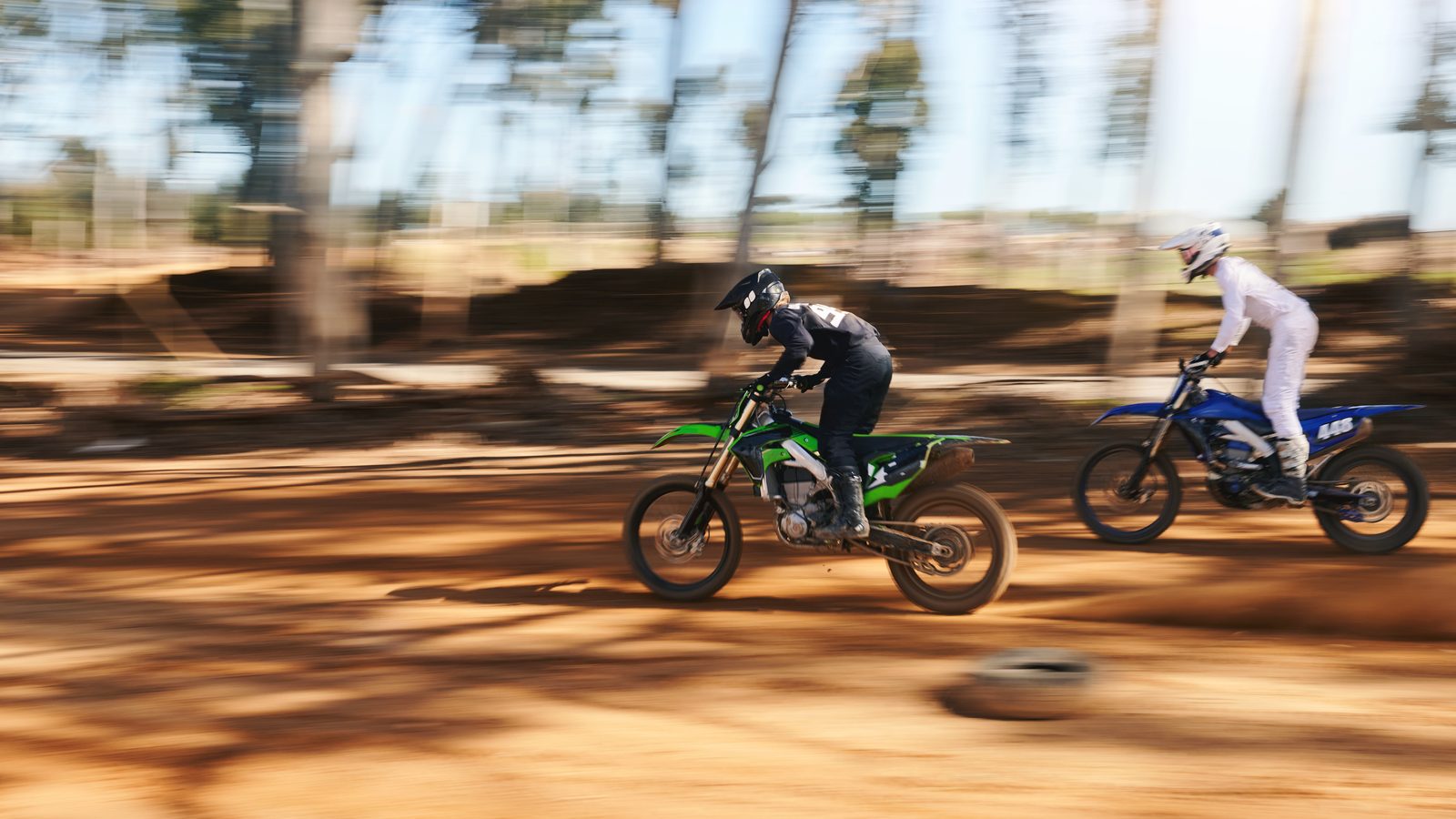
Turn one gets braked earlier than it would solo. There’s traffic, the margin is smaller, and nobody is leaving you the space you’d have had in practice. The principles are the ones from the braking guide, applied with extra room. Passing comes later — that’s a separate job, covered in the guide on passing.
If the start goes wrong — spin, stall, front wheel climbing — the only useful response is an immediate recovery. Time spent dwelling costs more than the mistake did. That’s also what mental preparation work is for: accepting the bad start so you’re still useful for the twenty minutes that follow.
The mistakes that cost places
Watching the competitors instead of the gate delays your reaction to the drop. The rider never notices it himself: he just sees three bikes leave in front of him.
An abrupt clutch release is still the most common fault, especially on soft ground where traction is already used up by the earlier motos. The wheel turns, the bike doesn’t go anywhere.
Shifting your body position mid-drive, out of pure adrenaline, unsettles the bike at the exact moment it needs to be stable to turn power into speed.
And plenty of riders only work on starts on race day. It’s the shortest and most decisive move of the weekend, and it’s the one that gets practiced least.
A start session that actually pays off
- Dry starts. On open ground with nothing on the line, run start after start, thinking only about clutch dosing and its timing with the throttle. Stop when the move comes out the same every time.
- Eye discipline. Same drill, but you pick a fixed point ahead and forbid yourself from looking anywhere else over the first meters. It’s harder than it sounds once someone is launching beside you.
- Start plus corner. Put a turn a few dozen meters past the line and work the braking at real speed. A great launch that runs wide in turn one has earned you nothing.
- Two-up starts. With a partner of similar pace, run the drill side by side. Pressure changes the move, and that’s precisely what you want to train.
FAQ
Where should you look at the start?
At the gate itself, right in front of your front wheel. Not the starter, not the riders beside you. Your reaction time keys off the gate’s movement, and your brain picks it up faster if your eyes are already there. The moment it drops, your eyes go straight to your line into turn one.
How do I stop the rear wheel from spinning at the start?
Release the clutch fast but without a snap, and open the throttle with it rather than before it. If the rear still breaks loose, the dirt is usually the reason: freshly turned soil, sand, an old rut. Find the firmest strip in your gate and launch on that, even if it means offsetting your front wheel slightly when you set up.
What do I do if I blow the start?
Recover immediately and let it go. Time spent replaying it costs more than the start did: two corners ridden badly because your head is still at the gate and you’ve doubled the bill. Take a different line from the pack on the first lap, where the surface hasn’t been chewed up yet.
Should you pick your gate based on turn one?
Yes, when you have the choice. A gate pointing toward the inside of turn one gives you the line advantage most of the time. Check the dirt too: an inside gate destroyed by earlier motos often returns less than an outside gate with real traction under the tire.
Find all the riding fundamentals on the riding technique page.
Editorial content. PiloteMX offers no on-site service, no parts or gear sales, no quotes and no bike repairs. Working on a bike and riding it carry risk: what you do with this guide is your own responsibility.