Mental Prep for Dirt Bike Riding: Managing Fear to Ride Better
Contents
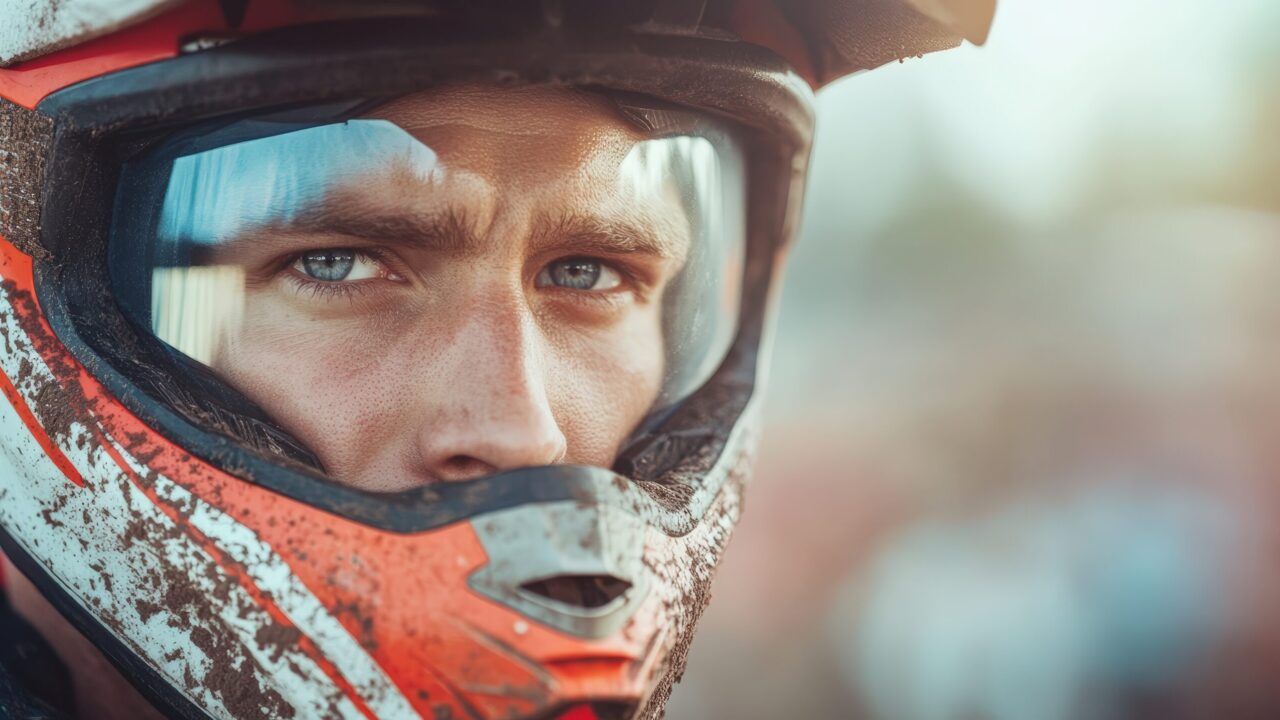
Mental preparation isn’t about deleting fear. It’s about stopping fear from riding the bike for you. A rider who panics sits up, chops the throttle, and stares straight at the danger instead of the line. Mental work keeps your body free to run the move you already know, even when the pressure climbs.
Why fear breaks the move before it reaches your head
Fear fires protective reflexes that are almost always the opposite of what riding asks for. You straighten up, you tense, you grab the brake, you lock your eyes on the exact spot you don’t want to hit. In daily life those reactions keep you safe. On a bike they strip away grip and control at the worst possible moment, exactly as described in the cornering position guide.
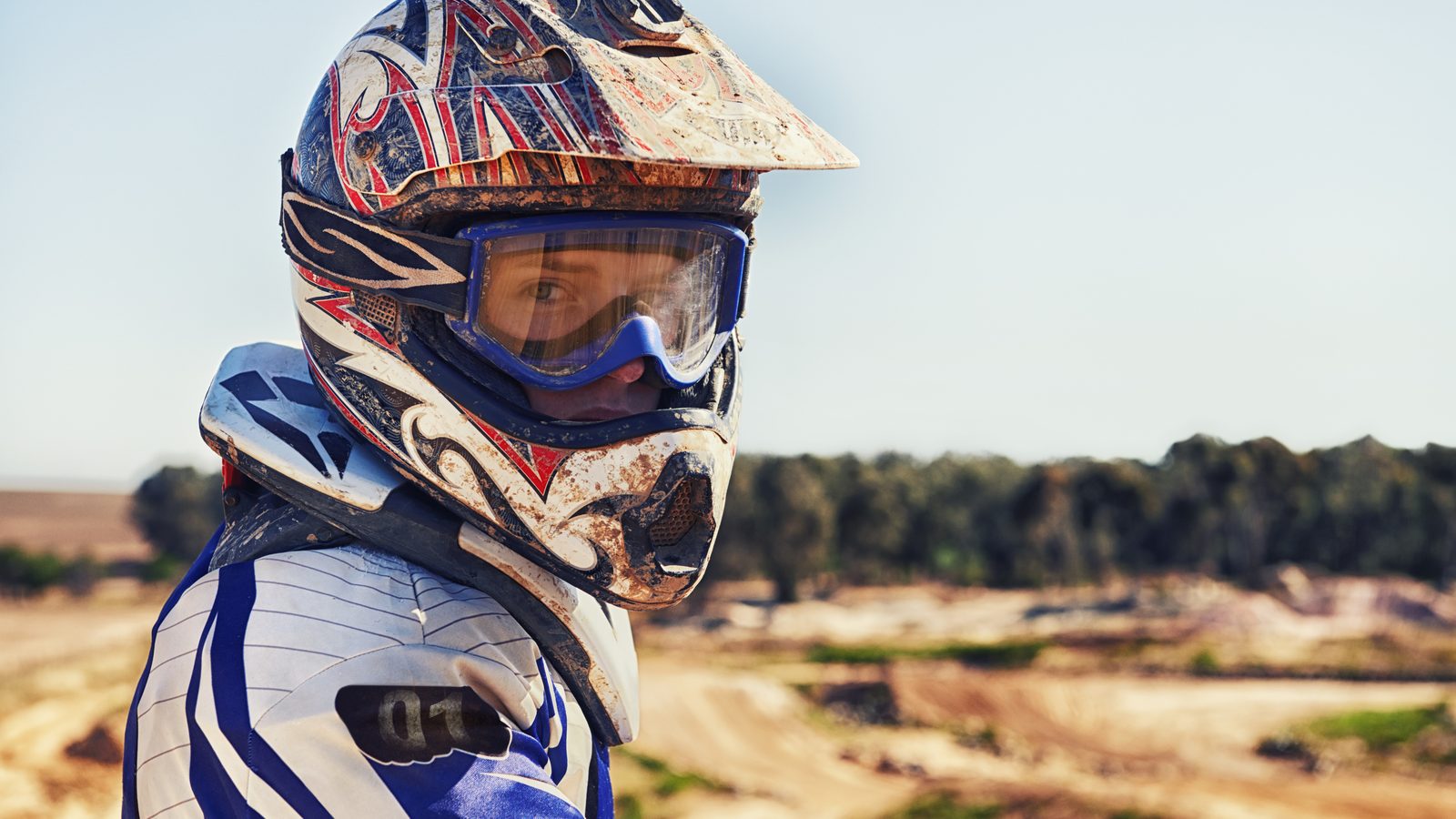
Understanding the mechanism already changes plenty. Fear isn’t a character flaw you crush with willpower. It’s a physiological reflex, and it trains like any technical skill: through repetition, in easy conditions first.
Useful fear versus fear that locks you up
Not every fear deserves the same answer. Some of it is telling you something true about the track and should be listened to. The rest is noise feeding on itself. Learn to tell them apart before you decide whether to send it or back off.
| What you feel | What it’s actually saying | What to do |
|---|---|---|
| A sharp, specific alarm about one spot on the track | Your eyes caught a real problem: broken landing, blind exit, ground that changed | Listen. Walk it, pick a different line, or sit this one out |
| Vague apprehension on something you normally clear | Fatigue, pressure, a bad session — the body can still do it, the head is doubting | Go back to basics, ride it slower, then build the pace back up |
| A full block, stomach tight, before you even roll out | Usually a crash you haven’t digested, replaying on a loop | Drop the difficulty hard and rebuild on sections that feel easy |
Climb the steps in order
Confidence isn’t declared, it’s stacked — one clean rep at a time, at a level just under your current limit. Three tidy passes over a small jump beat one heroic attempt at a big one. It’s the same logic running through the how to jump and whoops guides: don’t move up a step until the one below is smooth.
- Walk the obstacle. Look at the face, the landing, the exit. What you’ve studied on foot is far less frightening than what you’re guessing at speed.
- Ride it slowly, with no commitment. The goal isn’t to nail it, it’s to know it.
- Repeat it three times under the same conditions. As long as the move changes on every pass, you’re not ready to add speed.
- Raise the pace one notch, not three. The step should feel almost embarrassingly small.
- Finish on a success. End a session on a bad rep and that bad rep is what you’ll bring back next time.
Visualization belongs here, and not earlier. Picturing the correct move works once you’ve felt the obstacle at least once. Before that, your brain isn’t rehearsing the move — it’s rehearsing the crash. On a jump landing, that distinction separates useful mental practice from a private intimidation session. The same ladder applies to back to back jumps, where each face gets rehearsed alone before you link them.
What works in the moment
Breathe before, not during
The short, high breathing that comes with stress holds muscle tension exactly when riding demands looseness. Two or three slow breaths before you commit are often enough to unlock your shoulders. Do it stopped or down an easy straight, never at the point of entry.
Go back to one fundamental
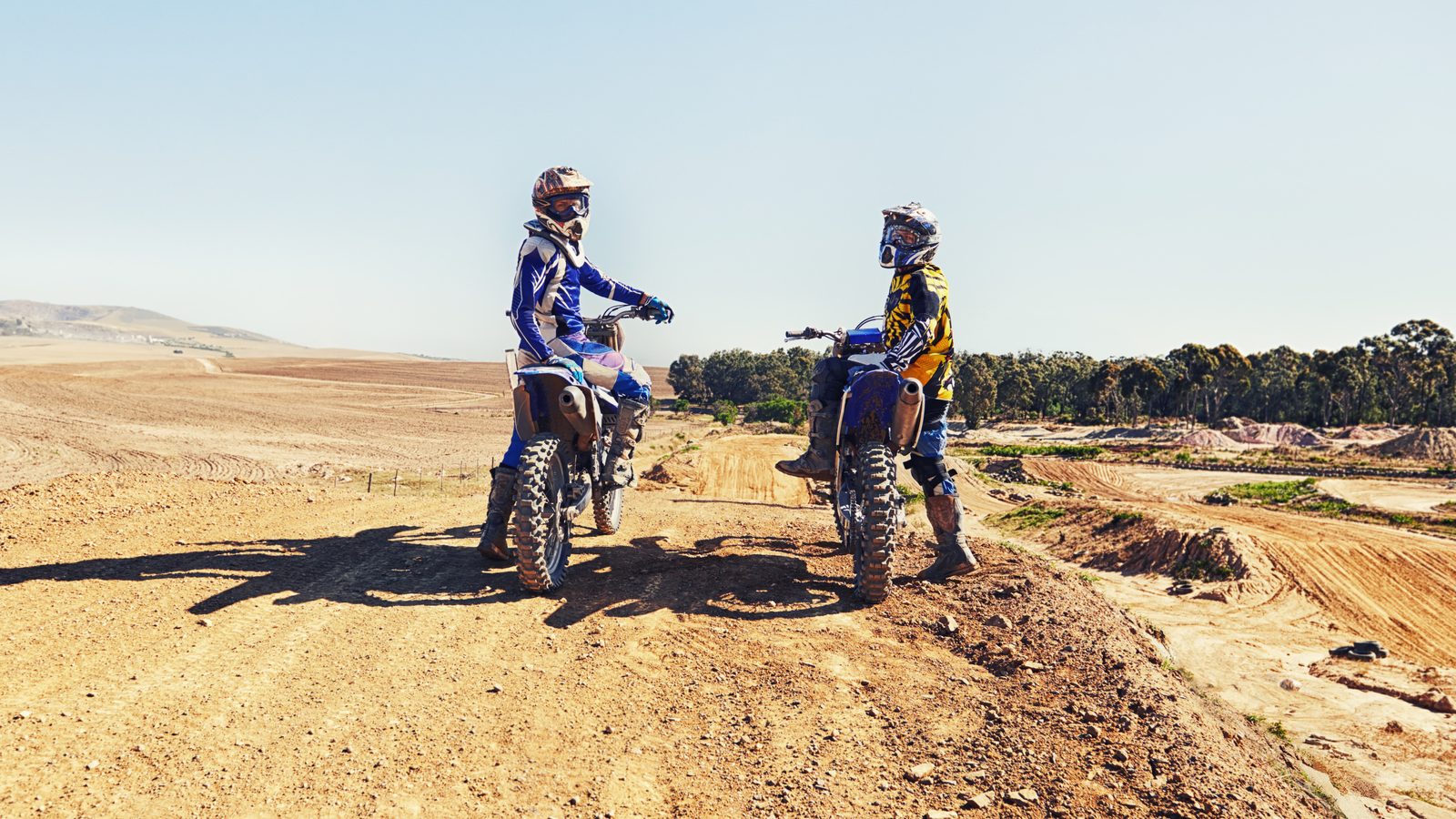
When apprehension climbs, stop listening to the emotion and give yourself a single technical instruction: eyes up, smooth throttle, elbows high. One instruction, not three. Stress keeps escalating as long as it has nothing concrete to chew on, and a specific task breaks the loop.
What makes it worse
Forcing a section despite clear fear degrades your execution and confirms the fear instead of dissolving it — next time around, the obstacle has grown. Comparing yourself to everyone else during a session pulls attention away from the only lever you control. And ignoring end-of-day mental fatigue means making your worst calls at the exact moment your judgment is thinnest.
Race pressure, one more layer
Competition adds the stakes of a result, the comparison, sometimes an audience. Unanticipated, that pressure always produces the same pattern: too much risk in the opening corners, then an equally extreme retreat if the start goes badly.
The fix fits in one line: set execution goals, not placing goals. “Keep my elbows up on corner exit” is still actionable on lap ten. “Finish top five” depends on nine other riders and tells you nothing about what to do right now. Sort that framing out cold, at home, alongside your training plan — not on the gate.
One last thing riders skip: physical fatigue amplifies all of it. A cooked rider doubts more, decides slower, and tenses up sooner. Fitness training is part of mental preparation, literally.
FAQ
How do I handle fear on a new obstacle?
Don’t try to make the fear go away, build around it. Walk the obstacle, ride it slowly several times, and add pace only once the move has become repeatable. If the apprehension climbs again, give yourself one simple technical instruction rather than telling yourself you’ve got this.
Why do I tense up in a race on stuff I clear all day in practice?
Because the stakes move your attention from the move to the result. Your body still knows what to do, your head is elsewhere. Refocus on an execution goal you can check lap after lap: a body position, a braking marker, a specific line. That puts your attention back where it does work.
After a big crash, how do I come back without dragging the fear along?
Restart well below your old level, even if it feels humiliating. The point of those first sessions isn’t speed, it’s stacking successful reps again. Go back to the kind of obstacle that put you down only once everything else feels smooth, and rebuild it from the bottom of the ladder.
Find all the riding fundamentals on the riding technique page.
Editorial content. PiloteMX offers no on-site service, no parts or gear sales, no quotes and no bike repairs. Working on a bike and riding it carry risk: what you do with this guide is your own responsibility.