Back to Back Jumps on a Dirt Bike: Read the Rhythm, Keep Your Balance
Contents
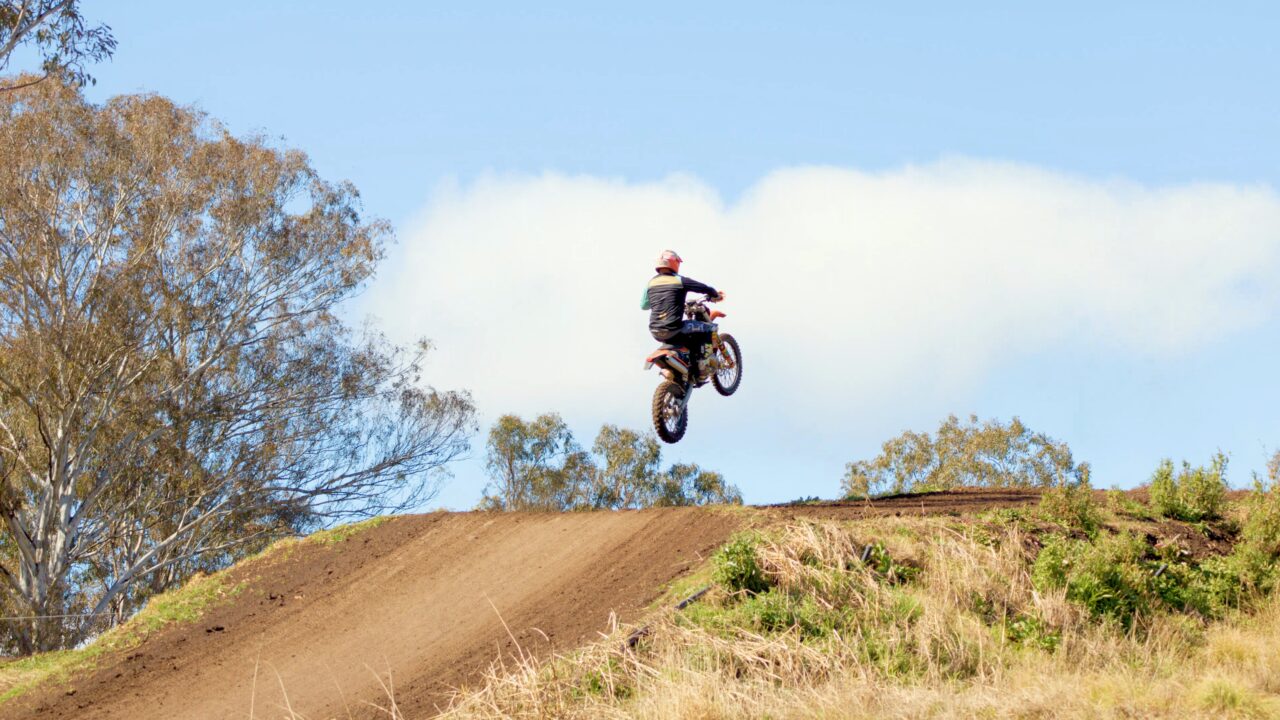
Back to back jumps on a dirt bike come down to three habits: read the whole section before you enter it, set your speed before each takeoff instead of in the air, and stay compact so you land ready for the next face. Treat every jump as part of one rhythm, not as a separate test.
Back to back jumps on a dirt bike start with reading the section
Before you hit a series of jumps, stop at the edge of the track and look at all of it. Count the faces, note whether each landing is flat, downhill or bermed, and find the line that stays straightest from the first takeoff to the last landing. A combination gets read once, calmly, not discovered one lip at a time while you are already rolling over it.
Staying calm while you read matters as much as the technique. Good mental preparation keeps your eyes up and stops nerves from shortening your gaze or pushing you to launch before you have finished looking.
Keep your speed steady between takeoffs
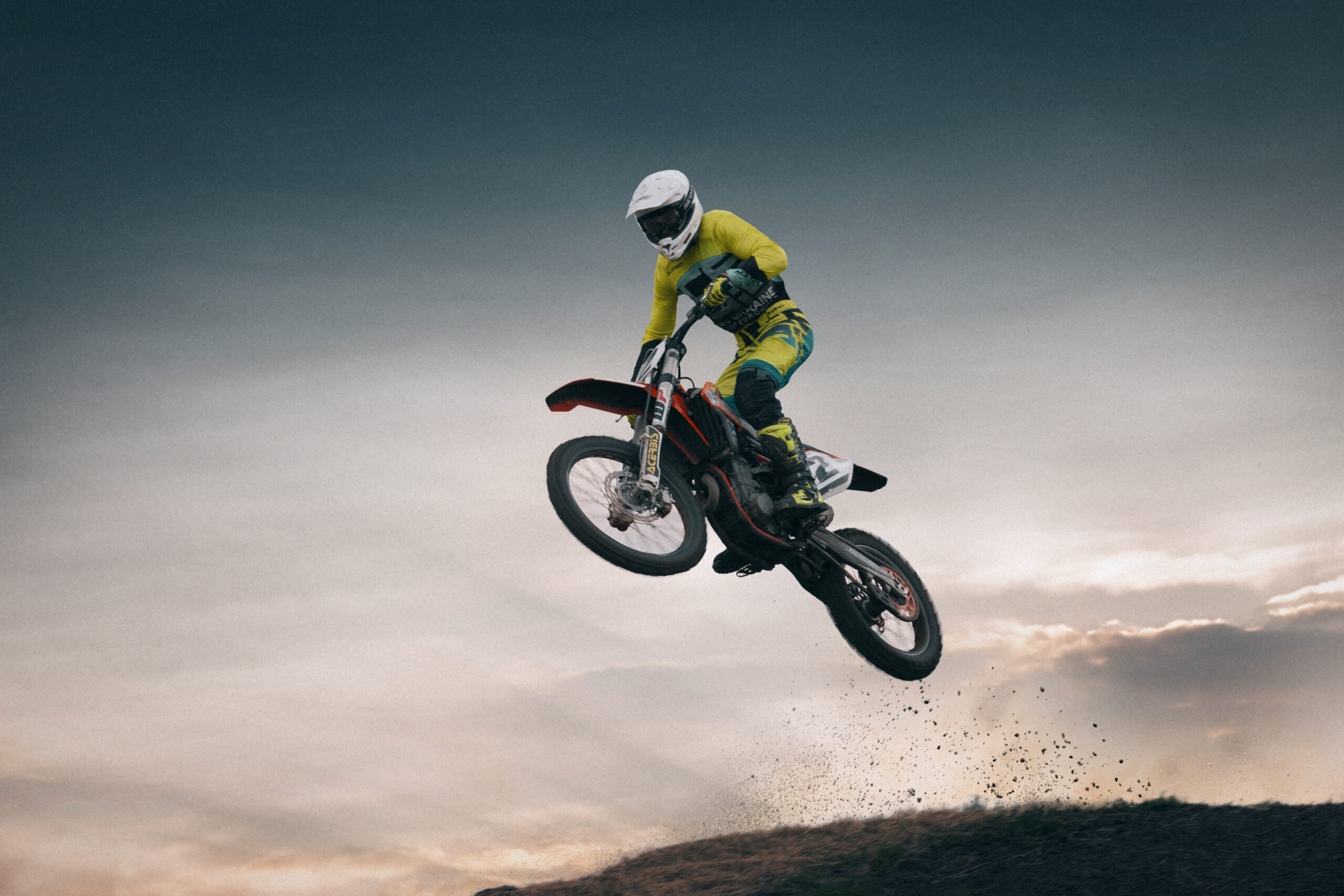
The worst reaction in a combination is to grab the brake in the air, or to blip the throttle mid-flight to fix a misjudged speed. The adjustment happens before you leave the ground: a touch less throttle if you are arriving too fast on the second face, a touch more if the next jump needs the carry. Once the wheels are off the dirt, your speed is already decided. Your job is to manage your body position, not the bike’s velocity.
That is the opposite of what works in whoops, where holding the throttle calms the bike down. In a jump combination each face gets its own approach speed, and no single cruising speed carries you through the whole section.
The kinds of combinations you will meet
One phrase covers several different situations, and each one asks for something different. Knowing which one you are looking at keeps you from riding a triple like a simple double.
| Combination | What you do | What saves you |
|---|---|---|
| Double (two faces close together) | Treat both takeoffs as one jump and keep the throttle steady over both | Expect a landing on the downslope of the second face |
| Triple (three faces in a row) | Decide whether to clear it in one bound or roll the middle one, based on your level | Never change your mind once you are committed |
| Rhythm section (evenly spaced bumps) | Hold a steady cadence with soft knees and don’t try to jump farther than you need to | Read the cadence before entering instead of finding it bump by bump |
| Step-up into step-down | Match your speed to the landing slope waiting for you, not to the distance | Look at the landing, never at the top of the lip |
Hold your body position in the air
A combination does not forgive a frozen body. Stay standing or slightly seated depending on the face, elbows up, knees bent, weight shared between both feet. Sitting too far back slows you down when you need to reposition for the next jump. Sitting too far forward pitches the nose down on the landing in the middle. There is no time between jumps to rebuild your stance, so you keep it and adjust it a little at a time without ever letting go of it completely.
Checkpoints
- Hands
- elbows high, wrists loose, arms never locked straight
- Feet
- balls of the feet centered on the pegs, ankles absorbing before the knees
- Eyes
- on the top of the next jump, never on your own front wheel
When it does not go to plan
You arrive too fast at the second jump
If you feel the second face coming too quickly, roll off the throttle gradually before you leave the ground, not over the gap. A stab of the brake in the air slows nothing down. It only pitches the bike up or down and makes the next landing harder. You are better off jumping a little long with a clean attitude than jumping precisely with a bike that is out of balance.
You lose your balance on the middle landing
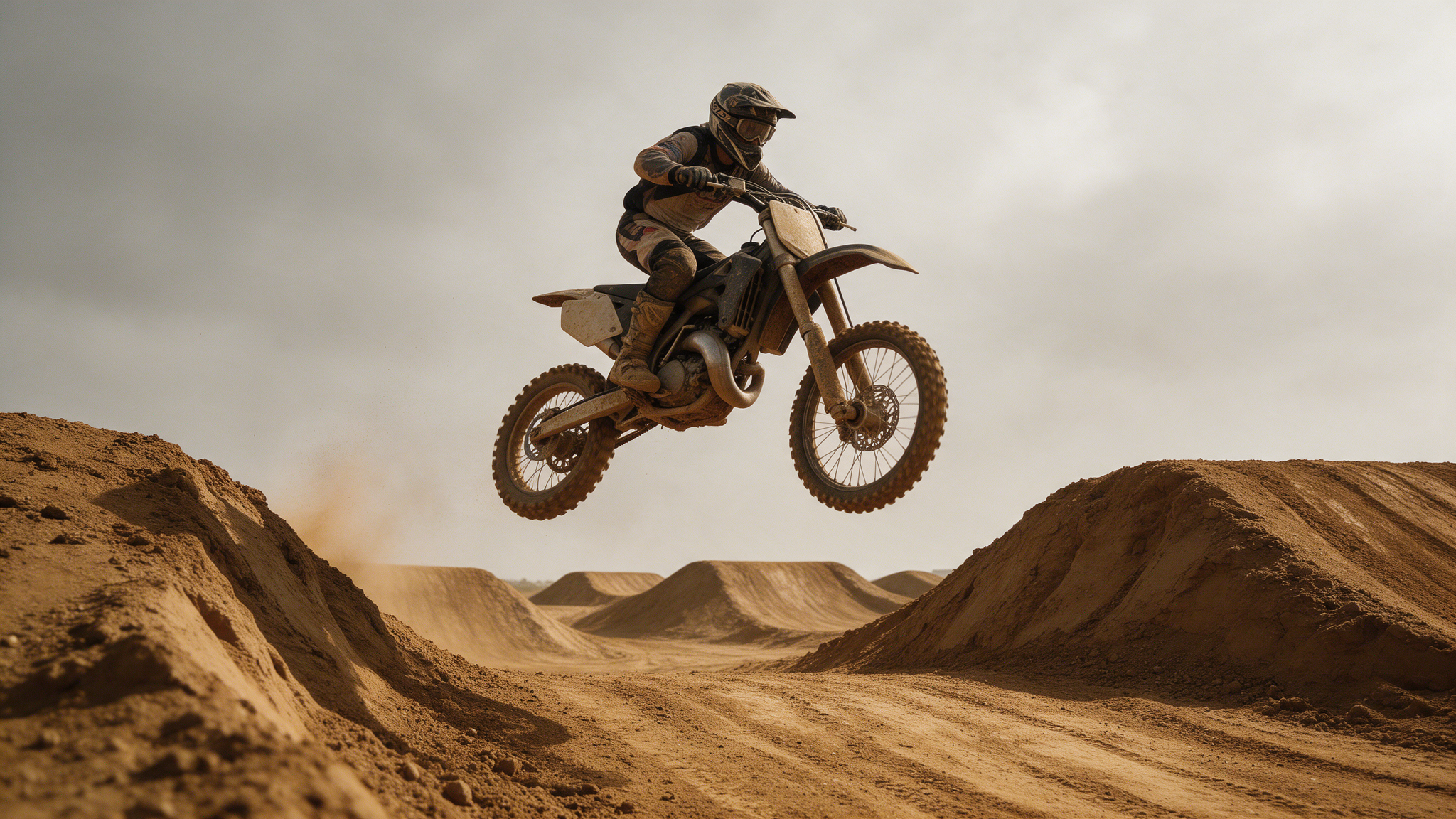
A rough middle landing gets saved by keeping your eyes on the next jump, not on the wheel that just came down. Let your legs soak up the impact, tuck your elbows toward the tank, and get back on the throttle as soon as the bike settles. Trying to correct your line before the bike has settled only stacks a second mistake on the first, and turns a small wobble into a real exit from the track. A good jump landing is what makes the next takeoff possible.
FAQ
What are the different types of back to back jumps on a dirt bike?
The main ones are the double, where two close faces are jumped as one; the triple, cleared in one bound or rolled through the middle depending on the rider’s level; the rhythm section, made of evenly spaced bumps at a steady cadence; and the step-up or step-down, where the landing slope matters more than the distance.
How do I know where to land between two jumps?
You read the landing from the top of your arc, not when you arrive. Look at the slope of the next jump while you are still in the air on the first one, and adjust your body position to that slope instead of to the distance left to the ground.
Should I brake between jumps in a combination?
No. Speed gets set before takeoff, never in flight. A brake stab in the air unbalances the bike without slowing you on the ground. If your pace is wrong, fix it at the next takeoff, not between the two jumps.
How can I get better at linking jumps without getting hurt?
Ride each jump of the section on its own at reduced speed first, then build pace once you recognize every takeoff without hesitating. A structured training plan keeps that progression step by step instead of going for the full combination on your first try.
Find all the riding fundamentals on the riding technique page.
Editorial content. PiloteMX offers no on-site service, no parts or gear sales, no quotes and no bike repairs. Working on a bike and riding it carry risk: what you do with this guide is your own responsibility.