Choosing Dirt Bike Goggles: Seeing Well to Ride Well
Contents
Good dirt bike goggles come down to three things: a wide field of view, foam that actually seals against dust, and ventilation that keeps fog off the lens. Tint comes after that, styling comes last. And you never buy goggles on their own — they have to work with your helmet, because the pair is what you ride in.
Field of view comes first
You ride what you see far ahead, not what is passing under your front wheel. Narrow goggles steal that lead time. You turn your head more, you correct your line later, and you arrive late at every entry. Looking well ahead drives the whole movement, exactly as it does in cornering position.
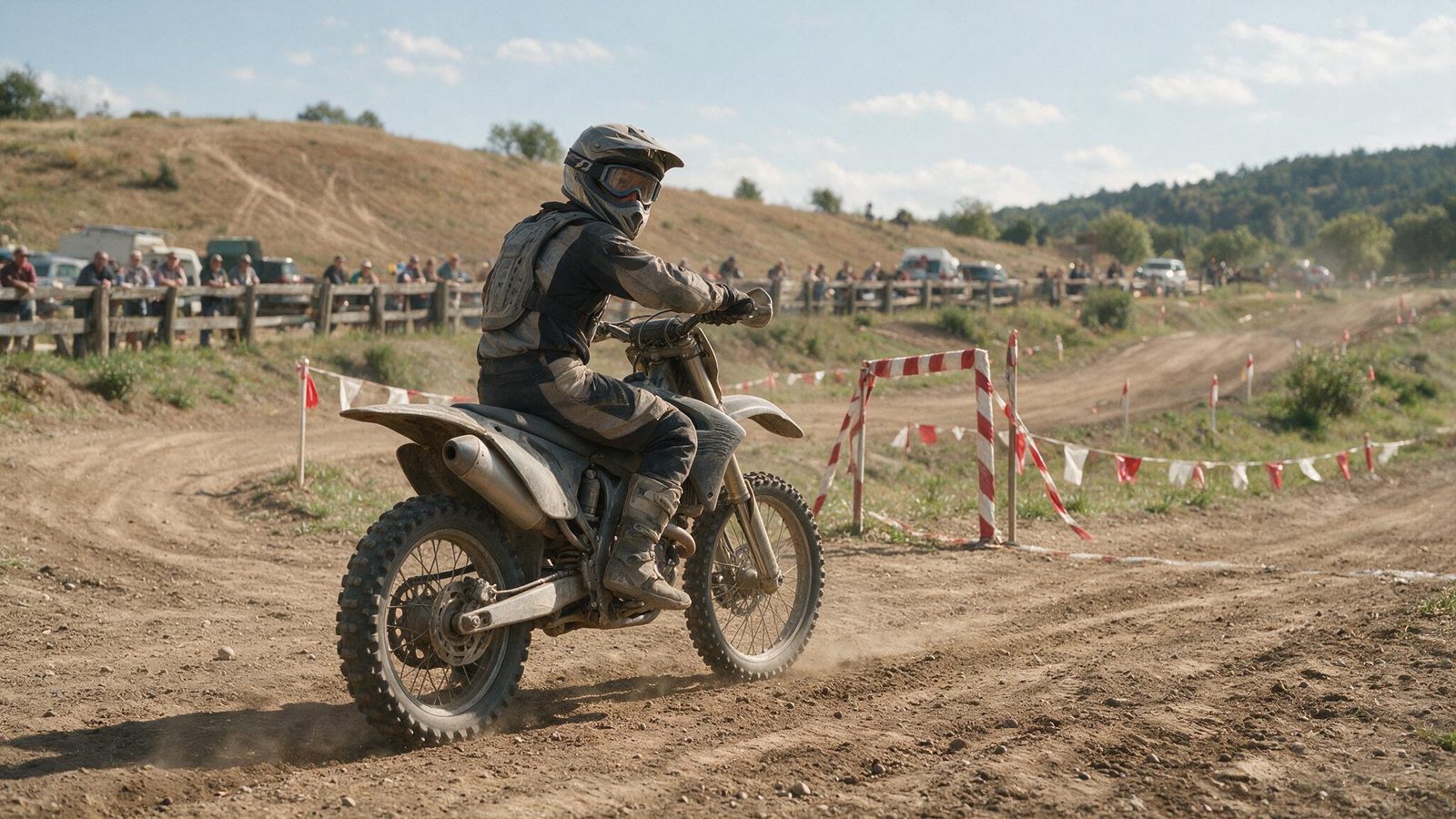
The frame matters as much as the lens. A thick rim, hinges that stick out, tall foam — the usable field shrinks without the lens surface changing at all. Sitting on the shop counter, the lens looks enormous. Helmet on, chest low over the bars, the impression is nothing like it.
Pay attention to the lower edge and the sides. That is where you pick up your front wheel, the side rut coming at you, the rider diving up the inside. Most riders judge goggles face-on, standing still — and get caught out on the first session.
Foam: the seal first, then the wear
Fine dust does not come through the lens. It comes in around your face, at the bridge of the nose and over the cheekbones. Multi-layer foam does a better job than a single layer on dry ground: the outer layer filters, the inner layers soak up sweat. With anything less, you finish two laps with a grey film in your eyes.
That foam packs down. It takes on mud, it takes on sweat, it dries stiff, and it never returns to its original shape. So goggles with a perfect lens can still leak everywhere. On most serious models the foam is replaceable on its own — treat it as a consumable, like a pair of gloves. The rest of the routine sits in the guide on maintaining your gear.
The test that never lies: helmet on, run a finger all the way around the foam-to-face contact. If you can feel a gap, dust will find it too.
Venting and fog: a trade-off, not an option
The tighter the seal, the more it fogs. The two demands pull against each other, and every manufacturer settles it differently: vents top and bottom, more or less breathable foam, dual-pane lenses with an air gap. There is no universal setting here.
Goggles that go white when you stop and clear as soon as you get moving are behaving normally: with no airflow, the moisture off your face settles on the lens. Goggles that stay milky while you are riding have a real problem — single-pane lens, vents packed with mud, or a goggle jammed under a peak that kills the airflow. That subject gets its own guide: beating goggle fog.
One trackside detail people forget: never dry wet goggles against a heater or in the sun behind a windscreen. The foam hardens, the anti-fog coating on the inner face goes first, and you do not get it back.
Lens tint, condition by condition
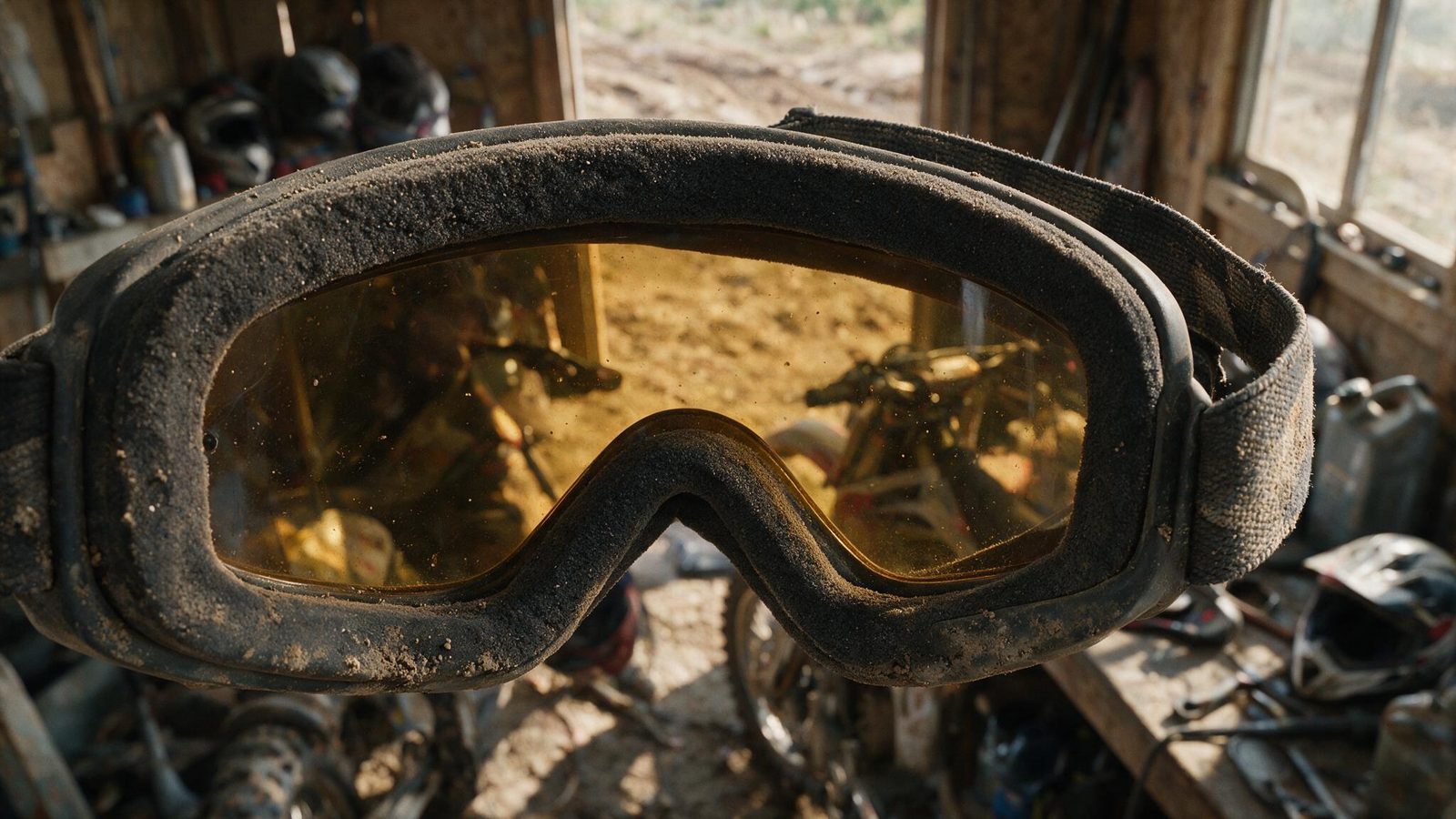
A lens is not decoration — it filters the light reaching your eyes. Keep a smoke lens on for a grey morning and the ground flattens out without you noticing, which is how you take a hole square on.
| Conditions | Lens | What you gain |
|---|---|---|
| Overcast, rain, wooded trails | Clear | Maximum light; the ground stays readable under trees |
| Low sun, late in the day, flat terrain | Yellow or amber | Contrast: bumps and ruts stand out |
| Bright sun, dry pale dirt | Smoke or mirrored | Less glare, less eye fatigue at the end of a moto |
| Sticky mud | Clear with tear-offs or a roll-off | Fresh vision without stopping |
Two lenses cover the whole year: one clear, one smoke. Yellow is a comfort, not a requirement. Keep spare lenses in their sleeve rather than loose in the gear bag — a scratch sitting right in your line of sight scatters far more light than it looks like it should.
Matching goggles to your helmet: the real fitting session
Goggles are not bought alone. Every helmet has its own eyeport, and a pair that fits one shell perfectly can press on your nose or leave a gap at the forehead on another. Change helmets and you check the pair again: shell criteria live in the guide on choosing a helmet, and helmet sizing feeds straight into this fit.
- Put your helmet on and fasten the chin strap as you would to ride.
- Slide the strap over the shell, then seat the goggles in the eyeport.
- Look straight ahead without moving your head, then sweep your eyes left and right.
- Look down: you should see the top of your bars without dropping your chin.
- Get into riding position, chest forward, and repeat the same sweep.
- Run a finger right around the foam, hunting for a gap.
- Shake your head side to side — nothing should shift or move off centre.
- Pull the goggles off and put them back on wearing gloves, since that is how you will do it on track.
Mistakes that cost you vision
Buying from a photo. The best-selling goggle of the season can be the wrong one on your head. Your helmet’s eyeport is the only judge.
Parking the goggles on the peak between laps. The foam loads up with dust, the lens scuffs against the shell, and you pull the whole lot back down over your eyes.
Wiping the inside of the lens with a finger or a jersey. The anti-fog coating is a fragile layer: two or three wipes and it is gone. Inside, you let it dry, you do not rub it.
Keeping dead foam because everything else still looks fine. That is the part deciding what reaches your eyes.
FAQ
Can you wear prescription glasses under dirt bike goggles?
Yes, with goggles built for it, usually labelled OTG: the foam is channelled where the arms pass so they are not crushed against your temples. In standard goggles those arms create two painful pressure points and two dust leaks. The other route is contact lenses, which is what many regular riders end up choosing.
Tear-offs or a roll-off system: which one?
Tear-offs stack on the lens and come away one at a time — simple and light, but you have to take a hand off the bars. A roll-off pulls a clean band across with one tug on a cord, faster in deep mud, heavier and more expensive to set up. For a trail ride or a practice day, tear-offs are plenty.
How do you clean muddy goggles without wrecking them?
Rinse with clean water without scrubbing, ideally while the mud is still wet. Dry the outside with a soft cloth and let the inside air-dry in the shade. No household cleaner, no paper towel, no fingers on the inner face. If the foam comes out, pull it and let it dry flat.
More gear guidance in the gear section.
Editorial content. PiloteMX offers no on-site service, no parts or gear sales, no quotes and no bike repairs. Working on a bike and riding it carry risk: what you do with this guide is your own responsibility.