Cleaning a Dirt Bike Air Filter: Protecting the Engine
Contents
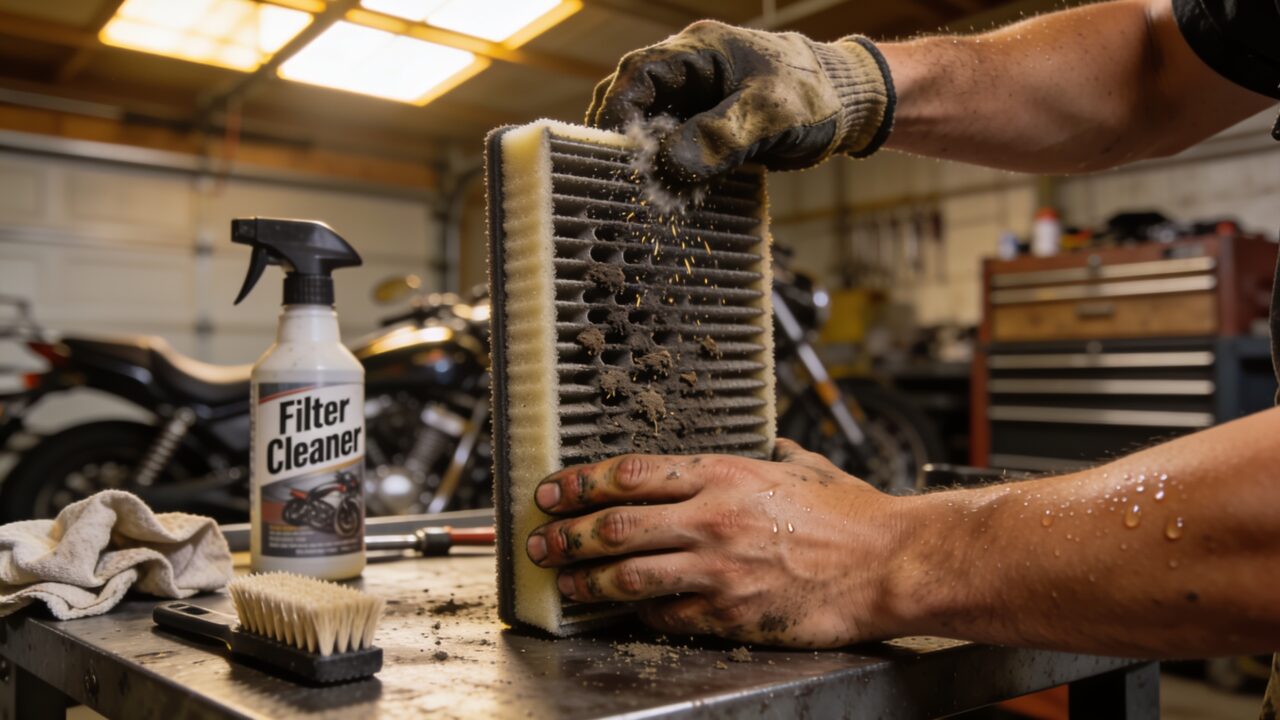
A dirt bike foam air filter gets washed in a dedicated filter cleaner, dried all the way through, then re-oiled with filter oil before it goes back in. Run that full cycle after every ride on dusty or muddy ground. It is what stands between fine grit and the inside of your engine, and neglect shows up as wear you cannot undo.
Why the foam has to stay oiled
A paper car filter stops dust with the fineness of its mesh. A foam dirt bike filter does not work that way. It stops dust because it is oiled — the oil does the catching, the foam only carries it. Wash one, dry it, refit it without oil, and you have a filter that looks perfect and passes fine grit by the handful.
That grit never announces itself. It scores the cylinder and the rings slowly, quietly, with no sudden loss of power to warn you. Months go by, then compression drops and the bill arrives all at once.
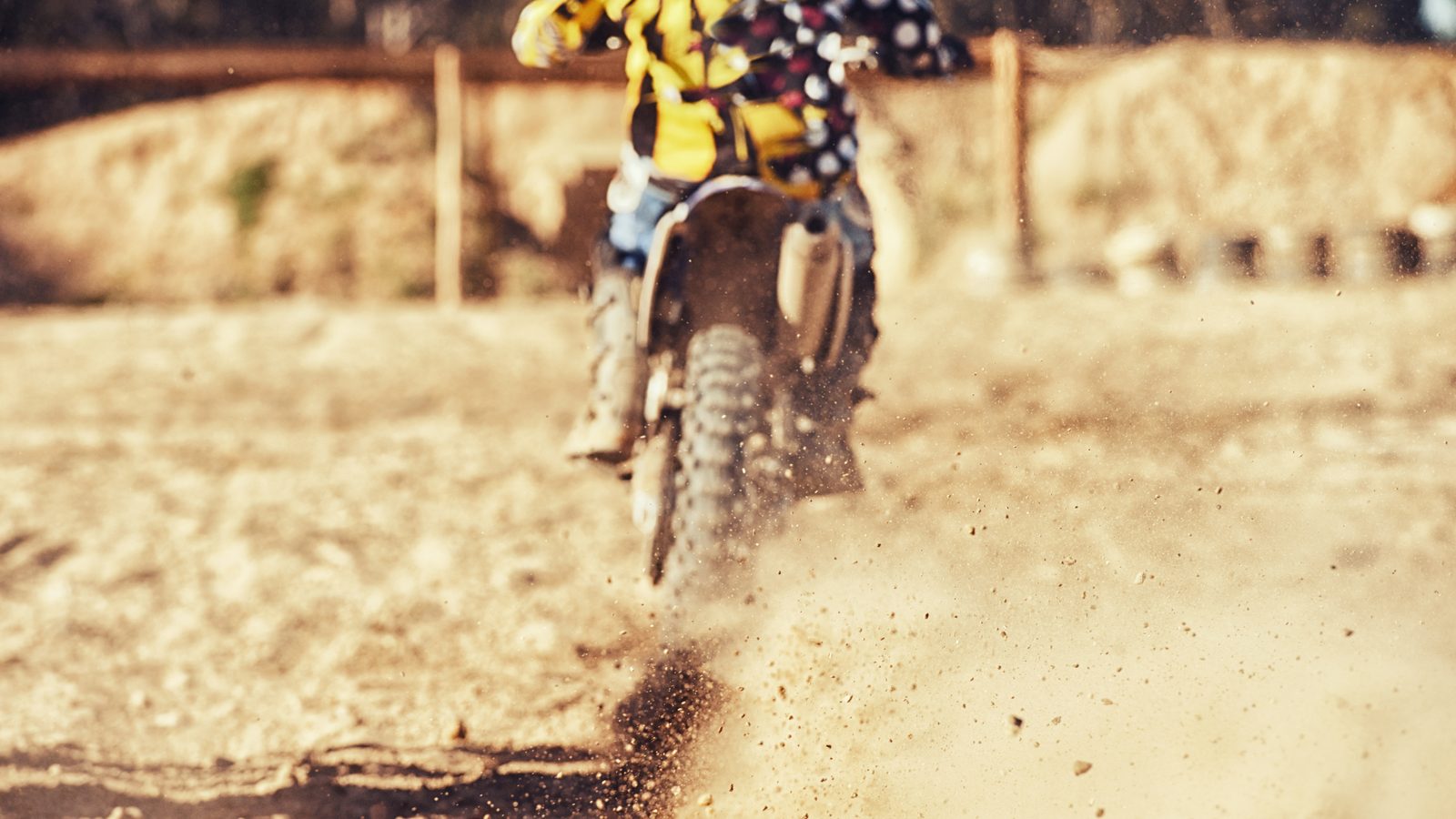
Motocross ground throws up dust on a scale road riding never approaches, which is why this job comes round so often. Same logic as the oil change interval: an engine working this hard needs every internal defence tightened up, not just one of them.
The cleaning cycle, step by step
- Open the airbox and work out how the foam is held — cage, wingnut, strap — before you pull anything apart.
- Plug the intake with a clean rag the moment the filter is out. Every bit of dirt that falls down that tract while you work goes straight into the engine.
- Separate the foam from its cage and hold it up to the light. A tear, a hole, a thin patch, and it is finished — no amount of washing fixes that.
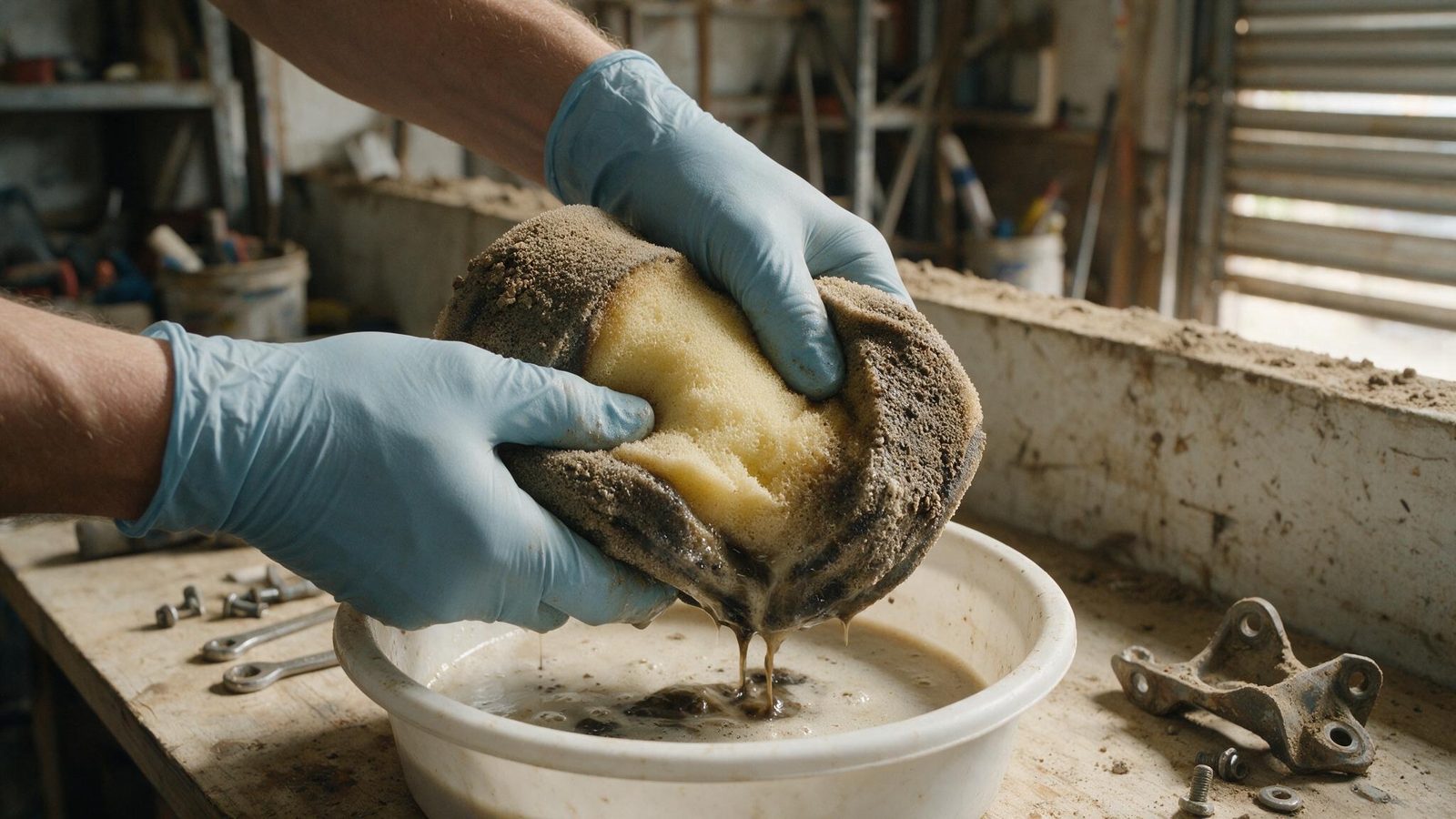
- Knead the foam through the filter cleaner, gently, until the packed dirt lets go. No petrol, no harsh solvent: they attack the structure.
- Rinse with clean water until the water runs clear, with no dirt and no cleaner left in it.
- Squeeze the water out between your palms. Never wring it like a cloth — that tears the foam from the inside where you cannot see it.
- Let it air dry completely, in the shade. No hot air gun, no baking it in direct sun.
- Work filter oil right through the thickness of the foam, not just over the surface. It should come out evenly coloured and slightly tacky, never dripping.
- Blot the excess into paper towel, refit the foam to its cage, and lay a bead of grease on the sealing face if your bike calls for one.
- Pull the rag out of the intake — that one gets forgotten more often than you would think — and seat the filter flat against its face, with no folds and no gap round the edge.
The real trap is not the washing, it is a rushed dry. Foam that is still damp when the oil goes on ends up patchy: greasy in places, bare in others. Dust finds the bare parts.
The airbox and the rest of the air path
A perfect filter on a filthy airbox only half counts. Every time it is apart, wipe the inside of the box from the back towards the opening and clear the dirt out of the corners and off the mounting post.
Then check the seal along the whole path: the face the filter presses against, the boot to the carburettor or throttle body, the clamps, and any hose or wiring grommet passing through the box. A split boot or a loose clamp opens an unfiltered route that cancels out everything you just did.
One useful cross-check is the spark plug. A bike drawing unfiltered air, or choking on a blocked filter, does not run right, and the electrode tells that story — the guide on the spark plug covers how to read it.
How often, by conditions
| Conditions | What it does to the filter | What you do |
|---|---|---|
| Dry and dusty | Fine dust loads the foam right through | Full cycle after every ride |
| Heavy mud | Less fine dust, but clogging and damp | Check every time, clean as soon as it is loaded |
| Sand | Abrasive grains get into the airbox itself | Full cycle, plus a careful wipe-out of the box |
| Race day or heat | Airflow matters twice as much; a loaded filter is felt immediately | Fresh filter fitted before each moto |
| Bike that has been sitting | Nothing has loaded up, but nothing proves it was clean | Check before you leave, in the pre-ride checklist |
After a muddy ride the filter belongs on the same-day list, as the post-ride checklist points out. An engine that went flat late in a session is very often an engine that could no longer breathe.
The mistakes that undo the work
Running with no filter at all, even for one moto, is the worst of them. Nothing stands in front of the dust, and the engine bill dwarfs whatever time was saved.
Refitting dry comes next, and it catches people who otherwise clean carefully. Without oil, the foam barely filters the fine stuff, which is the fraction that actually wears an engine.
Washing in petrol attacks the foam faster than a dedicated cleaner does, on top of the fire risk. Foam treated that way goes limp and loses filtering area with every wash.
And washing the bike without blocking the intake puts water exactly where it must not go — the guide on washing a dirt bike covers how to set that up.
FAQ
Can I clean a foam filter with petrol?
Better not to. Petrol breaks down and hardens the foam faster than a dedicated cleaner does, and having a tub of it open in the garage adds a fire risk you can easily avoid. A proper filter cleaner costs little, rinses out with water, and leaves the foam supple wash after wash.
Do I really have to re-oil every single time?
Yes, no exceptions. The oil is not a bonus step, it is the filtration itself: fine particles stick to it instead of passing through the foam. A clean, dry filter looks flawless and still sends the very material that wears cylinders and rings straight down the intake.
How do I know when a filter needs replacing?
Hold it up to the light after washing. A tear, a hole, a frayed corner, foam that no longer springs back when you release it, or a crushed sealing edge that will not seat — any of those and it gets replaced. Foam that has been through several seasons loses density even with no obvious damage.
How long should the foam dry for?
Until it is dry through the middle, not just on the outside. Press it hard into paper towel; if the towel comes away damp, it is not ready. In the shade, in open air, it takes as long as your garage conditions dictate. This is exactly why a spare filter is such a good purchase.
Find the rest of the maintenance guides on the dirt bike maintenance page.
Editorial content. PiloteMX offers no on-site service, no parts or gear sales, no quotes and no bike repairs. Working on a bike and riding it carry risk: what you do with this guide is your own responsibility.