How Often to Lube a Dirt Bike Chain
Contents
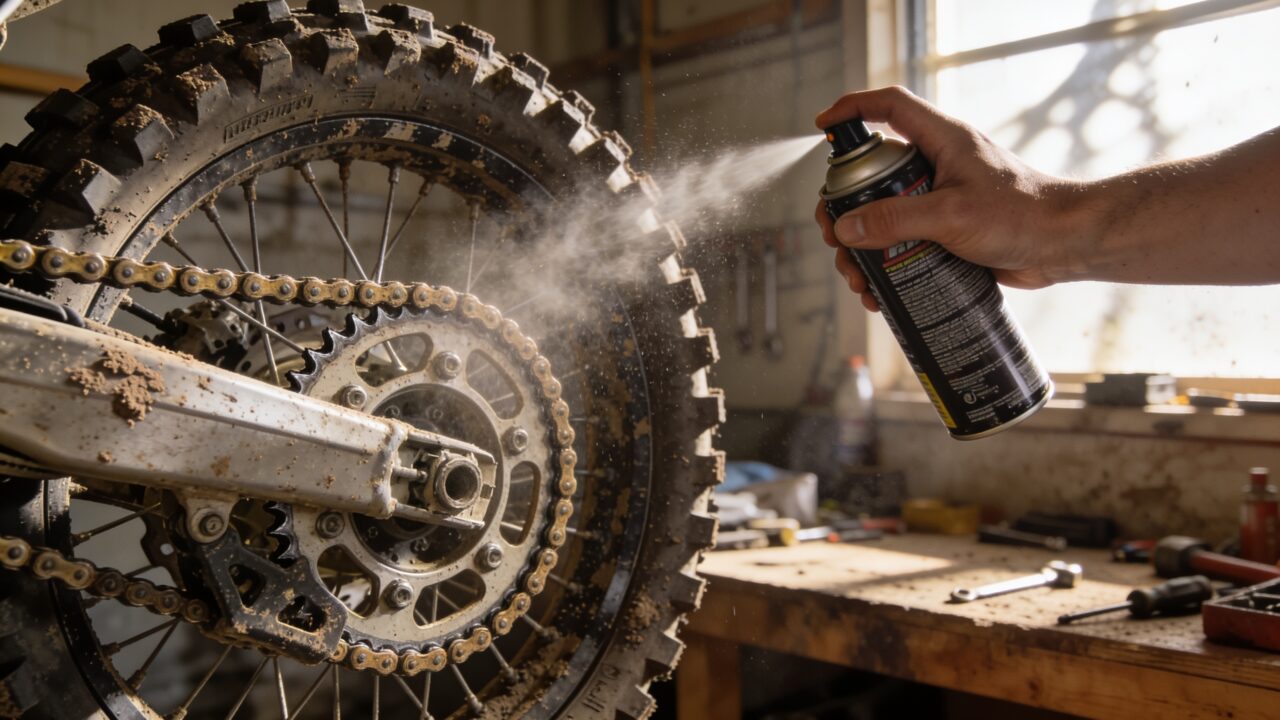
Lube the chain after every ride on wet or muddy ground, and at minimum every two to three rides in dry conditions. A chain running dry wears three to four times faster than a maintained one, and it takes both sprockets down with it. Clean first, lubricate second, never the other way around.
What lubrication actually protects
A drive chain is dozens of small parts working against each other: rollers, pins, side plates. With no film between them, every wheel rotation removes a little metal. You won’t see it after one ride. You’ll see it at the end of a season, when the chain has stretched and you’re pulling the rear wheel back more and more often.
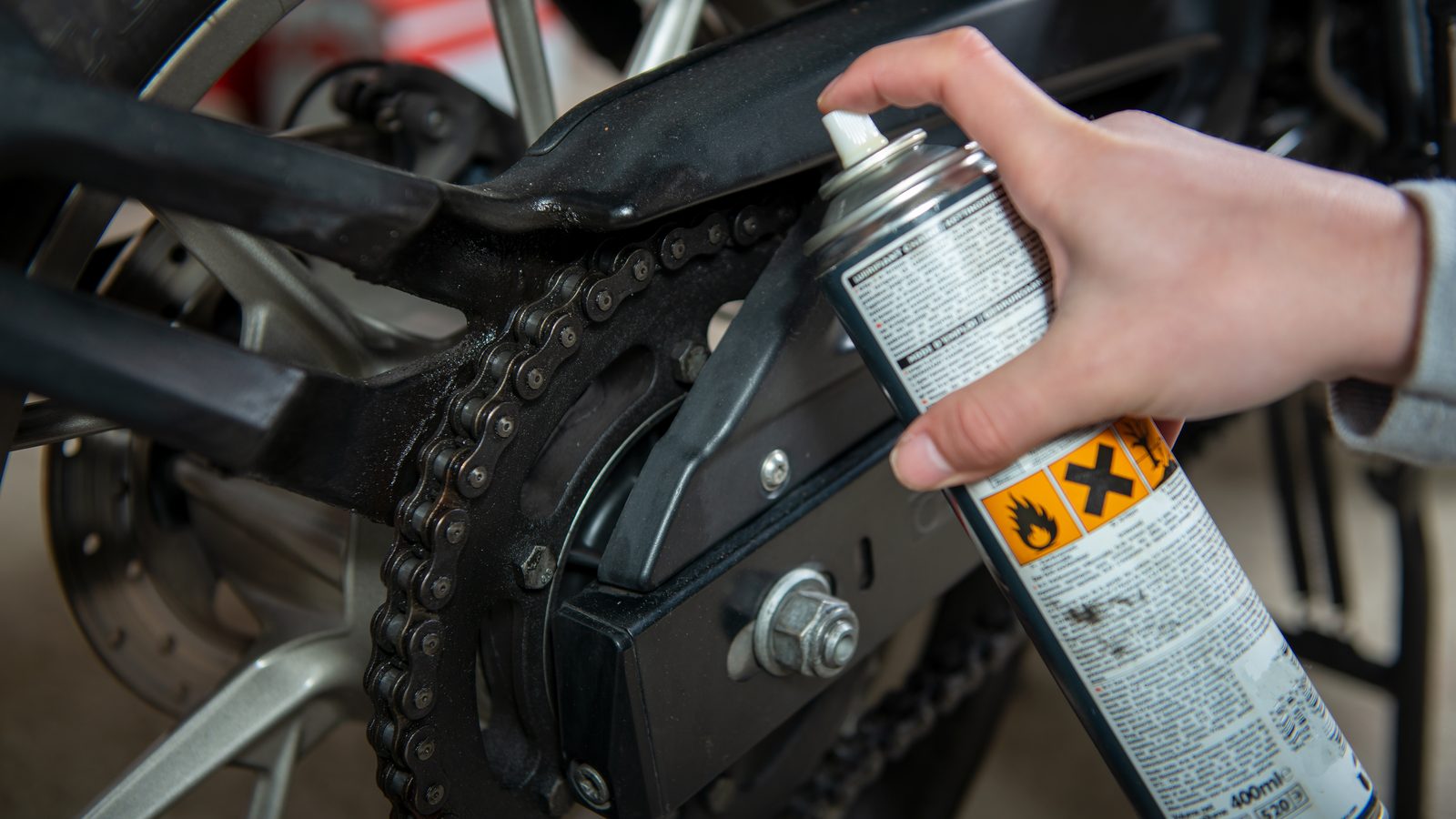
Lubricant also blocks corrosion. Off-road, the chain takes water, mud and sand nonstop, and all of that strips away whatever the factory put on. A chain running dirty and dry drags the sprockets down with it, which is covered in detail in the guide on sprocket wear.
The real difference with a street bike is abrasion. Dirt thrown at speed behaves like sandpaper against a dry chain. That’s where lubricant earns its place: it gives the grit something to work through before it reaches bare metal.
Clean before you lube
Lubing a dirty chain glues the grit against the rollers and gives it something to hold onto. Plenty of riders skip this step because it’s the boring half of the job. It’s also the half that does most of the work.
Start dry, with a chain brush, and knock off the caked mud and the clumps packed between the plates. Then use a degreaser meant for motorcycle chains, applied with a rag or a soft brush, to lift the old lubricant loaded with dust. Read the label first: some aggressive solvents are not made for sealed chains.
Rinse with clean water if the degreaser allows it, then let the chain dry completely. Lubricant applied to a damp chain thins out and holds badly, especially wax-based formulas. If you’re doing a full wash, save the chain for last, once everything else has been rinsed, the same order used in the guide on washing a dirt bike.
The process, step by step
- Put the bike on a stand, rear wheel off the ground, gearbox in neutral.
- Turn the wheel slowly by hand and work the chain section by section. Engine off, always.
- Apply lubricant to the inner face, the surface that meets the sprocket teeth. That’s where the film does its job.
- Let it soak in while you put the rest of your gear away, so the carrier solvent evaporates and the film sets.
- Wipe the visible excess with a dry rag. That surplus protects nothing and collects dust.
- While you’re there, look at chain slack and at the wheel axle nuts, the way you would on the pre-ride checklist.
One habit shows up again and again: lubing right before rolling out. The product gets no time to grab, and most of it flings off in the first few rotations. Do it when you get back, on a clean chain, with the bike parked and cooling. That’s exactly where the post-ride checklist puts it.
Matching lubricant to conditions
| Conditions | Product type | What it changes |
|---|---|---|
| Dry and sandy | Wax-based | Picks up less dust, thinner film that needs renewing more often |
| Mud, rain, water crossings | Thick water-resistant formula | Survives the washing, but collects more dirt once things dry out |
| Mixed conditions | General-purpose chain lube | A fair compromise, strong at neither end of the range |
None of these products makes up for skipping the job. A premium lubricant applied once a month protects less than an ordinary one applied after every dirty ride. And after a water crossing, don’t leave the chain sitting overnight with nothing on it: corrosion sets in fast on freshly rinsed rollers.
The mistakes that cost you a chain
The most common one is riding by the calendar. Conditions decide, not the date: a session in wet sand burns through lubricant faster than a morning on hardpack ever will.
Next comes generic garage grease. Thick and sticky, it turns the chain into a magnet for abrasive particles on sandy ground. Buy something made for motorcycle chains, even a cheap one.
Last is confusing lubrication with tension. A well-lubed chain that’s too tight loads the countershaft bearing; too loose, it slaps and chews the rear sprocket. They’re separate jobs, and chain tension gets checked on its own, against the figures in your bike’s service manual.
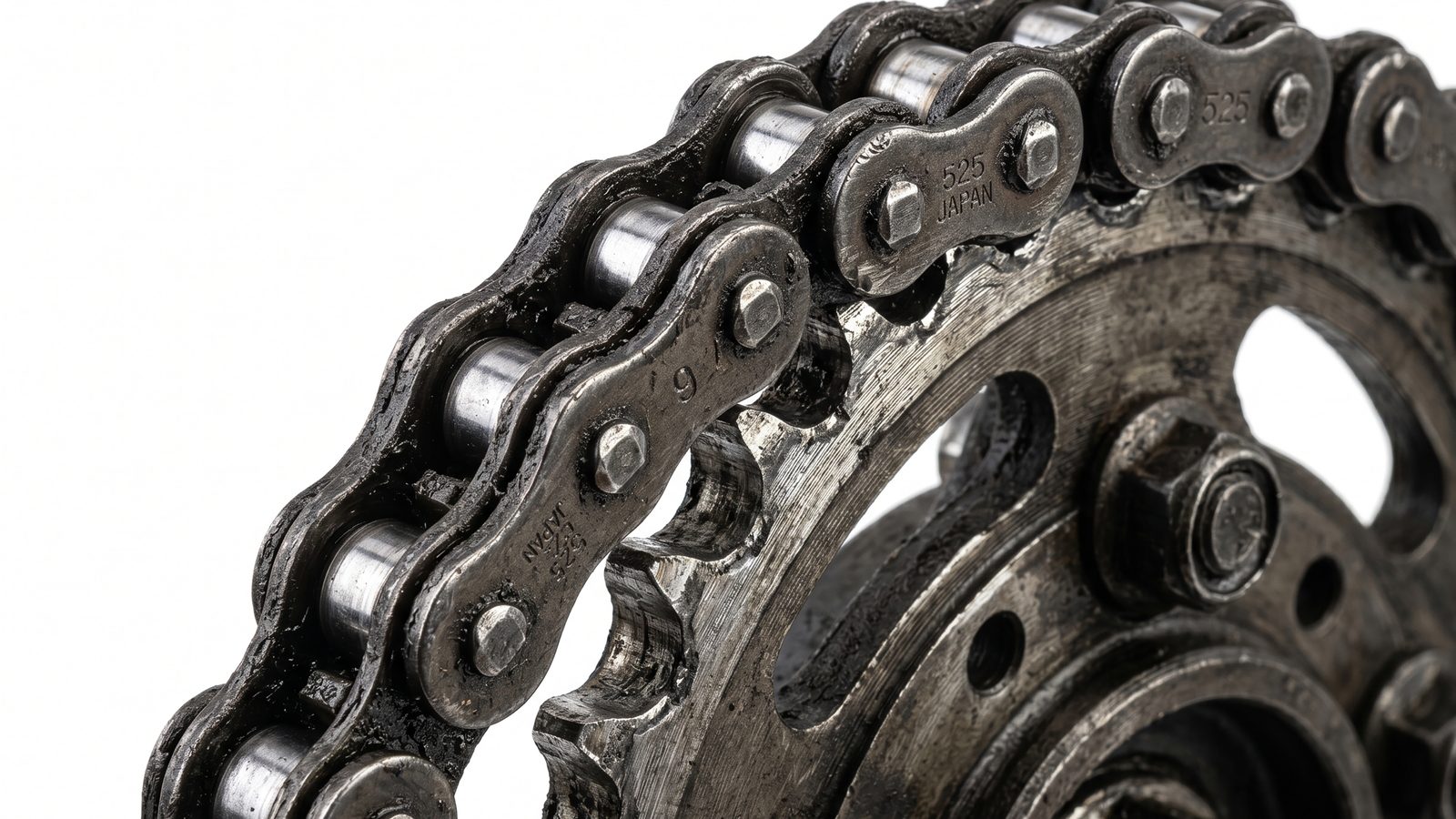
One more signal worth knowing: if links stay stiff after cleaning and lubing, or if the rear sprocket teeth start curling into a hook shape, you’re past maintenance. The set is worn out and needs replacing.
FAQ
Should you lube the chain before or after riding?
After, once the mud and dust are off. Lubing a dirty chain before heading out does nothing useful: the product traps debris against the rollers and flings off within the first few rotations. Doing it on your return also gives the film the time it needs to set before the next session.
How long should chain lube dry before riding?
Give it at least 10 to 15 minutes so the solvent evaporates and the film stabilizes. If you lube when you get home and then park the bike, the question never comes up. It’s the quick spray in the parking lot, seconds before rolling out, that achieves close to nothing.
Does more lubricant mean better protection?
No. Whatever runs down the outer plates touches no moving part, but it does collect dust and end up flung across the rim and swingarm. A thin, even film on the inner face protects better than a heavy, sloppy application. Wiping the surplus also saves you a cleaning job the next day.
Find the rest of the maintenance guides on the dirt bike maintenance page.
Editorial content. PiloteMX offers no on-site service, no parts or gear sales, no quotes and no bike repairs. Working on a bike and riding it carry risk: what you do with this guide is your own responsibility.