Fork Oil Change Interval: How Often You Really Need It
Contents
Fork oil on a dirt bike should be changed every 15 to 20 hours of hard riding, and at least once a season if you ride for fun. Nothing leaks, nothing rattles, the level never drops. The oil simply stops damping the way it should, and your feel for the front end goes long before any part fails.
Why fork oil ages faster on a dirt bike
A motocross fork never gets a break. Jumps, braking bumps, ruts, hard stops into a corner: compression and rebound cycles come at a rate no street fork ever sees. The oil heats up, gets sheared as it forces its way through the valving, and drifts away from the viscosity the hydraulics were built around.
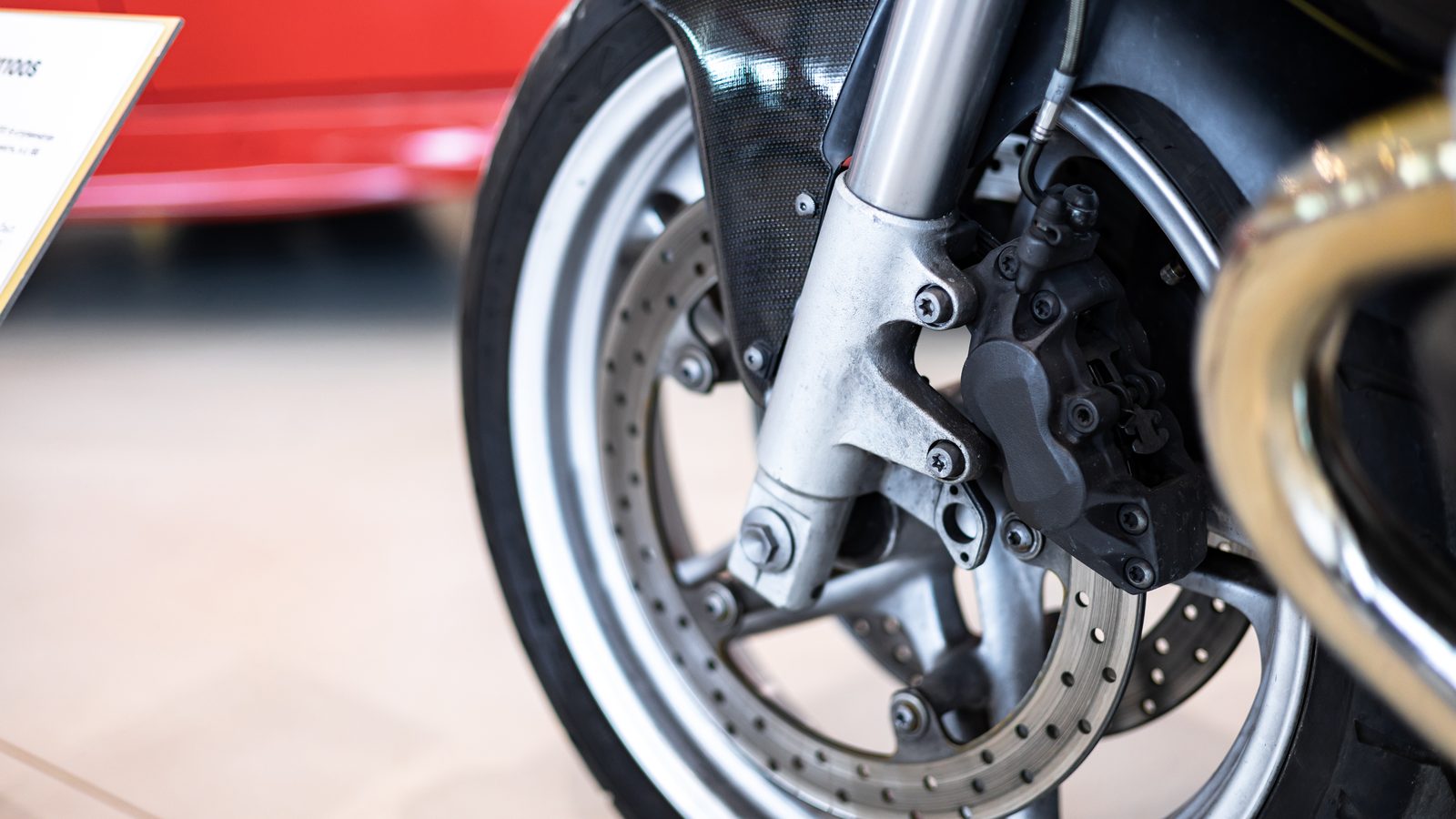
The trap is that none of this shows. The level holds, the tubes stay dry, the bike still rides. What changes is how the fork takes a hit — slightly less progressive, slightly harsher deep in the stroke, slightly vaguer over small chatter. Most riders blame the clickers and spend weeks chasing a setting that was never the problem.
That slow slide costs you where it matters most: landing jumps and holding a line through rough ground. A fork that damps poorly punches every impact straight into your arms, and traction on the front wheel goes with it.
Signs the change is due
These symptoms creep in, which makes them hard to spot without a fresh reference to compare against. Here is what the common ones usually mean.
| What you feel | What it usually means | What to do |
|---|---|---|
| The fork spikes deep in the stroke on moderate hits | Tired oil that no longer builds damping progressively | Change the oil before touching any clicker |
| The fork dives under braking and feels soft | Broken-down oil, sometimes a spring rate wrong for your weight | Fresh oil first, spring check if it persists |
| A gritty or sticky feel through the travel | Contamination from wear particles inside the leg | Change the oil and inspect seals and bushings |
| One leg behaves differently from the other | Trapped air or uneven oil volumes | Bleed and reset the level to the service manual |
Feel is a late warning, so keep the manufacturer’s hour interval as your main marker. The oil degrades even on rides that felt fine, in the same way coolant loses its properties without the level ever dropping.
The job, step by step
Give yourself half a day the first time, a clean bench, and the service manual for your exact model open beside you. That manual is where the oil volume, the weight and the torque figures live. No generic guide can stand in for it.
- Support the bike with the front wheel off the ground and the bars free, on a stable stand under the engine.
- Write down your current compression and rebound settings before you touch a clicker, so you can put them back exactly.
- Loosen the upper then the lower triple clamp pinch bolts, and pull one leg at a time to keep the bike settled on the stand.
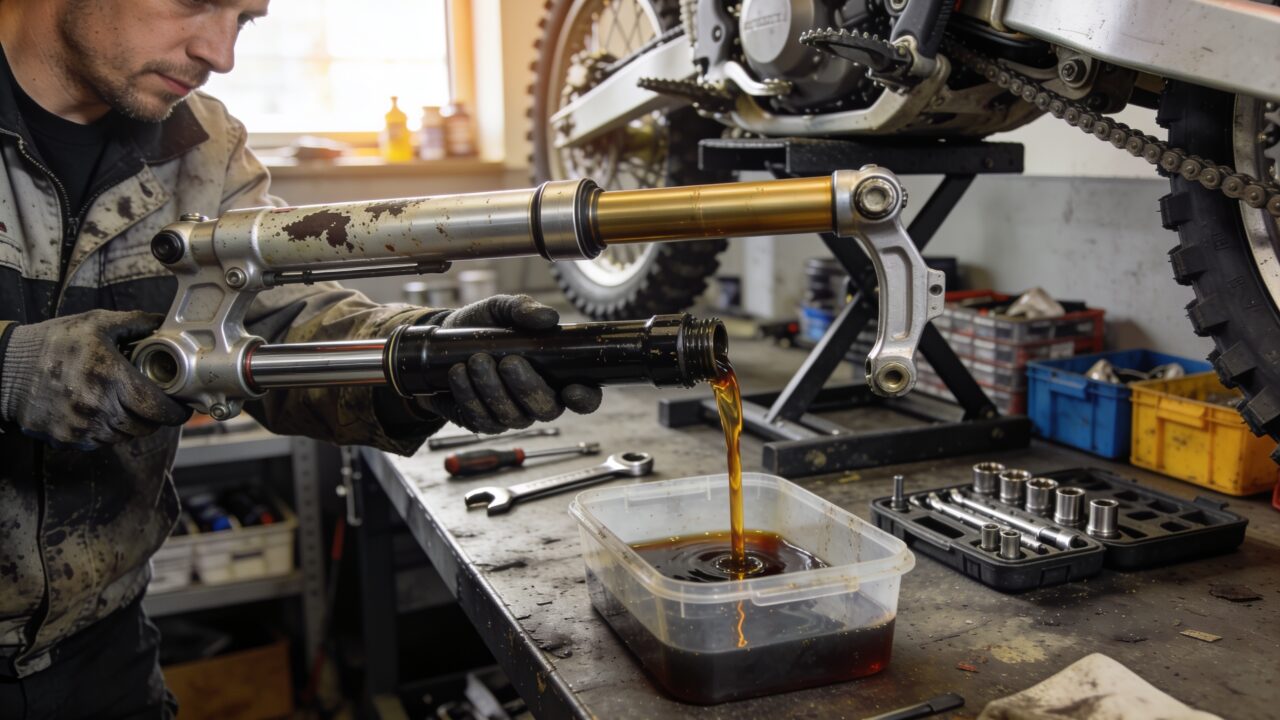
- Open the drain screw at the bottom of the leg, let it run out, then stroke the fork by hand several times to push the last of the old oil through.
- Look at what comes out. Colour, smell, metallic glitter held in suspension — this is the only free diagnosis in the whole job.
- Refill with the exact oil weight and volume the manual calls for. Volume gets measured in a graduated cup, never eyeballed.
- Bleed the air by stroking the fork slowly and smoothly until the resistance feels even across the whole travel.
- Reassemble, torque to spec, restore the settings you noted in step 2, then ride a calm lap before pushing the pace again.
What shortens the interval
Sand and dust chew through seals faster than heavy mud does. Fine grit works its way past the wiper, and once it is in the oil it accelerates everything else. On dry, loose ground, assume the fork is aging faster than the hour meter suggests.
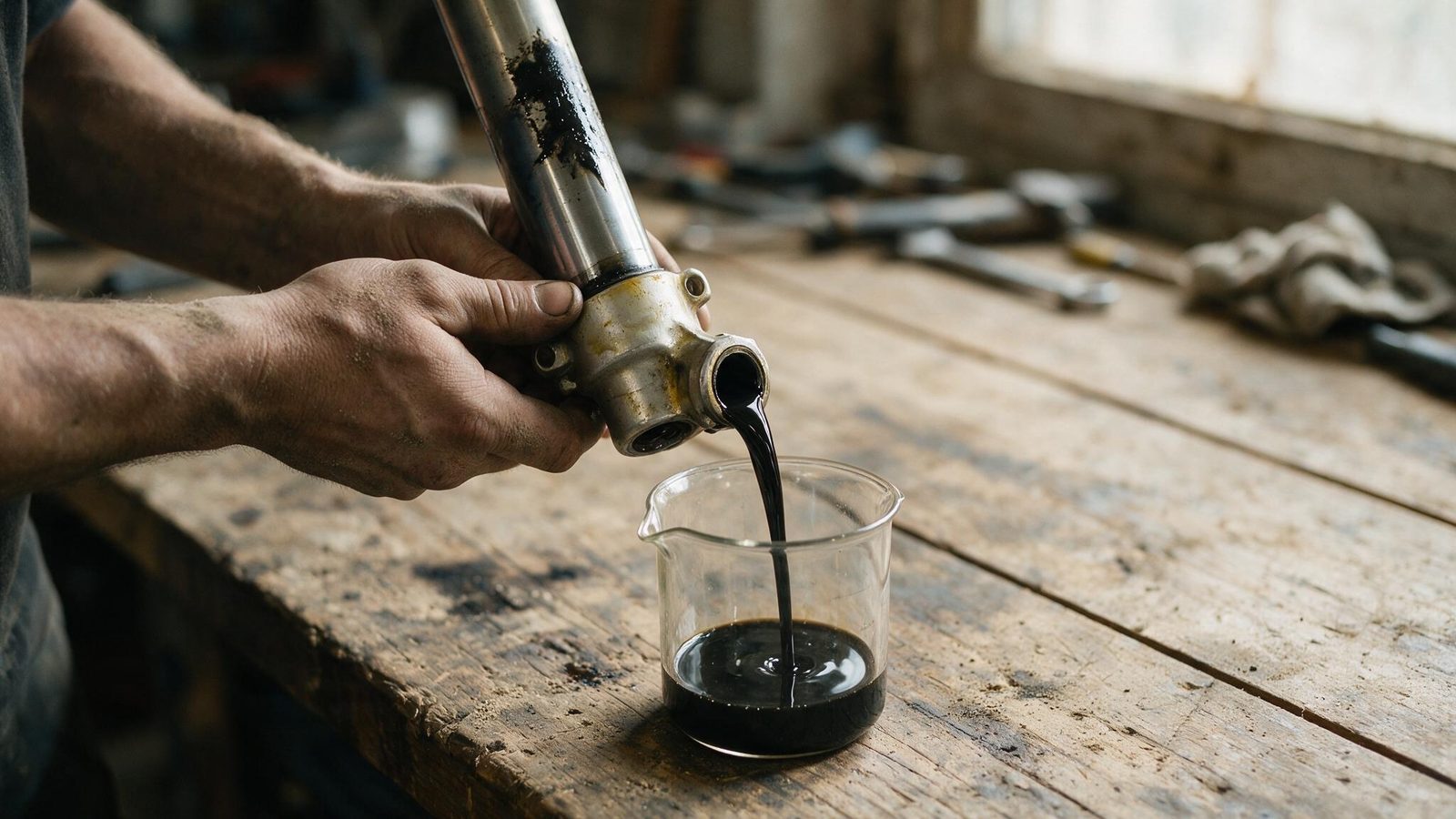
Riding style counts as much as the surface. A heavier rider, or one who jumps a lot, loads the hydraulics harder every single lap. A few relaxed sessions on a flowing track barely touch the oil. The hour meter cannot tell those two apart — you can.
A bike that sleeps all winter deserves the same attention. Do the oil at winter storage rather than in a panic the week the tracks reopen and you want to ride, not to strip forks.
Looking after the fork between changes
Wipe the tubes down after every dirty session, as part of your post-ride routine. Dried mud sitting on a tube grinds at the seal on every compression, and a leaking seal costs far more than a rag and two minutes.
Check for weeping around the seals during your pre-ride check. A faint film can be tolerable, but a wet patch that keeps spreading means the seals are on their way out.
Inspect the tubes for scratches and stone dings, especially after a crash. A deep score will destroy a brand-new seal within a few rides, so find it before you order parts. A careful wash helps, as long as you never aim a pressure washer straight at a seal.
Mistakes that cost money
Putting the change off because the fork still feels alright. The decline is too gradual to notice ride by ride, and your hands adapt to it. By the time the difference is obvious, you have been riding a fork that stopped protecting you a long while ago.
Switching oil weight to make the bike better without a clear goal. It shifts the balance of the whole chassis and it is hard to claw back with clickers. If you genuinely want the fork matched to your weight and pace, that belongs to suspension setup, not to an oil change.
Filling by guesswork. A fork reacts to a volume error out of all proportion to how small it looks, and two legs filled differently give you a bike that pulls to one side on landings for no reason you can name.
FAQ
How often should fork oil be changed?
Every 15 to 20 hours of hard riding, and at least once a season if you ride casually. Stick to the interval even when nothing feels wrong: the oil fades gradually and your hands adjust along with it, so feel alone will never tell you in time. A simple hour log beats memory here.
Can I do it myself?
Yes, if you stay with a drain and refill through the bottom screw and keep your model’s service manual to hand for volume, oil weight and torque. The moment a sealed cartridge has to come apart or a seal needs replacing, pass it on. The tooling is specific and a bad reassembly shows up under braking.
My fork still spikes after resetting the clickers. Why?
When compression and rebound are back at the baseline settings and it still spikes, tired oil is the most likely cause. Change it before you keep turning clickers. If the fault survives fresh oil unchanged, start looking at spring rate or internal wear instead.
Find the rest of the maintenance guides on the dirt bike maintenance page.
Editorial content. PiloteMX offers no on-site service, no parts or gear sales, no quotes and no bike repairs. Working on a bike and riding it carry risk: what you do with this guide is your own responsibility.