Winterizing a Dirt Bike: Protecting It During Storage
Contents
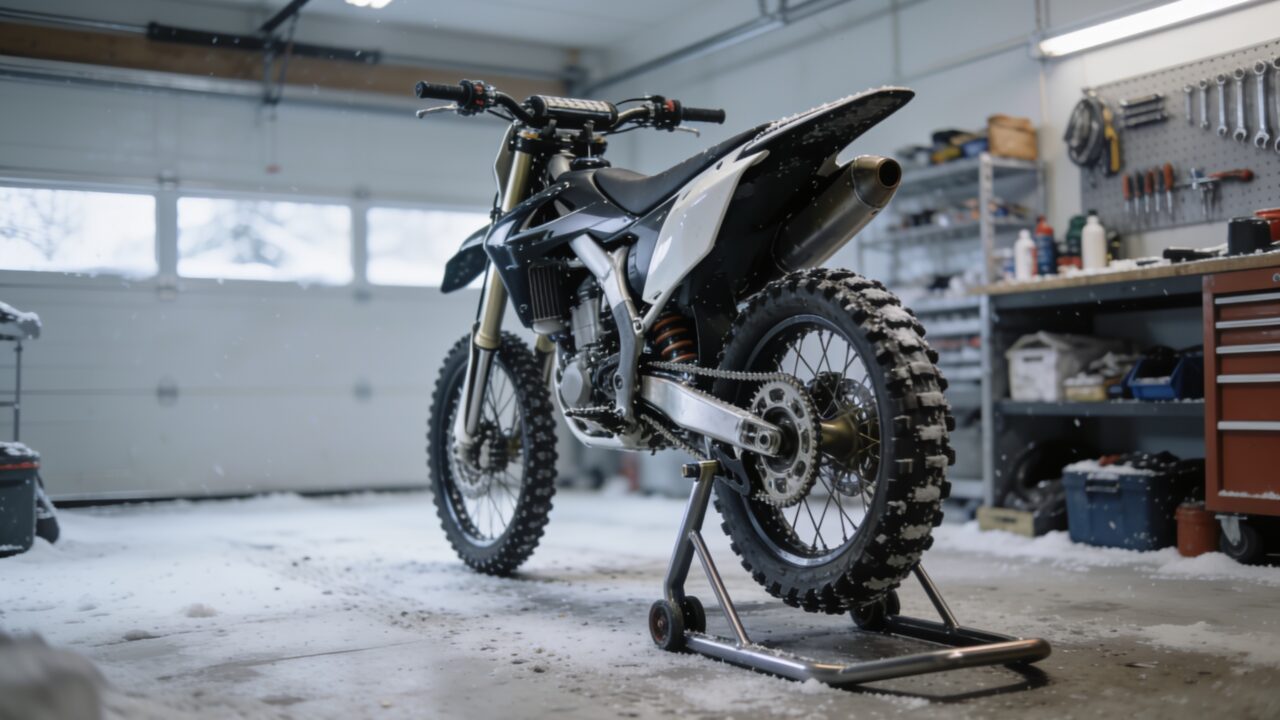
Winterizing a dirt bike means washing it properly, treating or draining the fuel, changing the engine oil before it sits, lubricating the chain, getting the tires off the ground on a stand, and pulling the battery. A bike stored dirty with old fuel in it collects the bill in spring: corrosion, and an engine that won’t fire.
What sitting still does to a bike
A dirt bike copes better with running than with resting. That sounds backwards until you list what protects the parts while it’s in use: oil circulating, heat driving moisture out, grease staying where it was put. All of it stops the day the bike goes into the corner of the garage.
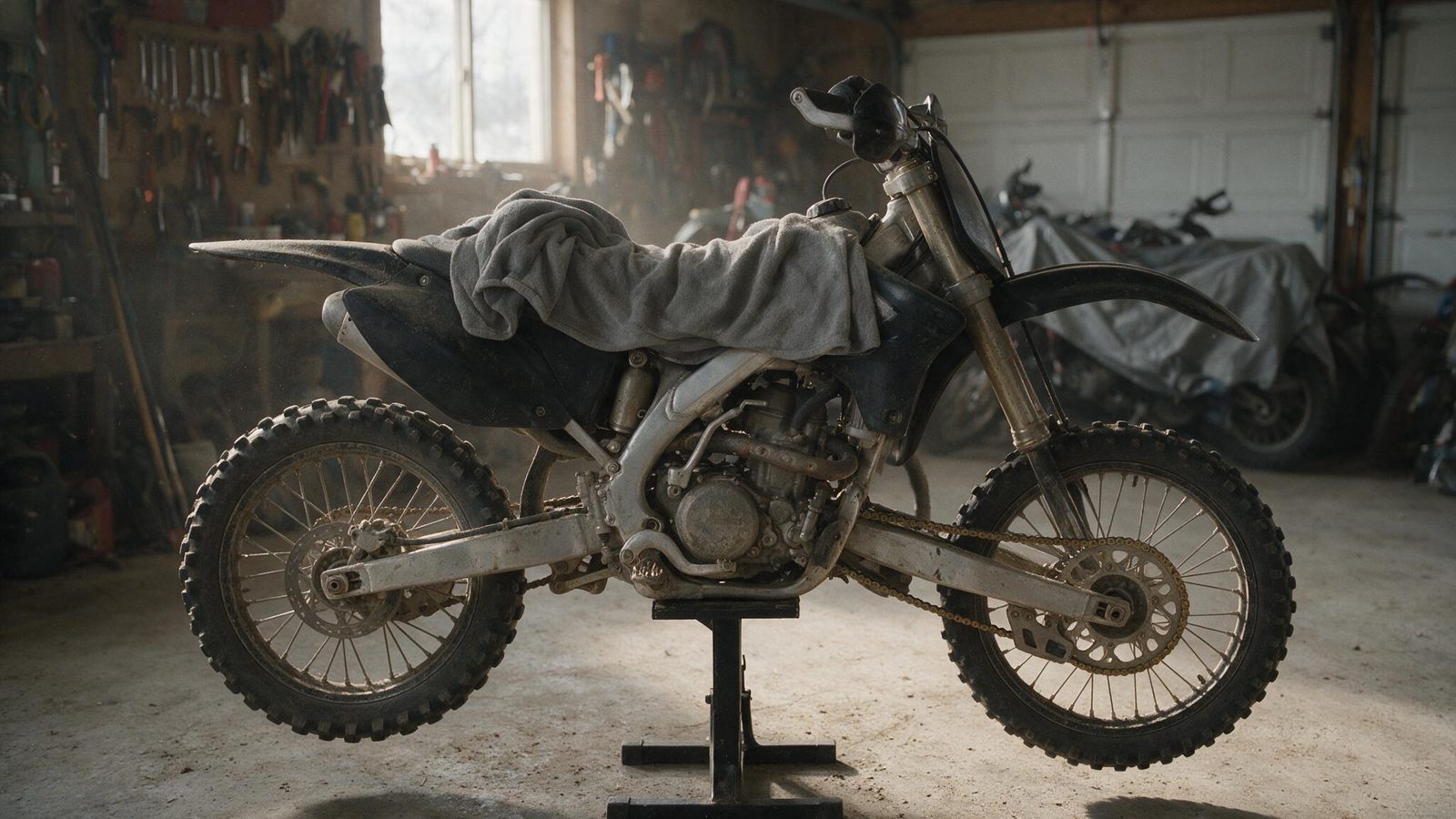
Fuel goes first. It breaks down in the system, leaves deposits, and blocks the small passages in a carburetor or fouls the injection. That is the classic spring no-start, and it’s entirely avoidable.
Moisture works next, including in a shed you’d swear was dry. It goes after the chain, the brake discs, the chrome on the fork tubes, anything left unprotected. Storing the bike dirty speeds all of it up, because mud holds water against metal for weeks. The full wash covered in the guide to washing a dirt bike is the real first step here, not an optional extra.
Tires flat-spot on whatever part of the tread carries the weight. Sometimes a few rides bring the shape back. Sometimes they don’t.
The prep, step by step
Order matters. Wash first, protect second, store last. Doing it the other way round seals moisture in under a coat of corrosion inhibitor.
- Wash the whole bike, including under the rear fender and around the linkage, then dry it thoroughly.
- Change the engine oil even if the usual interval isn’t up: used oil carries mildly acidic combustion byproducts that keep working on internal surfaces while the bike sits.
- Add fuel stabilizer, then run the engine long enough for treated fuel to reach the carburetor or injector. If you’d rather store it dry, drain the float bowl as well.
- Pull the spark plug, put a few drops of oil into the cylinder, and turn the engine over briefly with the ignition off to spread a film on the walls.
- Refit the plug, or fit a new one if the old one is tired, as covered in the guide to changing a spark plug.
- Clean and lubricate the chain generously, following the method in the guide to chain lubrication.
- Wipe a thin coat of corrosion inhibitor over exposed metal, keeping the product well away from the discs and pads.
- Plug the exhaust so moisture and rodents stay out.
- Put the bike on a stand with both wheels clear of the floor.
The wash and the drying take the time. Everything else fits into one evening. Plenty of riders do it backwards, rushing the wash and lavishing attention on the corrosion spray, which protects nothing at all when it goes onto a dirty bike.
Full tank or empty tank
Both approaches work. What doesn’t work is half a tank with nothing added: you get humid air above and aging fuel below.
| Option | What it gives you | What it asks of you |
|---|---|---|
| Full tank plus stabilizer | Little air inside, so little condensation on the walls | Buying the additive and running the engine after adding it |
| Empty tank | No fuel left in the system to go stale | Draining the float bowl too, and living with condensation in a metal tank |
| Half full, untreated | Nothing | This is the one to avoid: a gummed-up fuel system in spring is close to guaranteed |
On the plastic tanks most dirt bikes use, the condensation argument carries less weight and dry storage is comfortable. With a metal tank, a treated full tank stays the safer call.
Tires, battery, and where the bike sleeps
A workshop stand settles the tire question in one move: wheels in the air, no contact patch under load, no flat spots, and no bearings carrying static weight. Without a stand, run the tires slightly above your usual riding pressure and shift the bike now and then so the contact point changes. You’ll reset to working figures using the guide to tire pressure when you pick the bike up again.
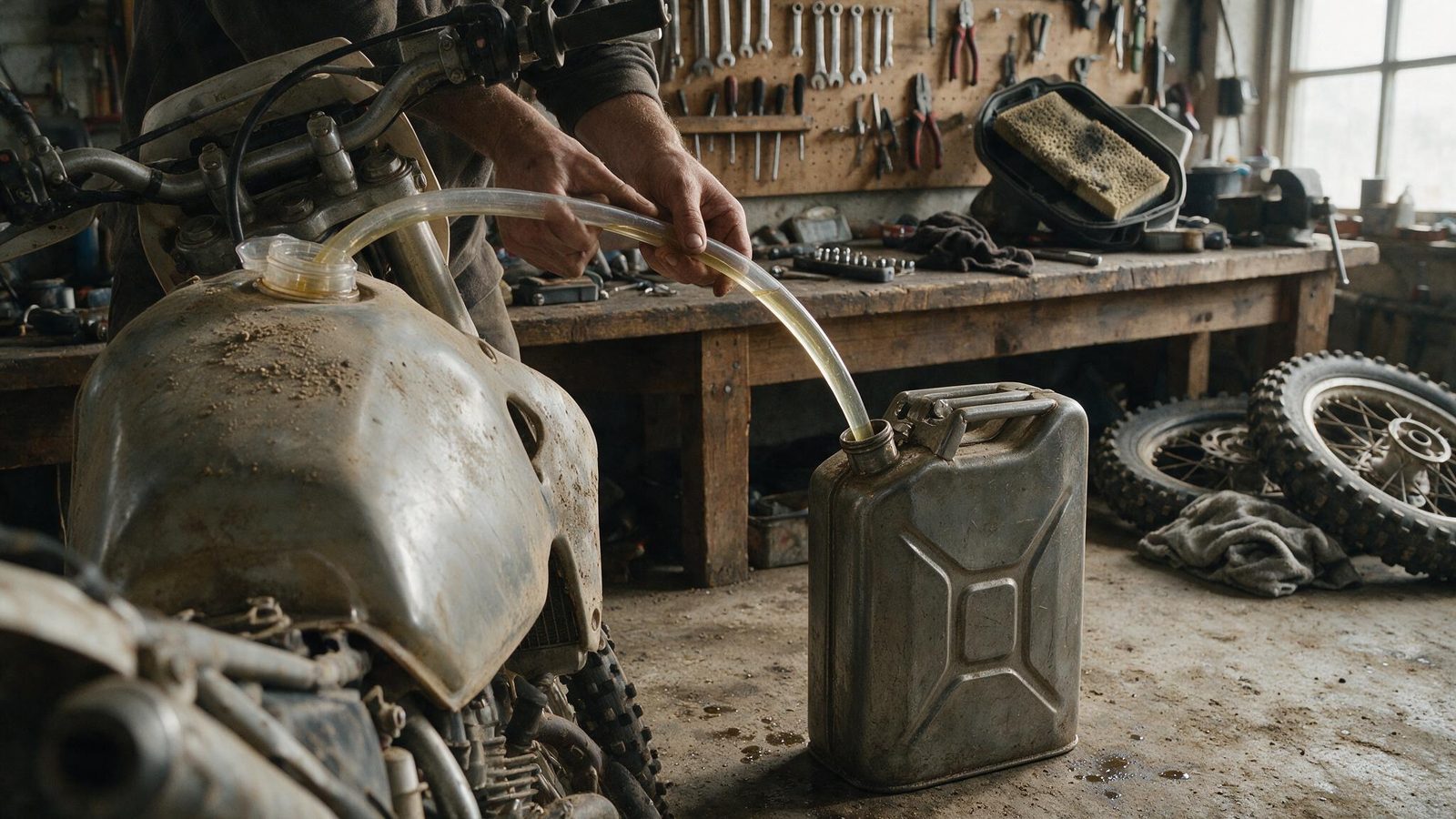
Battery, if your bike has one: disconnect it, take it out, and put it on a maintenance charger somewhere with a stable temperature. A battery left connected drains slowly through the standby loads, and one that goes flat for months usually never comes back.
For the space itself, a dry garage at a steady temperature beats an outdoor spot under a tarp. Under a tarp outside, damp rises from the ground, condenses on the bike and never escapes, which is a greenhouse for rust. If that’s your only option, put a mat or a board between the ground and the bike, and use a breathable cover rather than a waterproof sheet.
Waking it up in spring
Don’t start it first. Check first: oil level and appearance, chain tension and condition, tire pressure, brake fluid and coolant levels, play at the steering head. A bike that has slept doesn’t come back the way one parked yesterday does.
Look hard at the brake fluid. It pulls moisture out of the air over time, and it darkens as it ages. Brakes are the wrong place to economize: if you have any doubt, have a workshop check the system rather than heading out hoping. The guide to brake maintenance sets out what you can check yourself and what shouldn’t be improvised.
Then run your usual pre-ride checklist and keep the first session short. You want to hear the engine and feel the brakes before you start enjoying yourself.
FAQ
Should you start the bike now and then over winter?
Only if you bring it up to real operating temperature. A short cold start is worse than nothing: it puts condensation into the engine and exhaust without ever burning it off, and it drains the battery. Either ride it properly or leave it alone until spring.
How long can a bike sit without damage?
Prepared well, several months pass with nothing to show for it. Parked as-is after a muddy ride, the first damage appears within weeks: corrosion on the chain and discs, fuel starting to turn. Preparation decides how long it survives, not the calendar.
Change the oil before storage or after?
Before. Used oil carries mildly acidic combustion byproducts that stay in contact with internal surfaces for the whole layup. Fresh oil protects better and lets you ride as soon as the weather turns. Normal intervals are covered in the guide to oil change intervals.
Find the rest of the practical guides on the dirt bike maintenance page.
Editorial content. PiloteMX offers no on-site service, no parts or gear sales, no quotes and no bike repairs. Working on a bike and riding it carry risk: what you do with this guide is your own responsibility.