Dirt Bike Tire Wear: When It’s Time to Replace Them
Contents
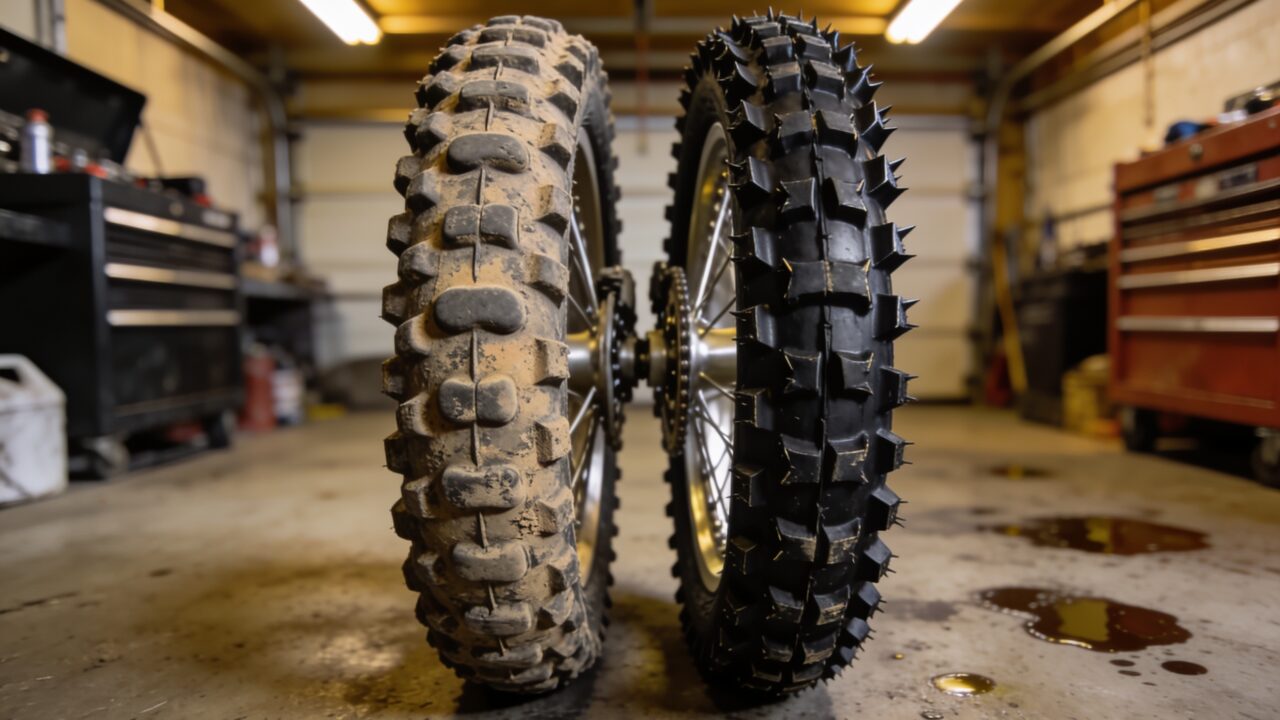
Replace a dirt bike tire once knob height drops below 50% of its original depth. Past that point the knob no longer digs into loose dirt or clears material between the blocks: you lose drive under acceleration, gain braking distance, and the slide in corners turns unpredictable. The shape of the knobs matters as much as their height.
What tire wear actually costs you
Knobs do two jobs: bite into loose ground, and throw material out from between the blocks while the wheel turns. A knob that has lost height does both jobs worse. It anchors shallower, and it holds mud packed between the blocks instead of flinging it clear.
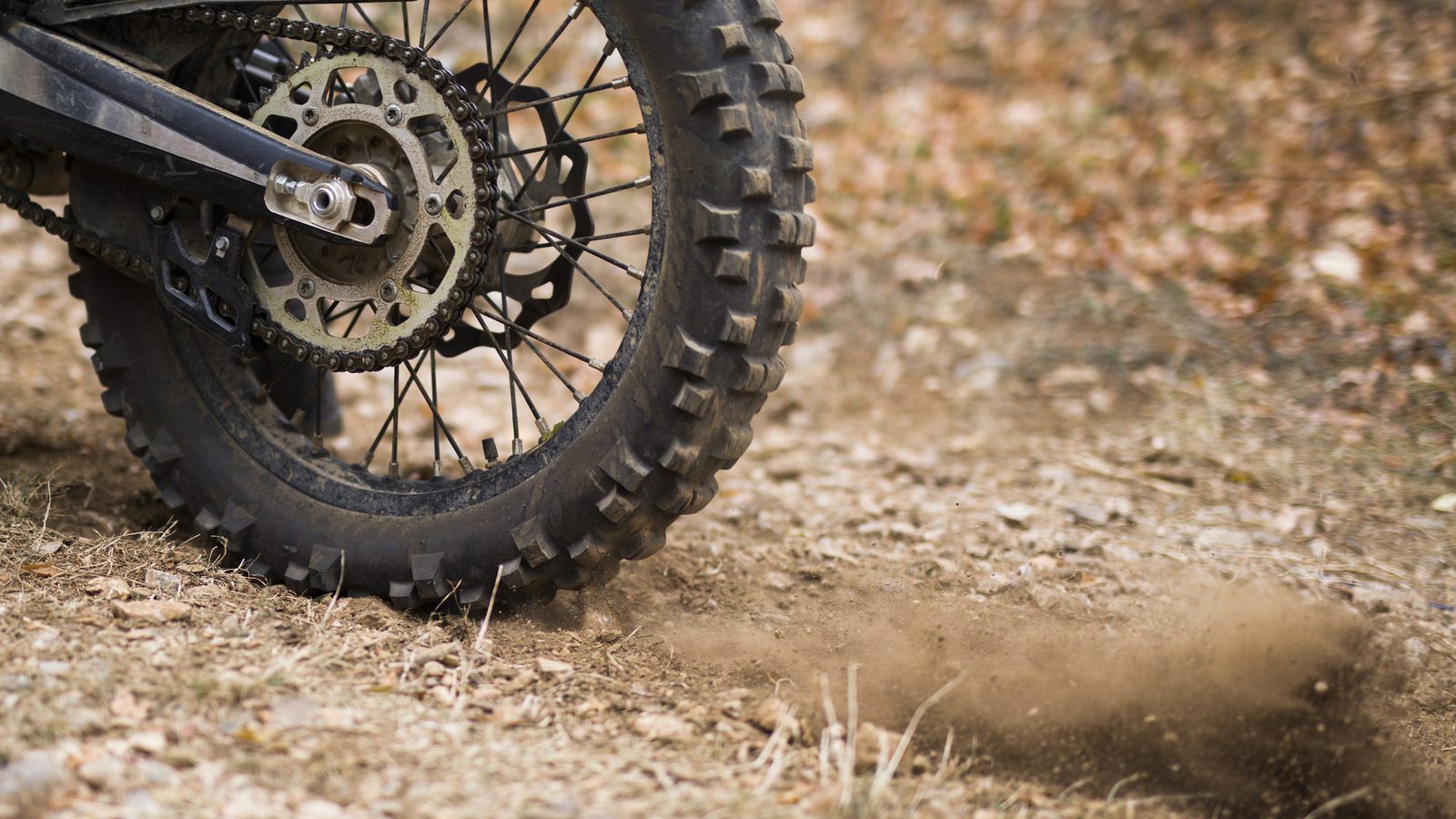
You feel it first under power — the rear spins earlier and you feed in more throttle for the same result. Then under braking, where the distance stretches without warning. Corners are the worst of it: a worn tire doesn’t slide more, it slides sooner and far less clearly, which makes the cornering position you’ve been drilling for months much harder to hold.
The trap is how slowly it happens. Nobody notices losing traction from one ride to the next. You adapt, you carry a little less speed, you blame the dirt — and you find out how big the gap really was the day you fit a fresh tire. Since the wheel is already off to fit that new tire, it’s also the easiest moment to check the wheel bearing for play.
Checking a tire in six steps
- Wash the tire and let it dry. A knob packed with dirt always looks taller than it is.
- Compare knob height in the center of the tread against the knobs near the edges. The center works in a straight line and goes first: a clear gap between the two zones means the tire is well down.
- Run your thumb across the edge of a center knob. A sharp edge bites. A rounded edge slips, even when the height still looks acceptable.
- Look for knobs split or torn at the base, especially on the rear after sand. A torn knob never comes back.
- Inspect the sidewalls closely: cracking, cuts, grey patches. A bike stored in the sun or badly put away for winter can ruin a tire that barely rode.
- Check that the valve still sits square in its hole. A leaning valve means the tire has turned on the rim — loose rim lock or pressure too low, and it needs sorting before the next ride.
The whole check takes two minutes and slots naturally into your pre-ride checklist. Do it with the tire clean and the bike on a stand so you can spin the wheel.
The dirt decides how fast tires wear
Two riders on identical tires don’t have the same life ahead of them. It isn’t the number of rides that counts, it’s what the ground does to the rubber.
| Terrain | How it wears | What to watch |
|---|---|---|
| Hardpack and rock | Steady abrasion, height coming down | Knob height in the center of the tread |
| Sand | Tearing: knobs rip rather than grind away | Blocks split or missing at the base |
| Mud | Little height loss, but the carcass runs loaded | Sidewalls and the knob-to-carcass joint |
| Dry loose dirt | Slow wear, edges rounding off | How sharp the edges are, not just depth |
Pressure weighs just as heavily. Too low and the sidewalls do the work and the tire folds under load. Too high and the contact patch shrinks, concentrating everything in the center. Either way the wear turns uneven, and a tire wearing crooked gets replaced sooner than one wearing flat.
Riding style counts too. A rider who kicks the rear sideways in every corner burns through a tire far quicker than one who hunts for the rut and the drive. Neither is right or wrong — it’s a budget line.
Choosing a replacement
Start from the terrain you actually ride most, not from whatever is trending. A soft compound with tall, widely spaced knobs works in loose dirt and mud but shreds on hardpack. A harder compound with tighter spacing lasts on abrasive ground and lets go early the moment it turns greasy.
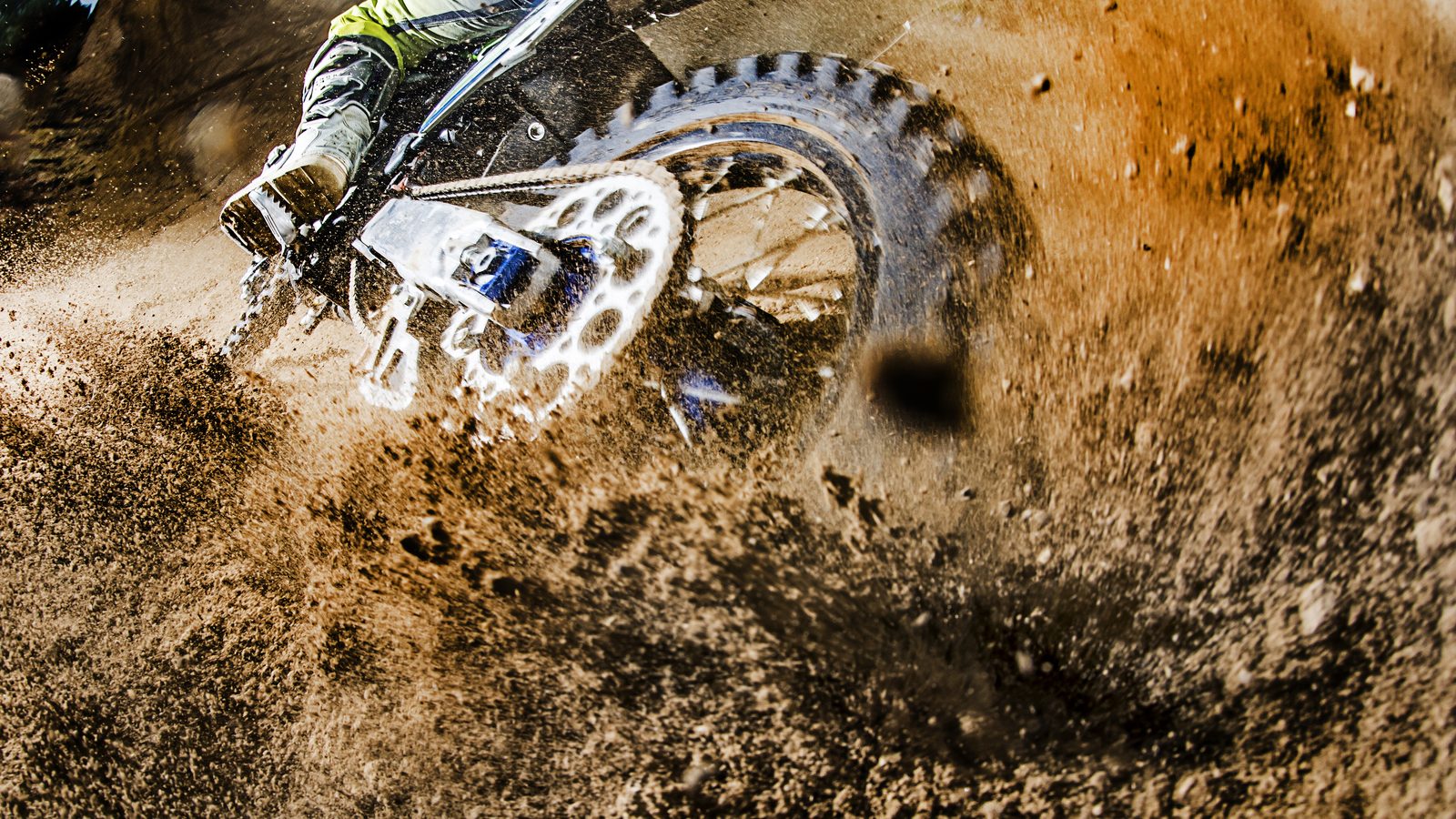
Plenty of regular riders keep two sets mounted, one for dry and one for loose or wet. It costs less than it sounds, because each set only wears on the ground it was built for.
Before buying, check the size and load rating in your bike’s manual. A wrongly sized tire changes how the chassis behaves even with the right knob pattern. And look at sprocket wear while you’re there — the two usually go off together, and the rear wheel is already out.
Mistakes that get expensive
Riding to the cords on greasy ground. The loss of traction becomes sudden instead of gradual, and it shows up at the worst moment: a jump landing, a panic stop, a hard load in a berm.
Looking only at the tread. Sidewalls crack quietly, especially on a bike that lives outside, and a tear under load gives no warning.
Trying to compensate for a worn tire with pressure. It moves the problem along one notch without solving it, and it eventually creates even more uneven wear.
Waiting for extreme wear to save money. A tire that’s too far gone works the tube hard and invites a flat. The tire you saved comes back as a tube, a lost afternoon and a missed moto. Take the look while you’re washing the bike — it’s the only time the tire is clean.
FAQ
How long does a dirt bike tire last?
It swings hugely with terrain and style: a handful of hard rides on abrasive ground, or several months of moderate use. Counting rides tells you nothing useful. Knob height and edge condition are the only reliable indicators, and both read in two minutes on a clean wheel.
Can you still ride a tire worn to 50%?
Yes, but bite drops off noticeably on loose or wet ground. In practice most riders finish the set at training days. For racing, many replace before that point to keep some margin. The real question: can you still predict the moment the rear lets go?
Why does the rear tire wear faster than the front?
It puts every bit of engine power to the ground and spins constantly under throttle, while the front mostly steers and brakes. Going through several rears per front is normal. Replace each one on its own condition rather than treating them as a pair.
Can a worn tire be repaired instead of replaced?
No. Lost knob height can’t be restored, and cutting or grooving knobs weakens what’s left. Repairs cover punctures and some sidewall damage, never tread depth. Once the knobs are down, the only fix is a new tire.
Find the rest of the maintenance guides on the dirt bike maintenance page.
Editorial content. PiloteMX offers no on-site service, no parts or gear sales, no quotes and no bike repairs. Working on a bike and riding it carry risk: what you do with this guide is your own responsibility.