Cracked Dirt Bike Engine Case: Repairing Without a Full Teardown
Contents
A shallow crack in a dirt bike engine case, away from a bearing seat and away from a mating surface, can be patched with metal epoxy for recreational use, or TIG welded in aluminum when you want it to last. The moment the crack goes through the wall and oil runs out, stop: the case needs a proper assessment before you try anything.
Finding where the crack actually runs
Degrease the area, dry it, then light it from a low angle. On aluminum a crack shows up as a dark, sharp line, usually with an oily halo around it when it seeps. Run the engine until it comes up to temperature, shut it off, and look again. The case moves as it heats, and that is when the crack gives itself away.
Still dry after that test? You are looking at a surface flaw, and there is no rush. If oil comes back, especially near a crankshaft bearing or a shift shaft, oil pressure is on the line and the job just got serious.
Impact cracks
These start at a strike point: a rock, the footpeg of the bike next to you, a landing on a buried stump. The outline is defined, and there is often a dent still visible in the aluminum. It will not spread on its own as long as the area is not loaded, which buys you time to do the repair properly.
Fatigue cracks
This kind is nastier. It grows out of an overtightened fastener, a pulled thread, a dead engine mount that lets the motor move, and it advances every ride. You recognize it by the path it takes: it follows a rib or starts at a mounting boss. Close the crack without fixing what caused it and you will be back at the bench soon enough.
Epoxy, welding, or a replacement case
These three are not in the same league. What decides is far less your budget than exactly where the crack runs.
| Method | What it handles | Where it stops |
|---|---|---|
| Metal epoxy resin | Surface crack, area that stays cool, no active leak | A stopgap you keep an eye on; surface prep decides everything |
| Aluminum TIG welding | Through crack outside a critical area, close to permanent | Case drained, removed, degreased; TIG rig and an experienced hand |
| Replacement case | Bearing seat, critical thread, branching crack | The price, and splitting the bottom end wide open |
Patching with metal epoxy
This is the Saturday night fix before Sunday’s race, and it does work. One condition: a surface crack, in an area that does not get anywhere near cylinder temperatures.
- Drain the oil. A repair laid on a case that still holds oil will not bond, whatever method you use.
- Degrease with brake cleaner, then do it again. Aluminum holds oil in its pores, and that is the number one reason patches let go.
- Open the crack slightly into a V with a burr or a small grinding wheel, so the resin has something to key into. Go easy: the wall is thin there.
- Sand well beyond the line on both sides to give the resin a grip.
- Blow off the dust, degrease one last time, and keep your fingers off the surface from here on.
- Mix the two-part resin exactly as the maker’s instructions say, and do not dawdle. Working time is short.
- Press on a thin first coat to drive the air out, then lay a second one that overlaps generously all around.
- Let it cure for the time printed on the package, somewhere free of dust, with nothing reassembled in the meantime.
The same family of product shows up on a cracked fuel tank, but the demands are nothing alike: there it is gasoline attacking the patch, here it is heat and hot oil.
Aluminum TIG welding
Welding actually closes the crack instead of covering it. The hard part is not the bead, it is everything around it. A dirt bike case has spent its life soaked in oil, and that oil boils back out under the torch as porosity that riddles the weld pool. A welder who knows cases will bake the part to purge it before the arc ever strikes.
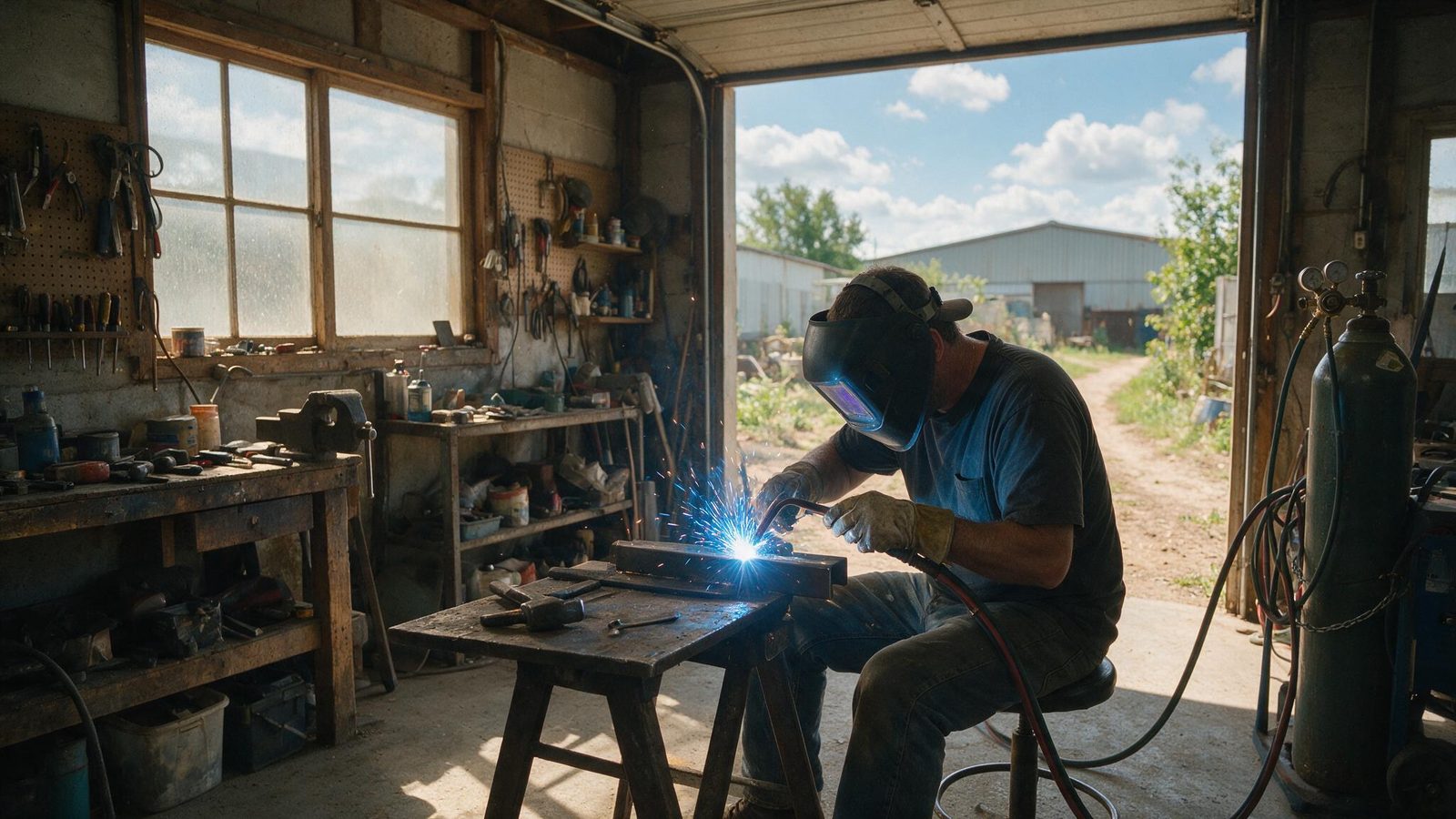
Gradual preheating is part of the job. A cold case hit all at once takes a thermal shock that drives the crack further instead of sealing it. Anything that dislikes heat comes out first, bearings and seals included. And since aluminum distorts as it cools, mating surfaces and bearing bores get checked again once the part is back to room temperature.
If you have never welded aluminum, an engine case is not where you learn. The process needs the right filler, a clean setup, and pool control that steel forgives far more readily. The basics are covered in the guide on plastic and aluminum welding.
Leak testing before you reassemble
Resin cured or bead cooled, put nothing back together yet. Fill the case with oil to normal level, slide a clean paper towel under the repaired area, and leave it sitting for several hours. Dry paper means you cleared this step. A low-pressure air test, if you own the plugs and a gauge, is stricter still: it catches porosity that cold oil would take days to find.
Then run the engine with the area clear and well lit. Hot oil is thin and finds what cold oil walks past. Shut it down, let it settle, and run a finger back over the repair.
When not to repair it at all
A crack running through a bearing seat, into a critical mounting thread, or spreading several centimeters with branches off it does not lend itself to any field fix. The case holds the geometry of the bottom end. Throw that alignment off and the crankshaft runs skewed until something lets go. A replacement case is expensive, but it stays the only dependable answer. The full trade-off is laid out in the guide on repairing versus replacing a part.
Same reasoning when the case cracked from a hard hit. Before you close the crack, you need to know what the crankshaft and its bearings absorbed. That inspection happens with the engine split, often at the same time as replacing a crankshaft bearing.
FAQ
Can I ride one more session with a case that seeps?
Seepage that comes back after every heat cycle means the crack goes through. Until it is dealt with, every lap moves you closer to losing level, and an engine short on oil seizes without warning. If the trace shows up near a bearing seat, the bike stays parked until a shop has looked at it.
Does epoxy really hold up to engine heat?
Metal epoxy made for mechanical work handles case temperatures and shrugs off hydrocarbons. What it will not hold is a mating surface under pressure, a bearing bore, or any area that flexes. On a moderate recreational bike a clean repair can go several seasons, provided you look at it every time you wash the machine.
Does the engine have to come out of the frame to weld it?
On a small, wide-open area some welders work in place. In practice, gradual preheating and pulling every heat-sensitive part push you toward a full teardown almost every time. A frame tube sitting centimeters from the bead soaks up that heat too, and nobody wants to discover an annealed spot in the chassis afterward.
More repair guidance in the repairs section.
Editorial content. PiloteMX offers no on-site service, no parts or gear sales, no quotes and no bike repairs. Working on a bike and riding it carry risk: what you do with this guide is your own responsibility.