Repair or Replace a Dirt Bike Part: How to Decide
Contents
Repair a part when the fix gives back its full original strength. Replace it as soon as the damage touches a structural safety point, or as soon as the time you would sink into it dwarfs the price of a new part. That rule settles most cases. The rest gets decided part by part, with the bike in front of you.
The three criteria that settle it
What the part does
A fender, a side panel, a number plate: nobody gets hurt because a plastic is split. Those get repaired without a second thought. A frame, a swingarm, a triple clamp, a brake disc is a different conversation. Those parts carry load all the time, the load spikes on every landing, and when they fail they give no warning.
Material and type of damage
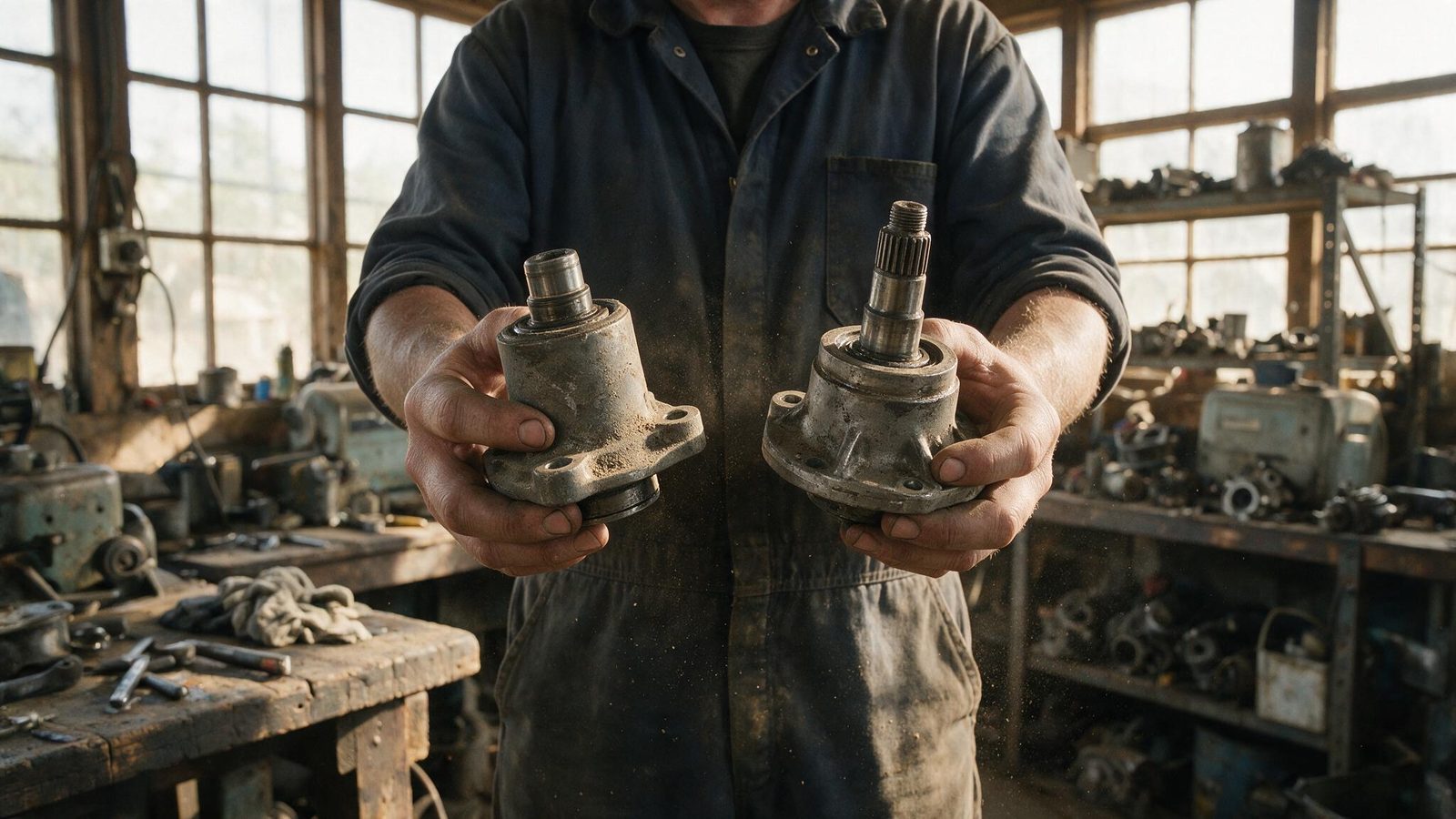
A surface crack in an aluminum case can be saved, with epoxy or with aluminum welding depending on depth. A bent steel tube is another matter. The bend changed the metal itself. Straightening gives the shape back, not the original stress distribution — that is the gap between a part that looks straight and a part that is sound.
What the part has already been through
A part repaired once in a spot that breaks again in the same spot has answered your question. The weak point is there and it is not going anywhere. A second repair costs time and usually buys you a third one.
The sorting routine, in order
- Clean the damaged area. A crack under dried mud always looks less serious than it is.
- Ask what happens if the part lets go mid-jump. If the answer involves the wheel, the steering or a brake, the call is made: replace.
- Hunt for secondary cracks around the main damage, with a light and a magnifier if needed.
- Check whether the break lands on a factory weld, a bearing seat or a seal housing. Those three areas turn a routine fix into shop work.
- Look up the price of the new part and of the same part used, before any tools come out.
- Estimate the repair time, then double it. You will be close to reality.
- Make the call, then write the decision and the date in your maintenance log.
Parts you never repair
A helmet that has taken an impact goes in the bin, even when the shell looks untouched. The inner foam absorbs energy once, and nothing about that shows from the outside. The guide on choosing a helmet covers this.
Same logic for pure-safety parts: a cracked brake disc, a master cylinder that took a hard hit, a visibly bent fork tube. None of those get nursed to the end of the season.
A frame cracked at a structural weld belongs in the same group. The repair exists, technically. It needs a welder qualified on motorcycle frames or in aerospace work, with proper inspection behind it — not a machine sitting on a garage bench.
Parts you repair without hesitation
Cracked or broken plastics come back nearly invisible when the work is done carefully. A small surface crack in a case, away from any bearing seat, takes two-part epoxy fine for casual riding. A damaged wiring harness almost always repairs, unless it has burned over a long section. A chain that breaks mid-ride gets you home on a master link.
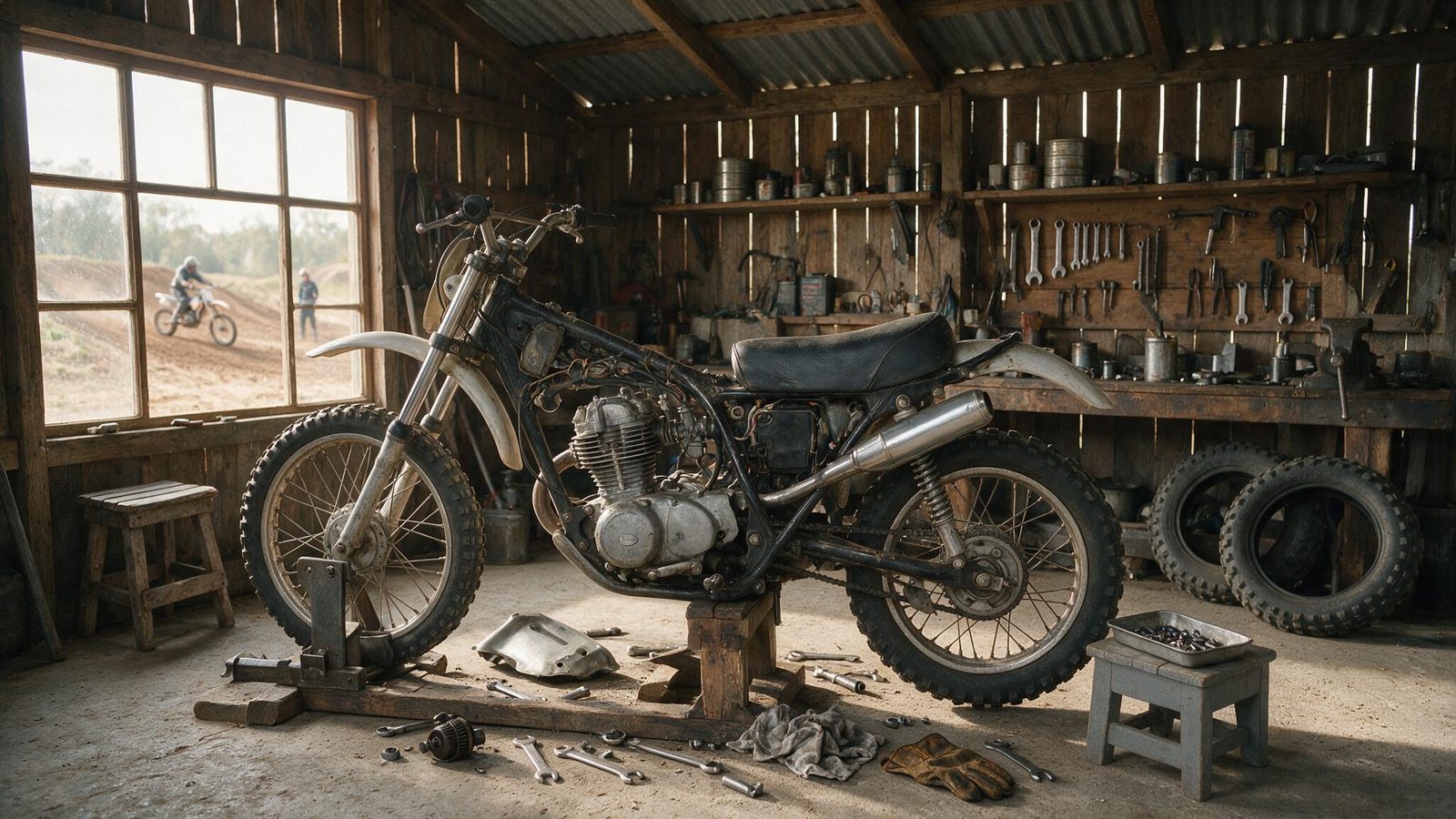
What those parts have in common: when they fail, you feel it coming. They do not surprise the rider at the worst possible moment.
What a repair really costs
Plenty of riders compare the price of a new part against the price of consumables and conclude that repairing wins. That maths leaves out the rest: the trips to the shop, the evening spent on it, the teardown you redo if the fix lets go, and the ride day lost when it does.
Decision markers
- Cosmetic part
- Repair, no hesitation.
- Mechanical, non-structural part
- Repair if you can check the result afterwards.
- Structural or braking part
- Replace, or have a professional sign it off.
- Second failure in the same spot
- Replace.
- Trailside fix
- Temporary by definition. Redo it properly at home.
The mistakes that keep coming back
Repairing a safety part to save money, with a promise to ride carefully. Dirt riding does not grant that margin. Crashes happen to careful riders too, usually on the lap where you were not thinking about that part.
Letting a trailside bodge become permanent, because the bike runs and nobody checks under the mud.
And the opposite, which gets mentioned less: binning a perfectly recoverable part out of reflex, because new parts feel reassuring. A fresh set of plastics has never made anyone faster.
FAQ
Can a bent frame be straightened?
A slight bend can sometimes be corrected by a professional with an alignment table, measured before and after. A frame that is visibly bent or cracked at a structural junction gets replaced. The guide on frame straightening lays out the cases where the job makes sense and the ones where it does not.
How do I know if an engine case crack is repairable?
A surface crack that does not go through the wall and stays clear of a bearing or a seal can be repaired. A crack actively passing oil needs a professional opinion first, because the leak tells you it goes all the way through. Clean and dry the area, run the engine, then look for oil coming back.
Repair, or buy a used replacement?
It depends on the price of a good used part and on how long the repair will take. For a common, cheap part, used almost always wins. For a rare part on an older model, repair becomes the only sensible route. Check the actual condition before you buy, with photos from several angles.
Do I always need a professional?
No. Plastics, small electrical repairs and most wear-item replacements happen at home with ordinary tools. A shop becomes necessary once the part touches structural safety or braking, or once a geometry check is the only way to validate the work.
More repair guidance in the repairs section.
Editorial content. PiloteMX offers no on-site service, no parts or gear sales, no quotes and no bike repairs. Working on a bike and riding it carry risk: what you do with this guide is your own responsibility.