Plastic and Aluminum Welding for Dirt Bikes: The Basics for DIY Repair
Contents
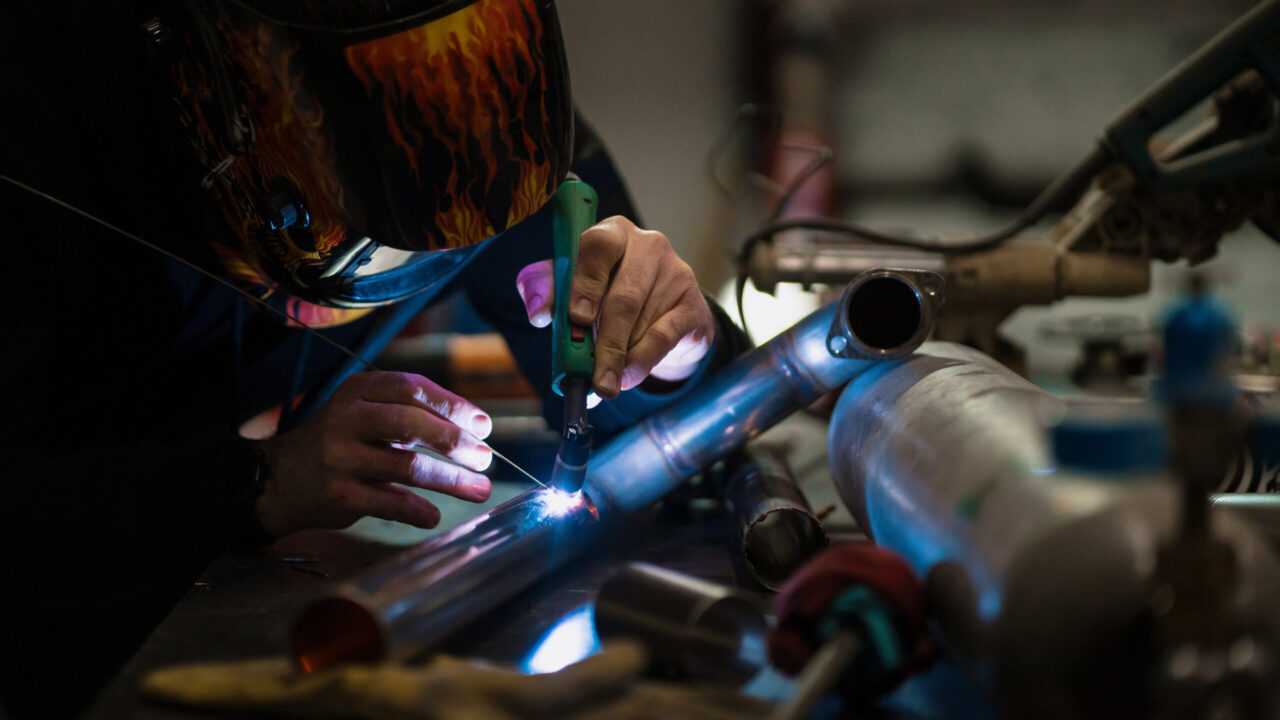
Plastic welding and TIG aluminum welding share a name and nothing else. A plastic welding iron closes a split fender or side panel with cheap gear, and an hour of practice on scrap teaches you the motion. A TIG welder closes a crack in an aluminum case, but it costs real money, needs shielding gas, and takes hours of ugly beads before one holds.
What each technique actually does
On a plastic panel you melt the parent material and a filler rod of the same plastic, then let them cool as one piece. No gas, no arc, temperatures a hot iron can reach. On aluminum you create a molten pool under an argon shield, struck by an arc bright enough to burn an unprotected eye. Same word, two different trades.
| Criteria | Plastic welding | TIG aluminum welding |
|---|---|---|
| Typical parts | Fenders, side panels, number plates, guards | Engine cases, brackets, mounts, frame sections |
| Kit | Plastic welding iron, filler rods, degreaser | AC-capable TIG welder, argon, tungsten, filler metal |
| Learning curve | A few tries on scrap panels | Hours of failed beads before clean work |
| Can you undo a mistake? | Yes, remelt and start again | Rarely: the part heats, distorts, and loses strength |
The plastic welder’s kit
A plastic welding iron with adjustable temperature, filler rods matching the panel color, degreaser and abrasive paper. The whole list fits in a shoebox. The rod is the part that matters most. A rod made from the wrong plastic never fuses with the panel — it sits on top and peels off at the first crash. Dirt bike plastics almost always carry a moulded code on the inside face, so read it before you buy rods.
That kit covers most of the work described in the guide on broken plastics, including cracks that start from a torn-out bolt hole.
The TIG aluminum kit
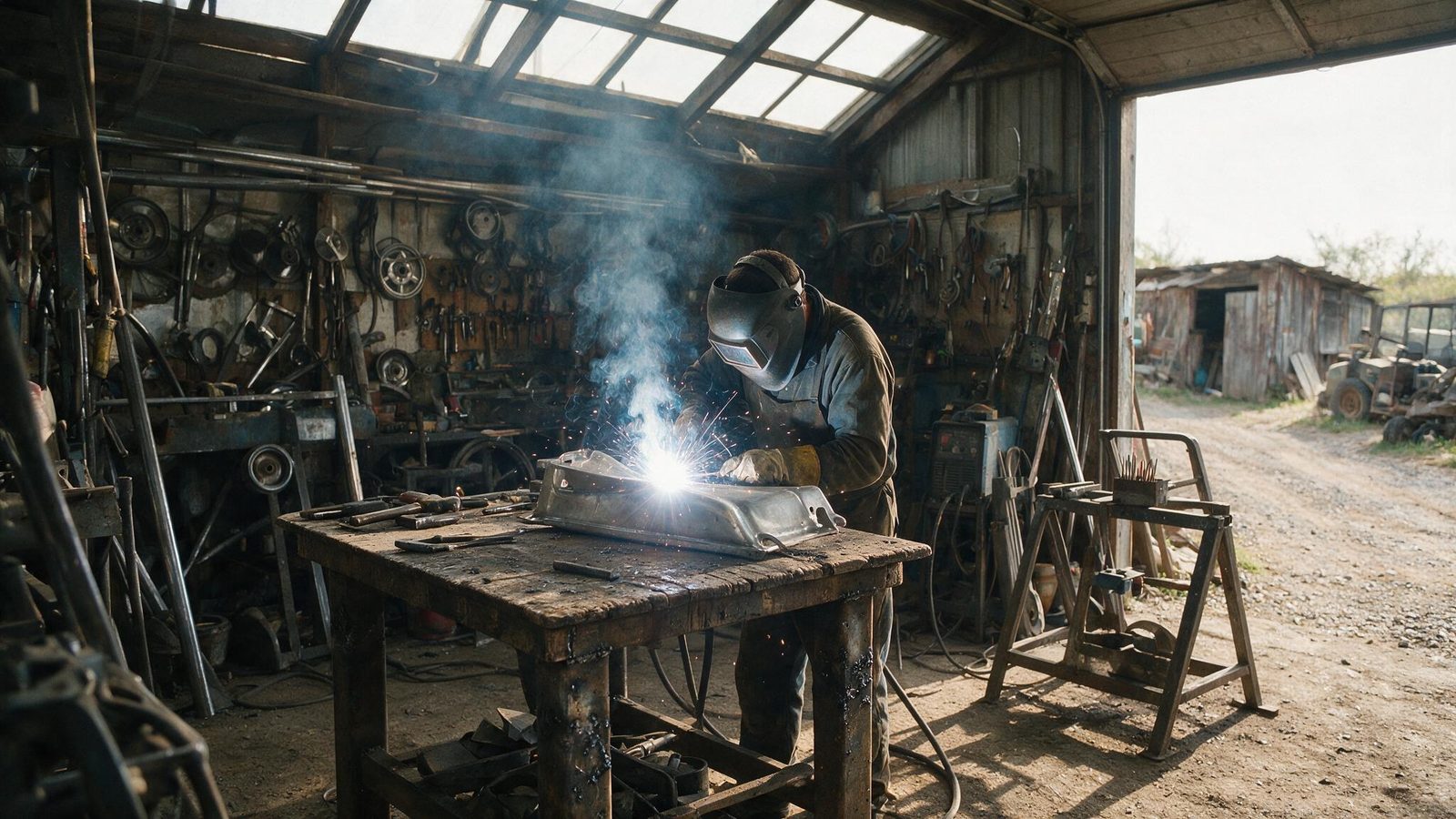
You need a welder that runs AC. That part is not negotiable: steel welds on DC, aluminum needs AC to break through the oxide skin that keeps reforming on the surface. Then an argon bottle, the right tungsten electrodes, filler metal matching the alloy, an auto-darkening hood and welding gloves.
The bill adds up fast. It makes sense if you regularly fix cracked engine cases or wrench for several bikes in the club. For one repair, a local welding shop will charge less than your first machine costs, and the bead will be better than your first attempt.
Welding a cracked panel, step by step
- Remove the panel and wash it with soapy water, then degrease both faces around the crack.
- Drill a small stop hole at each end of the crack so it stops travelling under load.
- Cut a V groove along the break, on both faces when you can reach both sides.
- Line the edges up and hold them with heated staples or high-temperature tape.
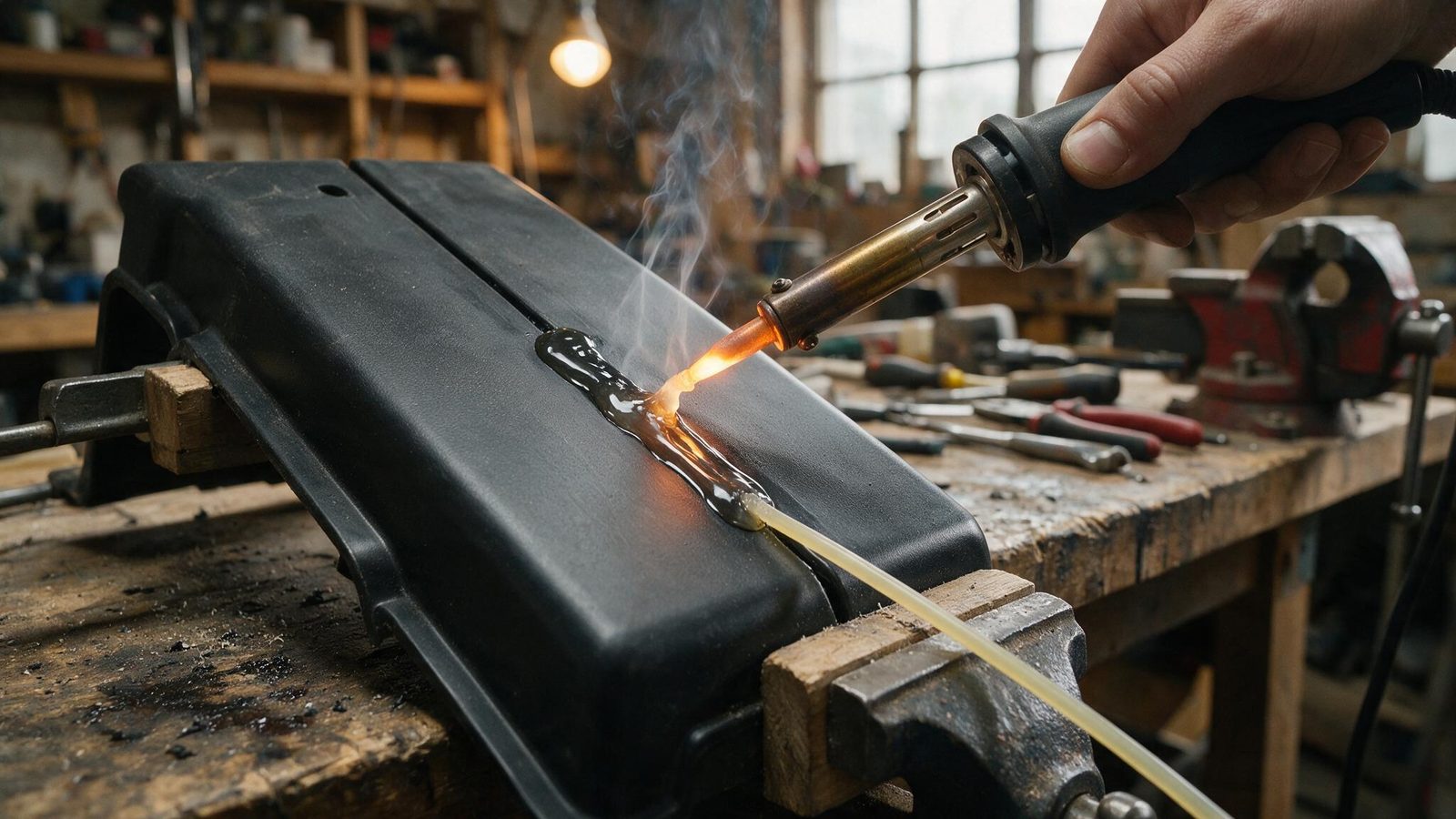
- Melt the parent material in short passes, letting it cool between each one instead of running a single long bead.
- Lay filler into the groove, pushing the pool forward so it anchors into the original material.
- Let it cool in open air. No blowing on it, no dunking it in water — fast cooling builds stress into the joint.
- Sand the excess flush, then flex the panel by hand. If the weld cracks now, it would have cracked on the first jump.
What makes or breaks an aluminum weld
Cleanliness does half the work. A smear of grease, engine oil trapped in a case crack, a film of oxide — each one puts porosity in the bead, and a porous bead leaks or breaks. Use a stainless brush kept for aluminum only, a clean rag, acetone, and weld straight away instead of letting the part sit and pick up moisture again.
Thick parts pull heat away faster than the pool can form. Gentle, even preheating of the whole piece avoids the thermal shock that spreads a crack instead of closing it. And if someone already repaired the part with low-temperature brazing rod, all of that old filler has to come off first. The two materials do not mix.
Where DIY stops
A bad plastic repair gets remelted. A bad aluminum weld on a loaded part leaves a weakened zone you cannot see. Heat changes the metal around the bead, and that heat-affected zone becomes the new weak point. On an engine case the worst case is an oil leak. On a swingarm, a steering head, or a bent frame tube, the worst case is a failure at speed.
The rule most paddock mechanics follow: anything holding a wheel, the steering or a brake goes to a professional with the inspection gear to back it up. The rest is fair game. Before you fire up the welder, run the money question too, the same way you would for any part — the guide on repairing or replacing lays out the criteria, and a dented silencer often comes back into shape with no welding at all.
FAQ
Can I weld aluminum without a TIG welder?
Low-temperature aluminum brazing rods exist and work with a torch. They will get you out of trouble on a small crack that carries no load, a cable bracket for instance. Strength stays well below a real TIG weld, and the filler hardens on top rather than mixing into the base metal. Do not trust it on anything that takes stress.
How long does it take to learn plastic welding?
A few attempts on a dead panel are usually enough to find the motion. You are looking for the moment the plastic turns glossy and soft without smoking or darkening. Once you recognise that look, the rest is patience. Metal welding takes far longer before it produces a bead you would trust on your own bike.
What gas should I use for TIG aluminum?
Pure argon is the reference for shielding the weld pool from oxidation. Argon-helium mixes exist for very thick sections, but they cost more and bring nothing to a motorcycle case. What matters more is a steady flow and a hose that does not leak — interrupted shielding shows up immediately in the look of the bead.
Will a weld hold on plastic that was already glued?
Not while the glue is still there. Scrape and sand every trace of adhesive until you reach bare plastic, otherwise the molten material bonds to the glue and peels away with it. That is the most common reason a plastic weld lets go even when the technique itself was fine.
More repair guidance in the repairs section.
Editorial content. PiloteMX offers no on-site service, no parts or gear sales, no quotes and no bike repairs. Working on a bike and riding it carry risk: what you do with this guide is your own responsibility.