The Trailside Repair Kit Every Dirt Bike Rider Should Carry
Contents
A trailside kit worth carrying fits in a small waist pack: a master link matched to your chain, wire and zip ties, a multi-bit screwdriver, cutting pliers, gaffer tape, and a pump or CO2 cartridge. That covers the great majority of ride-ending breakdowns and gets you back to the truck under your own power.
The minimum kit, piece by piece
The master link is the star of the bag. A chain that lets go pins the bike where it stands, and the same failure takes five minutes to fix when the right link is in your pocket. The word doing the work there is “right”: check pitch and width once, calmly, in the garage rather than crouched in the weeds.
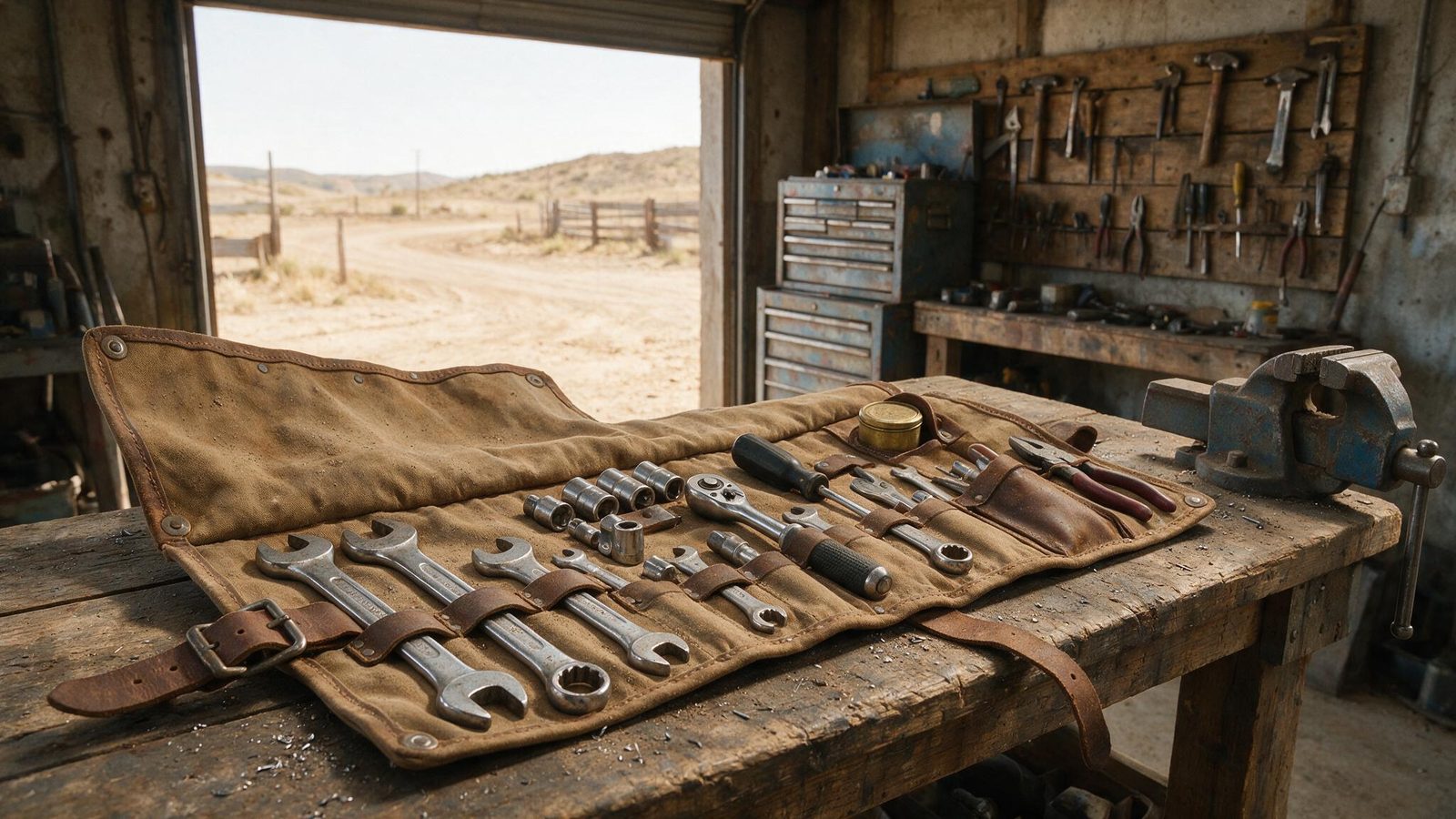
Wire and zip ties catch everything that flaps, dangles or splits. A torn fender, a side panel doing its own thing, a hose that jumped its clip. Gaffer tape handles the rest, holding a cracked plastic together long enough to get home and insulating a bare wire on the way. A hand pump or a cartridge, plus a patch or a spare tube if you run tubes, saves you from the last few miles on a flat that wrecks the rim.
| Item | What it saves | The detail that matters |
|---|---|---|
| Master link | Broken chain | Same pitch and width as your original chain |
| Zip ties and wire | Plastics, hoses, cables | Long ties, not the short ones from the drawer |
| Multi-bit screwdriver | Plastics screws, hose clamps | Check your bike’s Torx sizes are in there |
| Cutting pliers | Wire, ties, frayed cable | Strong enough to bite through steel wire |
| Gaffer tape | Cracks, bare wires, torn grip | Wrapped around the pump body, not the whole roll |
| Pump or cartridge | Slow puncture | Test it at home before you rely on it |
Where to keep it so it’s actually with you
The best kit is the one you never have to remember. A waist pack is the most flexible answer: it moves between bikes and it stays on you if the bike ends up parked somewhere in the trees. The flip side is that it is also the thing left sitting on the tailgate.
A pouch strapped to the rear fender or tucked under the seat solves the forgetting, but it collects mud and water. Bag the contents in a zip-lock or the bits rust and the tape peels. Whichever you pick, empty it out once a season and put it back together. A kit that never gets opened eventually holds a spent cartridge and a master link for a bike you sold two seasons ago.
Fitting a master link at the side of the track
The most common trailside repair is worth rehearsing once in the garage, in daylight, before you have to do it in the mud with cold hands.
- Kill the engine, put the box in neutral, and prop the bike on its stand or against a bank.
- Catch both chain ends and lay them over the rear sprocket so they can’t disappear into the cases.
- Remove the bent link and the damaged roller that nearly always comes with it.
- Feed the master link in from the inside out, both pins passing through the neighbouring links.
- Fit the side plate, then the clip, with the closed end of the clip facing the direction of chain travel.
- Check the clip has snapped fully home on both sides by pulling at it with a fingernail.
- Reset chain tension to your usual setting, then ride home smoothly, without snapping the throttle.
A broken chain rarely leaves everything else untouched. Look over the clutch cover, the chain guide and the slider before you set off. If the chain whipped the case, ride gently and keep an eye on the oil level.
What the kit genuinely fixes
A snapped brake or clutch lever gets swapped for a compact spare, or worked around by changing where your hands sit, at a much reduced pace. A torn wire is repaired by stripping cleanly, twisting the strands and taping over them, until a proper harness repair back at the bench. On long or remote rides, a cheap multimeter lets you confirm an electrical fault before you take anything apart.
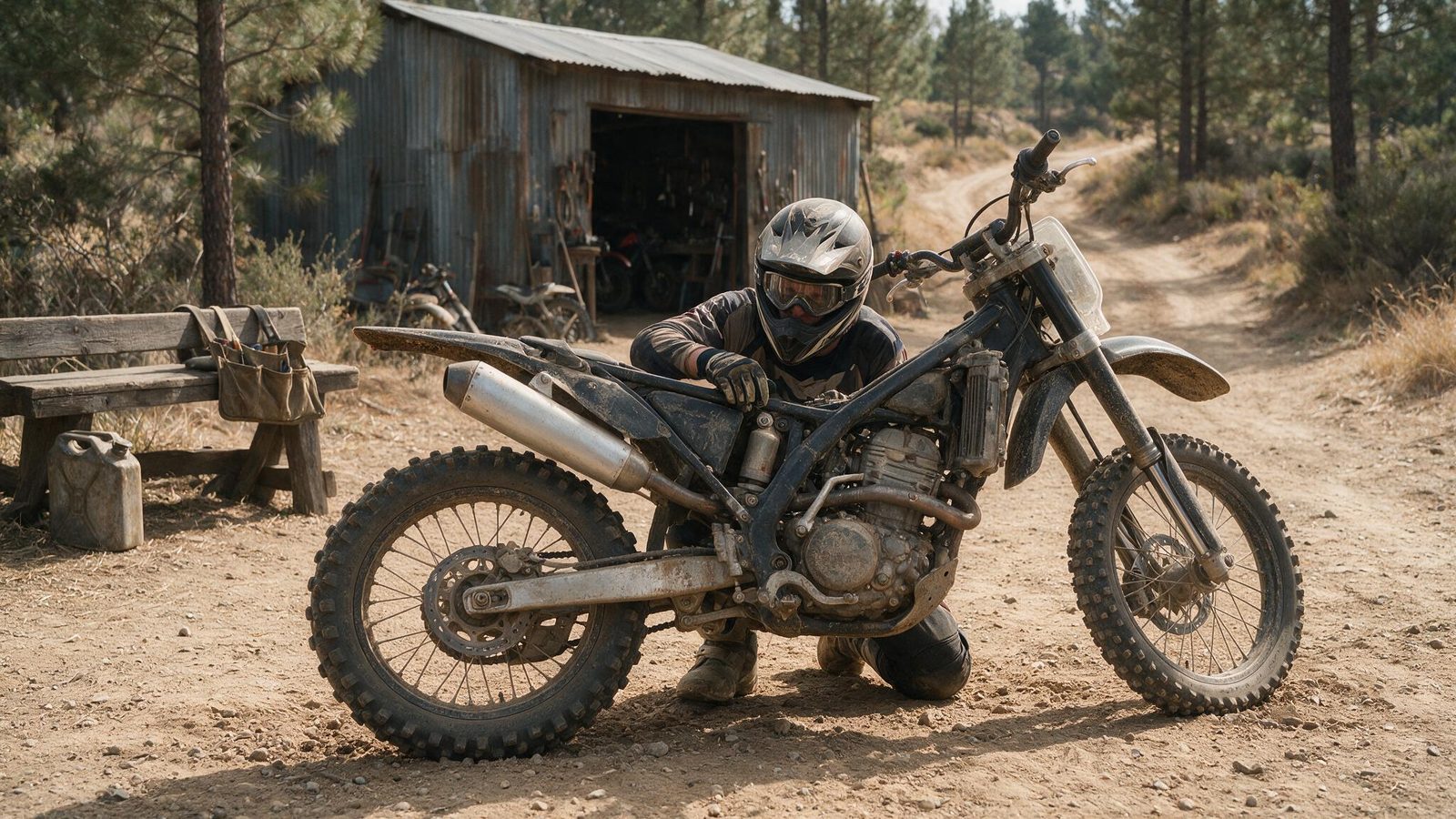
Gaffer tape also rescues a split plastic or a torn shroud, but only as far as the truck: repairing broken plastics properly happens at home, with welding or a backing patch. A broken spoke gets tamed by folding it back around its neighbours so it can’t flail, then dealing with the warped rim once you’re back.
What a trailside kit does not replace
A field fix stays a field fix. A master link brings you home, but a chain that has broken once earns a full drivetrain inspection before the next ride, because a hooked sprocket will break the next one too. A twisted, taped wire gets redone with heat-shrink or solder the moment you’re back.
Three failures don’t get bodged trailside, and trying anyway makes the bill worse: a suspension leak, play in the steering head, and a fuel leak. With a cracked fuel tank, you shut the engine down and call someone. The kit exists to get you home safely, not to stretch the life of a dead part.
FAQ
Which master link should I buy for my kit?
The one that matches your original chain’s pitch and width exactly. Note the marking stamped on the chain the day you fit it and buy the spare link at the same time. Watch out with O-ring chains: the link has to be the same type, or the seals won’t sit properly and the repair won’t survive the ride home.
Do I need brand-specific tools?
Hardware is nearly always standard metric, but the sizes that matter vary. Walk round the bike in the garage, note which Allen and Torx keys keep coming up on plastics, hose clamps and caliper bolts, and carry only those bits. A kit filtered for your machine weighs a lot less than a generic one bought off the shelf.
Is a trailside kit enough for racing?
No. Club and championship paddocks have a far better equipped support tent, and the rules often govern what can be done between motos anyway. A personal kit still earns its place on recreational rides, solo loops and practice days where nobody is waiting at the side of the track for you.
How long can a field fix stay on the bike?
Long enough to get home, and no longer. Redo the job properly before the next ride, and never beyond one or two rides for anything electrical or drivetrain related. Tape and wire age badly under mud and vibration, and the failure always comes back in the worst possible place.
More repair guidance in the repairs section.
Editorial content. PiloteMX offers no on-site service, no parts or gear sales, no quotes and no bike repairs. Working on a bike and riding it carry risk: what you do with this guide is your own responsibility.