Dirt Bike Knee Guards: Simple Protection vs Articulated Braces
Contents
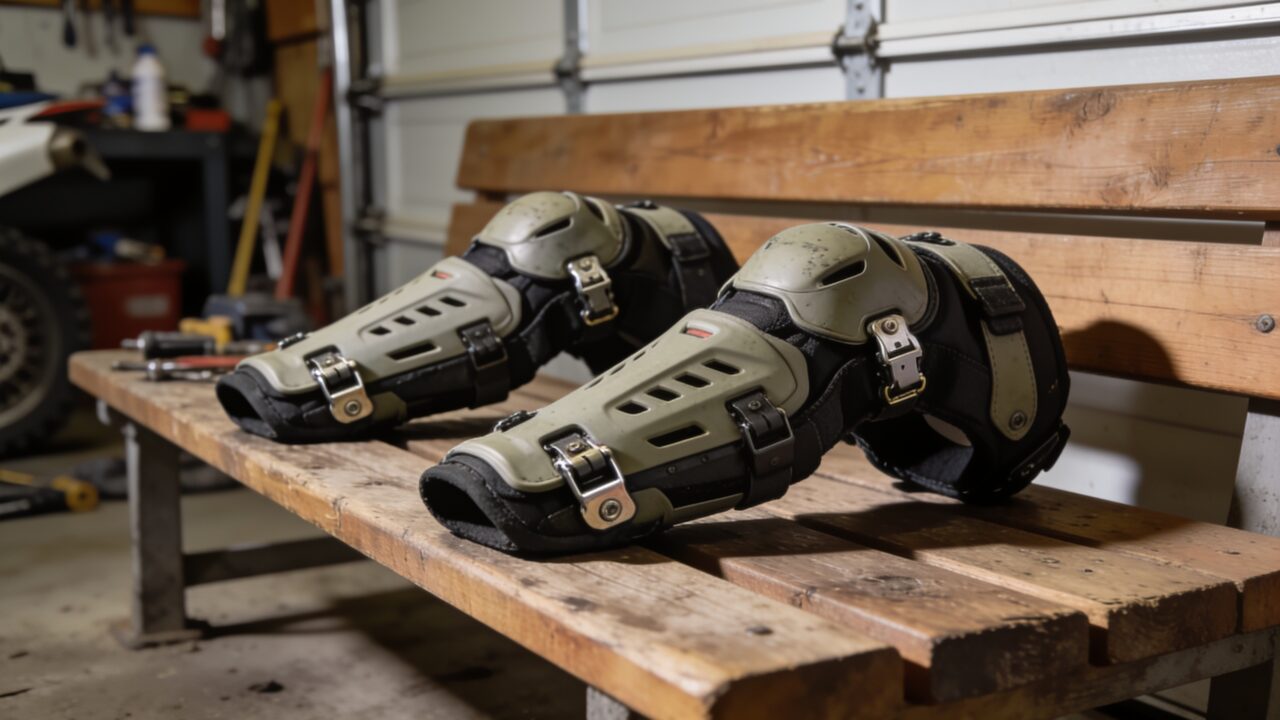
A dirt bike knee guard runs from a simple shell that absorbs impact to an articulated brace that holds the joint against twisting. The right pick comes down to your knee’s history and how hard you actually ride, not price or looks. Healthy knee and relaxed weekend laps: a guard is enough. Previous injury: brace.
Two families doing two different jobs
The standard knee guard, foam plus a light plastic shell, does one thing: it absorbs. A kicked-up rock, a bar coming back at you, the ground when your knee lands on it. It does not hold the joint together. It protects skin, kneecap and bone, and that already covers most of what happens on a trail day.
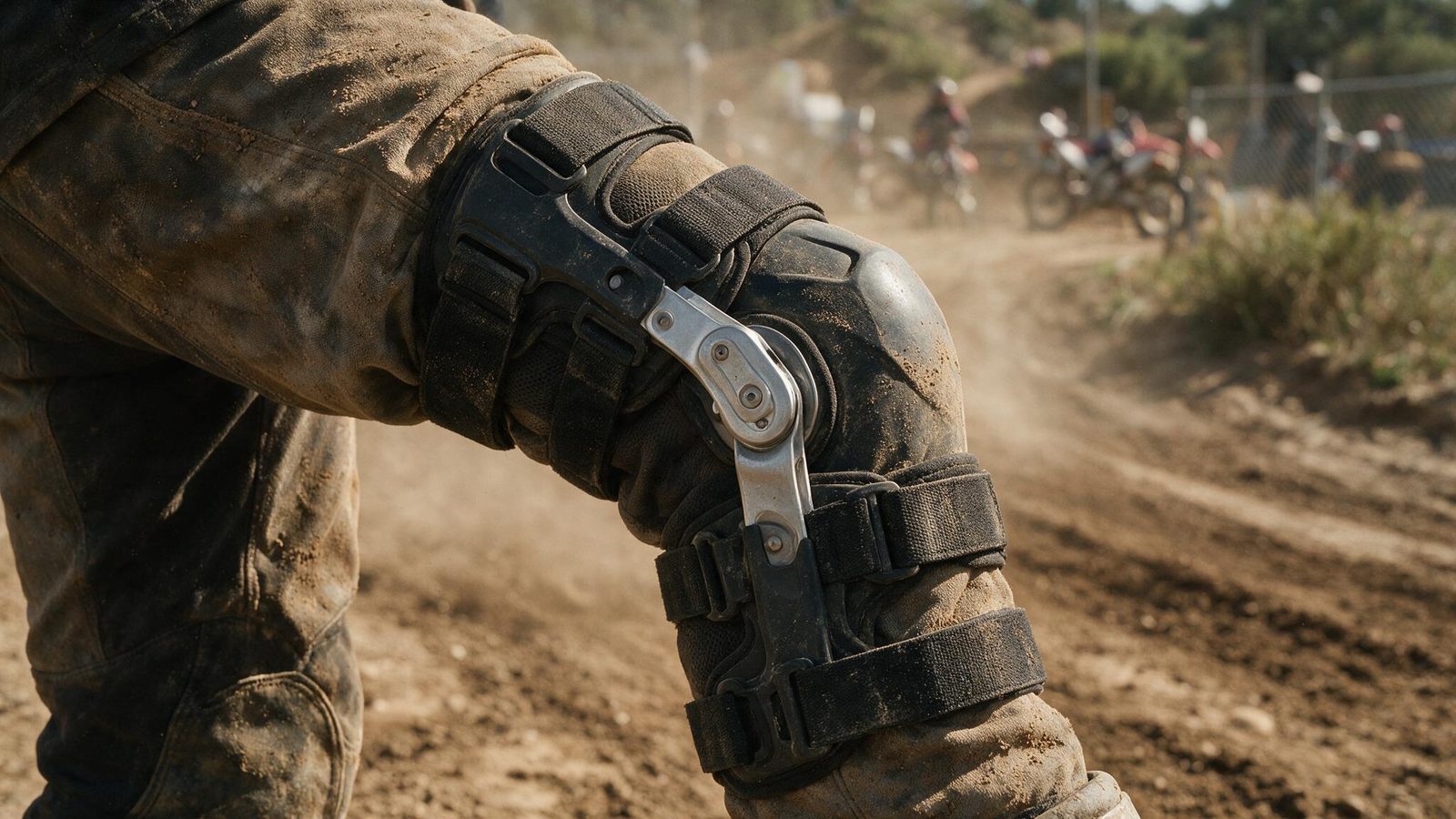
An articulated brace works on the joint itself. Lateral hinges frame the knee and limit what it cannot absorb: rotation and hyperextension. Those are the exact two movements that tear an ACL in a crash.
Mixing the two up gets expensive either way. A shell will never replace a brace on a compromised knee. And a top-end brace on a healthy knee that rides two Sundays a month is money that would have done more elsewhere, on a decent helmet for instance.
Why the knee takes so much abuse
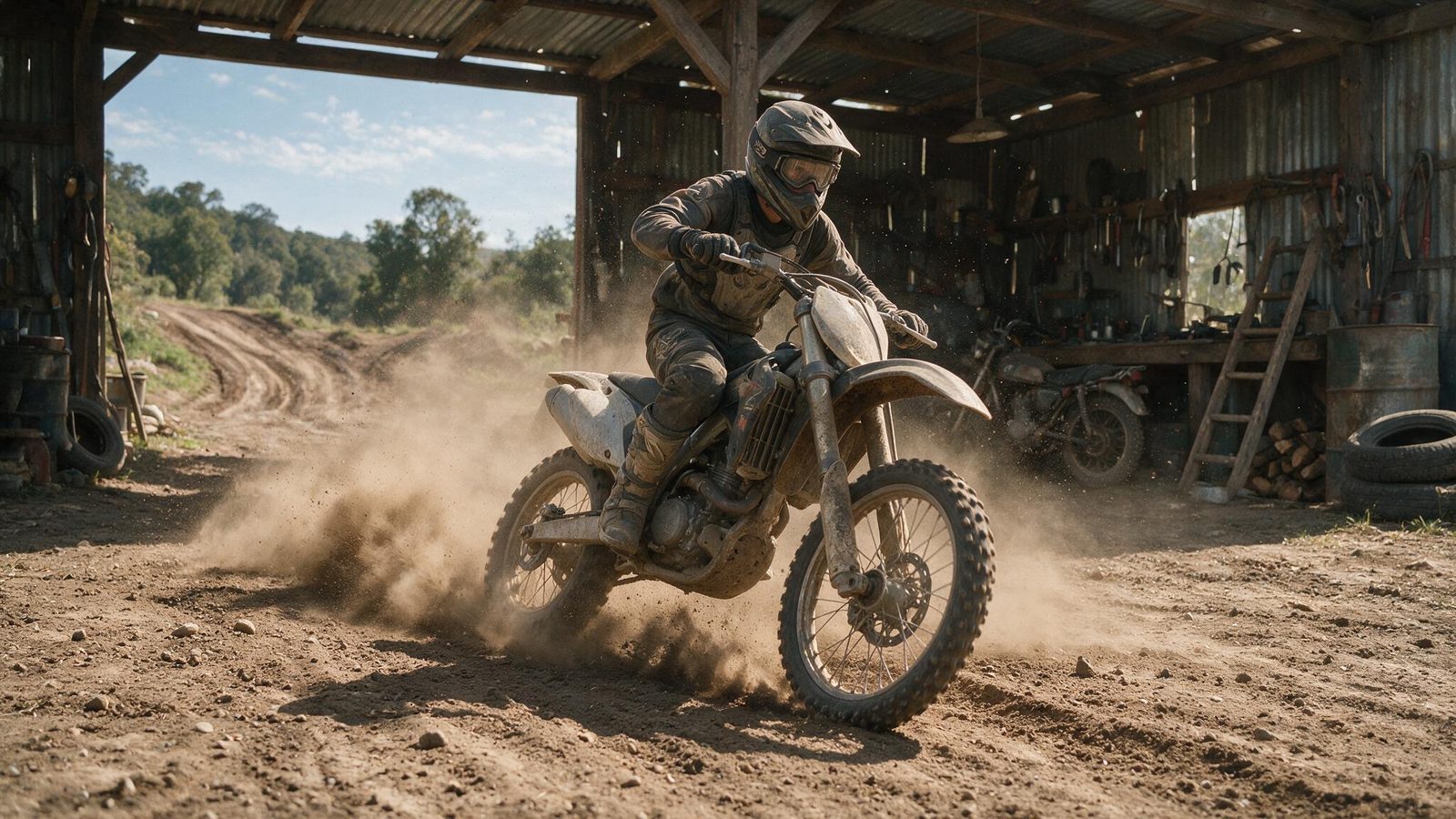
In normal riding, your knees grip the tank and take every load transfer. That is constant work, especially in corners, when your upper body shifts and the knee follows whether it wants to or not. The movement is covered in the guide on cornering position.
The real danger shows up in the crash. Your foot stays trapped, under the bike or planted in the dirt, while the rest of your body keeps travelling. The knee becomes the pivot point. It happens in a fraction of a second and no amount of muscle catches it.
Among regular riders, the knee stays one of the most frequently injured joints. Not the most dramatic at the time. The one that takes longest to come back.
Choose by your knee, not by the catalogue
The question is not which brace is best, it is what your knee has already been through. A ligament injury changes the whole answer, even if it happened several seasons ago and nothing hurts anymore.
| Your profile | What covers it | What else to check |
|---|---|---|
| Healthy knee, occasional riding | Simple protective knee guard | Stays put, comfortable under pants |
| Healthy knee, regular riding or racing | Heavier protection, brace as prevention | Real range of motion on the bike, weight |
| Past sprain or ligament tear | Articulated brace | Medical advice before buying, stop settings |
| Recent knee surgery | Whatever the surgeon says | Gradual return, prescribed model |
For heavy use with no injury history, a brace still makes sense as prevention: the more you ride, the more chances you get to land badly. That is a risk calculation, not a rule.
Fitting, the step everyone rushes
A guard that slides protects almost nothing. It rarely slides in a shop, standing up, leg straight. It slides on the track, knee bent, under sweat and mud. So test it under those conditions.
- Put the guard on bare skin or over your usual base layer, never over jeans.
- Centre the shell on the kneecap with the knee slightly bent.
- Tighten the straps top to bottom, without crushing the calf.
- Get on the bike, settle into attack position, knees squeezing the tank.
- Stand on the pegs and lift the knee like you would in a tight corner: the shell has to stay on the kneecap.
- Ride ten minutes or so, get off and look. If the guard has migrated down, it is the adjustment or the size.
Boots and pants are part of the decision
A bulky brace and a tall boot do not always get along. The sensitive area is the gap between the bottom of the brace and the top of the boot: if the two overlap badly, you build a lever instead of continuous protection. Try them together, not two months apart.
Same story lower down. Some pants are cut to sit over a brace, others are not, and pants that are too tight over a brace end up pulling on the straps every time you bend. Most riders find that out on the first ride out.
If you are building full protection, think about elbow guards too: same logic, same sizing mistakes.
Care and end-of-life signs
Sweat and mud attack the soft parts first. Rinse the contact foam after a dirty ride and let it air dry, not on a radiator. Cooked foam packs down and never comes back.
On a brace, the hinges are the part to watch. Clogged with dirt, they stiffen and lose the smoothness that makes a brace bearable to wear. Clean water and drying handle it most of the time; anything further belongs to the manufacturer’s instructions.
Straps and closures give up before anything else. Slack elastic, velcro that no longer bites, a buckle with play: the guard will not hold through a real impact. That is a wear part, so replace it. The rest of the routine sits in the guide on gear maintenance.
FAQ
Do I need an articulated brace with no previous knee injury?
Not necessarily. On a healthy knee and moderate recreational riding, a simple guard covers the main risk, which is impact. A brace becomes interesting once your riding volume climbs: regular training, racing, rough tracks. Treat it as a prevention decision made with your eyes open, not a box to tick because someone at the track said so.
Does an articulated brace get in the way of riding?
A properly adjusted model does not limit the range you actually use on a bike. What changes is bulk against the tank and under your pants: the first rides feel like a wider leg. That fades within a few sessions. If the discomfort sticks around, look at the adjustment or the size rather than giving up on the idea.
How do I know whether my knee needs a brace?
Past sprain, ligament tear, surgery, or a feeling of instability when you load the leg: none of those get answered by a product page. A health professional assesses the type of laxity and the kind of stabilization that helps. Turning up with that diagnosis saves time and stops you buying a brace that blocks the wrong movement.
Can I wear a brace on one leg and a plain guard on the other?
Yes, and it is common when only one knee has a history. Nothing says both legs need identical protection. The only catch is habit: two different volumes against the tank slightly change how you grip at first. A few rides and you stop noticing.
More gear guidance in the gear section.
Editorial content. PiloteMX offers no on-site service, no parts or gear sales, no quotes and no bike repairs. Working on a bike and riding it carry risk: what you do with this guide is your own responsibility.