Dirt Bike Elbow Guards: Protection Too Often Overlooked
Contents
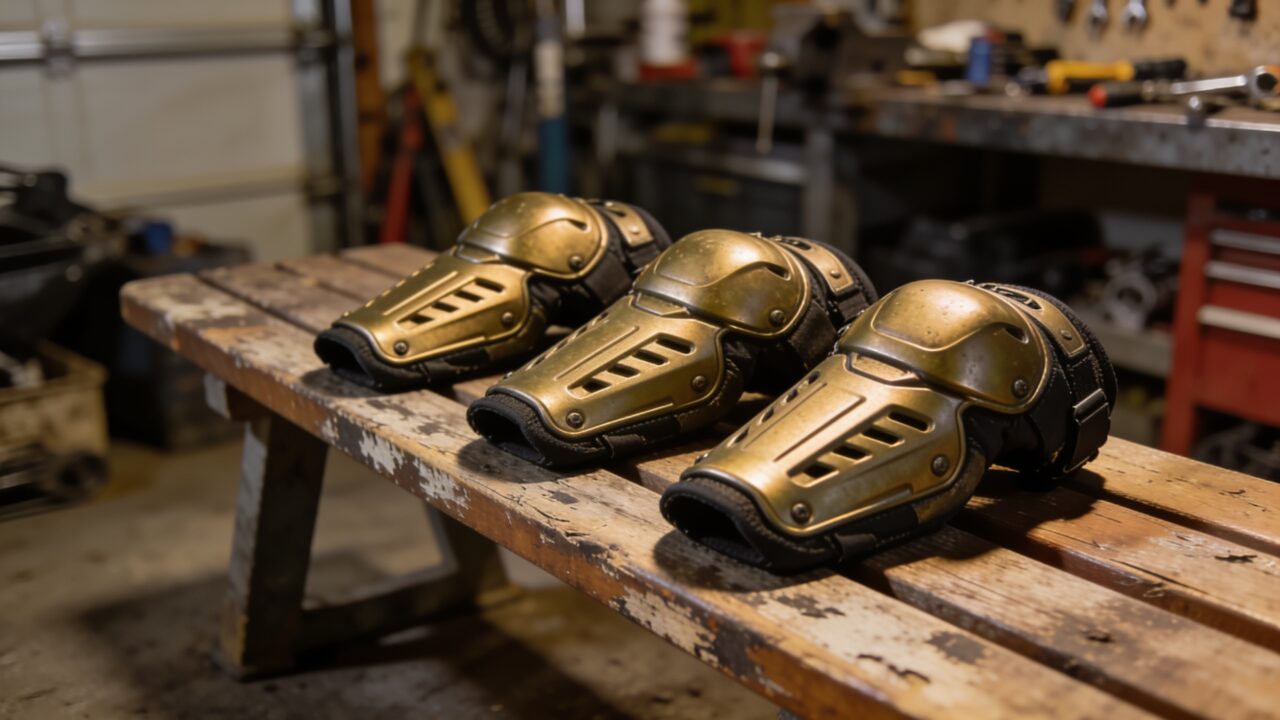
Elbow guards take the direct hit on a joint almost nobody protects first. Yet when you go down sideways, or throw an arm out on instinct, the elbow is what reaches the ground before anything else. A shell that stays where it belongs turns a deep gravel rash — or a silly fracture — into a bruise.
Why the elbow takes more than riders think
Instinct beats training here. The moment the bike gets away from you, the arm goes out to break the fall. The elbow lands on hardpack, a rock, or a course stake with nothing in front of it. Nobody controls that reflex, not even after years of riding.
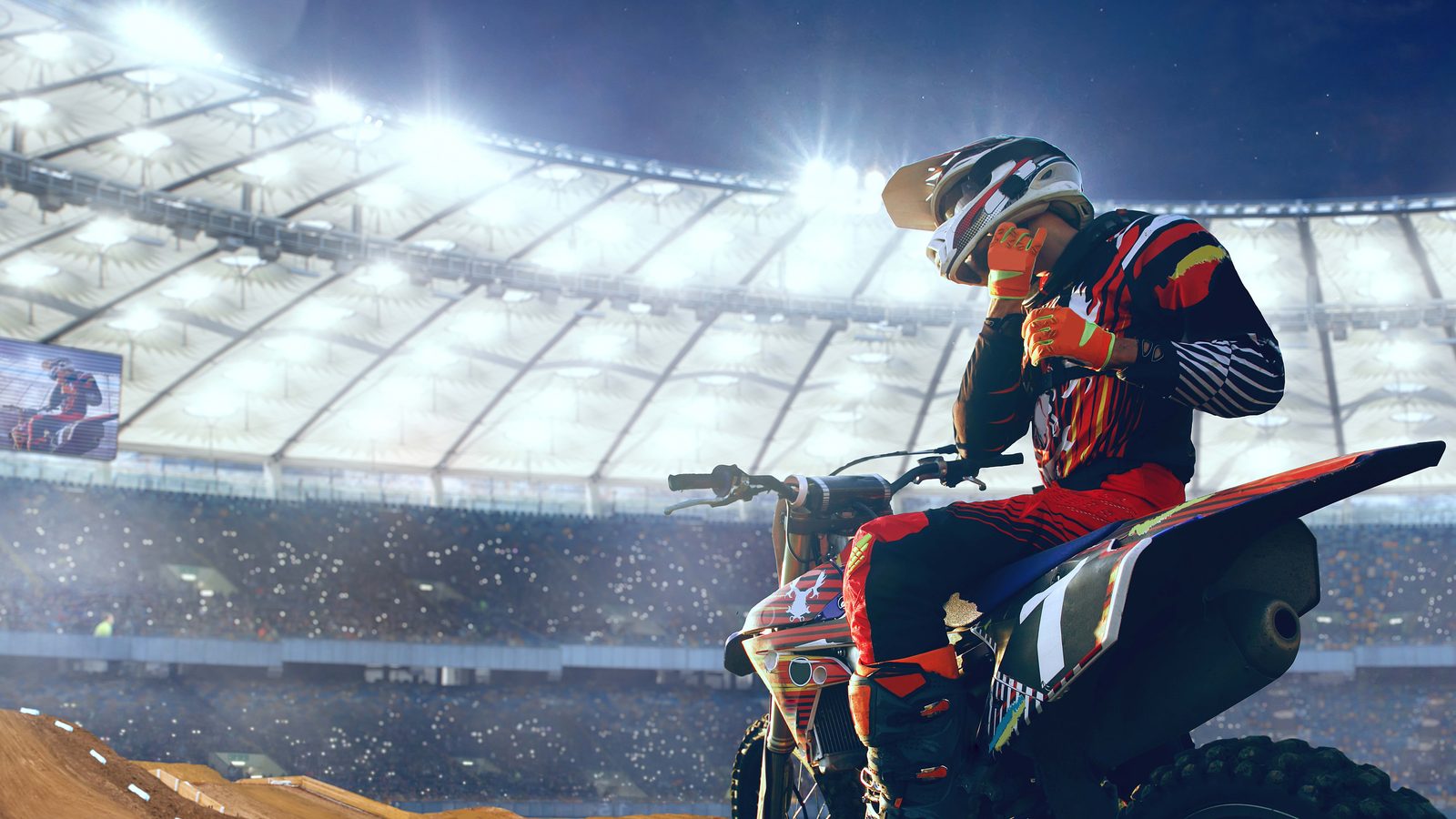
The joint works outside crashes too. On rough ground the arms filter part of what the bars send back, and the elbow is the hinge doing that job — the same loose-body logic covered in the guide on riding stance.
Knees get protected by nearly everyone. The elbow usually rides bare under a jersey. That gap has nothing to do with real risk and everything to do with paddock habit, and it costs riders weeks off the bike every season.
Dense foam, hard shell, elbow-and-forearm
Three families share the shelf, and they do not aim at the same rider. The decision has less to do with price than with terrain and with what you will actually keep on for two hours.
| Type | What it handles | Who it suits |
|---|---|---|
| Dense foam sleeve, light shell | Abrasion, moderate hits, slides | Casual riding, flowing tracks, riders who ditch anything bulky |
| Full hard shell | Solid impacts against something unforgiving | Technical terrain, regular training, racing |
| Combined elbow and forearm | Hits on the joint and along the bone | Rocky tracks, woods riding, riders with a past injury there |
Dense foam worn on every ride beats a hard shell that stays in the gear bag. Obvious once written down, and still the most common mistake among riders who upgrade too early.
Under the jersey or over it?
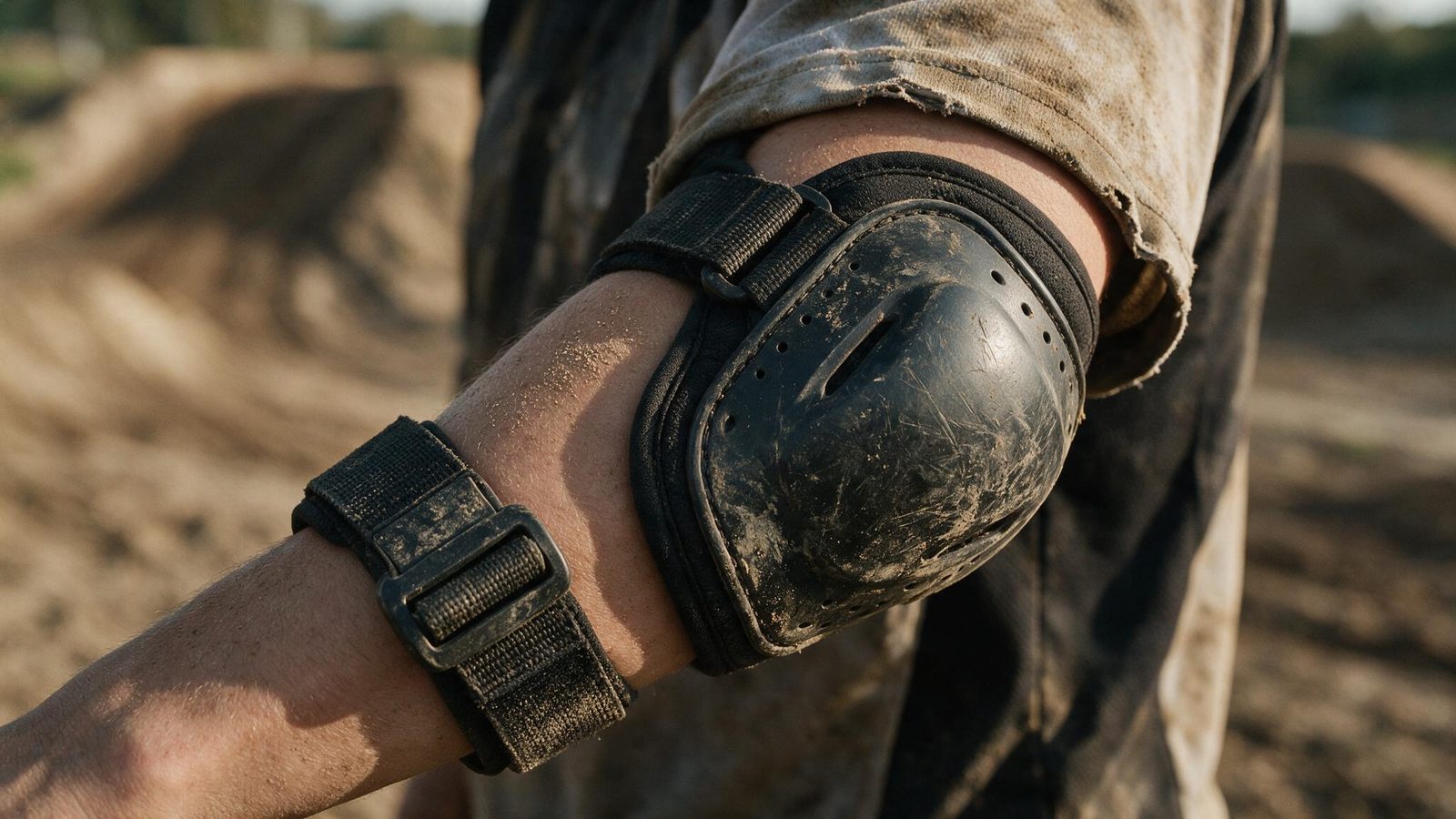
Both schools work. Under the jersey, the guard disappears and catches on nothing — the choice of riders who want to forget they are wearing it. Over the jersey, you strip it off in ten seconds while waiting at trackside, and the sleeve never rubs against the shell.
What matters more is whether it stays put. A guard that rotates around your arm by lap three protects nothing: the shell ends up on the side and the joint is bare again. A firm strap setting plus a sleeve that pins the whole thing down solves it.
The tension check is easy. Bend and straighten your arm fully ten times, then look at your hand. Tingling or cold fingers means too tight. A guard creeping toward the wrist means too loose. Somewhere between the two is your setting.
Upper-body protection is one system
Elbow guards, chest protector and gloves form a chain. A wide chest protector can overlap the top of the guard and create a hard point at the shoulder; a short one leaves a bare gap between the two pieces.
Some chest protectors carry elbow guards built onto articulated arms. The upside is genuine: nothing shifts, compatibility is guaranteed, you put everything on in one go. The downside is that you no longer pick each piece on its own merits, and one broken part sometimes means replacing more than you planned.
If you are building your kit gradually, the order set out in the guide on gearing up on a budget still holds: helmet, boots and knee protection first, elbow guards right behind. They cost little and pay for themselves the first time you get launched.
Checking and cleaning
Elbow guards live in sweat, dust and mud. Without a little upkeep they start to itch, then to smell, and above all to slide at the wrong moment.
Key points
- Washing
- after every muddy ride, foam separately when it comes out
- Drying
- open air, never on a radiator or in direct sun
- Shell check
- after any solid crash onto the arm
- Replace when
- cracked, shell gone white at a bend, foam packed flat, strap gone slack
- Weak spot
- elastics and hook-and-loop, which give up long before the shell
The rest of the routine matches what is covered in the guide on gear maintenance. Five minutes right after a ride beats a big cleanup twice a year.
Mistakes that cancel out the protection
Riding with nothing because it only happens to other people is the first one. The second is sneakier: picking a bulky guard that limits arm travel and hurts your control of the bike. Protection that makes you ride worse adds risk instead of removing it.
Then comes the cracked shell kept in service because it still looks fine. A shell absorbs once; on the same spot, it will not absorb twice. Last, the stretched strap nobody ever tightens. The guard is still on your arm, it simply no longer does anything.
FAQ
Are elbow guards actually useful or just comfort?
Useful. The elbow contacts the ground in a large share of sideways crashes and has no muscle layer to cushion it. A shell prevents rash down to the bone, protects the point of the joint, and blunts a hit against a rock. That is cheap insurance for a joint that is awkward to repair.
Foam sleeve or hard shell?
Dense foam is enough for casual riding on flowing terrain, and it has the advantage of being worn without a second thought. A hard shell earns its place as soon as the ground turns rocky or the pace climbs. If you are torn, pick the one you will actually put on every single ride.
Do they get in the way of gripping the bars?
A well-shaped guard stops short of the wrist and leaves your hand completely free on the controls. If something feels wrong, it almost always comes from a guard that runs too far down the forearm or is strapped too tight. Test it in the riding position, never standing at the shop counter.
Will they fit under any jersey?
Most dirt bike jerseys have sleeves cut loose enough. Still, check there is no tension on the seam at the elbow when you bend your arm — that is where the fabric fails first, and a sleeve that is too tight ends up dragging the shell out of position.
More gear guidance in the gear section.
Editorial content. PiloteMX offers no on-site service, no parts or gear sales, no quotes and no bike repairs. Working on a bike and riding it carry risk: what you do with this guide is your own responsibility.