Dirt Bike Jersey and Pants: Technical Gear That Moves With You
Contents
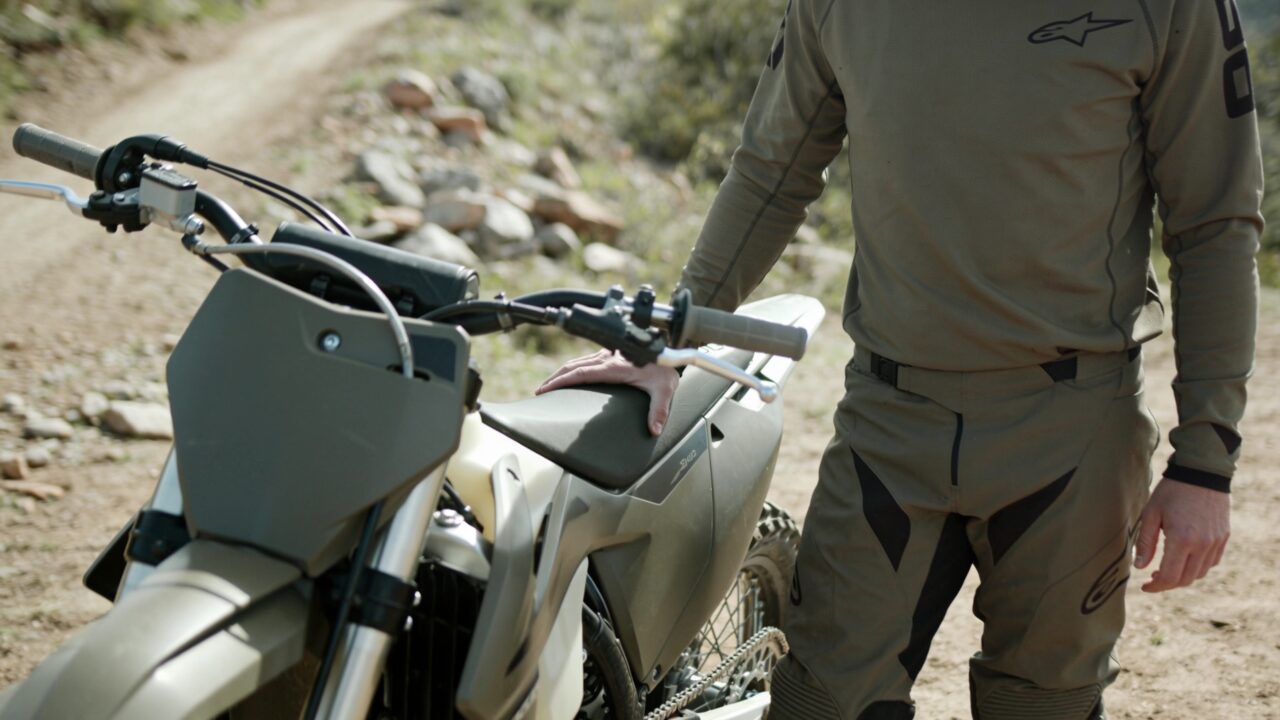
Judge a dirt bike jersey and pants in riding position, not standing in front of a mirror. You need full movement with your arms extended and your knees bent, fabric that pushes sweat outward instead of holding it against the skin, and reinforcement where the gear rubs the bike. Graphics come last.
Cut gets judged on the bike
Riding kit is not a tracksuit. It’s cut for specific postures: torso leaned forward, knees clamped on the tank, arms stretched to the bars, legs bent standing on the pegs. Those postures are laid out in the guide to riding stance.
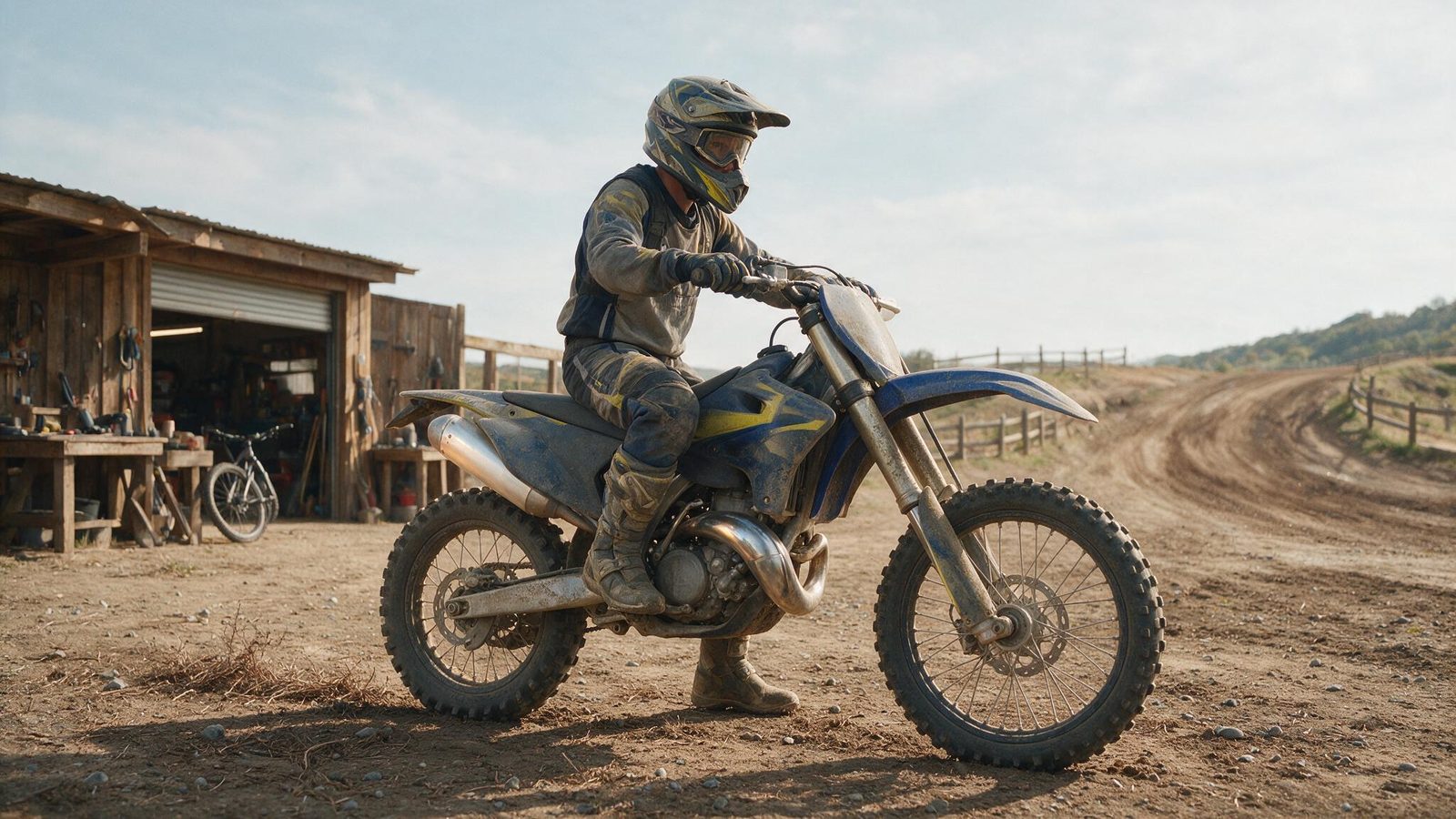
Badly cut pants always give themselves away in the same place. They pull behind the knee when you stand up, or they bind at the crotch after ten minutes seated. It’s nothing on the first lap. An hour into the session it’s all you can think about.
The jersey is deliberately roomy. It has to clear a chest protector or a set of elbow guards without the shoulder seams dragging when you push on the bars. Try it on over the protection you actually wear, not over a T-shirt.
- Put on the full kit, protection and boots included, the way you would ride in it.
- Sit on the bike and check the pants don’t bind at the crotch or across the front of the thighs.
- Stand on the pegs with your knees bent: the fabric should follow the bend, not fight it.
- Lean your torso forward and have someone check the jersey still covers your lower back.
- Reach both arms to the bars, then lift your elbows: the jersey’s shoulders shouldn’t ride up your neck.
- Turn your head side to side with the collar closed, hunting for anything that chafes the back of the neck.
Fabric and sweat
Riding is continuous physical work. Sweat shows up fast, especially in summer or on a track that demands a lot of movement. Fabric that traps moisture against your skin chills you at a stop and burns by friction while you ride.
Technical fabrics move that moisture outward so it can evaporate. It works, but only if the layer underneath plays along. A cotton T-shirt under a technical jersey kills the whole system: cotton loads up and gives nothing back. That’s exactly the job of base layers worn directly against the skin.
On pants, airflow comes from perforated panels behind the thighs and at the back of the knee. Check they don’t end up crushed under a bulky knee brace, because at that point they do nothing at all.
Abrasion and reinforcement: where it wears
The rub zones never change. Inner knees and calves against the tank and side panels. Backside against the seat. Inner thighs. On a decent pant those areas get a leather or heat-resistant panel, because contact with the frame runs hotter than people expect.
Good fabric limits surface damage in a slide, but don’t kid yourself: your kit is not protective equipment. Hard shells, knee guards and boots take the hit. The jersey mostly keeps mud, roost and branches off you.
Quick reference
- Fitting
- in riding position, with protection and boots on
- Jersey length
- covers the lower back with the torso leaned forward
- Pant cuff
- tucks inside the boot shaft with no bunching
- Areas to watch
- inner knees, seat contact, shoulder seams
- Washing
- follow the maker’s label, no fabric softener
Fitting with the rest of your kit
The pant cuff goes inside the boot, never over it. Too much fabric and it bunches in front of the ankle and gets in the way of the shift lever. Too narrow and it climbs up your calf on the first hard brake, leaving a strip of bare skin.
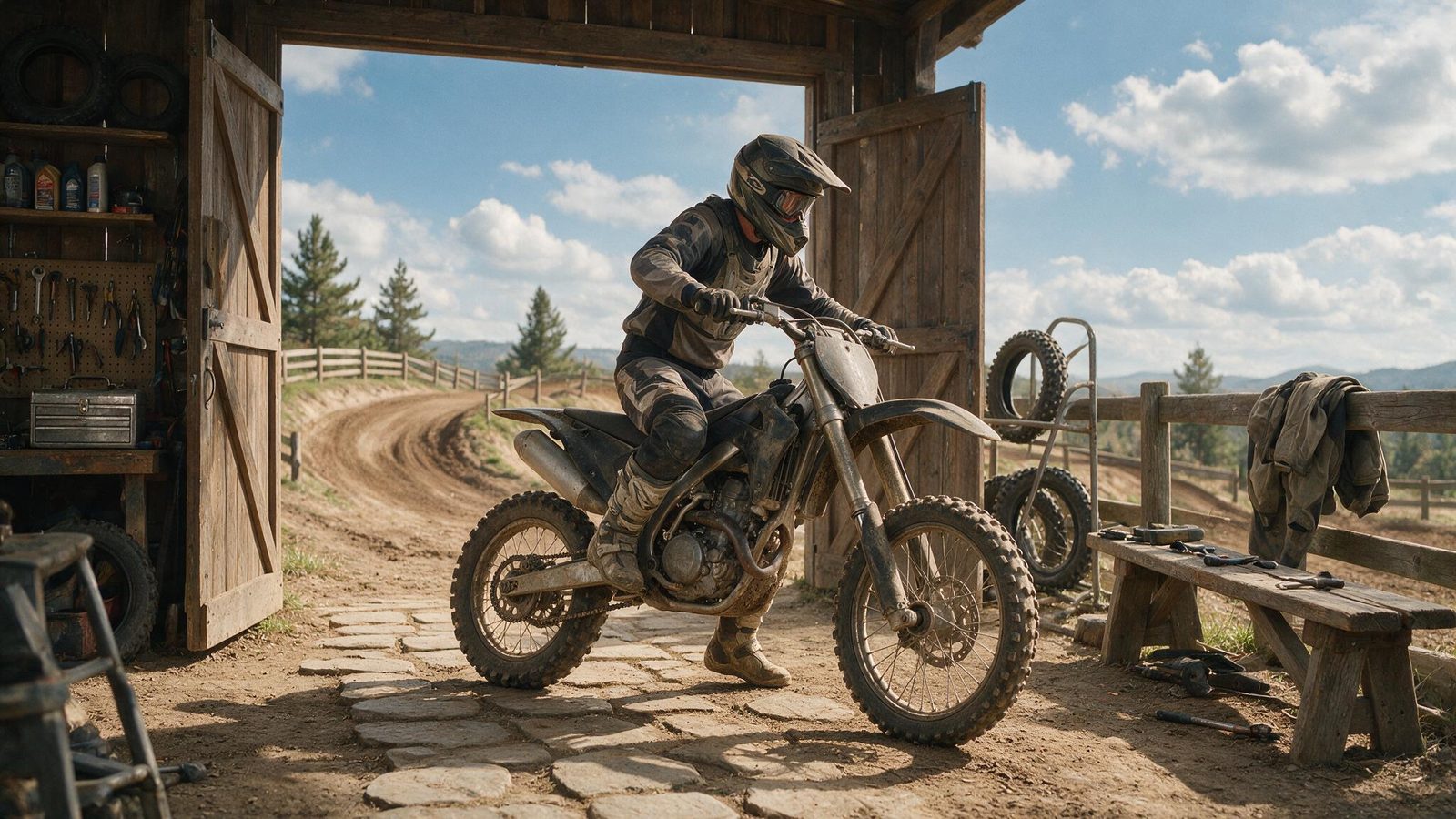
Up top, the jersey should tuck under the waistband and stay there when you lean forward. A short jersey leaves your lower back exposed to mud and cold, in exactly the spot you can’t see.
Check the cuffs too. Sleeves that are too wide stop the glove from covering the wrist cleanly, and mud moves into the gap. The guide to dirt bike gloves goes further on that.
Matching the kit to the season
Heat
Light jersey, open mesh, pants with as many perforated panels as you can get. You trade faster wear for thermal comfort. That’s a deliberate compromise, not a manufacturing defect.
Cold and rain
Denser fabric worn over a thermal layer holds up better. The full strategy, from layering to wind protection to moisture management, is detailed in the guide to rain and cold-weather gear.
Plenty of riders end up with two sets rather than one that’s supposed to do everything. If the budget won’t stretch, keep the summer kit and work the layers underneath. That’s the cheapest compromise, and it fits the logic of the budget gear guide.
Mistakes that keep coming back
Buying the kit standing up in the shop without ever bending a knee. It hangs beautifully, it looks perfect, and it turns unbearable in the first corner.
Going up a size to be comfortable. Loose pants slide on the seat and shift under the knee guard, which then moves as well. Freedom of movement comes from the cut, not from the size on the tag.
Keeping a set whose inner panels are polished shiny and whose seams have opened. It still looks fine in the paddock, it holds nothing on the track. Checking those rub zones is part of the routine described in the guide to gear maintenance.
FAQ
Do the jersey and pants have to match?
No, nothing requires it. The one real argument for buying a set is size consistency within a single brand: the pant and the jersey are designed to overlap properly. If you mix two makers, the thing to check is that the jersey stays long enough to tuck under the waistband once you’re leaned forward.
How long does a dirt bike kit last?
It depends far more on how often you ride and how you wash it than on the price tag. The rub zones give up long before the rest: inner knees, seat contact, crotch seams. Watch those three points instead of the general look. A pant with a thin, shiny inner panel is done, even if it still looks new from the outside.
Can I ride in jeans and a sweatshirt to start?
Technically yes, on a quiet session with the hard protection you can’t skip. But denim holds sweat, sticks to the skin the moment it’s wet, and tears without sliding in a crash. If money is tight, buy the helmet, boots and protection first, then pick up the textile kit afterwards.
Do I need to wash the kit after every ride?
After a muddy session or a hard sweat, yes. Dried mud acts like sandpaper between the fabric and the bike, and sweat attacks the elastic. After a short run on dry ground, a rinse and air drying is enough. What wears a kit out is the washing machine as much as the track.
More gear guidance in the gear section.
Editorial content. PiloteMX offers no on-site service, no parts or gear sales, no quotes and no bike repairs. Working on a bike and riding it carry risk: what you do with this guide is your own responsibility.