How a Dirt Bike Carburetor Works: Air-Fuel Mixing Explained
Contents
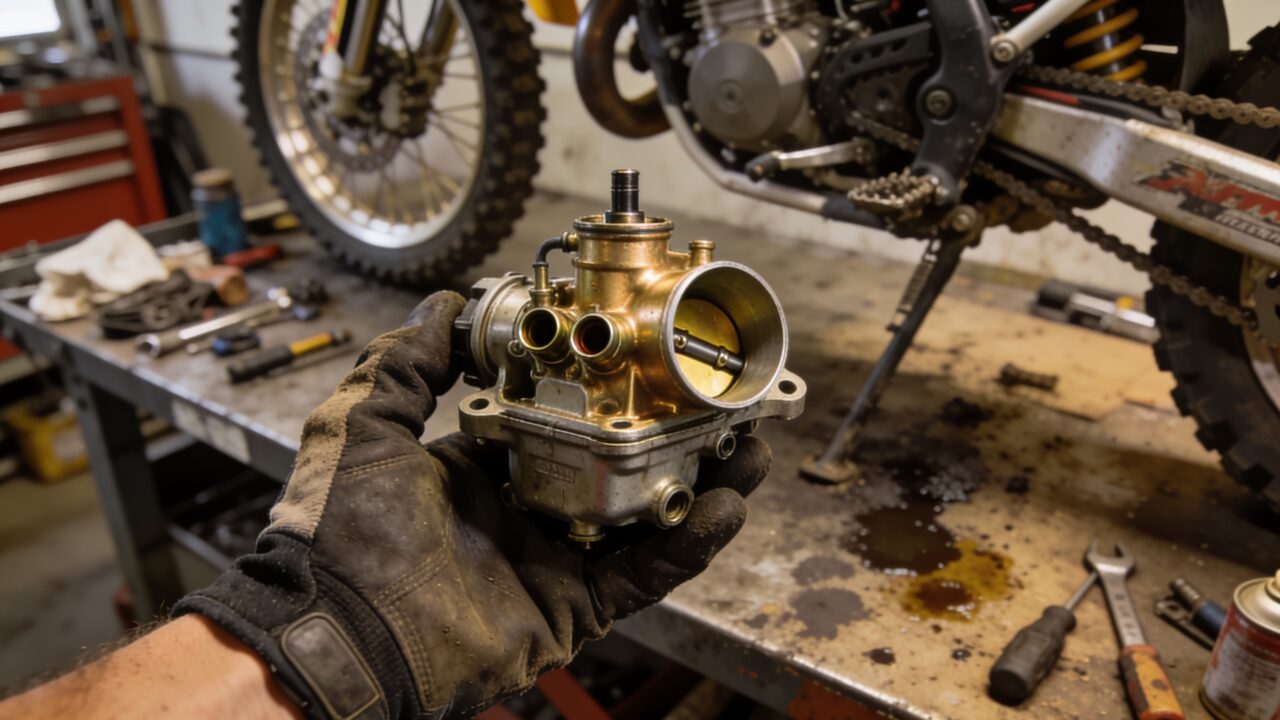
A dirt bike carburetor builds the air-fuel mixture with vacuum. Air pulled in by the engine speeds up through a narrowed section called the venturi, and that speed drops the local pressure enough to suck fuel out of the float bowl through calibrated jets. Several internal circuits hand off to each other as the throttle opens.
The principle: air that pulls fuel
When the piston drops on the intake stroke, it creates vacuum. Air rushes into the carburetor to fill it, and on the way through it passes the venturi, a narrowed throat that forces it to accelerate. The faster the air moves, the lower the pressure right there.
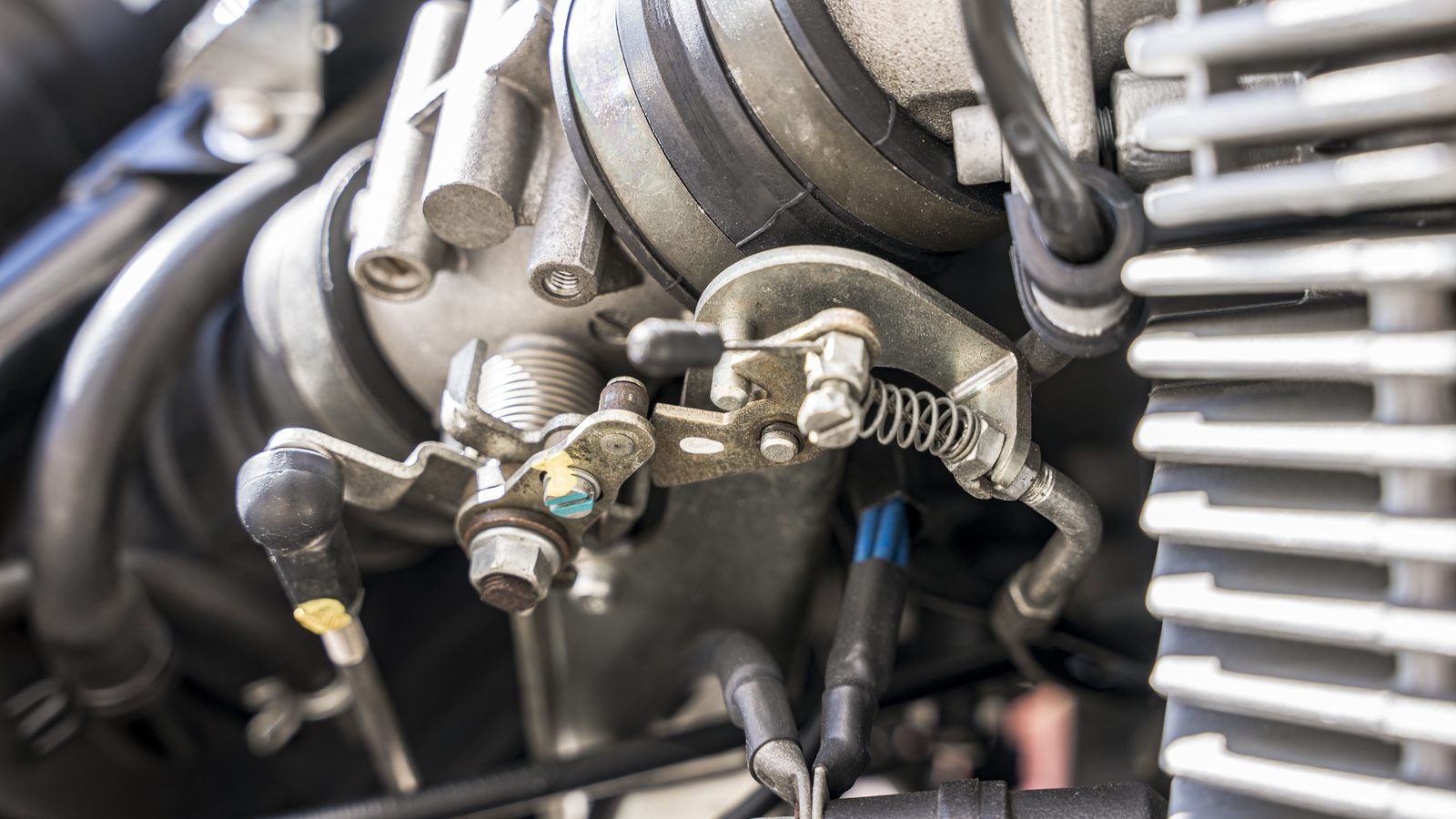
That pressure drop does all the work. Fuel sitting quietly in the float bowl at ambient pressure gets pulled through the jets into the air stream. No pump, no sensor, no map: the carburetor simply exploits a pressure difference.
The ratio holds together because both flows rise together. Open the throttle, air moves faster, fuel follows. It stays roughly constant across a given range — which is also the limit of the design, and the reason one jet cannot cover everything.
The finished mixture heads to the combustion chamber to be compressed and lit. That part is shared by 2-strokes and 4-strokes, whatever else separates them.
The circuits that hand off as you open the throttle
One jet cannot do the whole job. At closed throttle there is barely enough vacuum at the venturi to pull anything; wide open, the engine wants a lot. So the carburetor splits the range between circuits that overlap at the edges.
| Circuit | Where it rules | What you change |
|---|---|---|
| Pilot | Closed throttle and the first crack of opening | Fuel screw and pilot jet |
| Needle | Mid-throttle, where most riding happens | Clip position on the needle |
| Main jet | Large openings and wide open throttle | Main jet size |
| Choke | Cold starts only | Nothing: use it, then shut it off |
The needle deserves a note. It is a tapered rod tied to the throttle that slides in its needle jet. The further you open, the thinner the section presented and the more fuel gets through. Its height is set by a clip, and that clip is what changes the bike’s character across the range you actually ride.
What a bad mixture does to the engine
Too lean and the engine runs hot. Not enough fuel to cool the chamber, a harsher burn, and the piston pays for it over time. This is the dangerous side of the setting, the one that lets go without warning.
Too rich and the bike bogs. The plug blackens, the motor burbles, and on a 2-stroke carbon builds up faster in the chamber and the pipe — which means decarbonizing comes around sooner.
Between the two there is a comfortable band, not a single magic point. The adjustments themselves are covered in the guide on carburetor jetting; here, just hold on to which circuit owns which zone.
What shifts the setting while you touch nothing
Altitude first. Thinner air up high means less oxygen for the same fuel, so the mixture richens on its own. A bike dialed in at sea level often feels doughy in the mountains without a single fastener having moved.
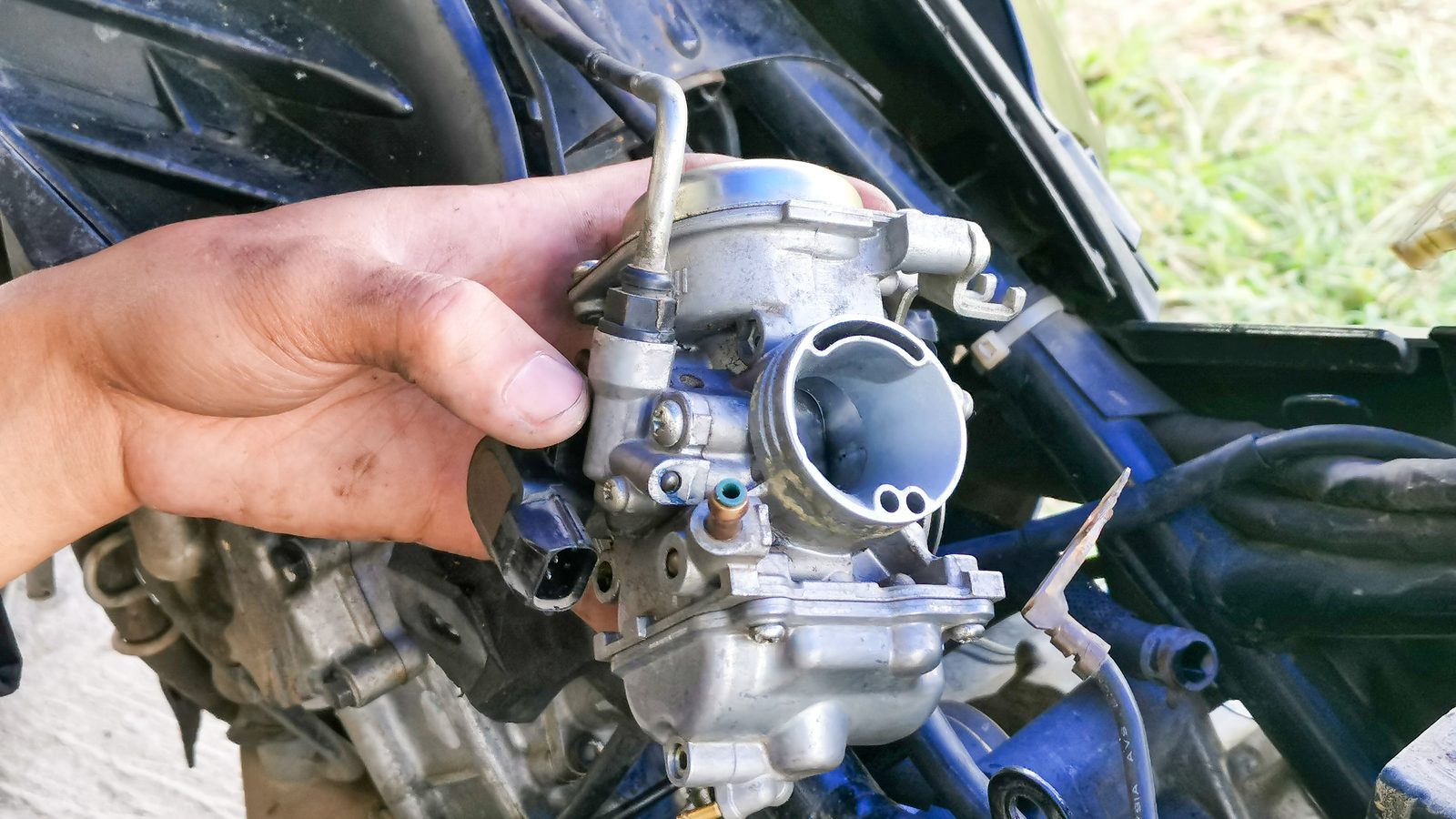
Temperature works the same way. A cold morning gives denser air than a hot afternoon, and the bike does not answer the throttle the same.
The air filter matters as much as any of it. Clogged, it chokes the intake and richens the mix with no jet change at all. Plenty of so-called carburetor problems disappear with a clean filter and nothing else.
Finally, a modified exhaust or a tired packing changes how the engine fills, and therefore what jetting suits it. Same story on a fresh motor: during break-in, chasing a fine setting is wasted effort.
Opening the float bowl without losing the plot
- Shut the fuel tap and let the engine run until it dies on its own.
- Drain what is left in the bowl through the drain screw, into a container, never onto the ground.
- Photograph everything before you take it apart: hose routing, cable orientation, visible settings.
- Count and write down the turns on the fuel screw before removing it, so it goes back exactly where it was.
- Drop the bowl, then pull the jets one at a time and lay them out in order on a light-coloured rag.
- Clean with proper solvent and compressed air — never a wire or a pin through a jet orifice.
- Reassemble, turn the fuel back on, and check nothing is weeping before you hit the starter.
The misunderstandings that cost time
Believing a carburetor gets set once and stays set. It works with ambient air, and ambient air changes every time you ride. A correct setting is correct that day, on that track.
Blaming fuel when the fault is ignition. Misfires, a motor that will not pull, hard starting: the symptoms overlap heavily. Check the spark and the plug before you open the jet box and you will save an afternoon.
Stripping it with no reference, on the theory that it all goes back the way it came off. Jets of neighbouring sizes look alike, gaskets have a side, and a carburetor put back crooked either leaks or floods.
FAQ
Why does my bike run badly after a change of altitude?
Because high-altitude air holds less oxygen in the same volume. The jets keep delivering the same fuel, so the mixture richens without you touching a thing. The bike feels soft, the plug darkens, it burbles when you crack the throttle. The fix goes through main jet size or needle clip position, with the figures taken from your bike’s manual.
How do I know if my carburetor is dirty?
A symptom tied to one throttle zone is the giveaway: an idle that will not hold, a flat spot as you get back on the gas, power missing only at the top. A partly blocked jet does not kill the engine, it makes it uneven. If the air filter is clean and the plug looks right, the float bowl is the next thing to open.
Do modern dirt bikes still use carburetors?
Plenty of them do. Fuel injection keeps gaining ground, especially on recent four-strokes, but the carburetor is still standard on many 2-strokes and across the whole used market. Understanding it stays useful for most of the bikes that actually show up at a club practice day.
See the full mechanics section for related systems.
Editorial content. PiloteMX offers no on-site service, no parts or gear sales, no quotes and no bike repairs. Working on a bike and riding it carry risk: what you do with this guide is your own responsibility.