Fuel Injection on Dirt Bikes: How It Replaces the Carburetor
Contents
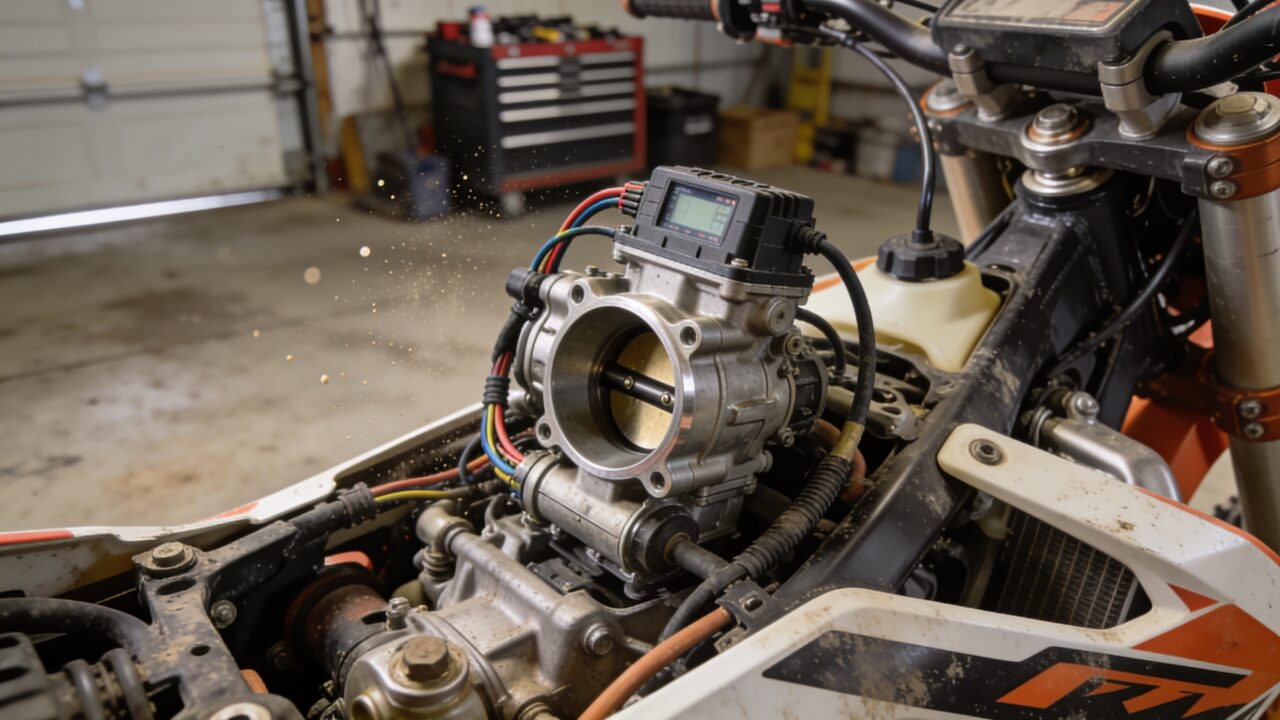
Fuel injection meters the air-fuel mix with an ECU that fires an injector in real time, reading pressure, temperature, engine speed and throttle position. The payoff: mixture stays consistent whatever the altitude or the weather, while a carburetor needs a fresh set of jets every time the air changes density on you.
How the system decides, sensor by sensor
A carburetor meters fuel by vacuum — passing air pulls fuel through calibrated jets. It’s mechanical, it’s tough, and it knows nothing about the world outside. Injection works the other way round. It measures.
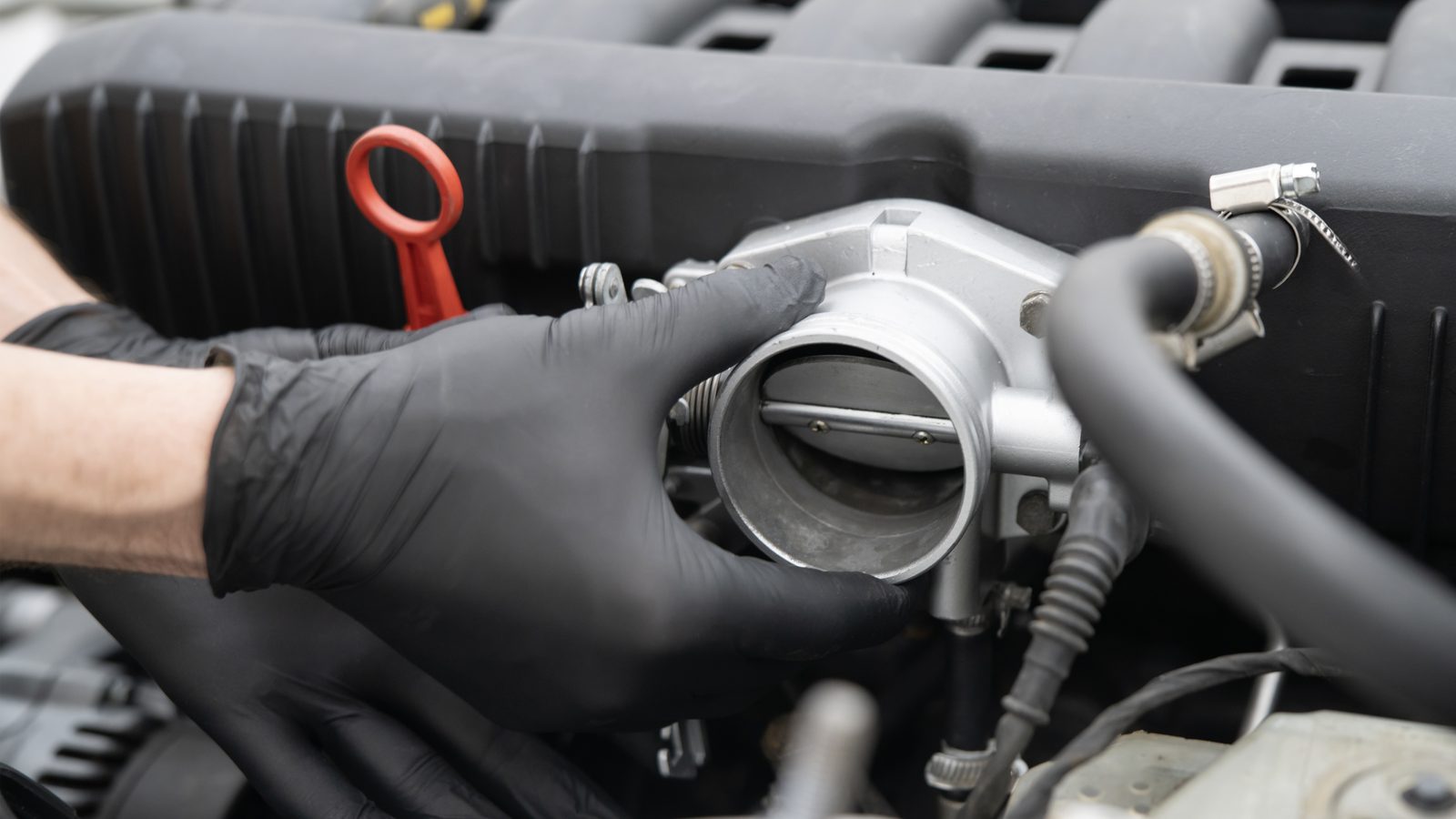
Atmospheric pressure, intake air temperature, throttle position, engine speed: the ECU reads those continuously and works out how much fuel to send. The injector sprays under pressure into the intake tract, usually right ahead of the intake valve on a 4-stroke. The spray is fine, so the charge mixes more evenly than fuel drawn through a venturi ever does.
All of it recalculates dozens of times a second. That’s why an injected bike feels the same on a cold mountain morning and on a hot afternoon at sea level, with nothing for you to touch.
Carburetor or injection: what actually differs
| On track | Carburetor | Injection |
|---|---|---|
| Altitude or temperature swing | Expect to rejet | Sensors compensate on their own |
| Cold starting | Pull the choke, remember to push it back | Enrichment handled automatically |
| Drift over time | Jets gradually varnish and clog | Steady metering while sensors stay clean |
| Fixing it in the pits | Strip and clean with basic tools | Not much you can do without a diagnostic tool |
| Parts cost | A jet is pocket change | Injector, pump or ECU: a real bill |
Neither technology wins across the board. Injection deletes the tuning work and hands you a dependency on electronics instead. A carburetor asks for method, but it gets repaired in a paddock with a screwdriver and some compressed air.
What the rider gains
The first gain is mental. No more staring at the sky before a moto wondering whether you’re running lean today. The ECU sorts it, and you think about riding instead of your jet box.
The second is repeatability. Throttle response stays the same ride after ride, where a carb drifts slowly as its passages load up. When an injected engine changes character, that isn’t drift — it’s a fault, and a fault has a cause you can chase.
The third is starting. No choke to pull, no choke to forget three laps in. On a gate, that matters.
What changes in upkeep
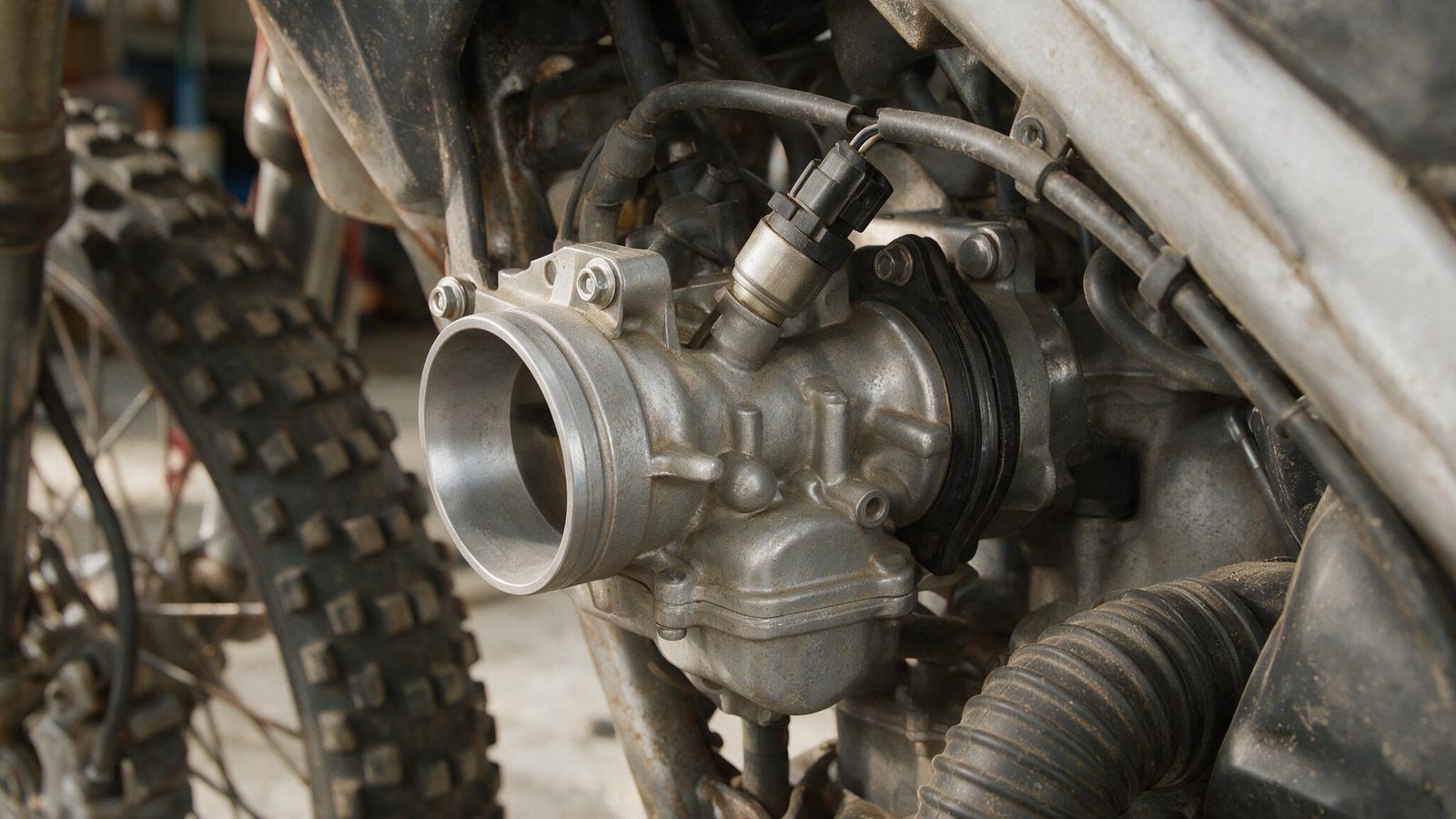
No jets to swap, then. In exchange the system comes with demands a carburetor never made, and the main one sits at the intake.
Quick reference
- The brain
- ECU, deciding how much fuel goes in
- The inputs
- Atmospheric pressure, air temperature, engine speed, throttle position
- The output
- An injector fed under pressure and fired on command
- The fuel side
- Pump and fuel filter, as worth watching as anything else
- The weak spots
- Tired battery, damp connector, saturated air filter
- The tool
- Diagnostic unit compatible with your model’s ECU
A clogged air filter corrupts what the system thinks it knows about airflow. It compensates partly, then it compensates badly. This is the highest-value maintenance job on an injected bike, and the one most often skipped.
The fuel pump has to hold steady pressure for the injector to atomize properly. A loaded fuel filter drops that pressure, the spray turns into a squirt instead of a mist, and the engine starts coughing at the top of its range.
Spotting an injection problem
Useful reflex: don’t blame the electronics first. Most symptoms pinned on injection come from somewhere else.
Rough idle, hesitation off the bottom
Dirty sensor, partly blocked injector, an air leak on an intake boot. But a tired ignition system feels exactly the same from the seat. Rule out spark before you order an injection part.
Diagnostic light on
On models that have one, that light means a fault code is stored. It gets read, not guessed. A compatible tool names the circuit at fault, which saves you replacing three parts to find one.
Fuel use climbing with no other sign
A sensor feeding bad data makes the ECU inject too much without the engine feeling ill. You notice it at the tank, in the smell of fuel, and on a plug that blackens fast.
The limits worth knowing
The system is electronically more complex. A sensor or harness fault behaves less legibly than a mechanical problem, and diagnosis quickly needs tools a home mechanic doesn’t own. The guide on diagnosing an electrical fault covers how to narrow it down before the shop.
Parts cost is the other thing to factor in. An injector, a pump, an ECU — none of it compares to the price of a jet. On a used bike, that weighs as much in the decision as the state of the top end.
FAQ
Is fuel injection more reliable than a carburetor?
Both go the distance when they’re maintained. Injection removes jetting headaches and clogging jets, but adds a dependency on the battery, the sensors and the harness. A carb fails in more predictable ways; injection fails less often, but it’s harder to fix where you’re standing.
Can I convert an injected bike back to a carburetor?
Technically heavy and rarely worth it. The bike is built around its technology: intake, ignition, harness and mapping work as one package. Swap one piece without the others and you get a machine that runs badly everywhere. It isn’t a parts change, it’s a full conversion.
Do I need a special tool to diagnose injection faults?
To read fault codes, yes — a unit compatible with your model’s ECU. Everything else narrows down without tools: check the battery, the air filter, the fuel filter, the connectors, and the intake boots for leaks. Plenty of so-called injection faults end right there.
Does an injected bike use less fuel?
Usually yes, because metering adjusts constantly instead of being fixed by a jet. The real gap depends on the model, on how well the carb you’re comparing against was tuned, and on how you ride. A rider who keeps the throttle pinned will drink either way.
More on how the rest of the engine works in the mechanics section, including the difference between 2-stroke and 4-stroke engines.
Editorial content. PiloteMX offers no on-site service, no parts or gear sales, no quotes and no bike repairs. Working on a bike and riding it carry risk: what you do with this guide is your own responsibility.