Carburetor Jetting: Finding the Right Air-Fuel Mix
Contents
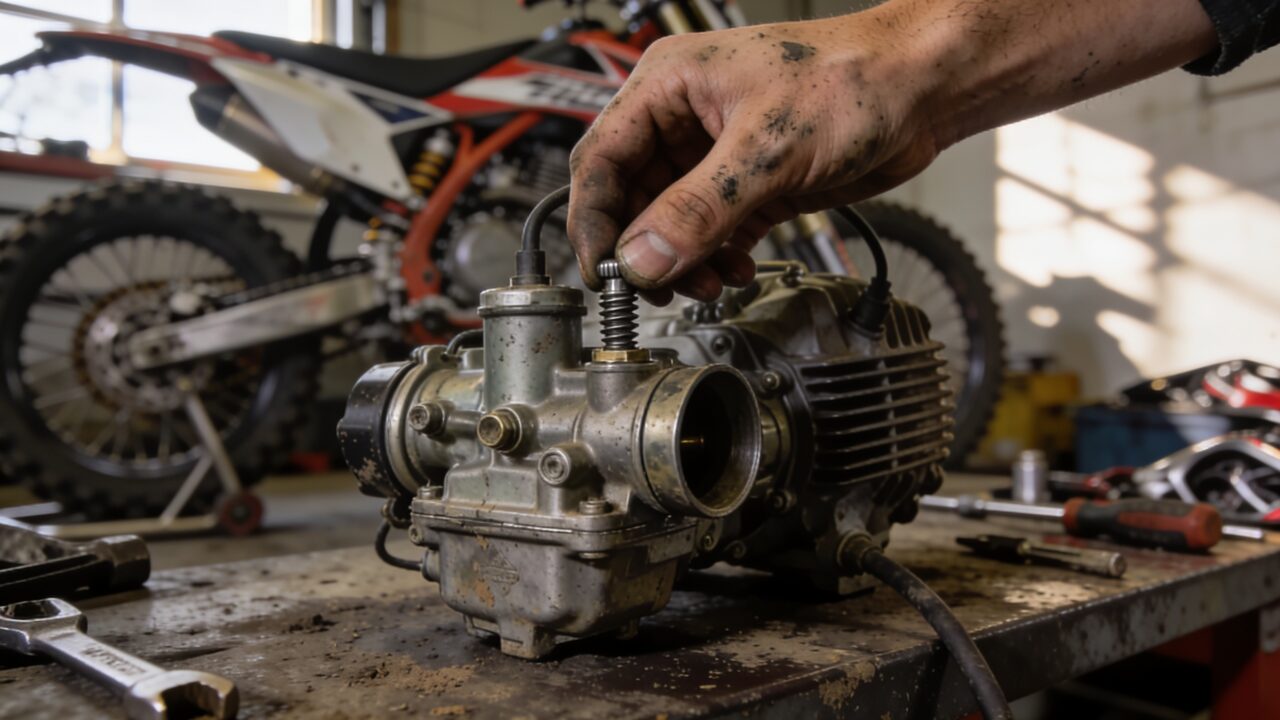
Jetting means setting the pilot screw, the needle clip position and the main jet so the air-fuel mixture is right at every throttle opening. You revisit it whenever altitude, temperature or engine condition change noticeably. Starting figures come from your own bike’s manual, not from the guy parked next to you.
Why the setting never locks in for good
The carburetor doses fuel against the air coming in, and that air changes density with altitude and temperature. A setup that felt perfect at sea level on a cool morning runs rich in the mountains or in real heat: less oxygen in the same volume, so too much fuel for what is left.
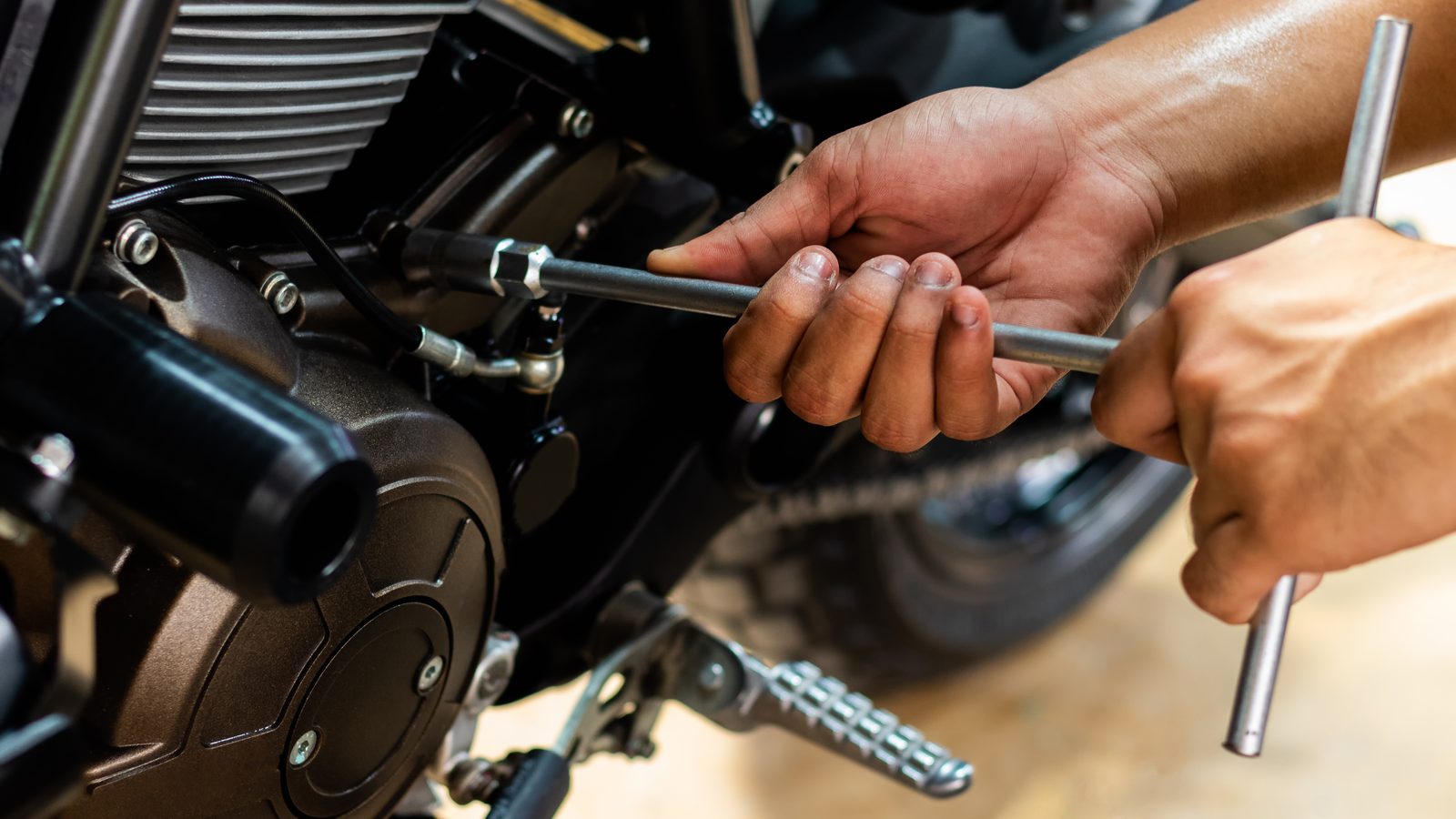
The air filter carries just as much weight. Clogged, it chokes the intake and richens the mixture without a single jet moving. Always start there. Jetting behind a blocked filter is fixing one mistake with another.
Mechanical changes count too. A different pipe, or a decarbonize that gives the engine its flow back, and the fuel demand is no longer the same. On a bike with fuel injection the question does not come up this way at all — the ECU handles the correction, not you.
Reading a mixture that is off
Lean and rich do not feel alike. One runs hot and breaks things, the other fouls and smothers. Learn to tell them apart before you touch anything.
| What you notice | Too lean | Too rich |
|---|---|---|
| Engine behaviour | Misfires up top, feels flat under load | Smothered, unwilling to rev out |
| Temperature | Runs abnormally hot, worst on climbs | Stays cool, hard to restart warm |
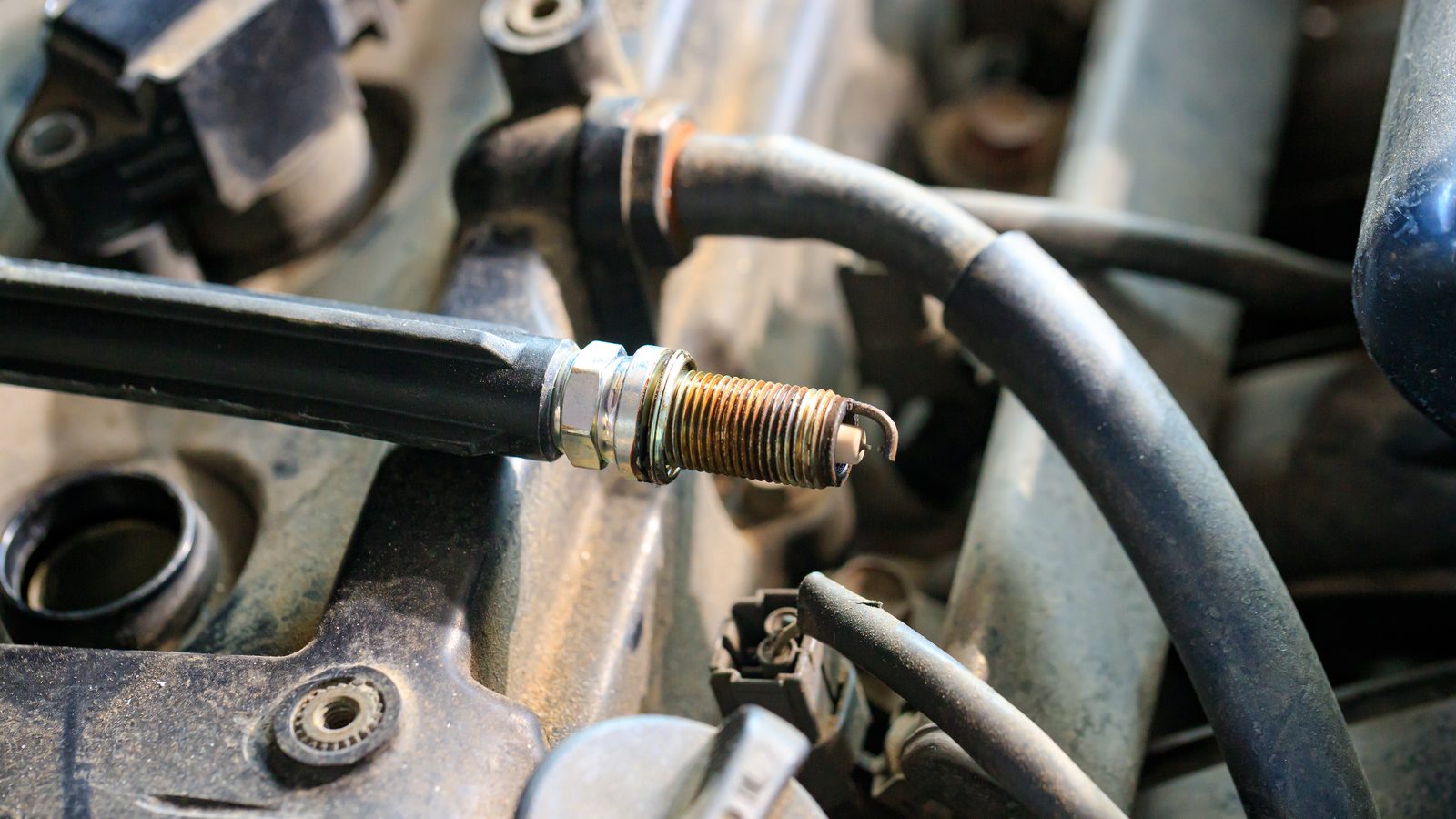
| Plug after a ride | Too pale, whitish | Black and wet |
| Exhaust | Nothing to see | Excess smoke, oily residue |
The spark plug is still the most honest witness, as long as you read it after a real session and not after a few minutes idling in the pits. Light tan generally means the mixture is right. On a 2-stroke, excess fuel also loads the chamber and brings decarbonizing around sooner.
The order to work in
- Clean or replace the air filter, and check for air leaks and fuel weeps while you are in there.
- Write down the current setup before moving anything: fuel screw turns, clip position, jet number.
- Get the engine properly hot — a cold motor lies about everything.
- Set the pilot screw first, throttle closed, in small identical fractions of a turn, letting the idle settle between tries.
- Move to the needle for mid-throttle, shifting the clip one position at a time: raising the needle richens, lowering it leans.
- Finish with the main jet for wide open: a higher number richens, a lower number leans.
- Test on the track after every change, on the same piece of ground, and read the plug when you come in.
One variable at a time. That single rule is the difference between a setup that converges and two weekends thrown away.
Matching the day’s conditions
Up high the air is thin: the mixture richens on its own, so you go leaner to get back in balance. Work that out before you leave, rather than pulling the float bowl in a car park with the wind blowing.
Heat follows the same logic, more quietly. Hot air is less dense than cold air, so a step leaner usually beats leaving a winter setup in place through August.
After break-in, the engine has moved on. Friction has dropped, filling has shifted slightly, and a setting that suited a fresh motor can want a touch-up.
If the bike runs hot with a mixture you know is right, stop blaming the jets and check the cooling system: fluid level, radiator fins, cap condition.
The habits that make it harder
Changing two things at once. Jet and needle in the same session and you will never know which one did the work. The bike may run better, but you cannot repeat it.
Tuning on the stand at idle and calling it done. The carburetor never works that way on track. Mixture gets judged under load, on a climb, on the way out of a corner.
Skipping the filter before you start. It is the most common source of a false diagnosis and the easiest one to rule out.
Pushing on when the symptoms refuse to move. An intake air leak, a tired ignition, a worn piston kit all produce behaviour no jet will ever fix. If several changes have moved nothing, the fault is somewhere else.
FAQ
How long does it take to get jetting right?
Longer than one morning, and that is normal. Plan on several rides with one change per ride, always on the same track so you are comparing something comparable. The riders who get there quickly are the ones who write everything down: conditions, setup, feel, plug colour. Without a notebook you go in circles and try the same setting three times.
Do I have to rejet for every ride?
No. As long as you ride in similar conditions, a stable setup holds fine. Rejetting earns its keep when you change region, when the season turns properly, or after work on the engine or exhaust. Fiddling for the sake of it does more harm than good — you lose the reference point that was working.
Is a new carburetor already jetted correctly from the factory?
Factory jetting is an average baseline built for average conditions. It runs, but it knows nothing about your altitude, your climate or the real state of your engine. Start from that baseline, keep it written down, then refine. And on a used bike, nothing guarantees what is fitted inside still matches the original spec.
More engine tuning topics in the mechanics section.
Editorial content. PiloteMX offers no on-site service, no parts or gear sales, no quotes and no bike repairs. Working on a bike and riding it carry risk: what you do with this guide is your own responsibility.