2-Stroke vs 4-Stroke Dirt Bike Engines: What Actually Changes
Contents
A 2-stroke fires once every crank revolution; a 4-stroke fires once every two. Everything else follows from that. The 2-stroke stays lighter and hits harder for its displacement, while the 4-stroke spreads power out and is far easier to meter while you’re learning. Two engines, two different sets of hands.
Two cycles, two philosophies
A 4-stroke runs four separate phases across two crank revolutions: intake, compression, combustion, exhaust. Valves open and shut at exact moments to control each one. It works well, but it costs weight and money.
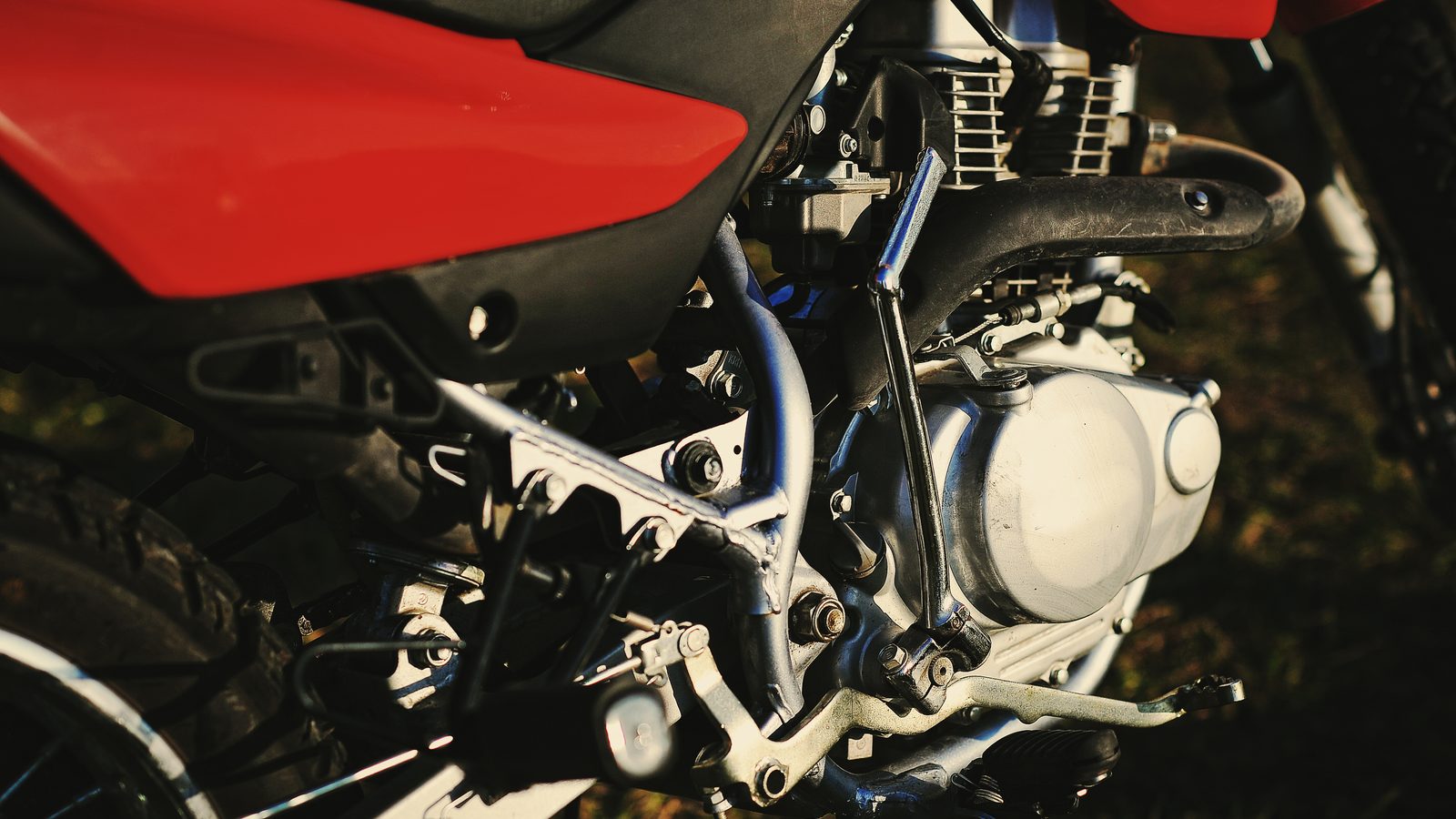
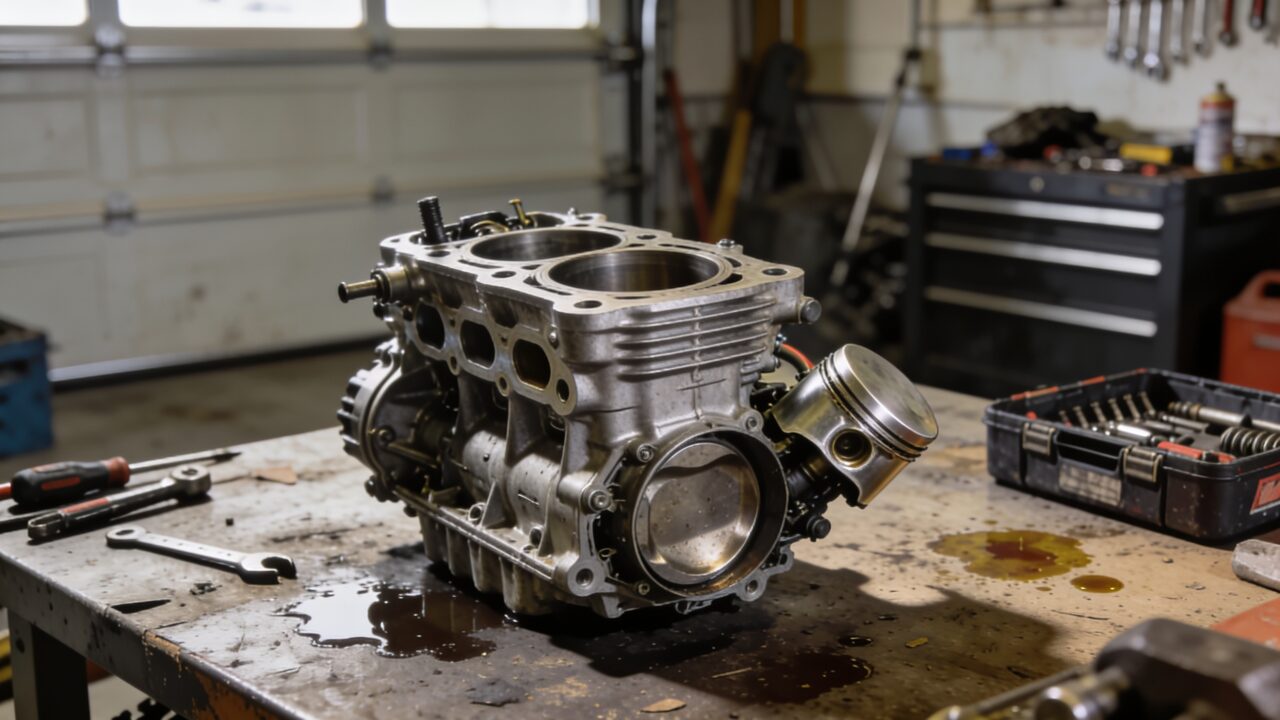
A 2-stroke packs the same functions into two phases on a single revolution, with no valves anywhere. The piston itself uncovers and covers ports cut into the cylinder wall. Fewer parts, less weight, a compact engine — and lubrication that arrives through the fuel, since there’s no dedicated oil circuit feeding the top end.
| Criterion | 2-stroke | 4-stroke |
|---|---|---|
| Combustion | Every crank revolution | Every second revolution |
| Power delivery | Sharp, concentrated up top | Progressive, usable from low to high |
| Weight for the same displacement | Lighter | Heavier |
| Lubrication | Oil mixed into the fuel | Separate oil case |
| Routine servicing | Frequent jobs, individually cheap | Rarer jobs, more technical |
| Warning signs | The engine speaks up quickly when it hurts | Symptoms creep in more quietly |
What it changes on the track
You feel the difference in the first corner, and it’s less about how much power there is than about how it arrives.
On a 2-stroke
You spend the lap keeping the engine inside its band. Drop out of it and the drive vanishes with no transition at all. That means constant work on gear choice and throttle-clutch control, and a much more active clutch hand: on a climb or in soft ground, the clutch is what drags the revs back up when the engine falls flat.
On a 4-stroke
Low-end torque forgives the wrong gear. You can pull out of a rut a gear too tall without slipping the clutch. On slick or technical ground that steady drive matters more than peak output — the rear tyre pushes instead of spinning up. The trade is a heavier bike to pick up and relaunch after a mistake.
A rider moving from a 4-stroke to a 2-stroke usually calls the new engine “gutless”. It isn’t. It just wants more revs and more gear changes. The reverse holds too: a 2-stroke regular finds the 4-stroke lazy until they learn to use the bottom end.
What it changes in the shop
Here the two bikes play entirely different games, and this is often what settles the purchase.
A 2-stroke wants fuel premixed with oil at every fill, at the ratio the manufacturer specifies. Its combustion chamber loads up with residue, hence periodic decarbonizing, and its top end comes apart more often. None of it is difficult, but it’s a rhythm you have to keep.
A 4-stroke keeps its oil in a case, on the usual oil change logic. No mixing, no carbon to scrape. What it does have is a valvetrain: periodic clearance checks, and a distinctly more technical job when something needs adjusting. Clearance figures are model-specific and live in the service manual.
Choosing: a working method
The decision rarely comes off a spec sheet. It comes off your terrain, your level, and your bench time.
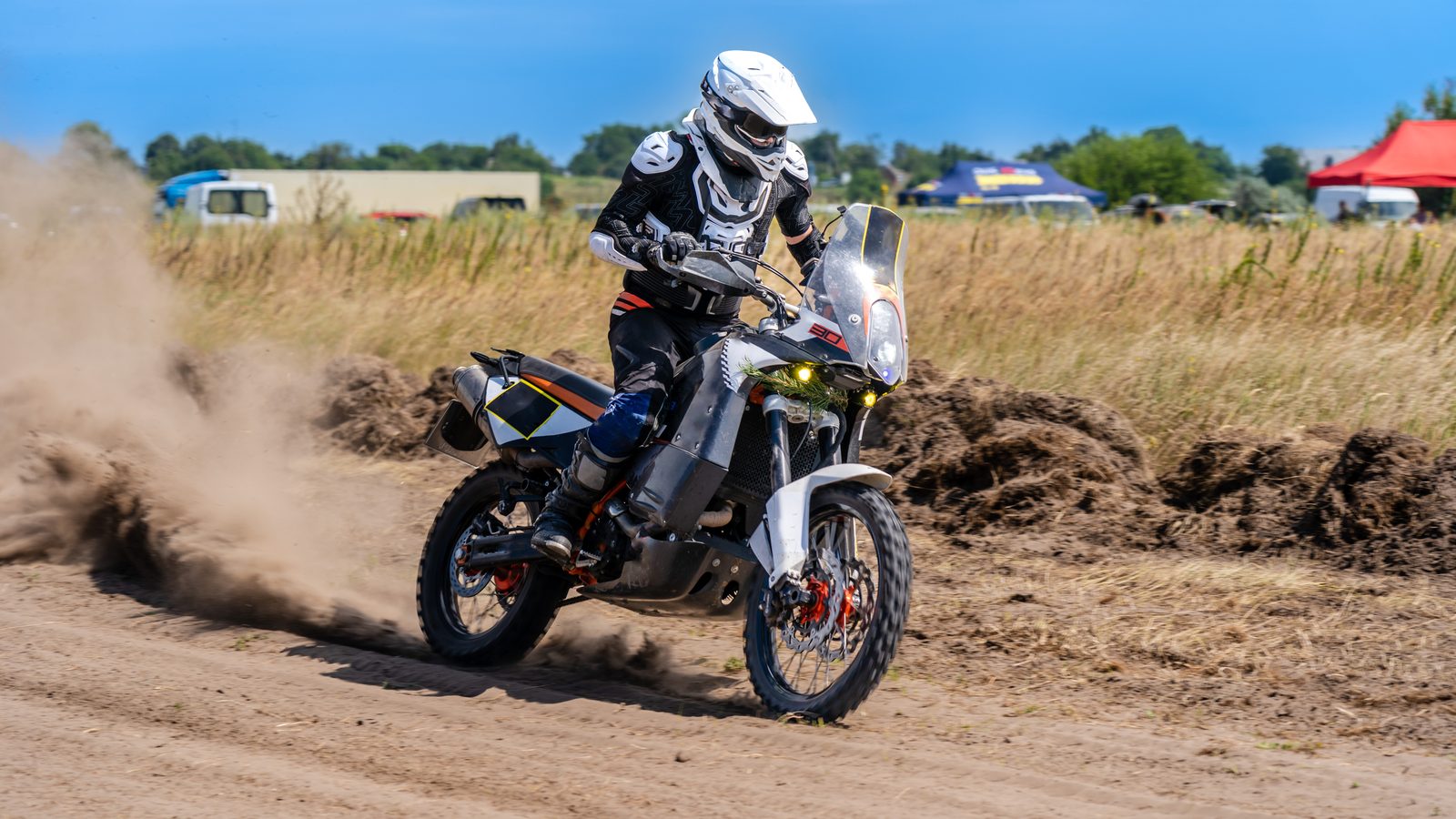
- Look at where you actually ride. Slick technical woods and a wide-open sandy track are not the same bike.
- Place your level honestly. If you’re still working on riding stance, progressive power leaves you room to think about the rest.
- Count your bench time, not just your budget. A 2-stroke asks for frequent simple jobs; a 4-stroke for rare heavy ones.
- Ride both before you sign anything. Half a day on each teaches you more than any comparison chart.
- On a used bike, check what it’s been through: a compression test and the state of the exhaust tell most of the story.
Myths worth killing
“2-strokes are fragile.” No. They’re demanding on specific points — premix, decarbonizing, top end — and perfectly durable when those points are respected. A 4-stroke neglected on valve clearance breaks too, just later and more expensively.
“Premix has always been near enough.” It was near enough until the day it wasn’t. The ratio is a manufacturer figure, not a personal preference.
“4-strokes feel dead.” What they do is put the power somewhere else. Plenty of riders who find their 4-stroke characterless are simply riding it too high in the revs, at a point where the engine has nothing left to give.
One more thing: fuel injection reshuffled the deck for both. A recent injected 4-stroke has little in common with an older carbureted one, in starting and in consistency alike.
FAQ
Can a beginner start on a 2-stroke?
Yes, on a small displacement. The issue isn’t the technology, it’s how violently power arrives on a big-bore machine under a rider who hasn’t built the reflexes yet. Plenty of schools point newcomers at a 4-stroke or a small 2-stroke for the first months, while the basics settle in.
Does a 2-stroke use more fuel than a 4-stroke?
Generally yes at equal displacement. Oil goes out with the fuel, and the engine spends its time higher in the revs to stay in the band. The gap moves a lot with terrain: on a flowing track where you stay in gear, it narrows considerably.
Why did 2-strokes vanish from some race classes?
Emissions rules and fast 4-stroke development pushed them out of several professional categories. In play riding and certain displacement classes they never left at all, and the renewed interest of recent years makes that plain.
Browse the rest of the mechanics section for how the rest of the engine works.
Editorial content. PiloteMX offers no on-site service, no parts or gear sales, no quotes and no bike repairs. Working on a bike and riding it carry risk: what you do with this guide is your own responsibility.