How the Clutch Works: The Link Between Engine and Gearbox
Contents
A dirt bike clutch links the engine to the gearbox through a stack of steel and friction plates squeezed together by springs. The left lever pulls that stack apart: fully in, drive is cut; fully out, drive is restored; anywhere in between, drive is metered. That metering is where riding actually happens.
What is really inside the cover
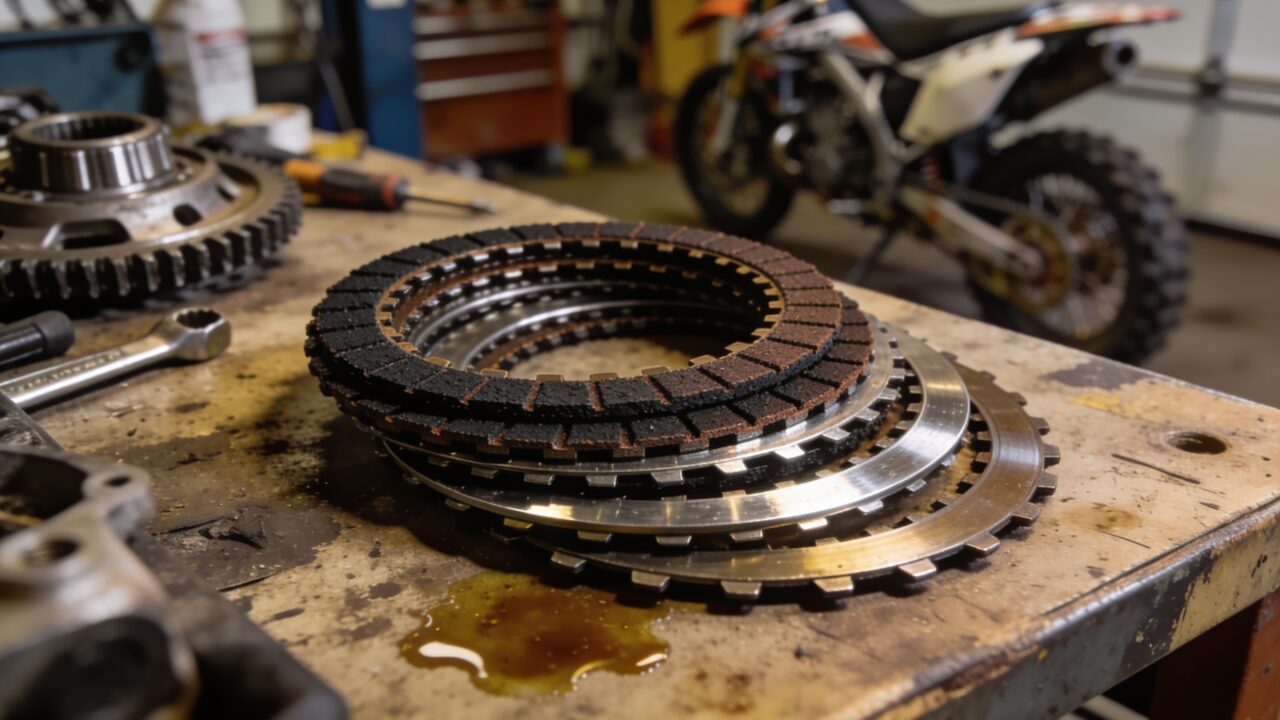
Plain steel plates alternate with friction plates faced in high-grip material. The steels are keyed to the inner hub, which drives the gearbox input shaft; the friction plates hook by their tabs into the outer basket, turned by the crankshaft. A set of springs clamps the whole stack.
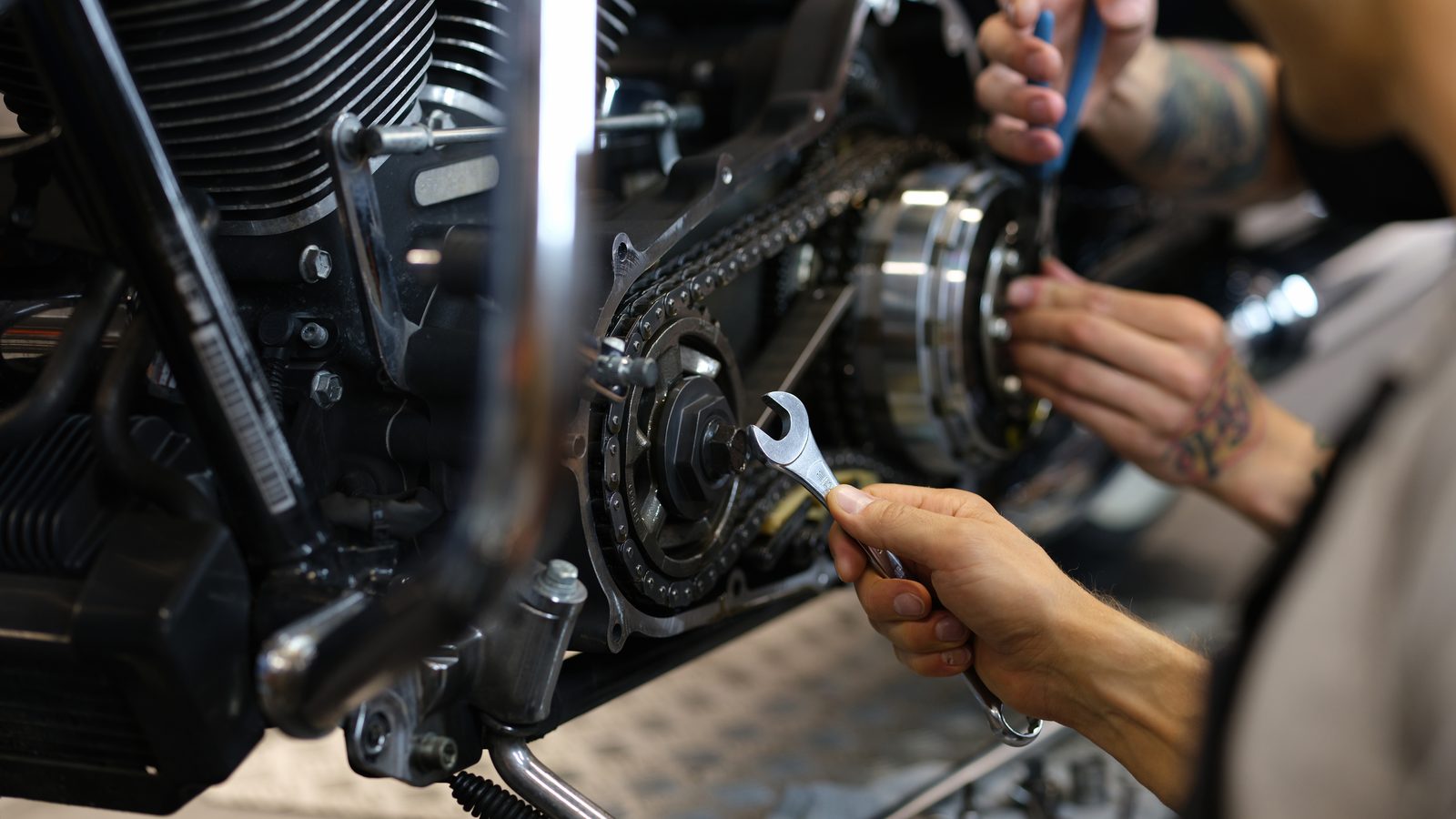
While that spring pressure applies, both families of plates turn as one and power runs from the engine into the gearbox and out to the rear wheel. Nothing is geared together here — it is friction, running wet in the oil that circulates between the plates.
Pull the lever and a cable or a hydraulic circuit pushes a central pushrod that lifts the pressure plate. The springs compress, the plates release just enough to stop driving each other, and the engine-to-gearbox link opens. That is what lets you change gear without forcing the dogs.
The slip zone is a tool, not a fault
Between lever in and lever out there is a band where the plates slide against each other. Part of the torque gets through; the rest turns into heat. That band is where a start is won, where you drive out of a rut, where you step the front wheel over a ledge at low revs.
Easy to describe, slow to master: you open the throttle while you release, and you trade one against the other. Too much lever and not enough throttle and it dies. Too much throttle with a dumped lever and the rear breaks loose. The full technique sits in the throttle and clutch control guide.
On loose ground, that same band smooths power delivery so the rear tyre keeps hooking up. A rider who only touches the clutch to shift gives away a lot of the traction available in sand or on a broken uphill.
Cable or hydraulic: same mechanism, two controls
| Aspect | Cable actuation | Hydraulic actuation |
|---|---|---|
| Feel at the lever | Heavier pull, direct feedback, engagement point that moves as plates wear | Lighter and more consistent pull, stable engagement point |
| Adjustment | Free play to reset regularly at the perch or the tensioner | Self-compensating for wear, little or no free play to set |
| Routine care | Lube and check the outer housing, replace once the pull turns stiff | Check fluid level and colour, bleed when lever travel grows |
| Typical failure | Cable snapping or seizing inside its housing | Leak at master or slave cylinder, lever going spongy |
Either way, the adjustment matters more than the technology. Wrong free play wears plates silently, and the actual procedure is in the clutch free play guide.
Spotting a tired clutch
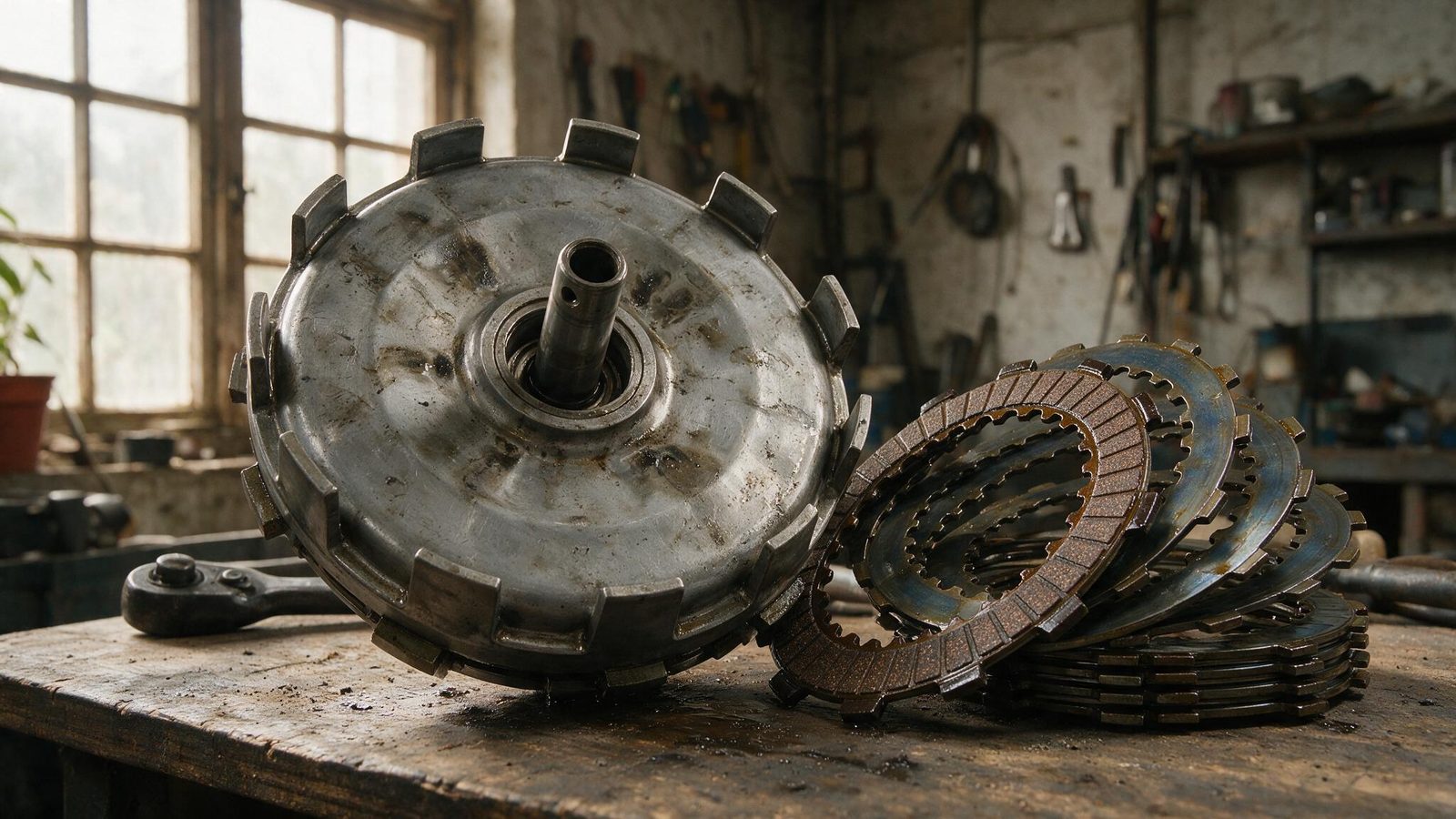
The classic symptom is revs rising while the bike does not. It shows up first in the hardest cases — full load in a tall gear, driving out of a corner on hard pack — then spreads through the rest of the range. A clutch that grabs and shudders on release points somewhere else: warped plates, a notched basket, or free play set wrong.
- Check free play at the lever first. Half of all “dead clutches” are forgotten adjustments.
- Check the gearbox oil: level, colour, and how long ago it was changed.
- Get the engine hot by riding. Slip rarely shows clearly on a cold motor.
- On a clear stretch, take a tall gear at low revs and open the throttle hard.
- Compare how fast the revs climb against how fast the bike actually goes. Tacho leaving without the bike means the plates are sliding.
- If doubt survives adjustment and an oil change, have a shop open the cover. Friction plate thickness and free spring length get measured, not estimated.
Watch out for false positives. An engine that revs without pulling can just as easily be running lean as slipping, so a look at the jetting guide can save you from splitting a cover for nothing.
What wears plates, and what kills them
Every slip phase makes heat, and heat eats friction material. A rider who lives on the lever in technical terrain will replace plates far more often than one who engages cleanly and works the throttle. That is not bad riding. It is the price of the traction you gain where traction is hard to find.
What genuinely kills a clutch is different. Riding with a finger resting on the lever “just in case” keeps clamp pressure short of full with nothing to show for it. Pushing on once it is already slipping, hoping it clears, turns ordinary wear into burnt material welded to a steel. And letting free play drift out of spec makes the clutch slip with the lever released, with nothing at all felt at the bar.
After fitting new plates, ride a few easy sessions before going back to full-load starts. Fresh friction material needs to bed in, exactly like the parts during engine break-in. Worth knowing too: engine braking does not behave the same way from one architecture to the other, which the 2-stroke vs 4-stroke guide covers.
FAQ
How long does a dirt bike clutch last?
It varies hugely with style and terrain: from a few dozen hours for a rider slipping constantly in technical going, to far longer for riding that barely uses that band. Sand and broken climbs eat plates fast. The hour meter alone tells you nothing — feel at the lever is what raises the alarm.
My clutch only slips when hot. Is that normal?
No, and it is the most telling sign of friction material at the end of its life, or of the wrong oil. Cold, the oil is thicker and the springs work under easier conditions; as temperature rises the margin disappears. Start with free play and gearbox oil before ordering a plate kit.
Should I avoid slipping the clutch to make it last?
Not entirely. Controlled slip is a riding tool, and you need it to drive out of slow sections without stalling. What to avoid is unintended slip and a finger permanently on the lever. Use the band when it earns its keep, and release the lever fully the rest of the time.
Can I replace the plates myself?
Pulling the cover and swapping the stack is within reach with patience and an exploded view. What cannot be improvised is the measuring: friction plate thickness, steel flatness, free spring length, torque on the pressure plate bolts. Those figures live in the service manual for your model and nowhere else.
More transmission topics in the mechanics section.
Editorial content. PiloteMX offers no on-site service, no parts or gear sales, no quotes and no bike repairs. Working on a bike and riding it carry risk: what you do with this guide is your own responsibility.