Flat Turns vs Berms on a Dirt Bike: Two Opposite Moves
Contents
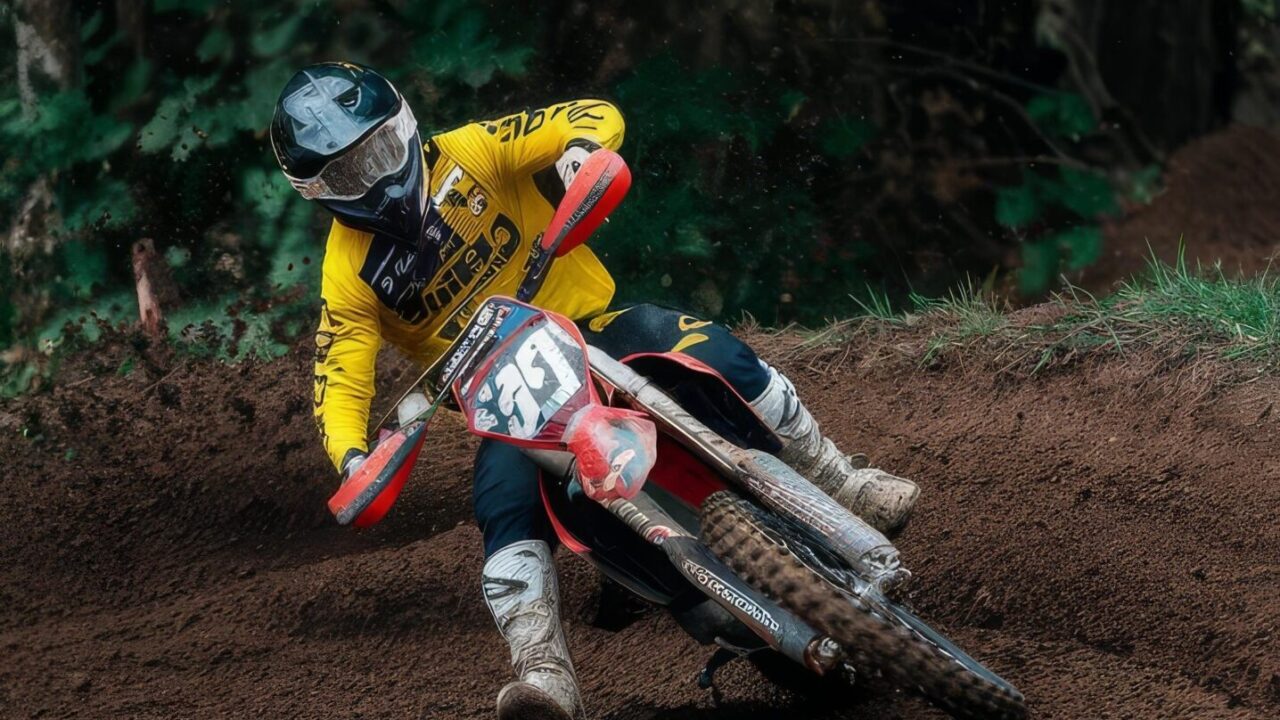
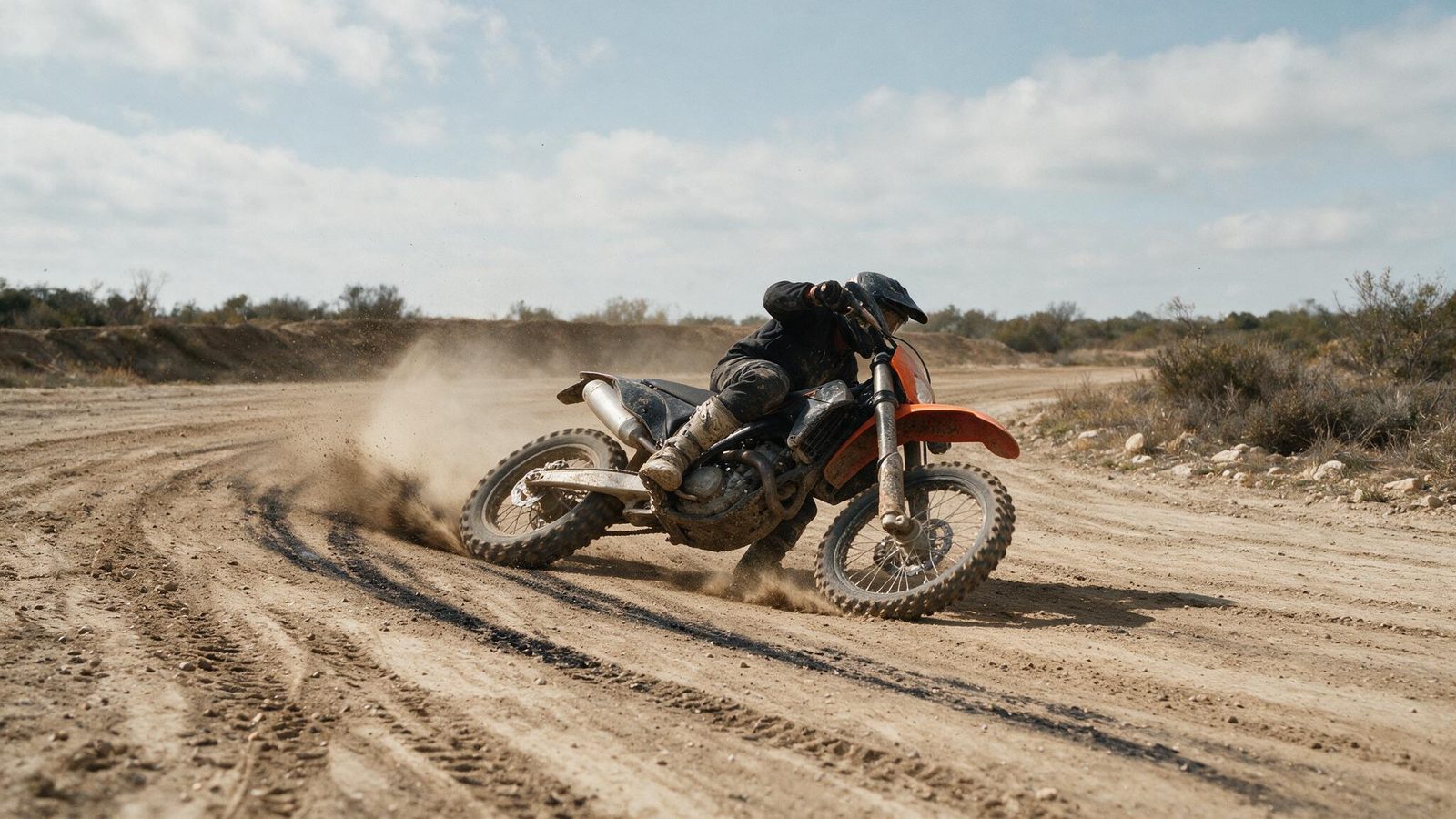
A flat turn forces you to slow down more and work with whatever grip the dirt gives you, because there’s nothing to lean on. A berm is banked on the outside, so you can push the bike into the dirt wall and carry speed all the way to the exit. Ride one like the other and you lose time every lap, sometimes the front end too.
What actually separates the two
They both turn. That’s where the similarity ends. The support, the entry speed, the moment you get back on the gas and above all what happens when you get it wrong — all of it changes. A berm covers part of your mistake. Flat ground covers none of it.
| What you’re judging | Flat turn | Berm |
|---|---|---|
| Support available | The dirt, nothing else | The banked wall on the outside |
| Entry speed | Lower, decided before you brake | Higher, partly absorbed by the banking |
| Getting back on the throttle | Early, but rolled on | Early and hard |
| Margin for error | Thin: the mistake bites immediately | Real, but not unlimited |
Riding a flat turn properly
With no banking to lean on, the grip you get depends almost entirely on how clean your input is. Chest and inside leg follow the principles laid out in the cornering position guide, but the margin is thinner: with no berm to soak up an entry mistake, coming in hot turns straight into lost traction or a wide exit.
Entry speed counts double here. Slow a little more than you would for a berm and get back on the throttle earlier on the way out. Your braking ends before you tip in, not during — trail the front brake with the bike leaned over and you’re asking the front tire for two things at once on dirt that only has one to give.
Roll the throttle on all the way through. On flat ground, too much power on exit spins the rear with no dirt wall to straighten the bike back up. You throw away the traction you just built and leave half a second on the table against the rider who metered it out.
Riding a berm properly
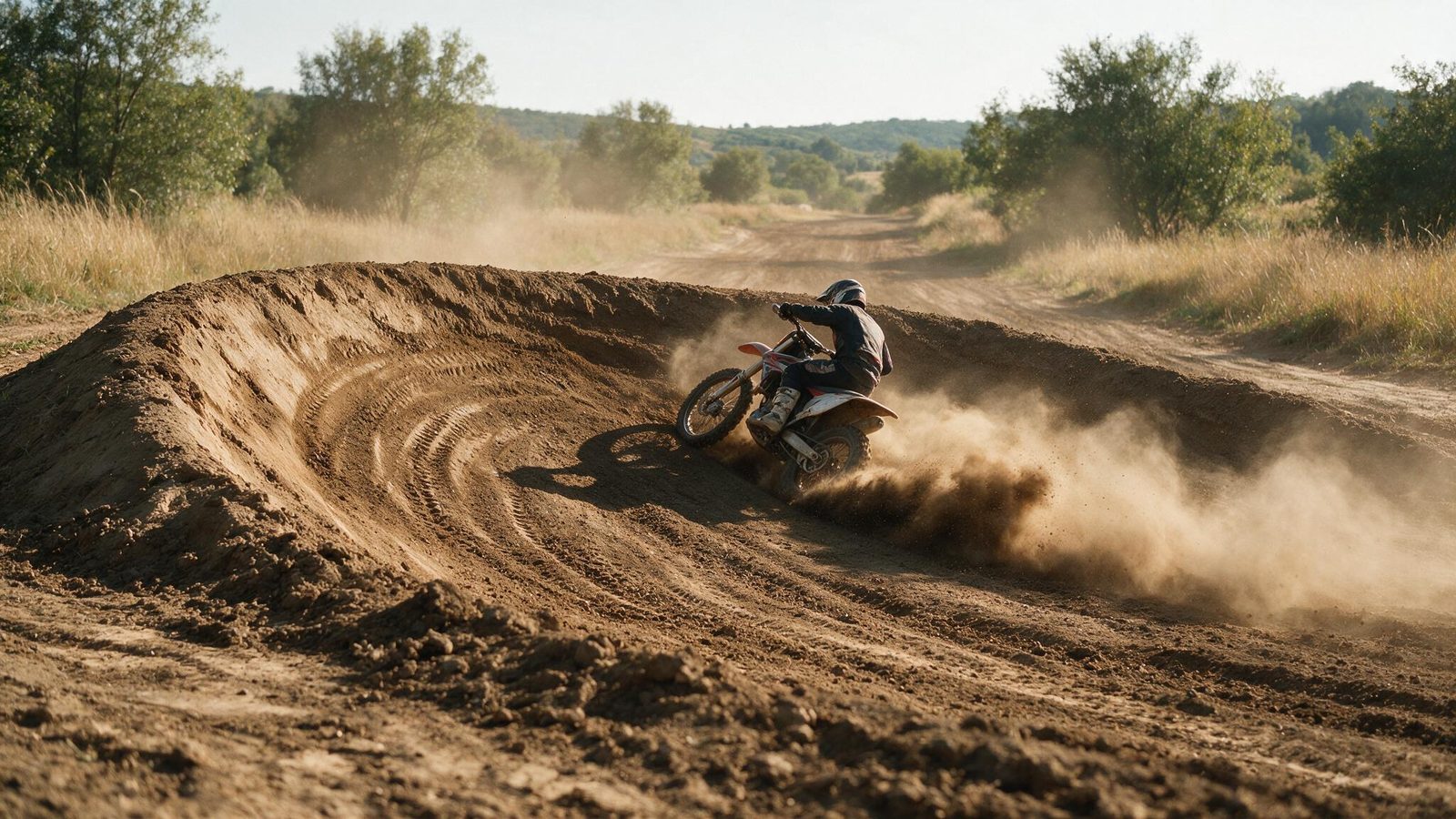
A berm changes the math. The banked outside edge lets you load the bike against it, which raises the available traction and lets you carry speed through the whole arc. The move is to aim at the highest part of the banking and stay pinned there to the exit, instead of cutting short and drifting down.
Here you can open earlier and harder than on flat ground, because the banking takes some of the cornering load and keeps the rear from stepping out. This is where throttle and clutch control creates the biggest gap between two riders of similar pace: a well-timed clutch hit plants the bike into the dirt instead of spinning it across.
The exit starts at the entry
A berm either tapers off or stops dead, depending on how it was built and how many laps it has taken. Exit too late, once the banking is gone, and you’re left without the support you were counting on, at a speed the flat ground ahead can’t handle. Look at where the berm ends as you enter it, not halfway through.
Fresh berm, blown-out berm
A morning berm is soft and tall: it holds if you climb high, it collapses if you sit at the base. By the last moto that same berm is cupped, polished by tires, with a step at the bottom. At that point it behaves more like a rut — you follow the line rather than choose it.
The mistakes that cost real time
Treating a berm like a flat turn — sitting low on the banking, chopping the throttle out of reflex — is the classic error for riders who grew up on flat tracks. You give up the benefit of the banking without escaping any of the flat-turn constraints.
The reverse happens just as often: arriving at a berm carrying flat-turn speed and expecting the banking to swallow all of it. It swallows some. Not all. The result is a wide exit or a front end that washes at the apex.
On flat ground, the usual fault is simply too much entry speed from poor anticipation. Then there’s the slow drift: sliding down a berm without noticing, lap after lap, until there’s no support left. Film yourself once and you’ll see how far down you actually finish.
Three drills that make the difference obvious
- Isolate one flat turn. Run it ten times in a row working only on entry speed, one notch faster each pass, until you feel the front start to push. Back off one notch — that’s your entry.
- Climb high in the berm. On one berm, force yourself to aim for the tallest part for five straight laps, even when it feels too high. Then check where you actually end up: most riders think they’re at the top and sit in the middle.
- Put them back to back. If the layout allows, link a flat turn and a berm of similar radius in the same lap and compare when you get back on the gas. The gap should be obvious. If it isn’t, you’re riding the berm like a flat turn.
Each of these takes about twenty minutes and drops easily into a structured training plan. Three clean passes beat thirty aimless laps.
FAQ
How do I know if I can carry more speed through a berm?
Listen to the support. If the bike feels stable and pushed toward the inside by the banking, you can open a bit more. If it slides or walks down the face, the problem is at the entry: cut your tip-in speed before you try to drive out harder. You gain in a berm through line choice, not bravery.
Why do I lose speed coming out of a berm?
Usually because you leave the banking before it actually ends, or because you drifted down through the corner without feeling it. Stay on the high part until the berm genuinely runs out, then stand the bike up before you go to full throttle.
Is a flat turn always slower than a berm?
At equal radius, yes, almost always: with no banking, available traction caps out and corner speed caps with it. The trade-off is that flat turns offer several possible lines where a berm dictates one. In a race, a wide flat turn is often the best place to make a pass.
Should my body position change between the two?
The basics don’t move: chest forward, inside leg out, elbows up. What changes is the tolerance. On flat ground, a chest that’s late costs you traction on the spot. In a berm the banking hides part of the flaw, which is why some riders look fast in berms and fall apart the moment the track flattens out.
Find all the riding fundamentals on the riding technique page.
Editorial content. PiloteMX offers no on-site service, no parts or gear sales, no quotes and no bike repairs. Working on a bike and riding it carry risk: what you do with this guide is your own responsibility.