Passing on a Dirt Bike: Setting Up the Move Before You Try It
Contents
A pass gets won two or three corners before the spot where you actually go by. You find the zone where your line beats his, you build the speed gap right there, and then you commit without hesitating. Hesitation is what puts both riders on the ground. The zone gets chosen, never improvised.
Read the rider ahead before you try anything
Sit in his roost for two full laps and watch. Not his overall speed, his holes. Almost everyone has one. He runs wide out of the flat turn, he brakes too early into the right-hander, he gets bounced around in the sand section and loses a bike length every time through. That bike length is your pass.
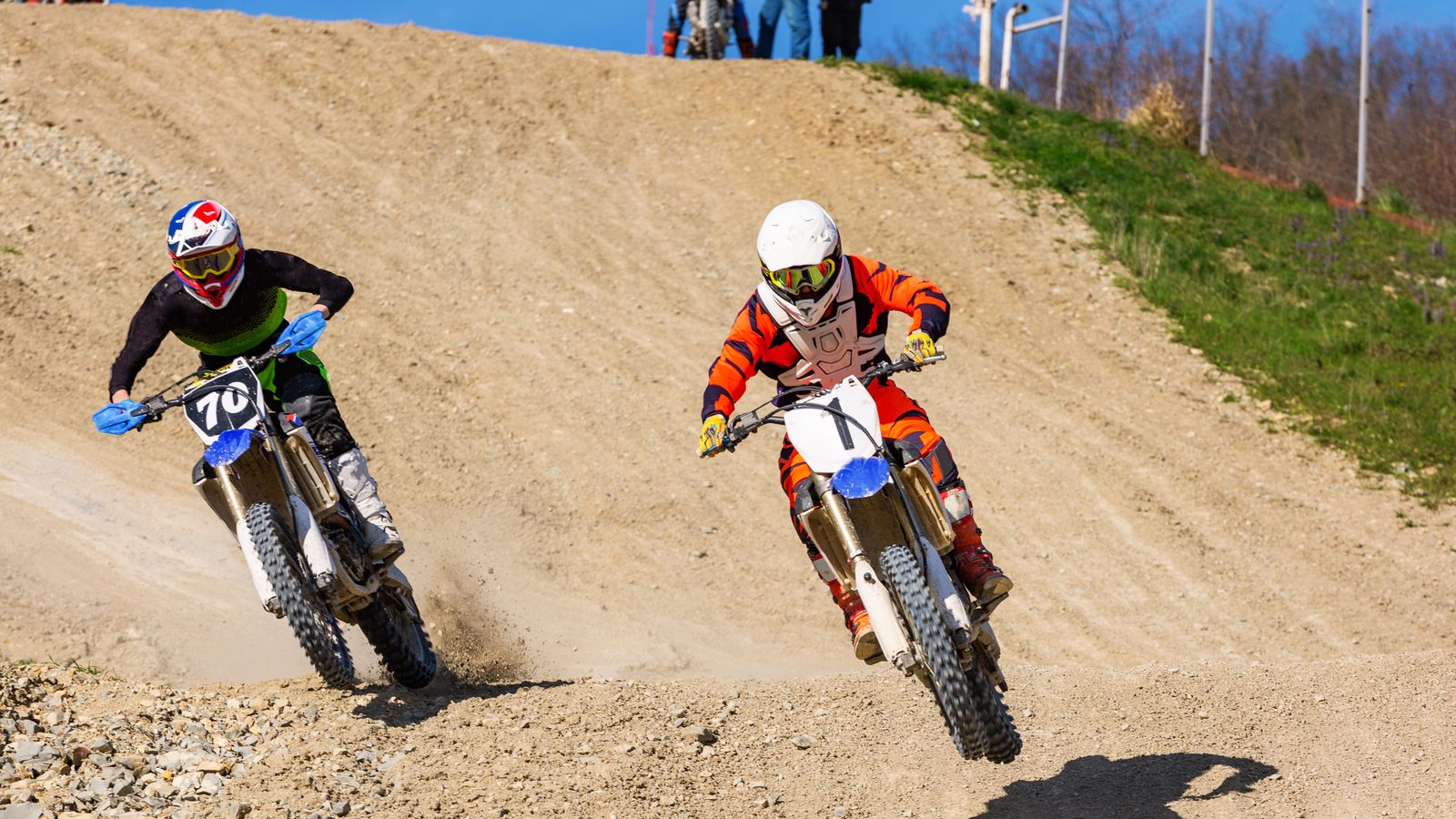
What reads clearest from behind is the rhythm of his throttle hand. A rider who chops the gas mid-corner is telling you he isn’t comfortable on that turn. A rider who stands up and coasts through the whoops instead of staying on the attack is showing you exactly where your time is waiting. Keep two zones in mind, not six. Two, you can actually prepare.
The reverse trap is real too: he isn’t blind either. Once he works out that you’re better through the rut, he’ll take the rut and shut the door. Your read has to include his reaction, not just his weaknesses.
Pick the zone: the three passes that work
There aren’t twenty ways to get by on a motocross track. There are three, and they don’t cost the same when they go wrong.
| Pass | Where it works | What it demands | Cost of a mistake |
|---|---|---|---|
| Late brake up the inside | Entry to a tight turn after a straight | Braking you already trust, and a solid marker | High: straight on, or contact |
| Drive off the exit | Corner exit followed by a real straight | Patience through the turn, then clean throttle | Low: you come up short, not into him |
| Different line | Multiple ruts, tricky sections, soft ground | Having tested the alternate line before the race | Medium: the line breaks down lap to lap |
On a short, choppy track the inside late brake dominates, simply because there’s no straight to build anything else. On a flowing layout with real drives, the exit pass pays better and forgives more. Look at what the track hands you first; technique comes second.
Commit fully or not at all
The decision happens before the apex, not during it. Once it’s made, you go all the way. The soft pass, the one where you put half a wheel inside while keeping the option to back out, is the most dangerous of all: the rider ahead can’t tell what you’re doing, so he can’t avoid you.
Late braking up the inside is the classic. It assumes your braking is already clean and that you know your marker. Aiming deeper than usual on a skill you haven’t nailed down means running straight on. The exit pass asks for something else entirely: patience through the corner, then throttle and clutch control that puts power down without spinning the rear.
On broken ground, the third option is refusing to fight him on the same line. If you’re better through ruts, take the neighbouring rut and come out ahead. It works, but not everywhere. A secondary line digs out fast, and the one that paid on lap four can put you down on lap twelve.
When he fights back
Some riders defend their spot corner after corner, parking themselves on exactly the line you want. Trying the same place three times only raises the bill. Back off a length, cool down for a lap, and look somewhere else on the track. The door is often wide open two turns later, where he thinks he’s safe.
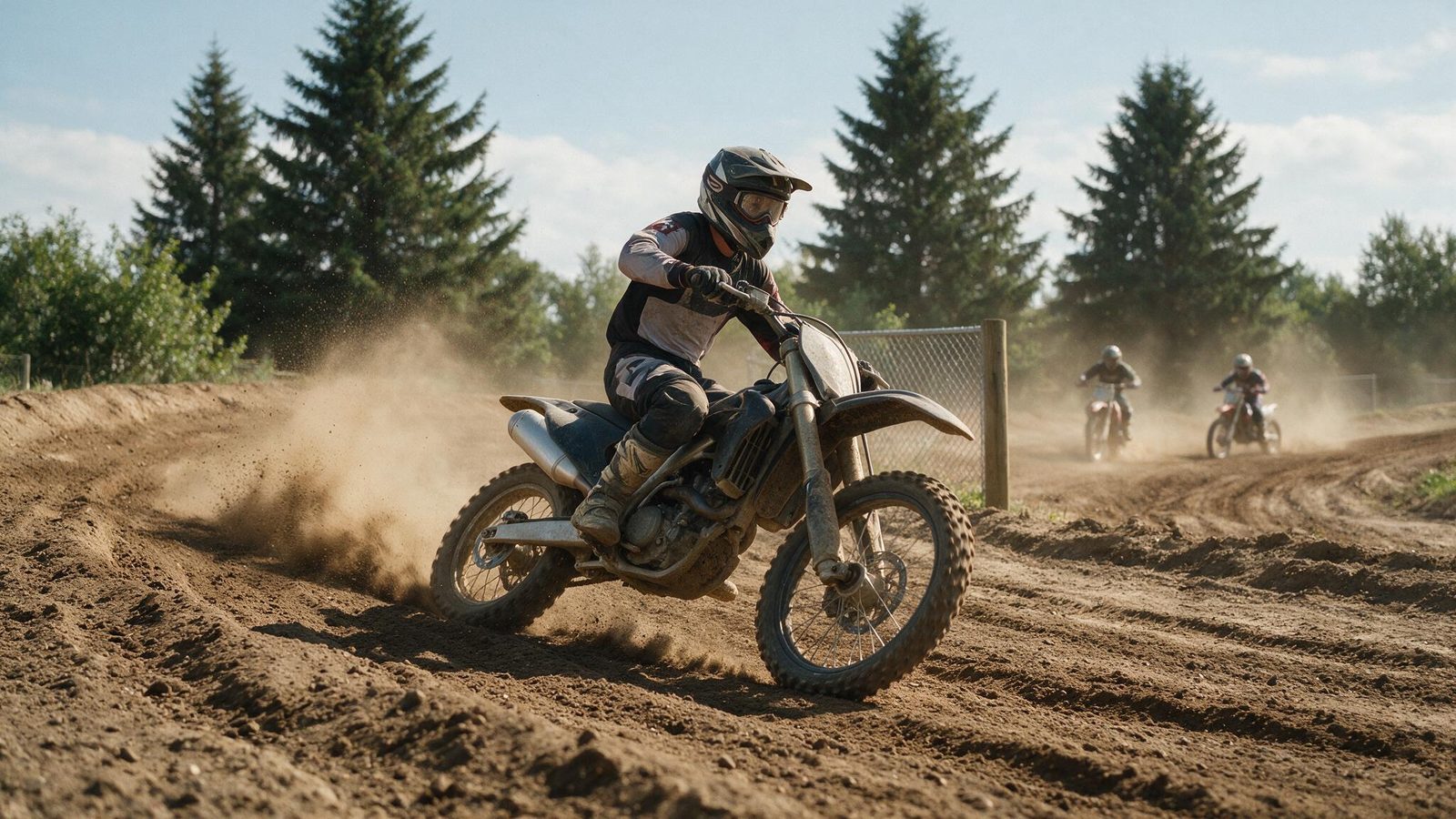
Frustration is the real opponent in those moments. An annoyed rider brakes later than he should and turns a duel into a crash. If you feel yourself getting wound up, that’s the signal to give up a lap: the mental side of racing matters more here than any braking technique.
Holding the spot right after
The pass isn’t finished when you’re ahead. It’s finished two corners later. The rider you just went by is hot, annoyed and stuck to your rear wheel. That’s where plenty of riders get repassed, attention dropped one notch.
Shut the door cleanly on the next few turns: move onto the line he was aiming for once, and stay there. A rider who moves twice in the same straight is in the wrong and gets punted. Then rebuild your rhythm. If you took the spot by braking deep, give yourself three or four corners to get back to an economical pace, or you’ll pay for it late in the moto. Same logic as the start: gaining a position means nothing if you cook your forearms holding it.
Training the pass
- Ride three laps behind a friend without ever trying to go by. Pick out the single zone where you gain the most.
- On the next lap, pass only in that zone. If it doesn’t work, back off and try again the following lap, nowhere else.
- Swap roles. Lead and let him hunt you: feeling a rider come is how you learn where your own doors sit open.
- Run ten starts in a row with two or three riders. The first turn is the only place you pass three opponents at once, and it’s a skill like any other.
- Finish with five solo laps on the lines you never use, including the outside of the flat turns. You don’t invent a line mid-race.
FAQ
Where should you pass on a motocross track?
Where your line beats his, not where you’re fastest in absolute terms. In practice: a tight corner entry if your braking is clean, an exit onto a straight if your drive is stronger. Spend two laps identifying that zone before you try anything, otherwise you’re passing on luck.
What do you do if the rider ahead closes the line?
You back off and come out. Avoiding contact beats taking the position, every time. An abandoned pass can be retried two corners later; a double crash costs you the moto and sometimes the weekend. Plan your escape route before you commit, not at the moment he shuts the door.
How do you avoid getting repassed straight away?
Stay switched on for two more corners. Take the line he was aiming for, once, without weaving. The rider you passed almost always counterattacks within seconds, while your focus is dropping. Once that window closes, settle back into a pace your arms can hold to the flag.
Find all the riding fundamentals on the riding technique page.
Editorial content. PiloteMX offers no on-site service, no parts or gear sales, no quotes and no bike repairs. Working on a bike and riding it carry risk: what you do with this guide is your own responsibility.