Chest Protectors and Roost Guards: Protecting Your Torso Without Restricting Movement
Contents
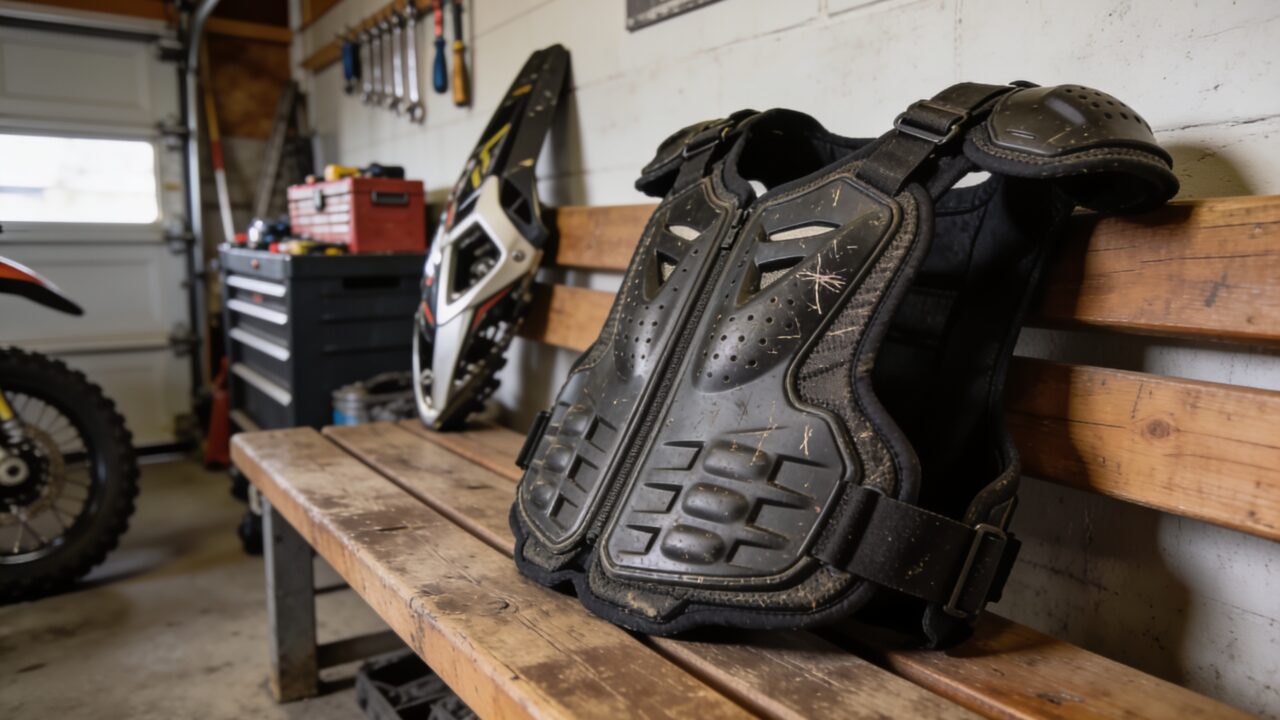
A roost guard stops what gets thrown at you: dirt, gravel and debris off the rear wheel ahead. A chest protector adds hard plates over the chest and back, built to take a direct hit in a crash. Two different jobs. The first is enough for relaxed trail riding, the second earns its place as soon as the ground gets rough or the pace picks up.
Two products people mix up
The roost guard exists because of one simple problem. Ride behind someone and you take their rear wheel square in the chest. Packed dirt, gravel, frozen clods. It stings, it leaves marks, and it eventually makes you back off in exactly the sections where you should be staying close.
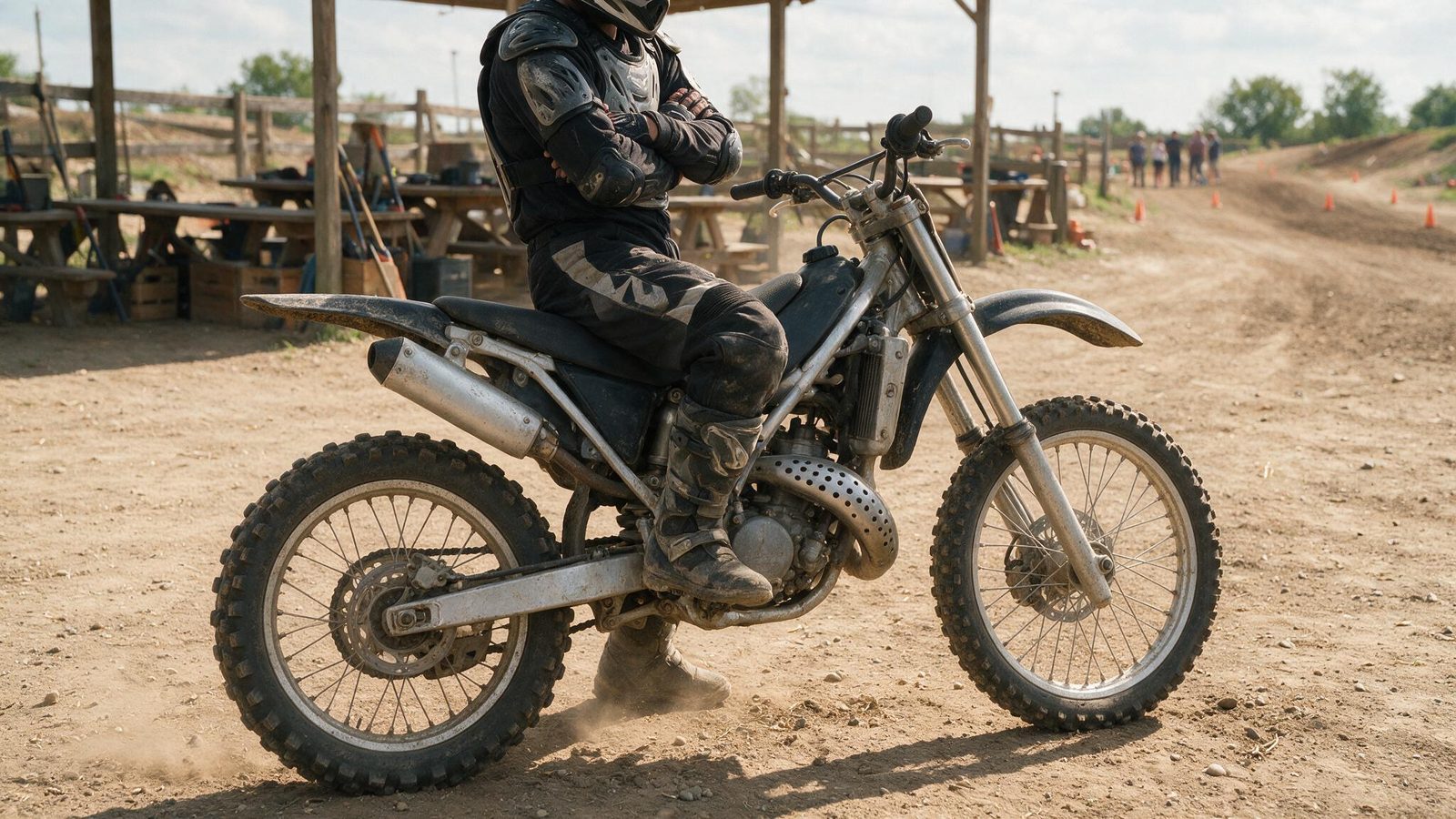
A chest protector answers something else entirely. The ground, a tree, the bar in your ribs. Its plates are sized for a solid impact and cover the sternum, almost always the spine, sometimes the shoulders. A roost guard never claimed to do that.
The confusion comes from the shop wall. Both sit in the same spot on your body and look alike from three metres away. Plenty of riders walk out with a roost guard believing they are covered for crashes. The disappointment shows up on the first big one.
What separates them
Pick for the ground you actually ride, not the ground you daydream about.
| Criterion | Roost guard | Chest protector |
|---|---|---|
| What it takes | Thrown dirt, gravel, branches | Direct impacts, landing on your back, hitting an obstacle |
| Build | Flexible panel or thin shell, little padding | Hard chest and back plates over absorbing foam |
| Bulk | Disappears under the jersey | Noticeable weight and volume, hot in summer |
| Where it fits | Flowing tracks, casual riding, riding in a pack | Rough ground, jumps, woods, racing |
One caveat: the line between the two has blurred. Some recent models claim chest-protector level impact ratings in a roost-guard silhouette. When that happens, read the conformity label sewn inside rather than the catalogue photo. The label is the only thing the manufacturer stands behind.
What a hard shell actually does
A shell does not delete the energy of an impact. It spreads it. Instead of a rock concentrated on two ribs, the load goes across the whole plate, and the foam behind it stretches out the contact. Same principle as a helmet shell, on a different scale.
What it does not do is protect your spine from compression. A back plate limits impacts on the bony ridges; it will not stop a vertebra from being crushed in a bad landing. Certified back protectors target that specific risk, and they are chosen separately.
Ventilation matters more than riders expect. A solid shell pressed against your torso turns a summer session into a sauna, and a rider who is cooking rides badly. The vent holes and air channels are not decoration.
Under the jersey or over it?
Both setups work. Under the jersey, nothing sticks out and nothing snags — that is the choice of riders who want to forget they are wearing anything. Over it, you can pop the straps in ten seconds between motos, and the fabric never rubs against the shell edges.
The real question is how it lives with the rest of your kit. A wide chest protector can bite into the top of your elbow guards and create a hard spot at the shoulder. A kidney belt pulled on over the top can lift the back plate away from your spine. Always try the full set, never the single piece.
If you are building your kit one item at a time, the order laid out in the gear on a budget guide still holds: helmet and boots first, joint protection next, torso right behind.
The fitting that saves you the mistake
Try a chest protector in riding position, never standing with your arms by your sides. Half the problems only appear once your torso tips forward, in the stance covered in the riding stance guide.
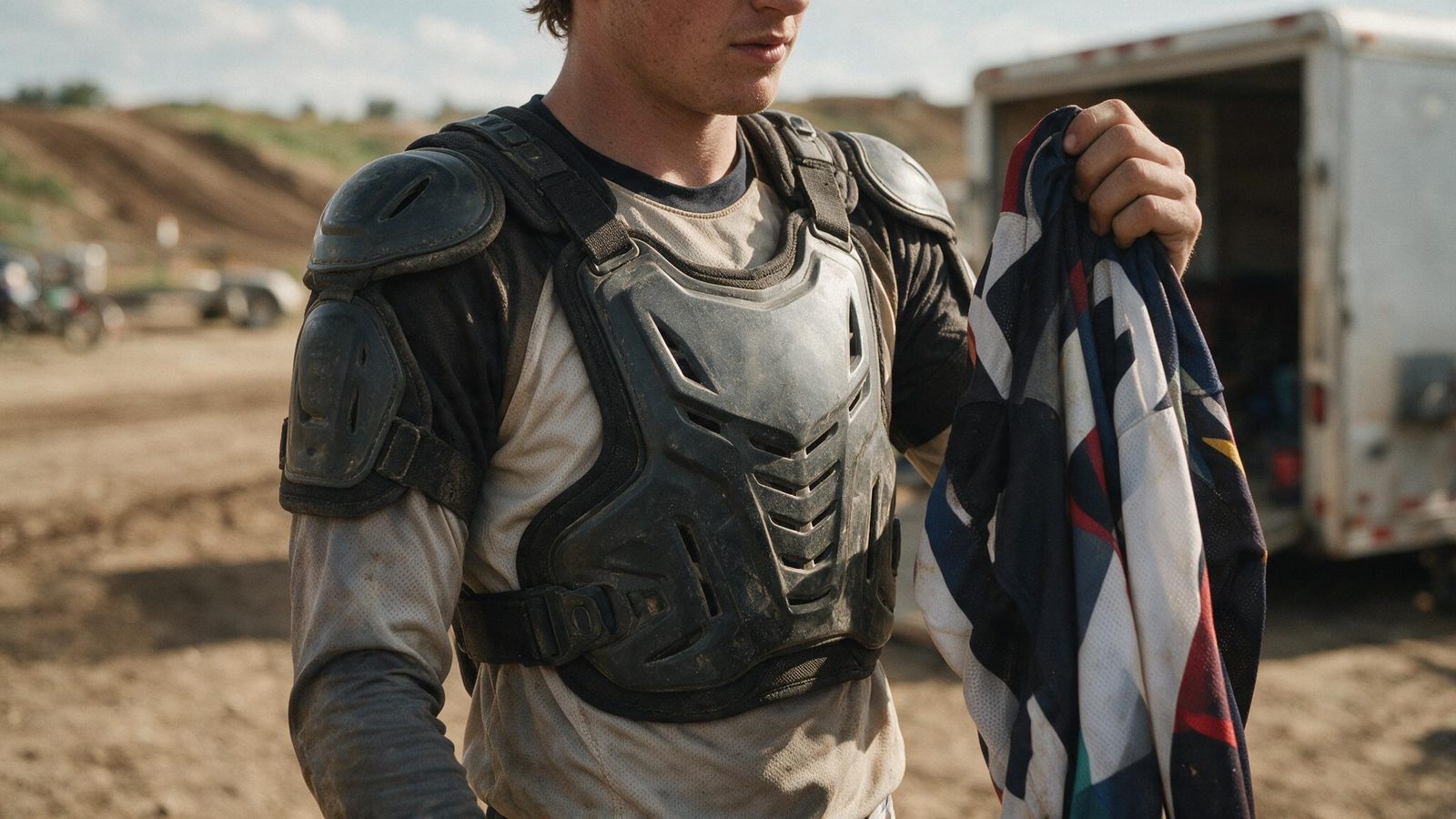
- Put on the full kit, jersey included, exactly as you would on a ride day.
- Set the shoulder straps so the chest plate sits on your sternum, not on your throat and not on your stomach.
- Tighten the side straps until nothing shifts when you shake your upper body.
- Lean forward as if you were on the bars, arms out, and check that the top edge does not jam under the helmet when you lift your head.
- Turn your head left, then right. Your line of sight down the track has to stay clear.
- Take two or three deep breaths. If your ribcage feels clamped, back the straps off — a rider short of air tires twice as fast.
A model that clears those six checks in the shop will not bother you on track. One that fails a single check ends up in the gear bag after three rides.
Care and checks
Sweat chews through foam and stitching far faster than mud does. Rinse the fabric parts after dirty rides and let everything air dry — never on a radiator, because heat warps plates and hardens foam.
Check the straps and buckles now and then; they are what fails first, and a stretched strap lets the protector slide at the worst possible moment. The rest of the routine follows the gear maintenance guide.
For a kid, one rule: the protector has to be built for their size. An oversized adult model spins around the torso and rides up under the helmet at the first hard bump. More on that in the kids’ gear guide.
Mistakes that cancel the protection
First one: choosing on weight alone. An ultralight roost guard bought for rocky ground is a comfort decision dressed up as a technical one. Second: cranking the straps down thinking tighter is safer. A plate clamped onto your ribcage restricts breathing without improving absorption at all.
Then there is the protector pulled on over a badly placed kidney belt, which lifts the back plate off your spine. And finally, simply leaving it at home on “quick easy ride” days. That is often exactly when it goes wrong, because nobody is really switched on.
FAQ
Is a roost guard enough to ride safely?
It is enough for what it was designed for: thrown debris. Casual riding on a flowing track, no tight pack, no big jumps, and it is a defensible choice. As soon as the ground turns rough or you are riding with others at a real pace, direct impact becomes the bigger risk, and a plated chest protector genuinely changes the outcome.
Can I wear a chest protector under my jersey?
Yes, plenty of models are built for it, with softened edges and a flatter profile. Just check that the jersey sleeve does not pull at the shoulder when you reach for the bars, because that is where the seam gives out. Models meant to go over the top have wider straps and come off much faster between motos.
Does a chest protector really restrict riding?
A model in your size, properly adjusted, disappears after a few minutes. Discomfort almost always traces back to shoulder straps set too loose, which let the plate creep up toward your throat. If you feel it touch under the helmet when you lift your head on a landing, drop the plate lower and tighten up.
Do I have to replace it after a crash?
After a solid hit on the chest or back, inspect the piece in full light. A crack, a whitened fold, foam that stays flat: the shell has already absorbed, so replace it. No visible marks and no violent impact, and you can keep riding with it. When you are unsure, replace it anyway.
More gear guidance in the gear section.
Editorial content. PiloteMX offers no on-site service, no parts or gear sales, no quotes and no bike repairs. Working on a bike and riding it carry risk: what you do with this guide is your own responsibility.