Dirt Bike Battery: What It Does and How to Maintain It
Contents
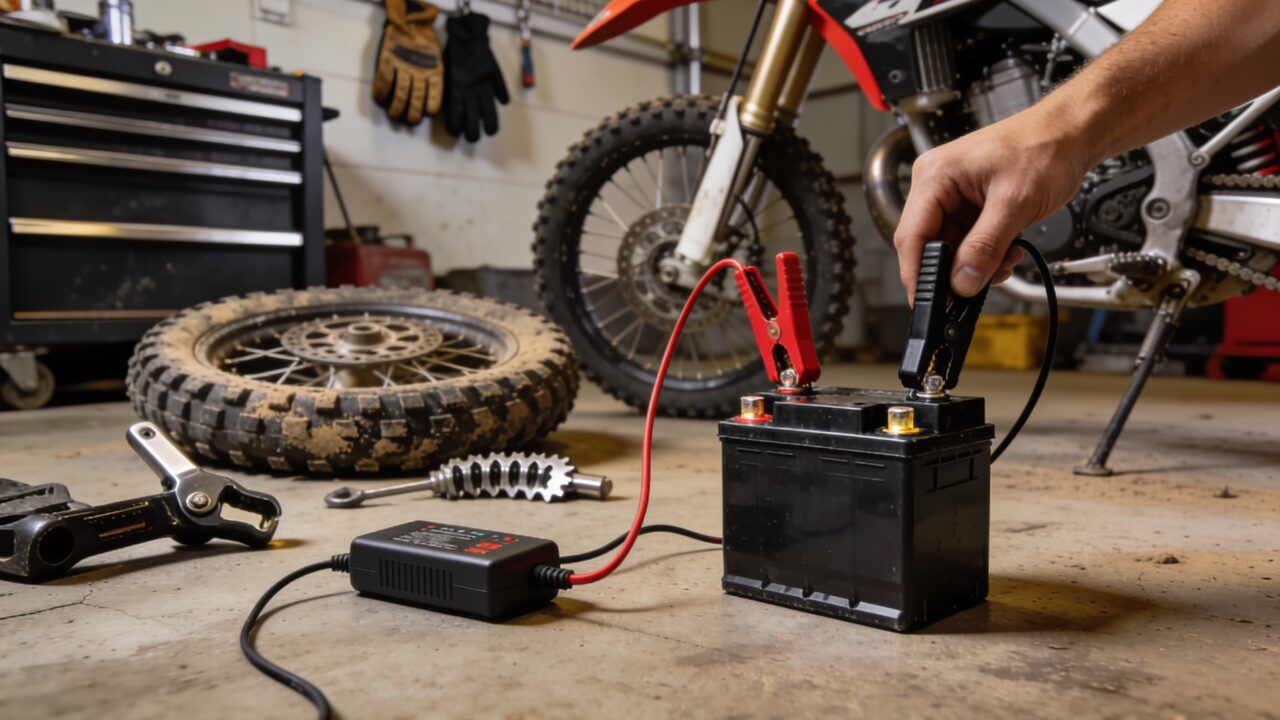
On a dirt bike, the battery feeds the electric starter and, on street-legal models, the lights. Plenty of pure competition machines carry none at all: they kick-start, with an ignition that makes its own current. If yours has one, storage and charging decide how long it lasts, not how hard you ride.
Why some bikes skip it entirely
An ignition system built on a stator and CDI runs completely on its own: the spinning engine generates the current that makes the spark. No battery is needed for the bike to fire, which is why so many race-only dirt bikes don’t have one. Less weight, fewer wires, one less thing to fail on a Sunday morning.
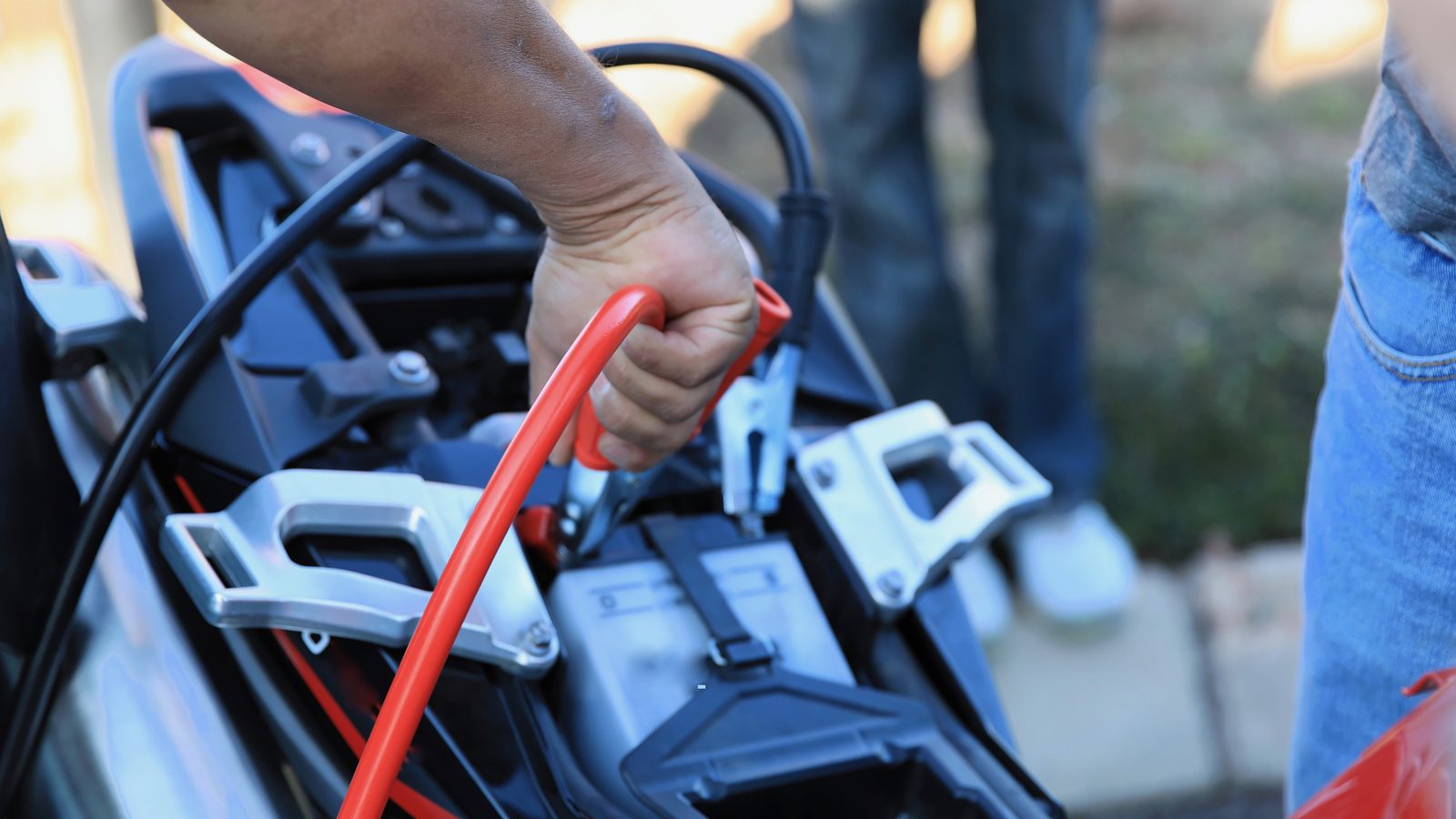
Add an electric starter and the story changes. Turning a cold engine over demands heavy current for a short burst, and only a battery delivers that. A kick does the same job mechanically, without a drop of electricity.
Street-legal machines follow the same logic. Headlight, tail light and indicators draw continuously, so a battery is almost always fitted. On a bike with fuel injection, it goes from useful to essential: the pump and the ECU need voltage before the engine even turns.
Lead-acid or lithium: what changes for you
| Criterion | Lead-acid | Lithium |
|---|---|---|
| Weight at equal capacity | Heavier | Noticeably lighter |
| Deep discharge | Handles it better, still leaves marks | Takes it badly, sometimes permanently |
| Charger | Standard lead-acid charger | Lithium-specific charger required |
| Routine care | Electrolyte level to watch on vented types | Nothing to top up, it all comes down to charging |
Lithium has taken over on recent bikes for a simple reason: on a machine where every gram registers through the bars, the weight saving is real. The catch is that a lithium battery left flat all winter doesn’t always come back. Lead-acid forgives a bit more, but it rarely forgives twice.
Spotting a battery on the way out
The first sign is the sound of the starter. A slow, gutless crank that hesitates means the battery can no longer push current out in one hit. On a bike that fired instantly the week before, that drag is the only warning you’ll get.
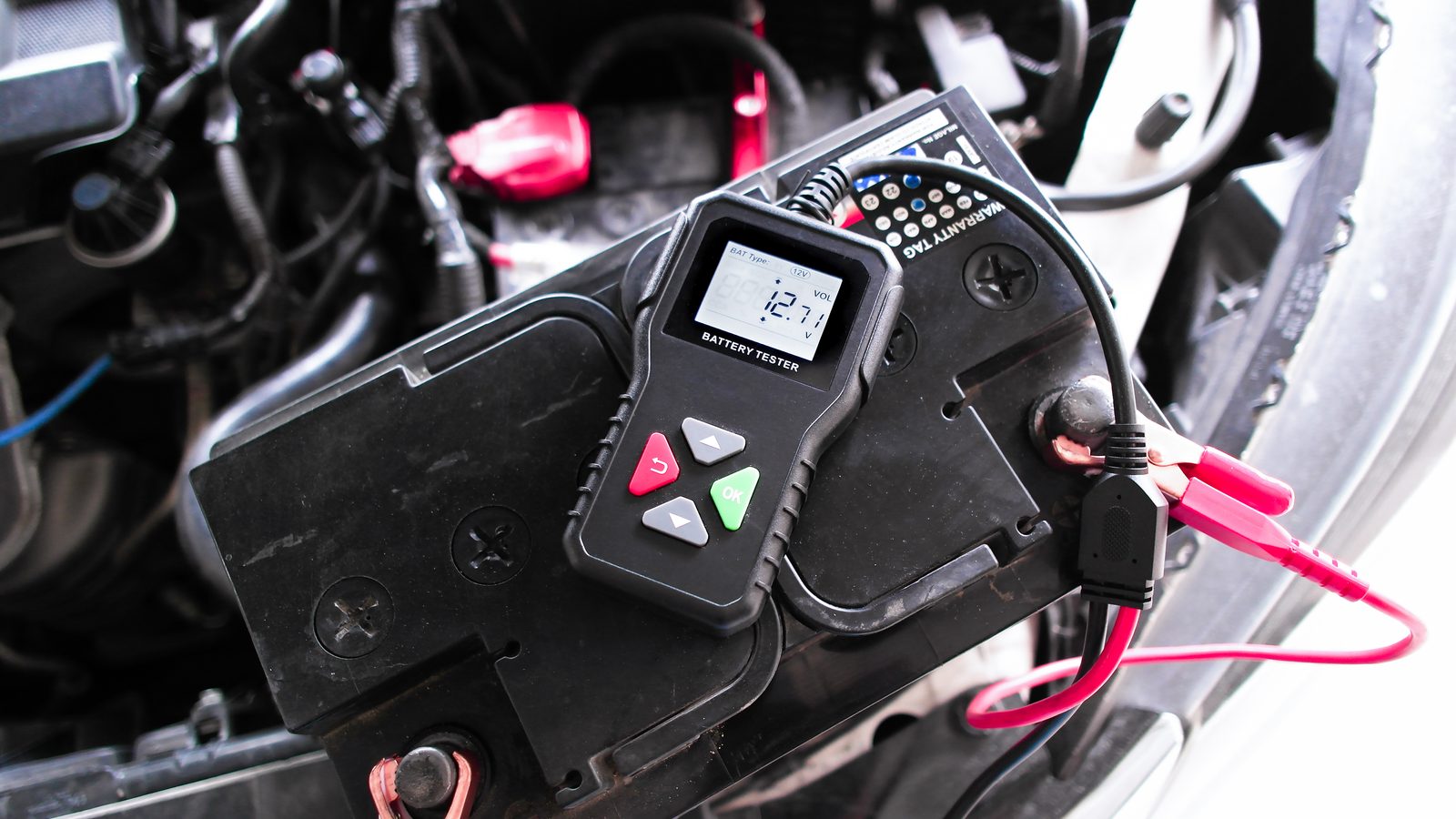
The test that settles it is a multimeter reading at rest, with the bike switched off for a while. A fully charged lead-acid battery generally shows 12.6 volts; noticeably below that, there’s charging to do before the damage sets in. For lithium, the reference voltage is specific to each pack, so take the manufacturer’s figure rather than one off a forum.
Then there’s the clearest case of all: a battery that drains within days of a full charge is finished. Charging it again only pushes the failure to the next ride. If you can’t tell whether the battery is dying or something on the bike is draining it, the method is laid out in the guide on diagnosing an electrical fault.
The routine that keeps it alive
- Check voltage with a multimeter before any idle period, not on the morning you want to ride.
- Put a maintenance charger matched to the chemistry on it as soon as the bike sits longer than usual.
- Clean the terminals the moment a white powdery deposit shows up, then retighten gently: the terminal post strips easily.
- Store the battery away from frost and heat. Deep cold and a summer attic both damage it.
- Switch the ignition off before washing the bike, and keep the pressure washer off the battery box and its connectors.
An entry-level multimeter covers all of that, and it earns its place in the basic tool kit. It’s the one tool that tells you whether the battery is at fault before you start pulling anything apart.
The mistakes that kill it
The champion is unattended winter storage. The bike goes into the garage in November, the battery self-discharges quietly, and in March nothing turns. A maintenance charger connected on the way out prevents it, and the guide on winterizing a dirt bike covers the rest of the prep.
Next come repeated full discharges. A battery that gets run flat, recharged, then run flat again loses capacity on every cycle. That’s especially true of lithium.
Last is terminal corrosion that everyone sees and nobody touches. It builds resistance that no warning light will ever show, and it produces starting problems that come and go, fine one day and dead the next. Chasing an intermittent fault like that costs far more time than a wire brush used in time.
FAQ
Does my dirt bike actually need a battery?
It depends on the model. A kick-start race bike with a stator-and-CDI ignition runs with no battery at all. As soon as there’s an electric starter, road-legal lighting or fuel injection, the battery becomes mandatory. Check your bike’s spec sheet before planning any conversion in either direction.
How long does a dirt bike battery last?
Generally 2 to 5 years with correct use and care. What shortens that is almost never riding, it’s repeated deep discharges and months of storage with no maintenance charge. A battery looked after through the off-season lasts considerably longer than one forgotten in the corner of a garage.
Can you kick-start a bike built with electric start?
Only if the manufacturer kept a backup kick lever, and many recent models no longer have one. Check your own bike before making that your plan B. On a fuel-injected machine, a weak battery also stops the ECU and pump from working, kick lever or not.
Should you remove the battery over winter?
It’s the simplest approach: take it out, put it somewhere temperate and leave it on a maintenance charger matched to its chemistry. That beats leaving it fitted for months with nobody watching, slowly discharging until it drops past the point where a charge brings it back.
More electrical topics in the mechanics section.
Editorial content. PiloteMX offers no on-site service, no parts or gear sales, no quotes and no bike repairs. Working on a bike and riding it carry risk: what you do with this guide is your own responsibility.