Frame and Chassis: What Holds the Whole Bike Together
Contents
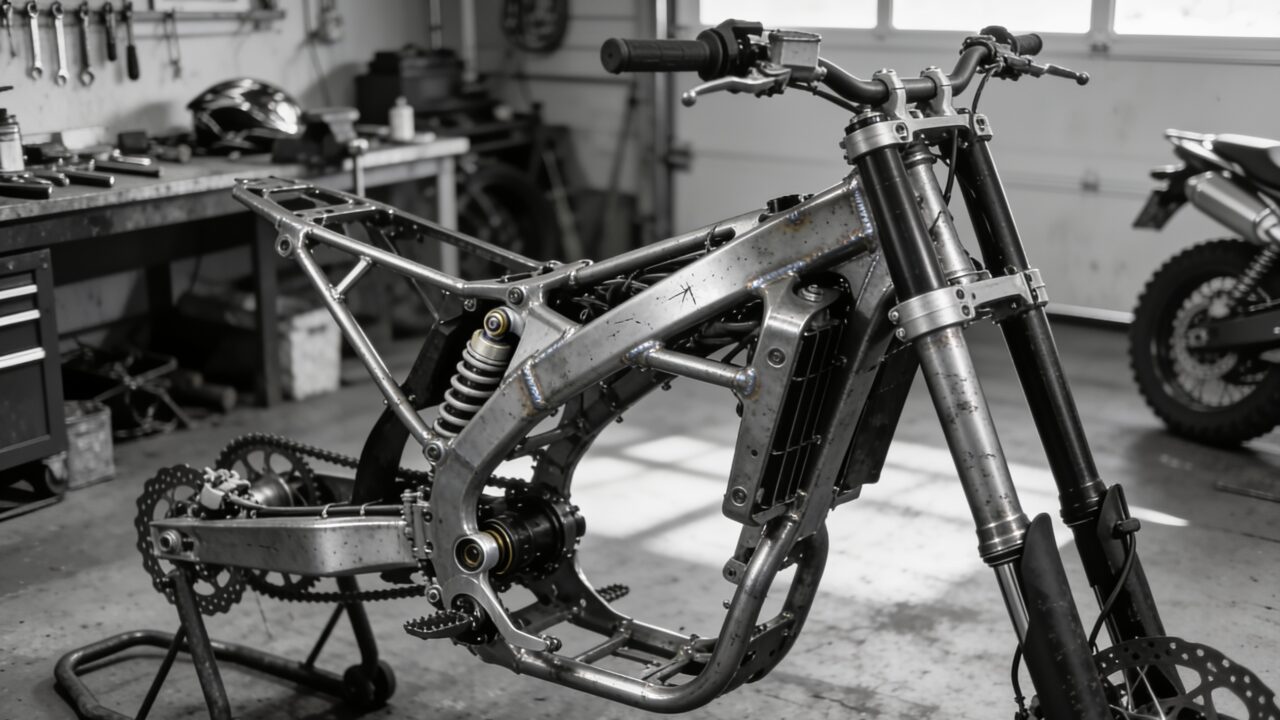
The frame on a dirt bike, steel or aluminum depending on the brand, holds the engine, fork and swingarm together as one unit. It sets the steering geometry, so it decides how the bike turns in and how it tracks in a straight line. And landing after landing, it absorbs loads nothing else on the machine takes.
What the frame really absorbs
On a dirt bike the engine is not simply bolted inside the frame — it is part of it. Fastened at several points, it stiffens the structure and carries load. That is one reason chassis design shifts with the type of engine fitted, and why frames built around a 2-stroke or a 4-stroke place their mass differently.
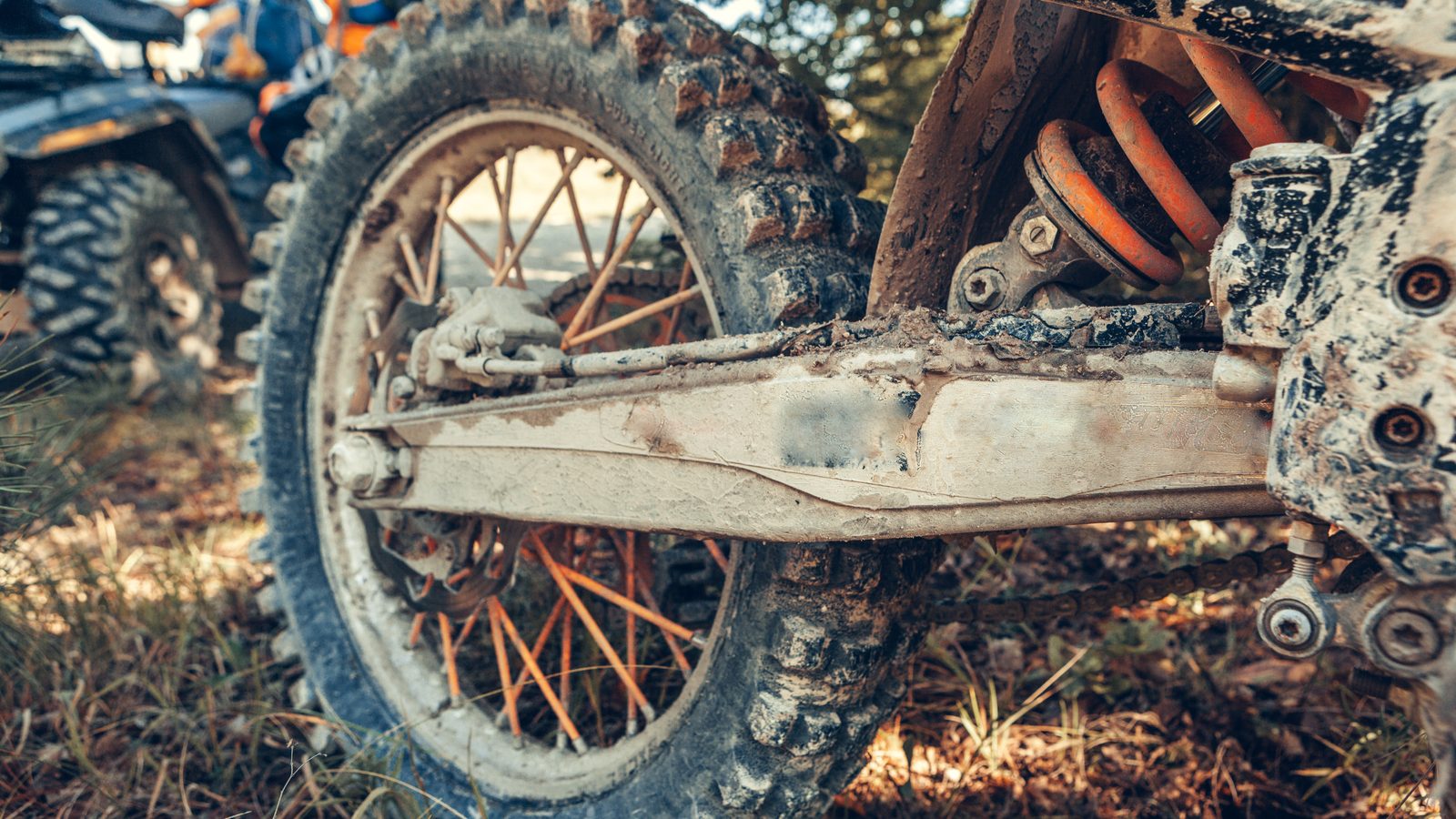
The rest of the work happens in torsion and bending. A jump landing sends a vertical load up through the suspension into the mounts. Leaning hard into a rut twists the triangle formed by the steering head, the main tubes and the swingarm pivot. A badly judged square edge does both at once.
Stiffness is therefore not something you maximize. Too stiff and the frame hands everything back to the rider: vibration, rocks, arm pump twenty minutes in. Too flexible and the bike wallows through fast sweepers and stops telling you clearly where the front wheel is. Every manufacturer sets that dial somewhere else, which is part of why two current 250s feel nothing alike.
Geometry finishes the picture. Fork rake and wheelbase decide the trade between stability and quickness. A stable bike inspires confidence down a rough straight but asks for more effort to turn tight.
Steel or aluminum: two philosophies
Neither one wins. They are two routes to the same result, with different sensations along the way.
| Criterion | Steel frame | Aluminum frame |
|---|---|---|
| Feel | Controlled flex, filters some vibration | Direct terrain feedback, very informative |
| Comfort over small chop | Generally in its favor | Drier, wants well set-up suspension |
| Corrosion | Rusts wherever paint is chipped | Barely affected, but dents on sharp impacts |
| Crack repair | Welding possible at a specialist shop | Far trickier, heat treatment comes into play |
In practice, frame material matters less to how your bike feels than the state of your bearings and your suspension settings. Any rider notices a loose steering head straight away; it takes serious seat time to feel the flex difference between two competing frames.
The post-crash inspection
A flat slide onto the side panel usually does nothing to the frame. A head-on hit into an obstacle, a landing across the face of a jump, a violent high-side — different story. Work through it in this order, bike clean, on a stable stand.
- Clean the area you plan to inspect: nothing hides a crack like dried mud.
- Look at the steering head, above and below, hunting for paint cracked in a star pattern around the welds.
- Follow the main tubes down to the engine mounts and read every weld bead, including the ones tucked behind guards.
- Check the swingarm pivot and its supports, the most heavily loaded part of the whole frame.
- Inspect the radiator mounts and their brackets: a pushed-back radiator means the cooling system took a hit the frame might have taken instead.
- Hold the bars straight, step back, and sight the bike from the front and the rear — both wheels should sit in the same plane.
- Ride slowly in a straight line with a light grip and see whether the bike pulls to one side for no reason.
What looks like a bent frame
Before you blame the structure, rule out the impostors. Play in the steering head bearings produces exactly the same vague front end. A tired swingarm bearing lets the rear step around under load and feels for all the world like a twisted chassis.
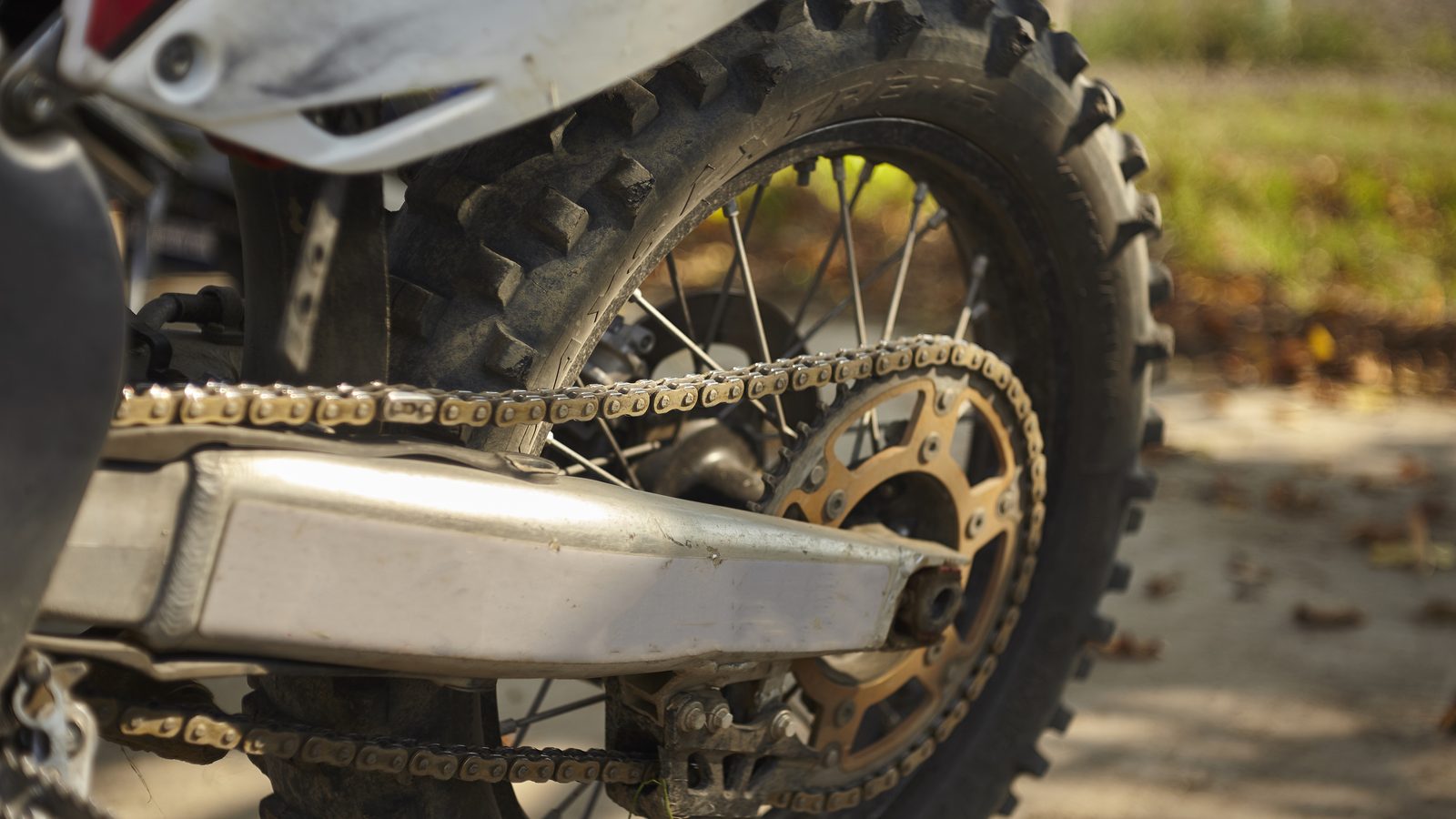
Add wrong tire pressures, a fork that bottoms, a broken spoke, an axle that was never torqued properly, and the list of causes for poor handling gets long — with the frame fairly far down it. A methodical check costs an hour; a new frame costs about what a used bike costs.
That said, when everything else checks out and the bike still pulls, invisible deformation is real. It gets measured, not guessed: a shop with the manufacturer’s reference dimensions will settle it, your eye will not.
What ages a frame
A pressure washer aimed at welds and bearings drives the grease out and lets water in. Wash often, but keep the lance back and finish the frame by hand — your washing routine is also when you spot a crack starting, while the paint is still clean.
The rest is common sense. Frame guards and a skid plate in good shape eat the rocks so the frame does not. Loose engine mount bolts make the chassis work in ways it was never designed for, and wear follows. A heavier rider does load the structure more, but the intensity of the landings counts for far more than what the scales say.
FAQ
Can a cracked frame actually be repaired?
Sometimes, depending on where and how bad. A crack on an accessory tab is nothing like one starting at the steering head. The question is not whether it can be welded but whether the area regains its strength once welded. Only an equipped professional can answer that, and on aluminum the answer gets a lot more delicate.
How do I tell whether my frame is steel or aluminum?
The model’s spec sheet says so. By eye, aluminum shows up as bulkier tubes, often rectangular in section, in a lighter finish; steel stays slimmer and painted. A magnet settles it in a second: it sticks to steel and ignores aluminum.
Do I need to inspect the frame after every crash?
After a plain slide-out, a glance is enough. After a solid impact, a hit on something fixed, or a bad landing, do the full round: steering head, welds, swingarm pivot, wheel alignment. Even if the bike rides normally afterward, a crack becomes visible long before it becomes noticeable.
Browse every guide on how the bike works in the mechanics section.
Editorial content. PiloteMX offers no on-site service, no parts or gear sales, no quotes and no bike repairs. Working on a bike and riding it carry risk: what you do with this guide is your own responsibility.