Piston and Rings: When and How to Replace Them
Contents
On a hard-ridden 2-stroke, the piston and ring kit usually goes every 40 to 60 hours; on a 4-stroke the interval runs much longer. The hour meter decides nothing, though. What decides is falling compression, blue smoke at the pipe, a metallic knock at idle. The actual numbers live in your bike’s service manual.
What the piston and rings actually do
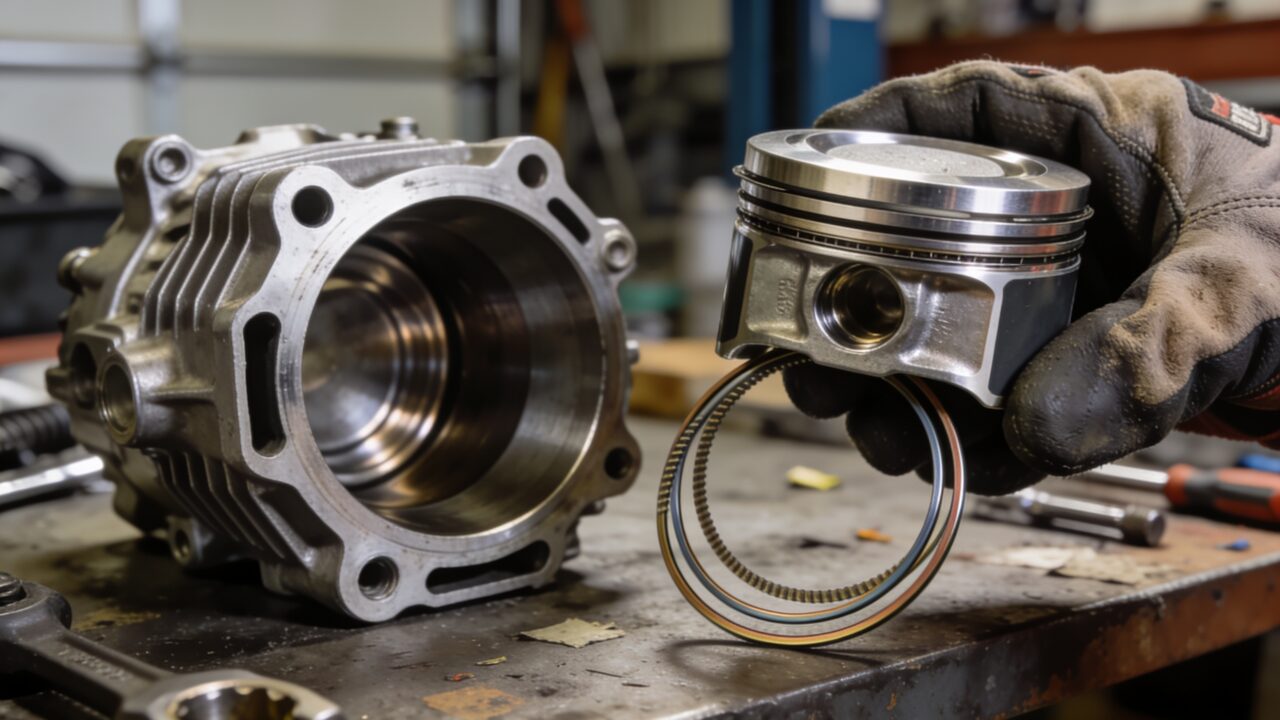
The piston takes the hit of combustion and passes that force to the crankshaft through the connecting rod, sliding in the cylinder on every cycle. The rings — thin metal bands seated in grooves around the piston — seal the gap between the piston and the cylinder wall.
Lose that seal and combustion gases escape into the crankcase while pressure collapses. The engine still runs, still starts, but it no longer pulls. That is exactly how worn rings behave: nothing breaks all at once, everything fades slowly, and the rider gets used to the drop without noticing it.
On a 2-stroke, wear moves faster. No valves means a simpler engine, but the piston sits directly in the thermal load of combustion on every crank revolution, and the rings have to cross ports cut into the cylinder wall over and over.
Catching the wear before the failure
A tired top end gives you warning. You just have to listen. The symptoms rarely show up alone, and it is the combination that gives you the diagnosis.
| What you notice | What it points to | What you do |
|---|---|---|
| Cold starts getting harder every ride | Compression seal fading | Compression test before any teardown |
| Blue exhaust smoke, oil level dropping | Rings passing oil | Plan a piston kit, inspect the cylinder |
| Metallic knock at idle that fades as revs rise | Excess piston-to-cylinder clearance | Shut it down, pull the cylinder |
| Engine won’t rev out, ignition and fuelling healthy | Not enough compression | Compare against the service manual figure |
A compression test settles the argument. It puts a number on what your ear suspects, and it tells you the trouble really is in the top end before you open the toolbox.
On a 2-stroke
Compression loss usually shows up as an engine that still pulls down low but refuses to sign off up top. Before you condemn the piston, rule out carbon build-up — a loaded chamber gives you similar symptoms and decarbonizing is a far quicker fix. Look at the piston skirt once it’s out, too: scuff marks read plainly with the naked eye.
On a 4-stroke
Oil consumption is the loudest signal here. An engine asking for oil between changes with no leak anywhere is burning it somewhere, and the oil control ring is the first suspect. Careful though — worn valve guides produce the same symptom. Running the compression test dry, then again with a little oil in the cylinder, separates the two.
Doing the swap, step by step
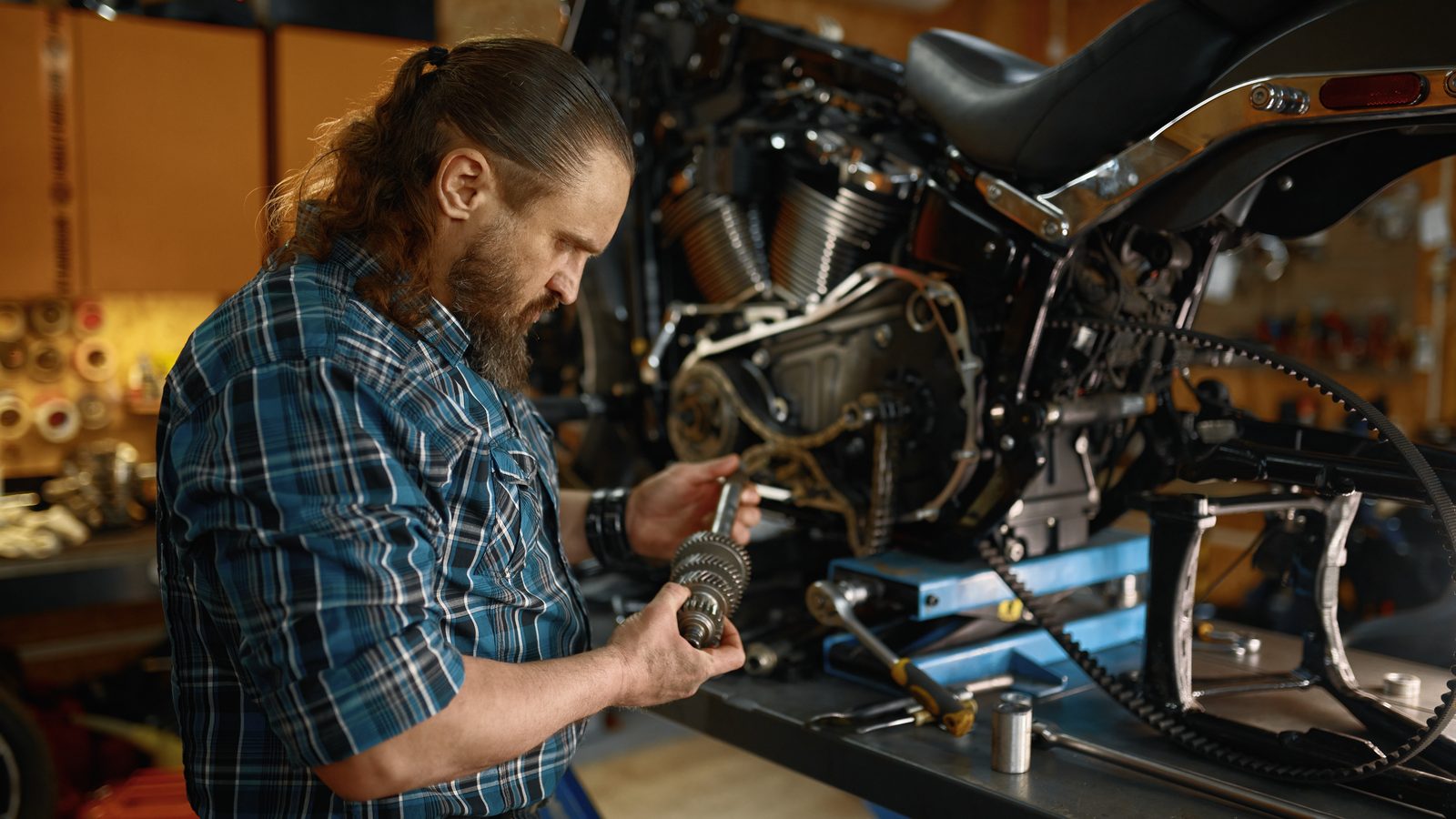
The job means pulling the cylinder and reaching the piston from the top of the engine. A careful home mechanic can handle it, as long as the service manual for the model is open on the bench: loosening sequence, torque figures, inspection limits — they’re all in there, and none of it can be guessed.
- Wash the bike before you open anything. Dirt that drops into the cases ends up inside the engine.
- Drain the coolant, pull the exhaust, then the head and cylinder, following the loosening sequence in the manual.
- Stuff a clean rag into the crankcase mouth before you go near the circlips. One circlip down into the bottom end means splitting the whole engine.
- Remove the circlips, push out the wrist pin, lift the piston. Note the orientation: the arrow stamped on the crown normally points toward the exhaust.
- Inspect the cylinder. Scoring you can catch a fingernail in, ovalization, bright patches — that goes to a shop for measurement and a possible rebore.
- Fit the new rings in their grooves the right way up, then check ring end gap in the cylinder against the manual figure.
- Rebuild with a new pin and new circlips, oil the skirt and rings, and slide the cylinder down while squeezing the rings in by hand.
- Torque the cylinder and head in a cross pattern, to the manual’s figures and sequence, then refill fluids before the first start.
Picking the right kit
Buy the complete kit: piston, rings, wrist pin, circlips. Mixing new parts with used ones puts components with different wear histories to work together, and the new ring is the one that pays.
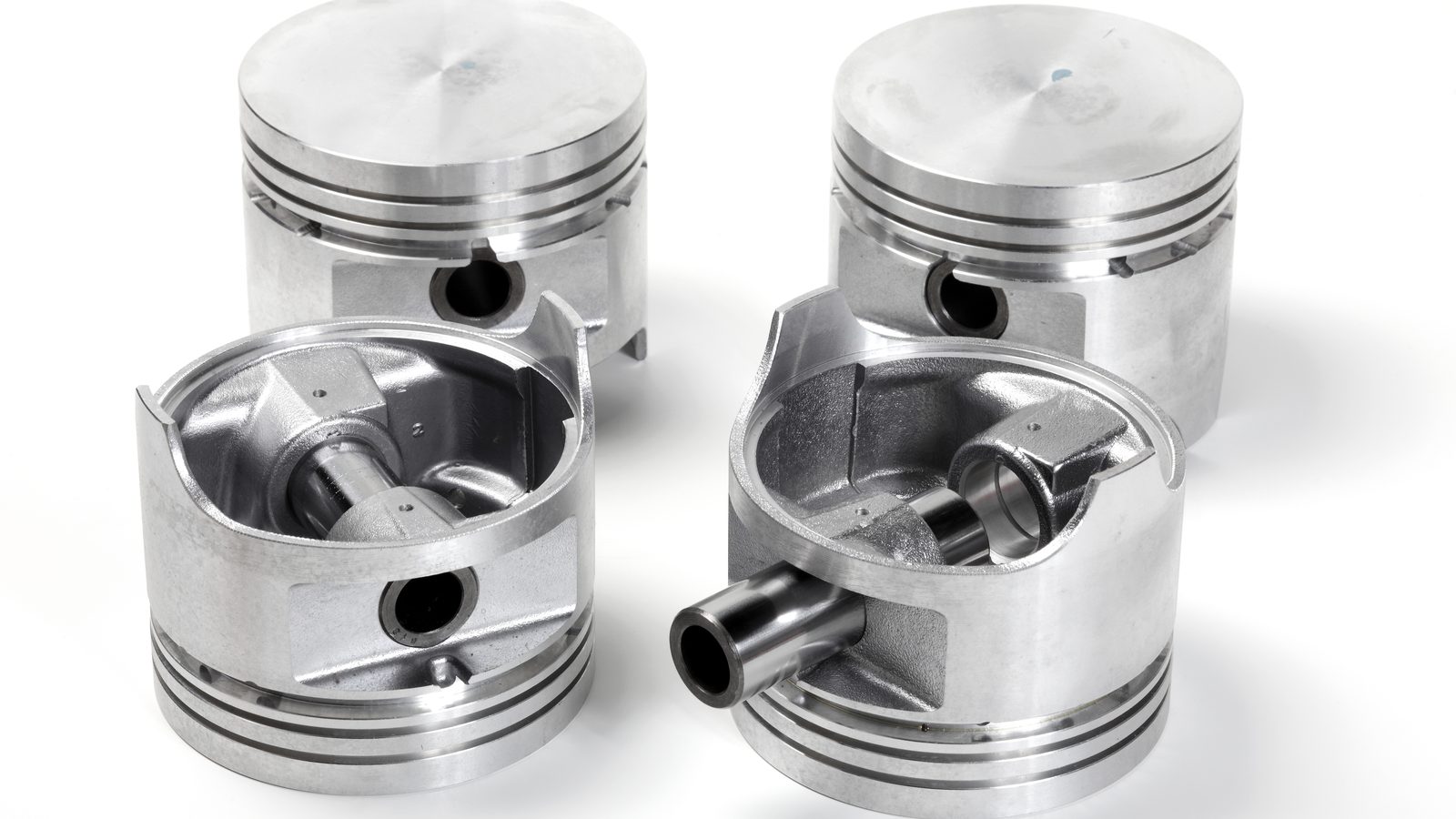
Size gets chosen after the cylinder is measured, never before. A rebored cylinder needs a piston in the matching oversize, and ordering standard when the barrel has already been cut costs you an order and a week of waiting.
On quality, most riders save in the wrong place. An OEM kit or a known brand costs more up front, but a cheap piston that lets go takes the cylinder with it, sometimes the rod as well. The maths isn’t hard, especially on a race engine.
Mistakes that cost real money
Riding on “just a bit longer” with sagging compression lets a loose piston work against a wall it eventually scores. A straightforward top-end job then turns into a rebore, or a new cylinder.
Skipping break-in after the rebuild wears the new rings before they’ve bedded to the bore. They need moderate load cycles to seat properly.
Last one: rebuilding without finding the cause. A piston that melts or holes doesn’t die of old age — look at a lean jetting setup and at the cooling system. Otherwise the new kit goes the same way as the old one.
FAQ
How long does a piston kit last on a dirt bike?
Generally 40 to 60 hours on a hard-ridden 2-stroke, considerably longer on a 4-stroke because the piston is loaded differently. Treat those as rough markers only: a rider dragging gears through deep soft ground wears parts faster than someone riding hard-packed tracks. Trust a compression test over the hour meter.
Can I replace just the rings and keep the piston?
You can, if the piston passes its measurement checks and the ring grooves aren’t hammered out. In practice the full kit costs little more and saves opening the engine twice for the same reason. If you’re unsure, have the piston measured by a shop with proper gauges before ordering rings on their own.
How do I know if my cylinder needs a rebore?
Scoring you can catch a fingernail in, ovalization, or wear past the service limit all call for it. This isn’t an eyeball judgement: it takes a micrometer and a bore gauge, then a comparison with the manual’s figures. That’s shop work, best left to a properly equipped professional.
More on how these engines work in the mechanics section, including the gearbox and the clutch.
Editorial content. PiloteMX offers no on-site service, no parts or gear sales, no quotes and no bike repairs. Working on a bike and riding it carry risk: what you do with this guide is your own responsibility.