Broken Dirt Bike Shift Fork: Symptoms and Repair
Contents
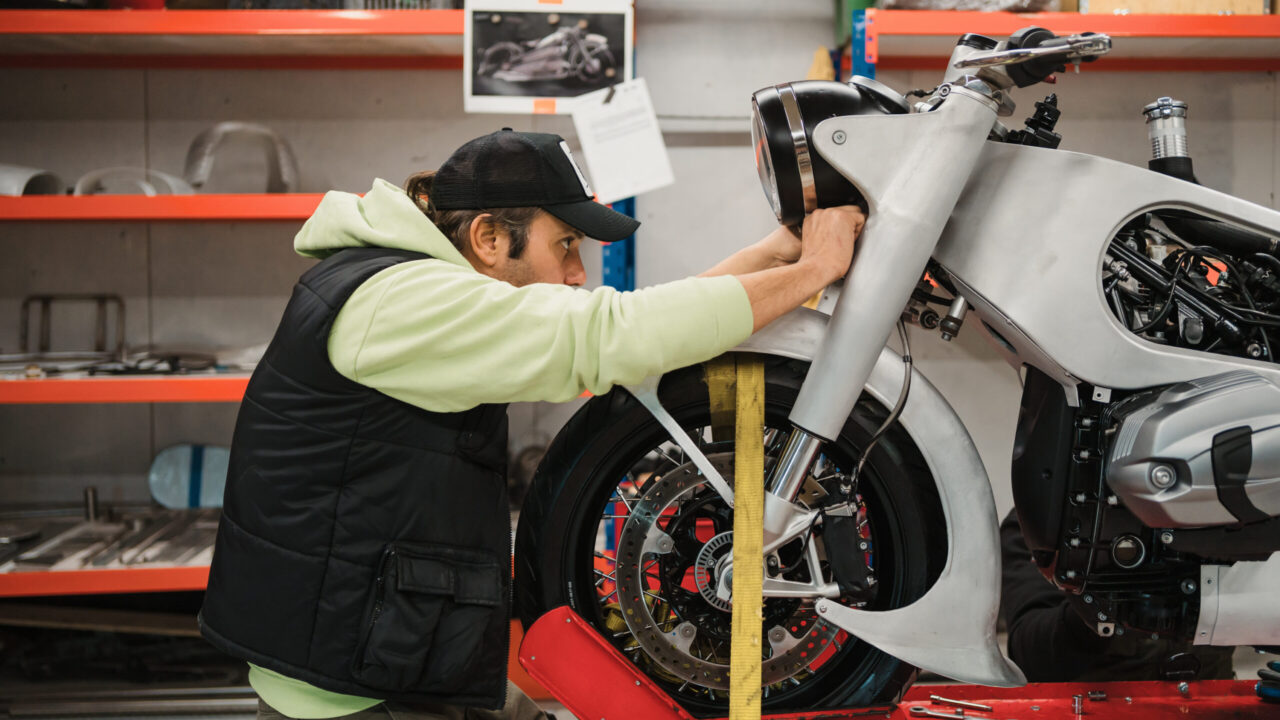
A broken or bent shift fork announces itself with a gear that jumps out under load, nearly always the same one, and with one spot in the pattern that has gone stiff at the lever. Fixing it means splitting the cases: you replace the fork and, in almost every case, the sliding gear it pushes.
The symptom that gives it away
You roll on in third, the bike pulls, and the gear kicks out to neutral with a bang. It does it again on a jump landing, never at idle. That is a fork talking: it no longer pushes the sliding gear far enough, the dogs only catch at their tips, and torque shoves them straight back out.
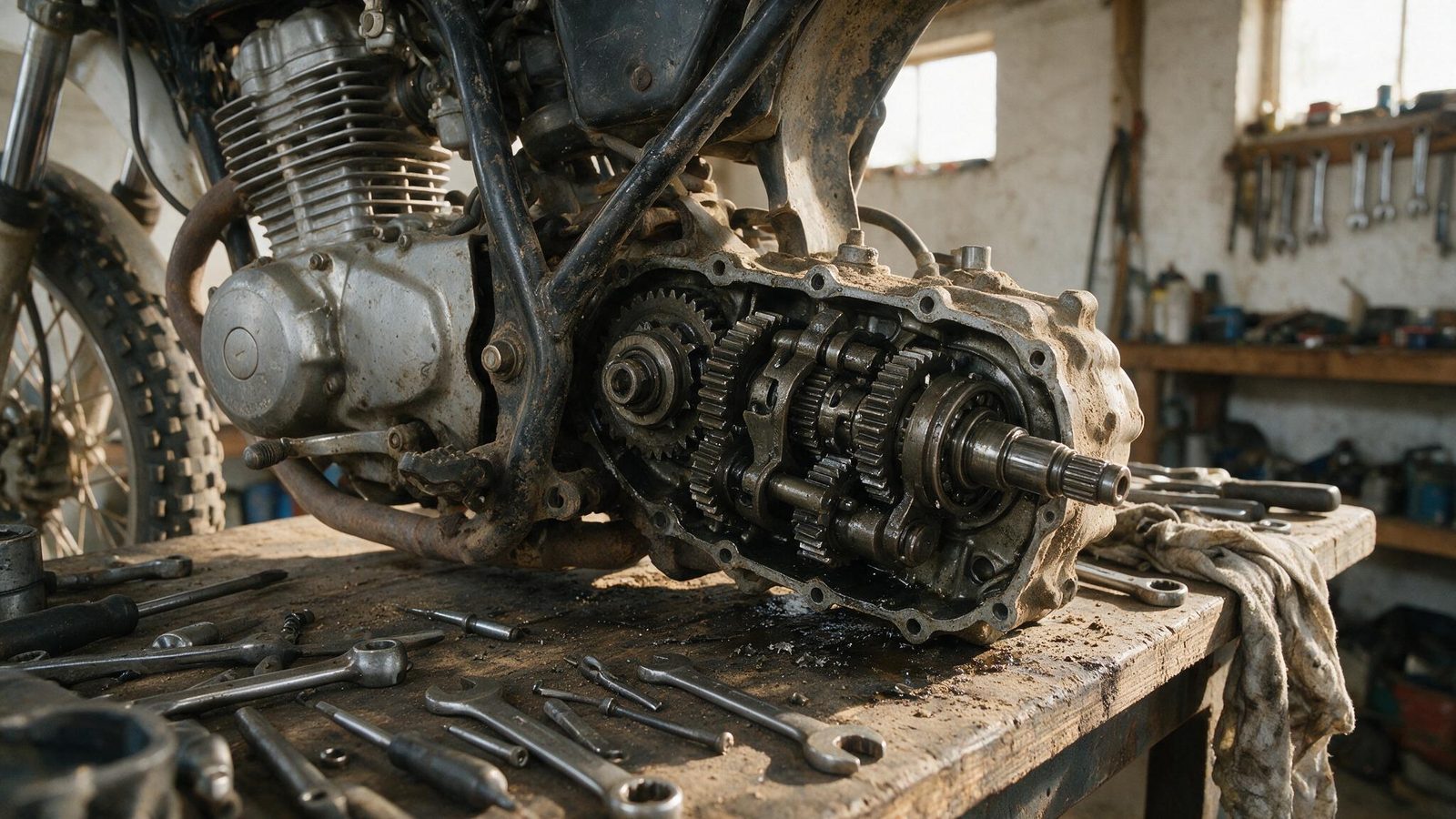
The second symptom is quieter. One specific gear refuses to go in, always the same one, with a hard spot at the lever while the rest shift fine. A bent fork drags in the sliding gear’s groove and never completes its travel.
What is not a fork: a crunch on every shift, across the whole box, plus a bike that creeps forward with the lever pulled in. That sends you to the clutch and its adjustment first, not into the gearbox.
Sort the symptoms before you split anything
| What you feel | Points at the fork | Points elsewhere |
|---|---|---|
| One gear jumps out under load, always the same | Very likely, with worn dogs on the sliding gear | — |
| One gear won’t engage, hard spot at the lever | Bent fork | Shift shaft bent in a crash |
| Crunching on every shift, all gears | Unlikely | Clutch not releasing cleanly |
| False neutrals everywhere, vague action | Possible | Tired shift drum detent spring |
| Lever won’t return, bike grabs two gears at once | Unlikely | External shift mechanism |
Do this sorting properly. Splitting an engine only to find a bent shift shaft worth pocket change happens more often than anyone admits in the pits.
Why a fork gives up
On every shift, the fork pushes a gear that is spinning at full speed. It carries the whole sideways load for the fraction of a second while the dogs hunt for each other. In motocross that gesture repeats hundreds of times a ride, usually on the throttle, sometimes with no clutch at all.
Clutchless shifting under power is the main culprit. A dragging clutch comes right behind it: the box never fully unloads, so the fork pushes against a gear that is still being driven. Then there is oil — tired, or the wrong spec for a box that shares the engine’s supply — which leaves the fork’s groove working dry. You see the result when the cases come apart: a fork tip rounded instead of square, sometimes blued from the heat.
Open it, inspect it, measure it
- Drain the oil, then pull the exhaust, shift lever, clutch cover and flywheel in the order the manual gives.
- Split the cases without prying between the mating surfaces. If it resists, a bolt is still in there somewhere.
- Slide the fork shafts out, then lift the forks one at a time. Photograph the orientation of each before it moves.
- Look at the tips under raking light. A rounded, blued or scored tip is scrap.
- Lay each fork flat on a surface plate or a pane of glass. Any warp shows up instantly.
- Measure tip thickness with calipers and compare it to the manual’s figure. That book is the only reference that counts.
- Take the sliding gear that the suspect fork controls and study its dogs: rounded on one face, they will not hold torque any more.
- Turn the shift drum by hand and run a fingertip along the tracks. A grooved track eats a brand-new fork within a few rides.
What gets replaced alongside
Swapping the fork alone is the shortcut that puts the engine back on the bench three months later. The sliding gear goes with it almost every time: the two parts wore against each other, and rounded dogs will pop the gear out even behind a perfect fork.
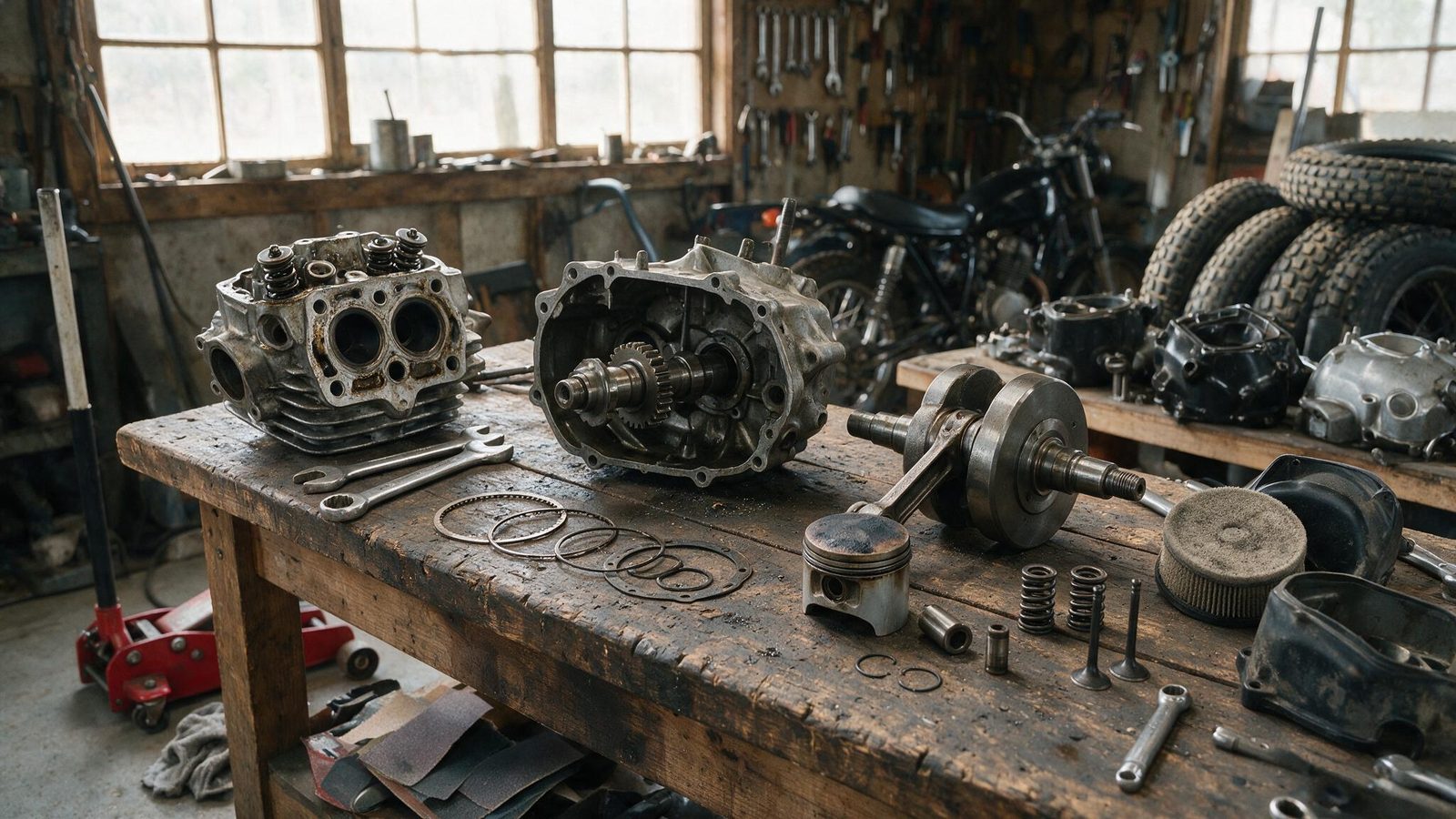
The shift drum only gets replaced when it is actually marked. Look at the bottom of the tracks, not the surface. Everything else on the list depends on what you find: case gaskets, the output shaft seal, transmission bearings with play. And since the engine is open, check the bottom end while you are in there — a crankshaft bearing with axial play gets changed now or never.
Same logic upstairs. If the engine already had serious hours on it, a top-end rebuild at the same time costs mostly parts, since the teardown is already done. And if the clutch was dragging, use the open cover to settle the question of the clutch plates.
Doing it yourself or handing the box over
Opening an engine takes no special talent, but it does take method, bench space, and specific tools you cannot improvise. The real difficulty is reassembly: washer order, fork orientation, shaft end float. Get one of those wrong and the engine earns another trip to the bench.
Before you close it up, dry-assemble the cases and shift through every gear by hand while you turn the input shaft slowly. Each gear should engage crisply and come back out. If one hangs, now is the moment to know. And if you still have doubts about the measurements, hand the box to a shop — that costs less than a second teardown.
FAQ
Can I finish the season with a gear that pops out?
No. Every pop tears a little more material off the dogs and the drum tracks, and the bill grows with every ride. There is a riding side to it too: a gear letting go on a landing or halfway through a rut puts you on the floor. Ride it as far as pushing the bike to the van, not further.
Can a bent shift fork be straightened?
No. The part is surface treated, and straightening cracks that treatment without guaranteeing it returns to spec. A fork that bent also ran hot, which changes how the metal behaves. It gets replaced, together with the sliding gear that goes with it. That is the cheapest line on the whole job anyway.
Does the shift drum need replacing every time?
Not automatically. The drum is a chunky part and often outlives several forks. Replace it when the tracks show a clear step under your fingertip, a chipped edge, or a spot where material has been dragged away. If you keep it, clean the tracks thoroughly — one trapped shard of metal ruins a new fork in hours.
Can a badly adjusted clutch break a fork?
Break it outright, rarely. Wear it out far faster, absolutely. A clutch that never fully releases leaves the gears driven while the fork pushes the slider across, and all that load lands on the fork tips. Set the free play at the lever before the engine goes back together, or the new part follows the old one.
More repair guidance in the repairs section.
Editorial content. PiloteMX offers no on-site service, no parts or gear sales, no quotes and no bike repairs. Working on a bike and riding it carry risk: what you do with this guide is your own responsibility.