Dirt Bike Top-End Rebuild: When and How
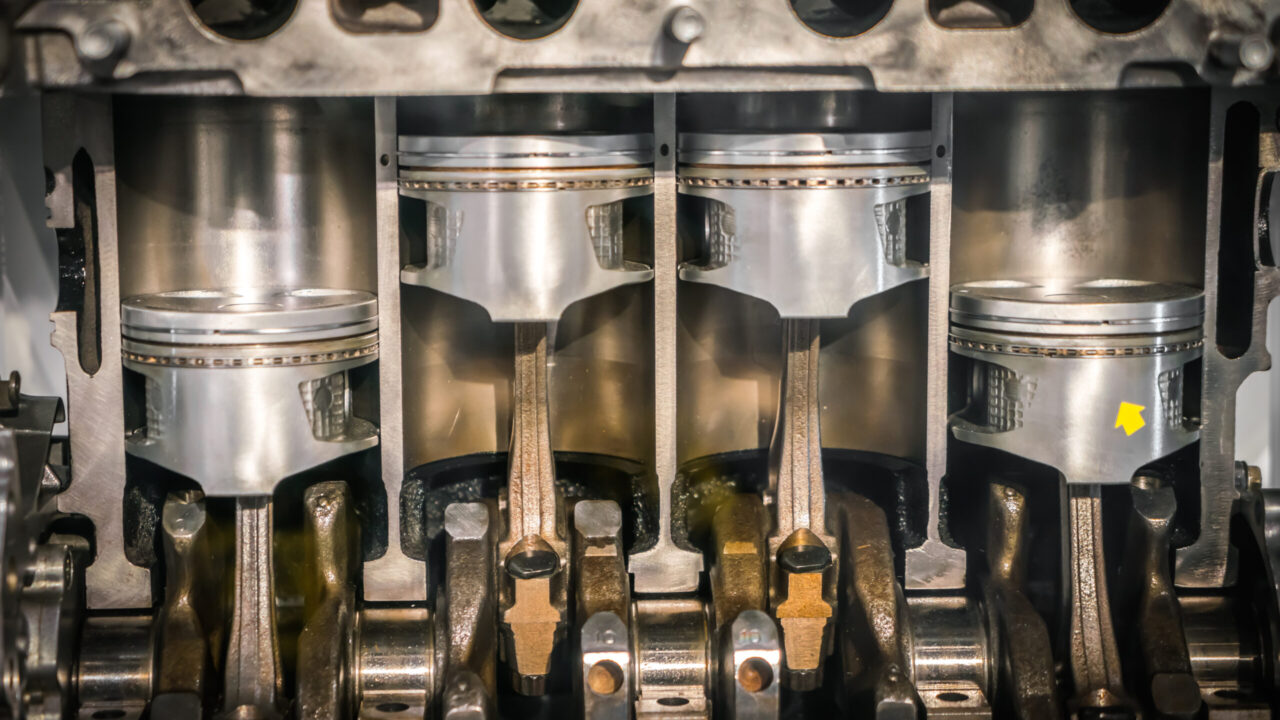
Contents
A top-end rebuild is due when a compression test reads well below stock, or when gradual power loss shows up alongside excess oil consumption. The job replaces piston, rings and gaskets, with a rebore or a cylinder refinish if the measurements call for it, to give the combustion chamber its seal back.
Signs that justify a rebuild
It never happens overnight. Power drains away across several rides, and because you ride the bike every weekend, you adapt to it without noticing. The wake-up call usually comes from a mate who borrows your bike and tells you it feels flat.
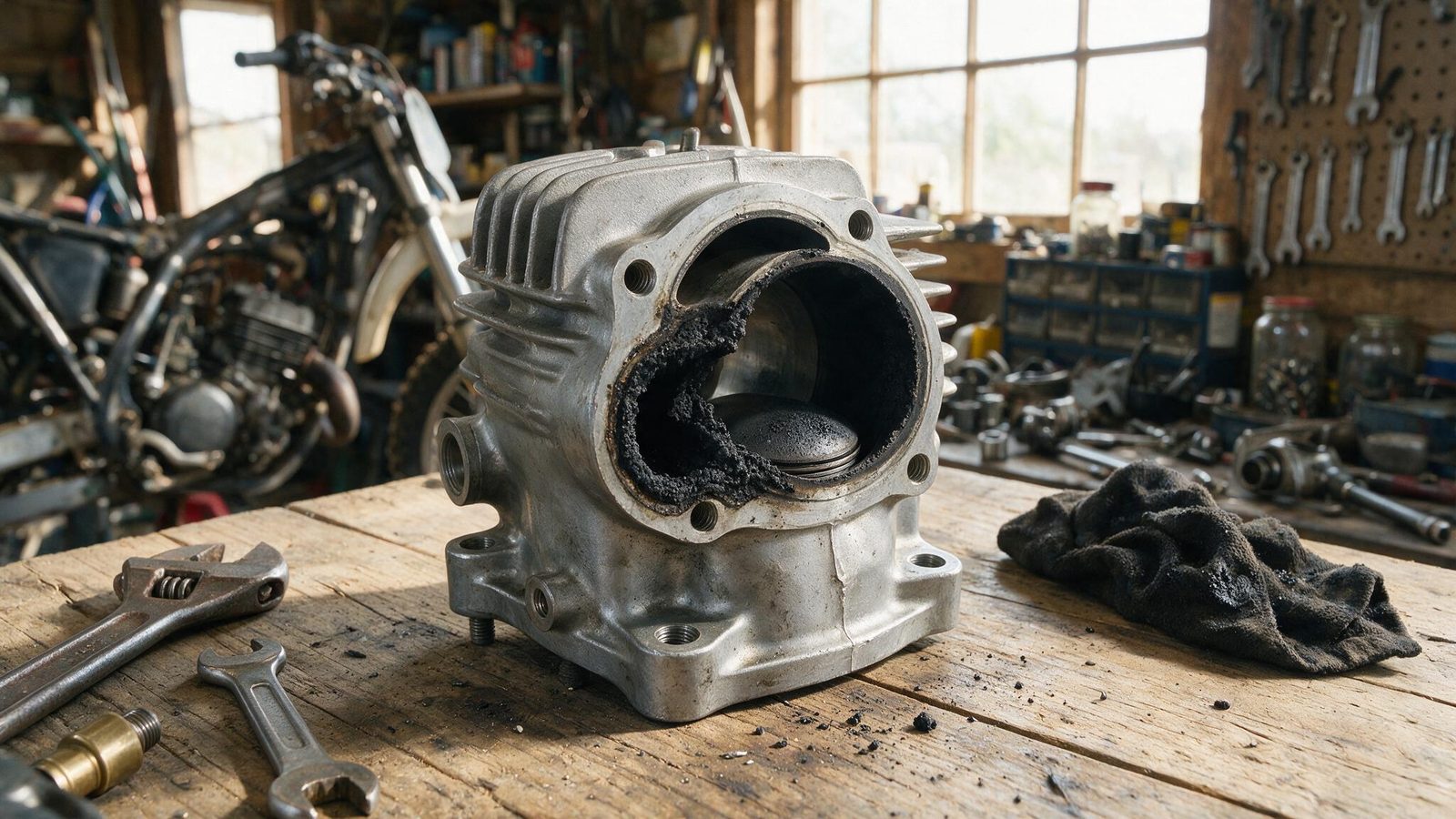
The other signals: bluish exhaust smoke that hangs around long after the cold start, abnormal oil consumption on a 4-stroke, a kickstart that suddenly feels easy because compression no longer holds, an engine that goes soft up top.
None of these settles it alone. What settles it is a compression test, engine hot, throttle wide open: a reading well below the manufacturer’s spec confirms the diagnosis before you pull anything apart. It also saves you from opening an engine that only had a clogged air filter.
Two-stroke and four-stroke: what changes
Same principle, completely different timing and scope. A 2-stroke eats pistons quickly but opens up in a morning. A 4-stroke runs far longer, then asks for a much heavier teardown on the day it finally needs one.
| 2-stroke | 4-stroke | |
|---|---|---|
| First warning sign | Compression fading at the kick, soft top-end | Oil consumption, blue smoke, valve train noise |
| Scope of the job | Head, cylinder, piston, rings, gaskets | Same, plus valves, springs, cam chain and guides |
| Where to look hard | Cylinder ports and the bore coating | Valve seats, cam timing on reassembly |
| Typical interval | Short under hard use (often 40 to 60 hours) | Noticeably longer, per the model’s manual |
On a 4-stroke, use the open engine to settle the cam chain question. If it’s close to its own replacement interval, doing it now saves reopening everything for that one part. Same reasoning if you hear something from the bottom end: decide before you close it up, because a tired crankshaft bearing gets dealt with in the same session or not at all.
What a full rebuild covers
The top end comes apart completely: head, cylinder, piston. The piston and ring kit always gets replaced, never reused even when it looks perfect — rings lose tension long before they show a mark.
The cylinder decides the rest. Cast-iron sleeve out of tolerance, it goes for a rebore and the piston gets ordered to the matching oversize. Nikasil coating, and a rebore isn’t an option: either the bore is clean and you reassemble, or it’s scored and the cylinder ships out to a specialist for replating.
Gaskets get changed as a set — head, base, exhaust. Reusing one that “looks fine” is just booking a second teardown. And while the engine is open, look at the clutch: this is the moment to replace worn or stuck plates without paying for the same disassembly twice.
How the job runs
- Wash the outside of the engine before opening anything. Mud left around the head ends up in the crankcase.
- Drain the oil, pull the exhaust, the radiator if it’s in the way, then the head. Sort the bolts by length — they aren’t interchangeable.
- Lift the cylinder straight up without levering it sideways, and stuff a rag around the piston the moment it appears to block the crankcase.
- Remove the piston pin circlips and put them straight in the bin, not on the bench.
- Measure the bore at several heights and on two crossed axes. That’s what reveals ovality or taper — your eye never will.
- Check head flatness on a surface plate with a straightedge and feeler gauges. Slightly warped, it can be resurfaced; badly deformed, it gets replaced.
- Check each new ring’s end gap in the clean bore, pushed square with the piston crown, against the manual’s figure.
- Fit the piston the right way round — usually an arrow pointing to the exhaust — with new circlips, their opening away from the pin cutout.
- Stagger the ring gaps around the piston, oil the skirt and the bore, then ease the cylinder down. Never tap it.
- Torque head and base bolts in a cross pattern, in several passes, to the exact figure in your bike’s service manual.
What’s beyond a home workbench
Teardown and reassembly stay within reach of a methodical DIYer who works clean with the model’s manual open. The rest doesn’t: reboring, head resurfacing and Nikasil replating need machines you can’t improvise in a garage.
Be honest about measuring, too. Without a micrometer and a bore gauge you don’t know whether your cylinder is still in tolerance — a caliper doesn’t read that fine. Plenty of engines go back together on feel, with a new piston in an oval bore, and the wear restarts immediately. When the shop quote closes in on the price of a good used cylinder, it’s the same call as any other part: run the numbers before committing.
Break-in after the rebuild
An engine that just got a new piston and rings needs a full break-in, exactly like a new one. The rings have to conform to the bore, and that happens through load, not through revs.
In practice: build up gradually, no sustained wide-open throttle for the first hours, but no long idling either — an engine loafing along seats nothing. Vary the rpm, let it cool between sessions, check for leaks and levels after the first heat cycle. An early oil change then flushes out the wear particles.
FAQ
How much does a full top-end rebuild cost?
There’s no useful number up front, because the cylinder drives the price. A straight piston kit in a healthy bore, a rebore with an oversize piston, and a Nikasil replate are three different budgets. Get the cylinder measured first, then ask a shop to quote on that basis. Any figure given before teardown is guesswork.
Can I do a rebuild myself?
The teardown and reassembly, yes, if you work clean and have the model’s service manual plus a torque wrench. The reboring, head resurfacing and surface treatment, no — those go to a specialist. Plenty of riders split the job: strip the engine themselves, ship the cylinder out, then reassemble with parts sized to match.
How many hours does a piston kit last before a rebuild?
On a hard-ridden 2-stroke, generally 40 to 60 hours. On a 4-stroke, the interval runs noticeably longer. Treat both as ballpark only: sand, sustained rpm, air filter quality and how strictly you keep to oil changes can move it by a factor of two. Your bike’s manual gives the reference interval.
Should the cam chain be replaced at the same time on a 4-stroke?
It’s worth doing as soon as the chain is near its own replacement interval, since the access is already there. Check the guides and the tensioner in the same pass — a new chain on worn guides goes slack quickly. Reopening a 4-stroke a few months later for that single part costs far more than the whole set fitted at the right moment.
More repair guidance in the repairs section.
Editorial content. PiloteMX offers no on-site service, no parts or gear sales, no quotes and no bike repairs. Working on a bike and riding it carry risk: what you do with this guide is your own responsibility.