Compression Testing: Diagnosing Real Engine Condition
Contents
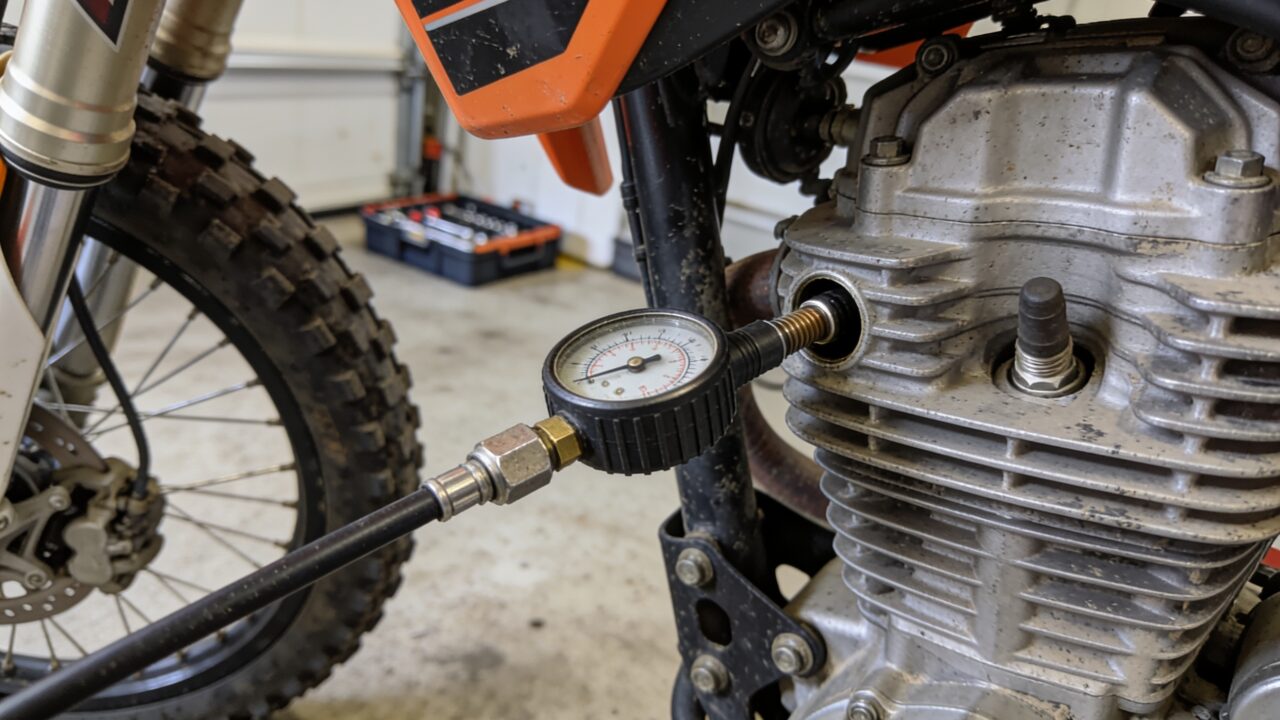
A compression test uses a gauge screwed into the spark plug hole, engine warm, choke closed and throttle wide open. The number it gives you describes the real condition of the piston, rings and cylinder head, usually long before any power loss shows up on the bike. Compare it to your manufacturer’s spec, never to someone else’s bike.
What compression tells you about the engine
Compression is the pressure reached in the chamber as the piston tops out, right before the spark. It depends on one thing: how well the piston, rings and cylinder seal against each other — plus the valves on a 4-stroke.

When that seal holds, the charge gets squeezed all the way and fuel energy turns into power properly. When it leaks, part of the gas escapes before ignition. The engine loses torque, starts harder from cold, and riders often blame fuelling or the exhaust for weeks before looking any further.
The value of the measurement is that it is objective. A seat-of-the-pants impression can lie; a number taken under identical conditions a few weeks apart cannot. This is the check to run before considering a piston and rings replacement, not after the parts have already been ordered.
Running the test properly
The procedure matters as much as the tool. Change one variable and the number stops being comparable to the last one.
- Warm the engine to normal operating temperature, then shut it off.
- Pull the spark plug and set it aside — its colour will tell you something else later.
- Thread the gauge into the plug hole with the correct adapter, tight enough that no gas slips past it.
- Open the throttle fully and hold it open for the whole measurement.
- Kick or crank several times in a row until the needle settles at its peak, usually after four to six pulls.
- Write down the reading, the date and the engine hours, then compare with your bike’s workshop manual.
That logbook is half the point of the test. A single number says almost nothing; three numbers taken the same way draw a trend, and the trend is what decides whether the engine comes apart.
Reading the result without fooling yourself
Clearly below spec
The usual suspects are rings or cylinder. On a 4-stroke a valve that no longer seats gives the exact same symptom, which is what the wet test below is for. A very low reading points more towards a head gasket leaking between cylinder and head — check the level and the look of the coolant in the cooling circuit, since oil traces or foam confirm it.
Slightly below
With no other symptom, that is usually normal ageing. Nothing to open right away. Log it, measure again later, and see whether it keeps sliding or holds steady.
Higher than expected
On a 2-stroke that often means carbon build-up. It shrinks chamber volume and pushes the number up. A gummed-up engine can show handsome compression while being in poor shape. Never read a high figure as a clean bill of health.
The wet test and the false readings
When the number comes back low, drop a small amount of engine oil into the cylinder through the plug hole and repeat the measurement under the same conditions. The oil temporarily seals the gap between rings and bore.
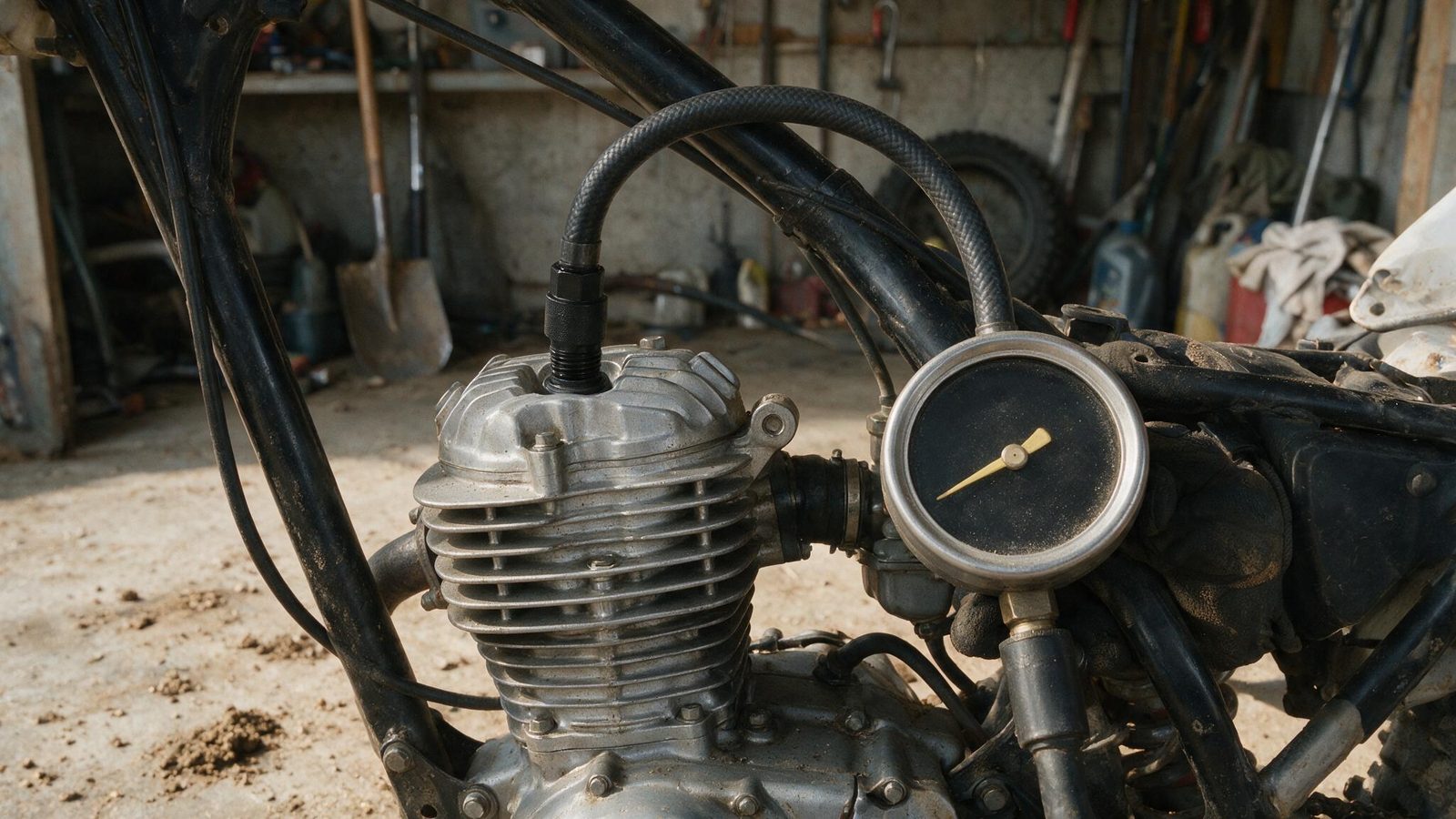
If compression climbs noticeably, the leak was at the rings. If it does not move, look elsewhere: valves on a 4-stroke, head gasket, or a warped head face. That one step saves a full teardown for nothing.
Two situations also produce misleading figures. An engine still breaking in can read slightly under spec until the rings have bedded to the bore. And a bike that starts badly does not necessarily have a compression problem — rule out the ignition system before reaching for the gauge.
When to reach for the gauge
Key points
- How often
- once a season, or before an important race
- Engine state
- warm, at normal operating temperature
- Throttle
- wide open for the whole measurement
- Reference figure
- the one in your model’s workshop manual, not a general average
- Other useful moments
- gradual power loss, hard starting, buying used, after a top-end repair
On a used bike, this test beats a quick blast down a trail. A seller can hide an early weakness with a hot engine and easy ground; they cannot hide a needle that refuses to climb.
The mistakes that wreck the diagnosis
Testing cold. The most common one by far, and it always reads low, so you worry about nothing. Running clearances differ, and so does the number.
Hand-tightening the adapter in the plug hole. The leak is invisible, silent, and enough to swallow a serious chunk of the result. Check the seat before blaming the engine.
Comparing against a figure found on a forum. References change with displacement and stock compression ratio; a number that is right for one bike means nothing on another.
Last one: settling for a single isolated reading. With no history you cannot tell whether the engine is falling or has always sat there. And if you have opened the top end, measure again after reassembly — that is the only proof the repair did its job. When the result stays doubtful after all that, a leak-down test at a workshop settles it far faster than a blind teardown.
FAQ
What is normal compression on a dirt bike engine?
There is no universal good number. It depends on displacement, stock compression ratio and engine type, and the spread between models is wide. The only reference that counts is the one in your bike’s workshop manual. A figure taken from another model, even a close relative, will send you down the wrong path.
Can I run this test myself?
Yes. A compression gauge is an accessible tool and the job asks for no special skill: pull a plug, thread the gauge in, crank, read. Interpretation is the part that needs experience, particularly telling normal wear from an early fault. If the result leaves you unsure, have a mechanic confirm it before opening anything.
Does low compression always mean a big repair?
No. It ranges from normal wear tied to running hours, to a head gasket needing replacement, to nothing more than a badly seated adapter during the test. Repeat the measurement carefully before drawing conclusions, then run a wet test to find out whether the leak sits at the rings. Related symptoms — smoke, oil use, starting behaviour — narrow it down.
Should I retest after a repair?
Yes, every time you have been into the top end. The fresh reading confirms the seal is back and becomes the starting point for your log. Take it under the same conditions as the earlier ones, otherwise the comparison is worthless. Record it in the bike’s logbook with the date and the engine hours.
The rest of the engine and transmission guides live in the mechanics section.
Editorial content. PiloteMX offers no on-site service, no parts or gear sales, no quotes and no bike repairs. Working on a bike and riding it carry risk: what you do with this guide is your own responsibility.