Riding Mud on a Dirt Bike: Finding the Grip That’s Left
Contents
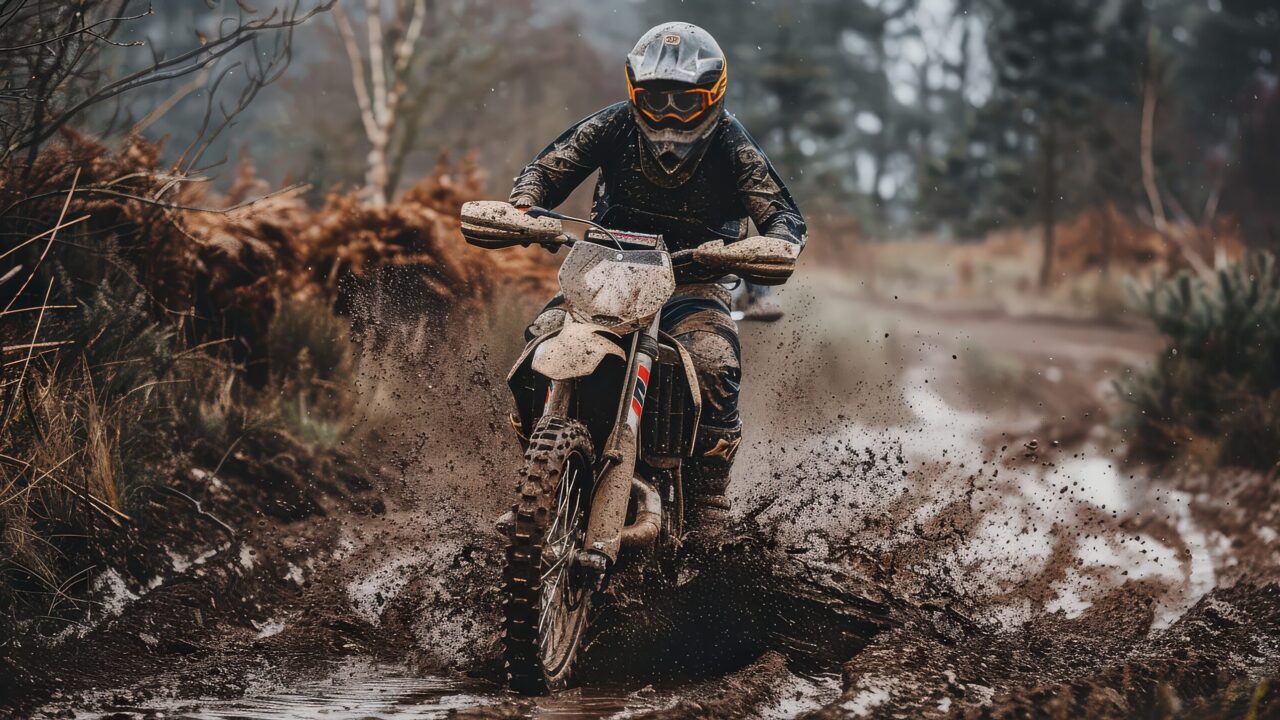
Mud doesn’t ride like sand. Sand wants speed; mud wants you to hunt down the few patches that still bite, usually along the edges of the chewed-up lines, and to feed in the smallest amount of power that keeps you moving. The technique is finer, more patient, and far less instinctive than anything else you ride.
Why mud doesn’t behave like sand
Mud stacks two problems sand never combines: almost no surface traction, and a stickiness that packs the tire so the knobs stop clearing themselves. A wheel that spins in mud cakes up and loses a little more bite with every rotation. In sand, that same wheel eventually digs down to something solid and finds purchase.
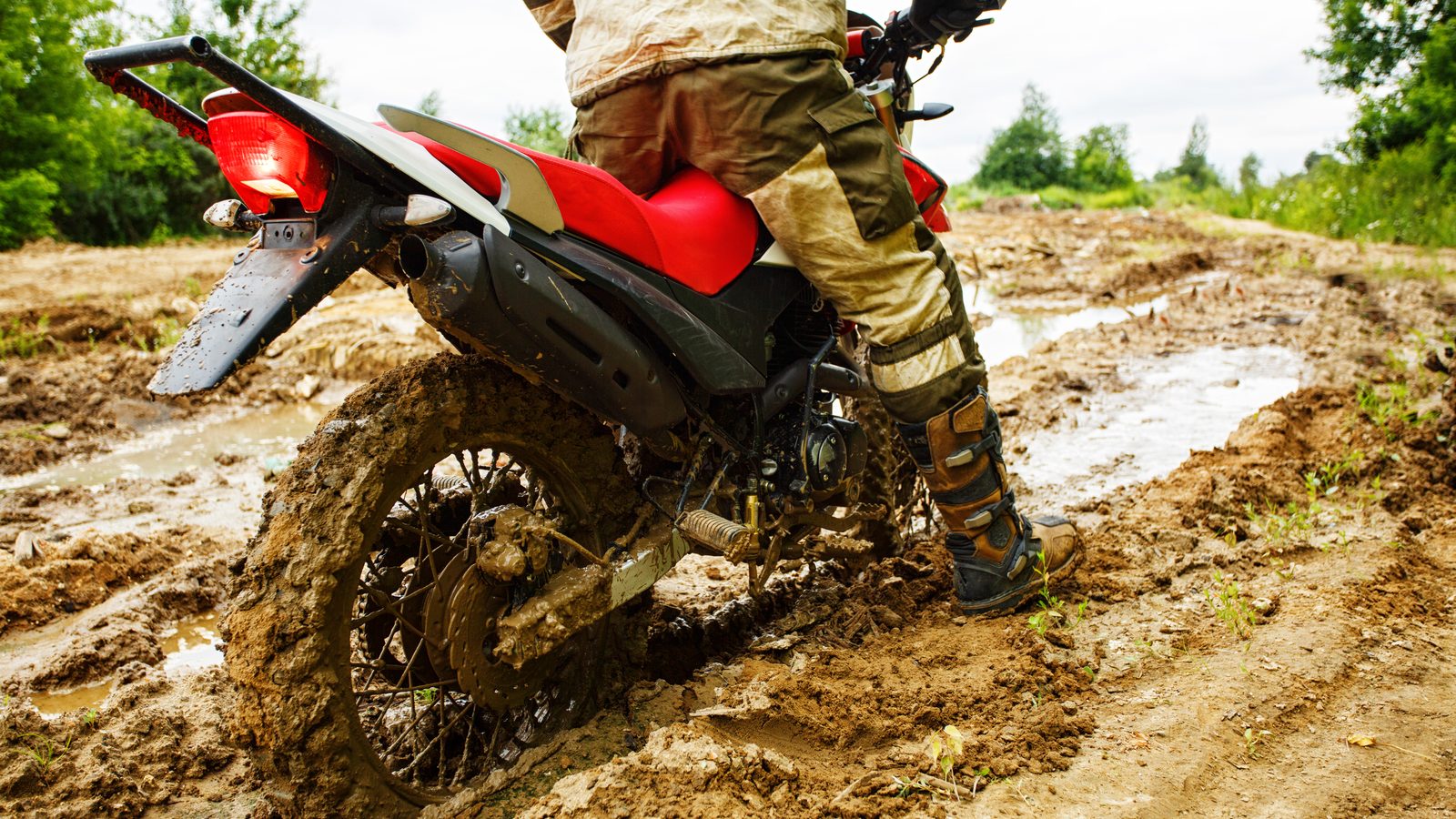
That’s why the reflexes from the riding sand guide don’t transfer straight across. Speed doesn’t stabilize you here. With nothing to bite into, speed turns into a slide instead of a line. Most riders meeting real mud for the first time arrive too fast and end up on the ground in the first corner.
Read the mud before you commit
Riders talk about “mud” like it’s one surface. You’ll meet at least three, and they ask for completely different things from you. Mixing them up is what puts people down. A glance at the track edge, at other riders’ lines, and at the color of the ground tells you which one you’re dealing with.
| What you see | What happens under the tire | What to do |
|---|---|---|
| Thick, greasy mud that sticks to your boots | Knobs pack solid and the tire goes slick | Roll the throttle on, use a taller gear, never a stab |
| Brown water sitting on a hard base | The front floats and washes out with no warning | Loose arms, no sharp corrections, cross it straight |
| Soaked surface over dry ground | A slick film sitting on a base that still grips | Reach through for the base, shorter gear, smooth throttle |
The technique that works when it’s slick
Throttle: as little as possible, but constant
Your right wrist matters more here than anywhere else. A sharp input spins the rear without putting a single useful watt into the ground, kills the momentum you had, and makes the next drive harder. A taller gear than usual helps, because it smooths out your mistakes mechanically. Everything in the throttle and clutch control guide still applies, just with a much thinner margin.
Body: neutral, not back
Stand up, weight shared between both wheels. This is where riders get caught out: they copy the far-back sand position and end up with a front wheel that steers nothing. A front that’s too light washes out just as badly as one that’s overloaded. Go back to the basics in the riding stance guide and adjust to what the bike is actually doing, not to your habit.
Eyes: two corners ahead
Once you’re in the greasy part, your options are gone. Spot the worst sections before you get there and pick your line on purpose. Path edges, a strip of grass, ground that fewer riders have torn up — that’s usually where the traction hides, not down the middle of a rut full of standing water. Rut cornering actually gets more reliable than flat ground once the track breaks up, because the line holds you in place.
When it spins or steps out
Rear wheel turning without moving you forward: back off. It’s counterintuitive, and it’s the opposite of what works in sand, but pushing digs the hole deeper and packs the tire. Ease off, let the wheel find something, then feed the throttle back in.
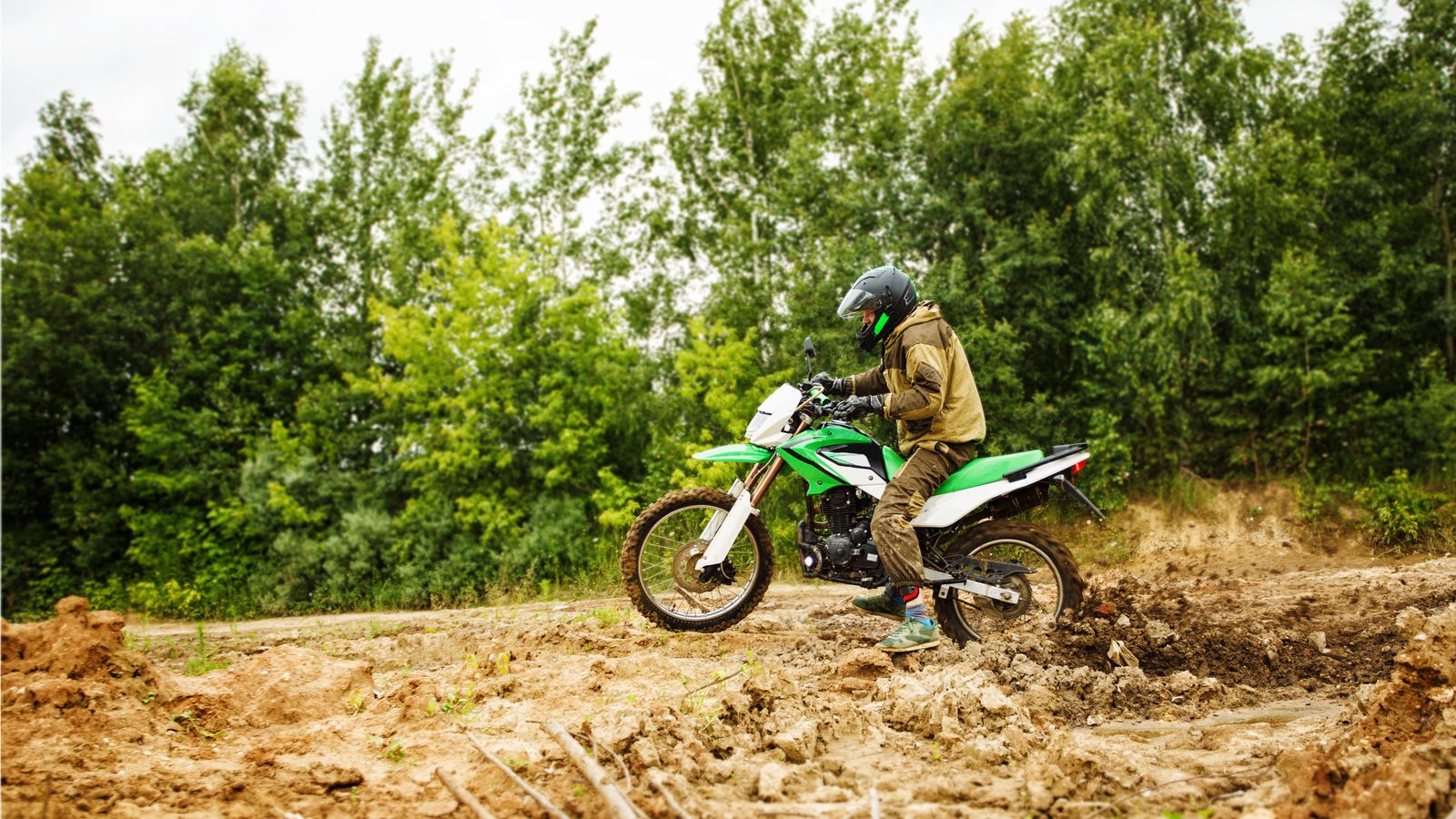
Bike sliding sideways: leave the bars alone. A sharp correction turns a manageable slide into a crash. Keep your arms loose, let your body weight bring it back, and look where you want to go rather than where you’re heading.
Stopped dead in the greasy stuff: don’t restart from exactly where you’re stuck. Your own spinning destroyed that patch. Shuffle the bike sideways onto untouched ground and pull away on the smallest amount of throttle you can hold.
Mistakes that make it worse
Pushing the throttle when a wheel spins is still the number one mistake. The reflex comes from surfaces where more power moves you forward. Here it buries the bike.
Following the most obvious line out of habit is the second. The deepest, most visible rut is also the most saturated and the most polished. Look beside it.
Riding tense is the third, and it’s the one riders deny. Stiff arms send every slide straight into your line. Loose at the elbows, tight at the knees: the bike is going to move around under you, and that’s fine.
Four drills that pay off
- Find your minimum throttle. On a muddy stretch with nothing at stake, hunt for the smallest opening that still moves the bike without spinning the rear. Repeat it until you feel the threshold without thinking.
- Read before you ride. Stop at the edge of a greasy section, call your line out loud, then ride it. Compare what you planned with what the bike actually did.
- Provoke the spin. On open ground, deliberately break the rear loose, then recover by easing off progressively instead of chopping the throttle. Learn the move before you need it in a race.
- Practice restarts. Stop in the slop, pull away, stop again. A standing start in mud is the highest-value thing you can drill all day, and almost nobody does it.
FAQ
Why does my wheel spin more in mud than in sand?
Because mud offers very little surface traction and sticks to the knobs. The tire packs solid, goes slick, and loses its ability to bite. Sand is granular, so the wheel digs down until it finds something to push against. In mud, digging gives you nothing — it just buries the bike a little deeper every rotation.
Should I give it more throttle or less when the wheel spins?
Less, and progressively. It’s the opposite of sand, where holding speed usually keeps you floating. In mud, pushing the throttle digs a hole and packs the tire with no traction gain at all. Ease off, wait for the wheel to catch something, then roll it back on smoothly.
Do mud tires actually make a difference?
More than any other change you can make. The tall, widely spaced knobs on a mud tire clear themselves as the wheel turns, while an intermediate packs into a slick within a few meters. It won’t replace technique, but it turns the bike from something you survive into something you can ride.
Should I stand or sit in mud?
Stand most of the time, with neutral weight rather than sitting far back. You keep load on both wheels and your legs absorb the slides. Sitting earns its place in a tight corner where you need to weight the front so it bites, inside leg out, ready to dab.
Find all the riding fundamentals on the riding technique page.
Editorial content. PiloteMX offers no on-site service, no parts or gear sales, no quotes and no bike repairs. Working on a bike and riding it carry risk: what you do with this guide is your own responsibility.