Riding Technique
Dirt bike riding technique is what separates two riders on similar bikes: body position, throttle and clutch control, braking, cornering, and how you read terrain that keeps changing under your wheels. This section covers the fundamentals — riding stance, cornering position, throttle and clutch coordination, braking — then builds toward specific situations: jumps and landings, whoops, ruts, berms, sand, mud, hill climbs and descents, race starts, and passing. It closes with the physical and mental preparation that lets your technique hold up for a full moto instead of falling apart when you get tired.
Every guide here focuses on one clear move: what to do, why it works, the mistakes that break it, and how to build it up safely through progressive practice. None of it replaces time on the bike, but it should make that time count for more.
Les guides du silo
-
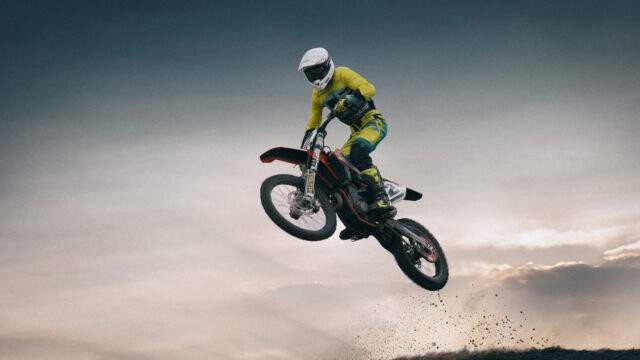
Dirt Bike Riding Stance: The Base Position for Everything Else
The base riding stance on a dirt bike is standing on the balls of your feet on the pegs, knees slightly bent, chest forward over the tank, elbows up near wrist height, eyes far down the trail. It's the neutral posture you return to between every corner, bump, and change of terrain.
-
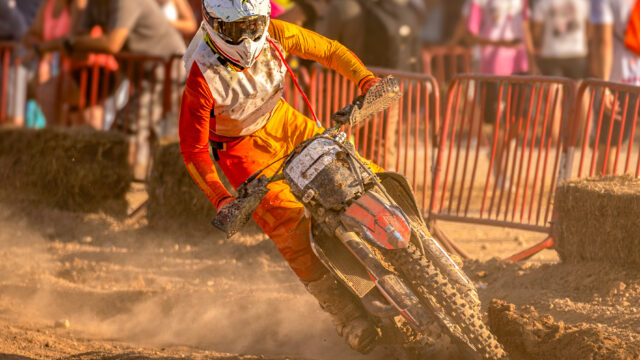
Cornering Position on a Dirt Bike: The Move That Saves You Time
The right cornering position on a dirt bike is chest low and forward, outside leg locked against the tank, inside leg open and ready to touch down, eyes planted on the exit well before you get there. This position gives you the grip and control to carry speed through the turn instead of losing it.
-
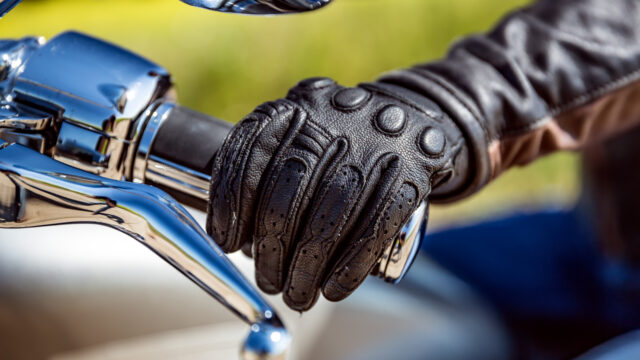
Throttle and Clutch Control on a Dirt Bike: The Hand Coordination That Matters
Throttle and clutch control on a dirt bike is the coordination between a right hand that feeds in power progressively and a left hand that modulates the clutch's friction point to smooth out jerky delivery. That coordination, more than raw horsepower, decides whether you keep traction on soft ground or drive cleanly out of a turn.
-
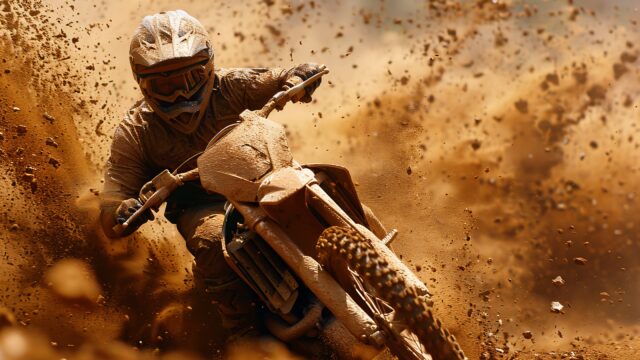
Dirt Bike Braking: Modulating Instead of Grabbing
Good dirt bike braking means using both brakes together, applied progressively, with the front doing most of the work on hard ground and the rear taking over on soft ground or mid-lean. The brake is never a switch — it's a dial you adjust continuously based on available grip.
-

How to Jump a Dirt Bike: Takeoff, Flight, and Landing
To jump a dirt bike well, you accelerate into the base of the jump, ease off the throttle slightly at the face so the nose doesn't come up too high, keep your body compact in the air, and set up your landing before you've even left the ground. A jump is 90% decided before takeoff.
-
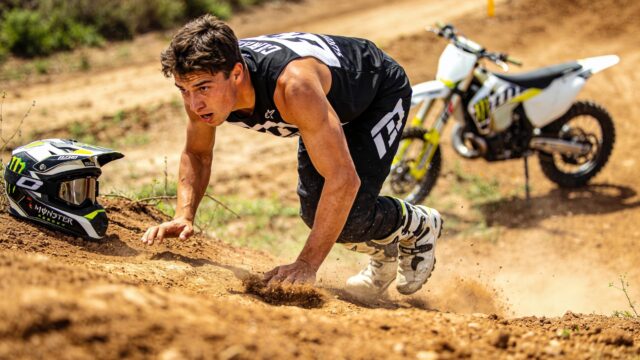
Dirt Bike Fitness: A 12-Week Training Plan That Holds Up
Getting fit for dirt bike riding means building an aerobic base first, then specific strength for forearms, neck, and core, then an intensity phase that mirrors real race effort. Over 12 weeks, that progression is enough to hold your form for a full moto without fading — the top cause of crashes in underprepared riders.
-
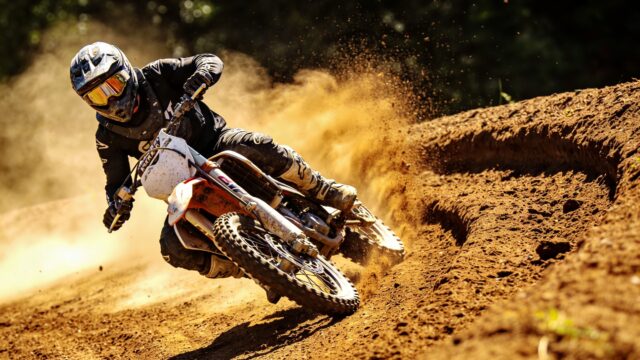
Rut Cornering on a Dirt Bike: Following the Line Instead of Fighting It
In a rutted corner, the front wheel is guided by the walls carved into the ground: your job stops being steering the line like a normal turn and becomes letting the bike follow the groove while you manage balance and speed with your body and the throttle. Fighting the rut with the bars is what puts down most riders who meet one for the first time.
-
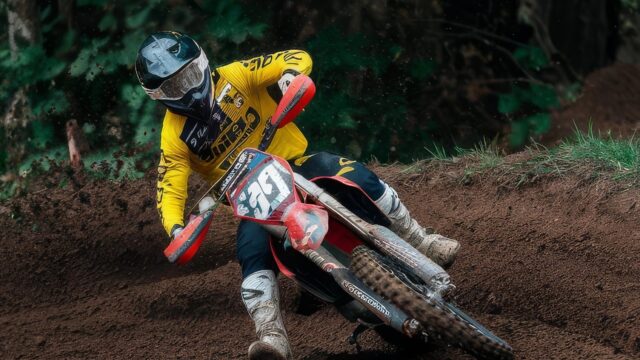
Flat Turns vs Berms on a Dirt Bike: Two Opposite Moves
A flat turn forces you to slow down more and work with limited grip since there's no berm to lean on, while a berm, banked at the edge, lets you push against it and carry more speed out of the corner. Treating a berm like a flat turn is a common mistake that costs riders time or grip every time.
-
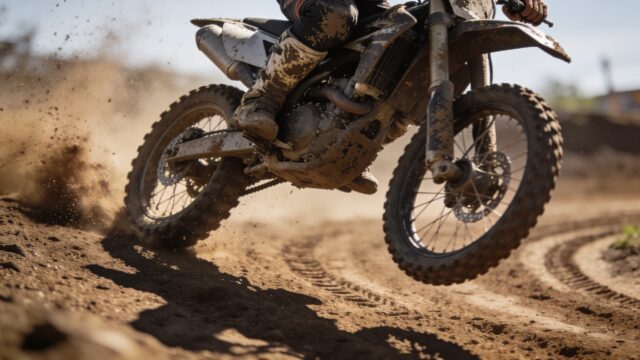
Landing a Jump on a Dirt Bike: Absorbing Without Getting Caught Out
A good jump landing is decided before impact: you read the landing slope from the top of the arc, adjust the bike's attitude accordingly, and let your legs absorb the shock while keeping arms and legs slightly bent, never locked. Most bad landings come from a body that discovers the ground instead of anticipating it.
-
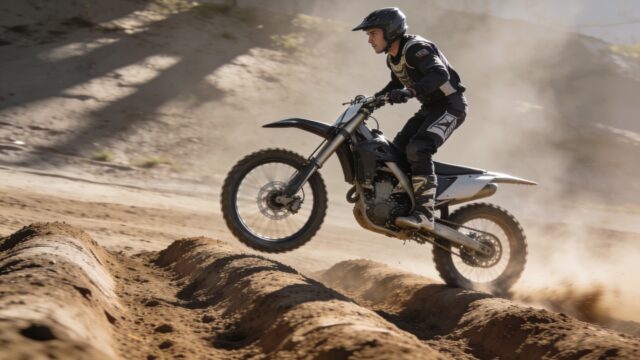
Whoops on a Dirt Bike: Why Speed Stabilizes You Instead of Throwing You Off
Getting through a set of whoops rests on a principle that feels backwards: speed up instead of slowing down. At the right speed, the bike skims across the tops of the bumps instead of diving into every trough, which stabilizes the line. Too slow, and each bump becomes an isolated hit that unsettles the bike a bit more than the last, until you lose it.
-
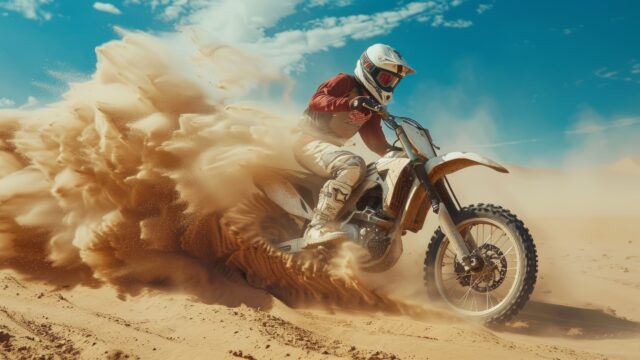
Riding Sand on a Dirt Bike: Keep the Momentum, Don’t Fight It
Sand rides like deep water: you never stop in it, you keep constant momentum, standing and slightly back, with steady throttle instead of on-off bursts. Most sand trouble comes from a rider who slows down too much, gets bogged down, then panics trying to force a pass that would have been easy at maintained speed.
-
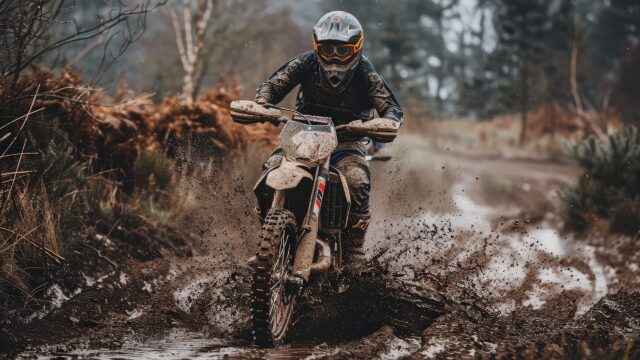
Riding Mud on a Dirt Bike: Finding the Grip That’s Left
Mud doesn't ride like sand. Where sand needs speed to stay stable, mud needs you to find the rare pockets of grip, often at the edges of existing lines, and feed in minimal power so every drive doesn't turn into uncontrolled wheelspin. The technique is finer, more patient, and far less instinctive than on other soft terrain.
-
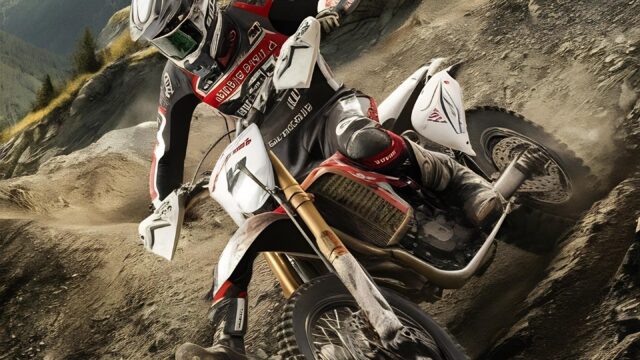
Hill Climbs and Descents on a Dirt Bike: Two Opposite Skills
Climbing a hill, you shift your body forward to keep the front planted and transmit power without the bike looping out. Descending, you shift back and let engine braking do the main work, with the brakes only fine-tuning speed. These two moves are nearly inverted, which is why so many riders apply one's reflexes to the other by mistake.
-
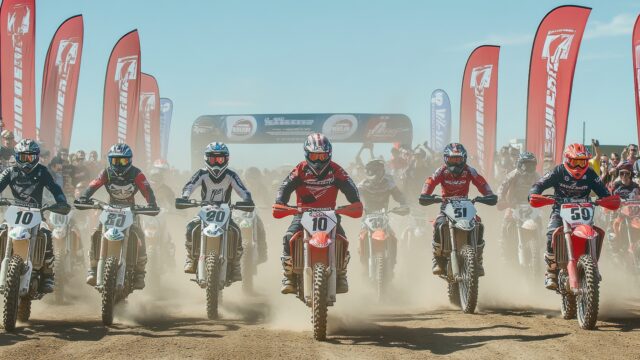
Dirt Bike Starts: Winning the Race Before the First Turn
A good dirt bike start is set up before the gate even drops: body locked and ready, eyes on the gate rather than the other riders, gear chosen in advance, and a clutch release that transmits power without spinning or stalling. The rest of the race can be clawed back — places lost at the start, much less often.
-
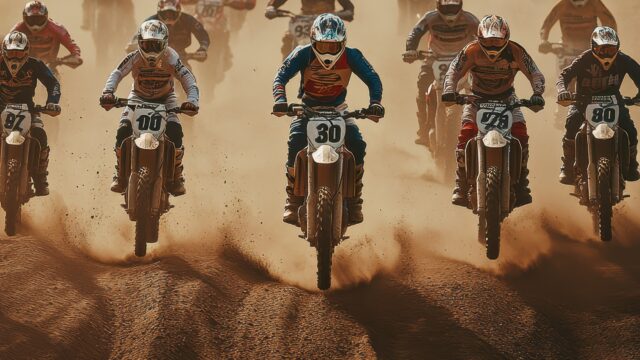
Passing on a Dirt Bike: Setting Up the Move Before You Try It
A clean pass on a dirt bike gets set up over several turns before it happens: you spot where your line beats the rider ahead, build a speed gap at that exact spot, and commit to the move with clear intent rather than a hesitant half-attempt that puts both riders at needless risk of going down.
-

Mental Prep for Dirt Bike Riding: Managing Fear to Ride Better
Mental preparation for dirt bike riding isn't about eliminating fear — it's about managing it so it doesn't take over your technique. A rider who panics leans back, chops the throttle by reflex, and stares at the danger instead of the line — exactly the mistakes covered throughout this site's technique articles. Mental prep keeps the body available to execute the right move even under stress.
-
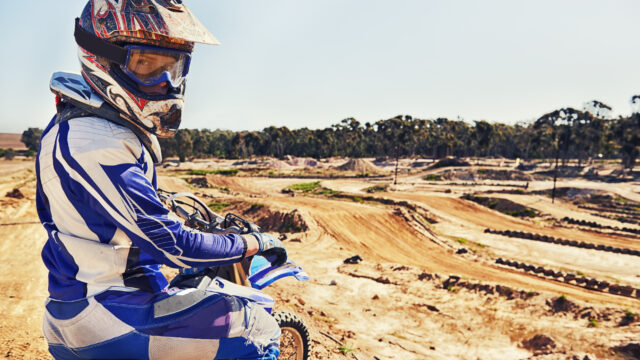
Dirt Bike Training Plan: Structuring Practice Instead of Just Riding
An effective dirt bike training plan alternates sessions focused on a single technical move, sessions that string everything together on a full track, and fitness sessions — instead of riding without a clear goal every time out. This structure builds skill faster than an equivalent amount of riding without a plan, because every session works on something defined.