Maintenance
Dirt bike maintenance guides — PiloteMX EN
Les guides du silo
-
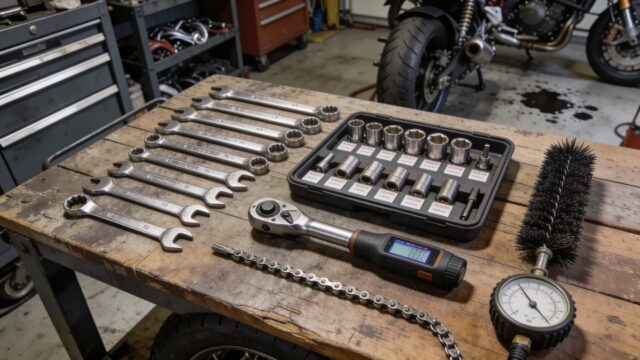
The Basic Dirt Bike Tool Kit That Covers Everything
A basic dirt bike tool kit needs a metric wrench and socket set, a multi-bit screwdriver, a chain brush, a low-pressure gauge, and a torque wrench — enough to cover routine maintenance without depending on a shop.
-
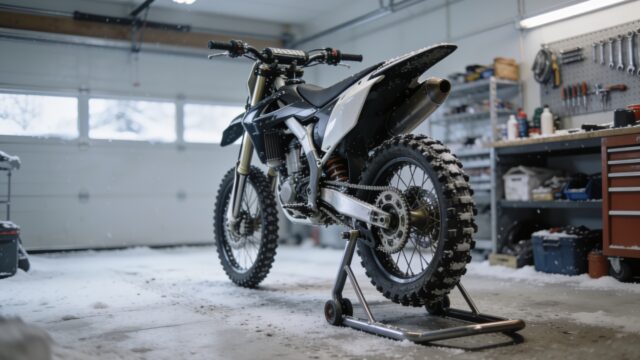
Winterizing a Dirt Bike: Protecting It During Storage
Winterizing a dirt bike before any storage of several weeks or more prevents corrosion, fuel degradation, and flat-spotted tires, the three issues that make a bike hard to start again after sitting.
-
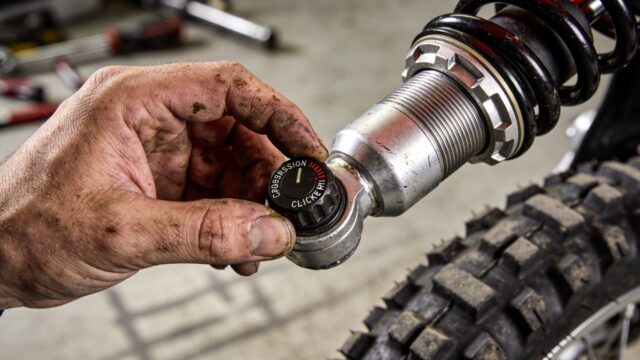
Dirt Bike Suspension Setup: Matching Fork and Shock to Your Weight
Dirt bike suspension setup starts with spring sag matched to rider weight, then rebound and compression damping, because suspension left at factory settings never suits a specific rider regardless of skill.
-
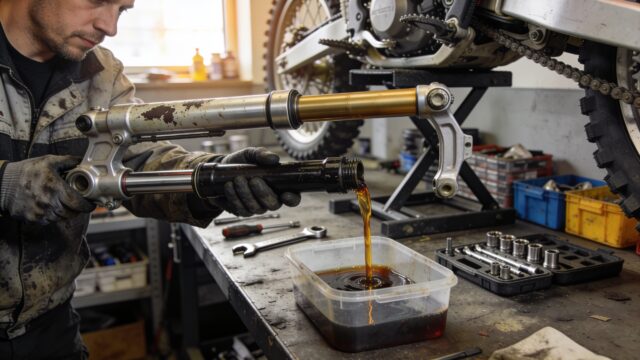
Fork Oil Change Interval: How Often You Really Need It
Fork oil on a dirt bike should be changed every 15 to 20 hours of hard riding, because degraded oil loses its damping properties and hurts fork feel long before any mechanical failure occurs.
-
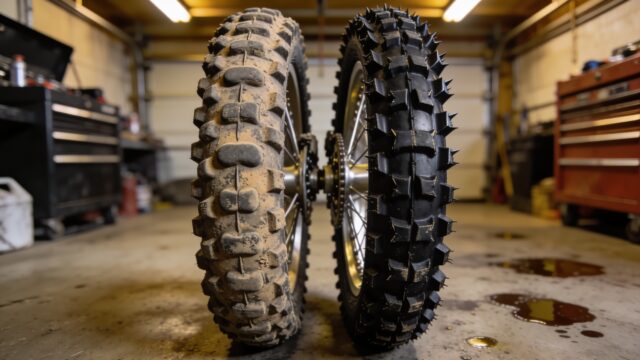
Dirt Bike Tire Wear: When It’s Time to Replace Them
A dirt bike tire should be replaced once knob height drops below 50% of its original depth, because a worn tire loses most of its bite on loose terrain right when traction matters most.
-
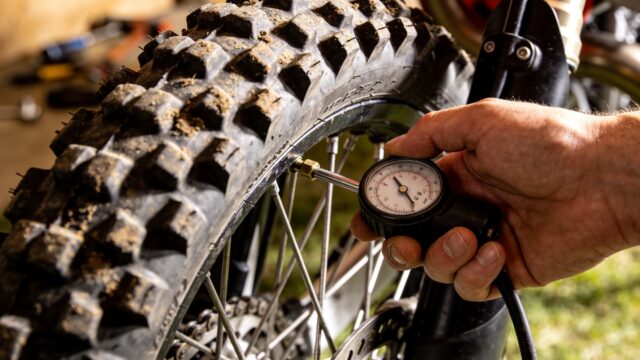
Dirt Bike Tire Pressure: The Setting That Changes Your Traction
Dirt bike tire pressure should be set based on terrain, typically between 8 and 15 PSI front and rear, because incorrect pressure directly cuts traction, raises pinch-flat risk, and changes how the bike handles in corners.
-
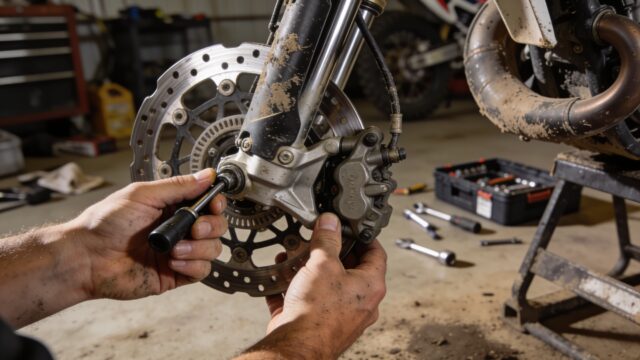
Dirt Bike Brake Maintenance: What to Check Before Every Ride
Dirt bike brake pads and fluid should be checked before every ride, because insufficient pad thickness or degraded fluid cuts directly into stopping power exactly when it's needed most, at speed heading into a corner.
-
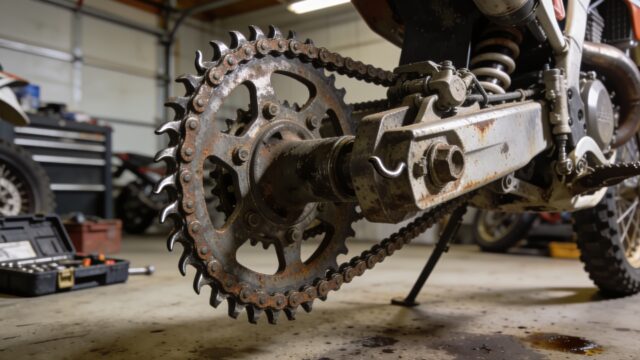
Sprocket Wear: When to Replace the Front and Rear Together
Front and rear sprockets on a dirt bike should be replaced together, along with the chain, as soon as the teeth show a hooked shape instead of a straight profile, because uneven wear on a fresh chain accelerates its wear too.
-
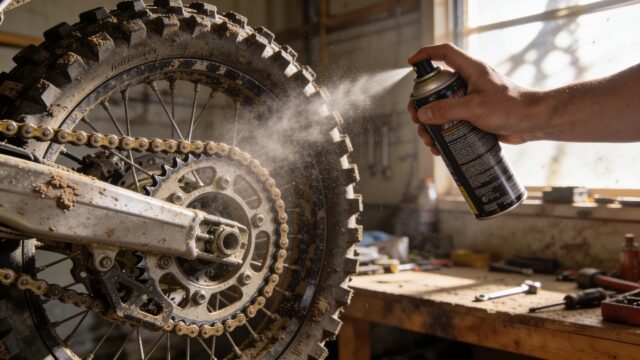
How Often to Lube a Dirt Bike Chain
A dirt bike chain should be lubricated after every ride on wet or muddy terrain, and at minimum every two to three rides in dry conditions, because a poorly lubricated chain wears three to four times faster and takes the sprockets down with it.
-
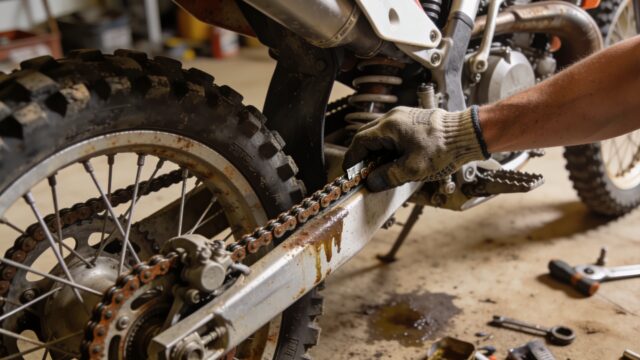
Dirt Bike Chain Tension: Getting the Adjustment Right
Dirt bike chain tension should be checked before every ride and adjusted once slack exceeds the manufacturer's tolerance, typically 5 to 10cm of vertical movement, because a chain that's too tight or too loose wears the sprockets and swingarm prematurely.
-
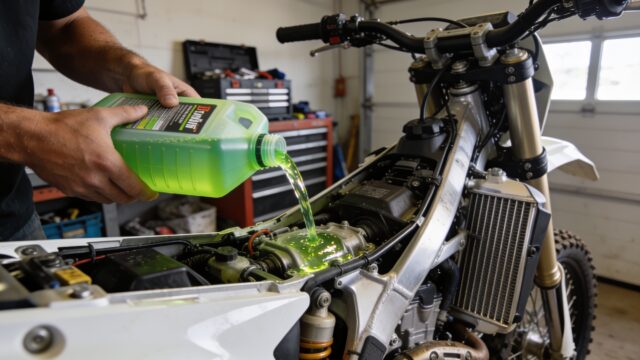
Coolant Level: Avoiding Overheating on a Dirt Bike
Coolant on a liquid-cooled dirt bike should be checked before every ride and fully replaced every one to two years, because a low level or degraded coolant leads straight to engine overheating, one of the most expensive failures to repair.
-
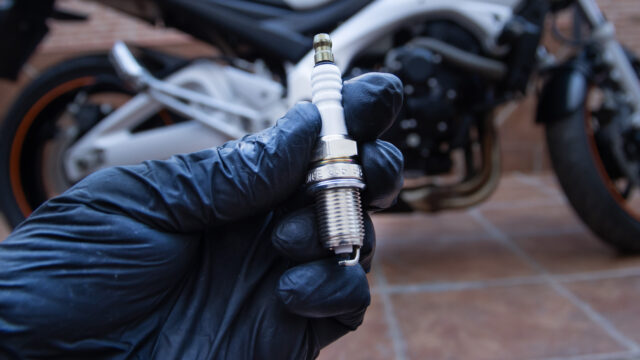
Changing a Dirt Bike Spark Plug: A Small Fix That Solves a Lot
A dirt bike spark plug should be changed far more often than on a street bike, typically every 15 to 25 hours of riding, because high, sustained engine RPM and repeated heat cycles wear it out faster than road use ever would.
-
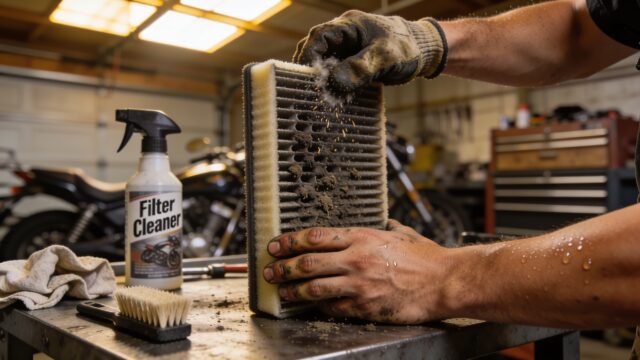
Cleaning a Dirt Bike Air Filter: Protecting the Engine
A dirt bike foam air filter should be cleaned with a dedicated degreaser, fully dried, and re-oiled with filter oil before reinstalling, a full cycle worth repeating after every ride on dusty or muddy terrain to protect the engine from accelerated internal wear.
-
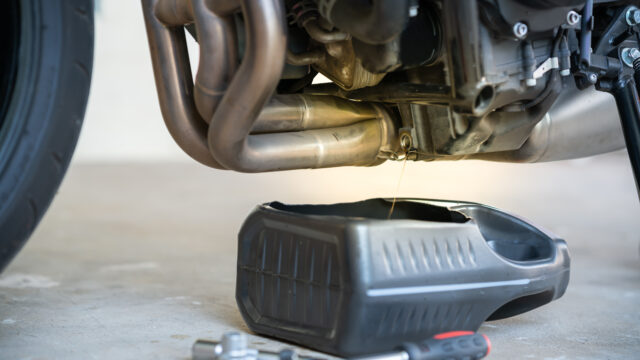
Dirt Bike Oil Change Interval: How Often to Really Do It
Engine oil on a dirt bike should be changed every 5 to 10 hours of riding, whether two-stroke premix aside or a stressed four-stroke, far more often than the thousands of miles a street bike goes between changes.
-
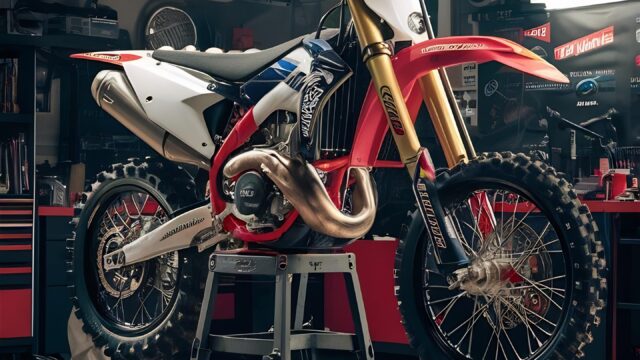
Post-Ride Checklist: What to Do Within the Hour
Within the hour after a ride, three quick steps prevent most avoidable damage: a fast rinse before mud dries hard, a visual check of the chain and impact points, and adjusting tire pressure back if it was changed for the terrain.
-
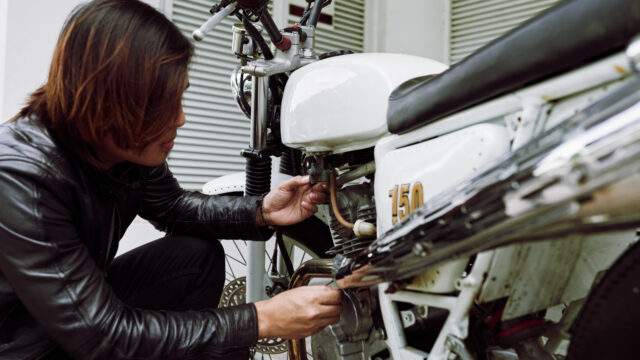
Pre-Ride Checklist: Five Minutes That Prevent Breakdowns
Five minutes before every ride is enough to check the points that can leave you stranded or cause a crash: tire condition and pressure, chain tension, oil and coolant levels, critical fastener tightness, and brake function.
-
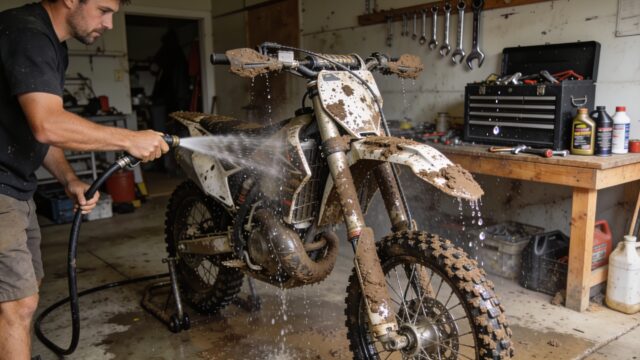
Washing a Dirt Bike: The Routine That Protects the Mechanics
Washing a dirt bike after every ride means rinsing top to bottom with warm or cool water, never a high-pressure jet aimed at bearings and seals, then drying and lubricating sensitive points before dirt has a chance to dry into an abrasive crust.