Base Layers for Dirt Bike Riding: The Invisible Layer That Changes Everything
Contents
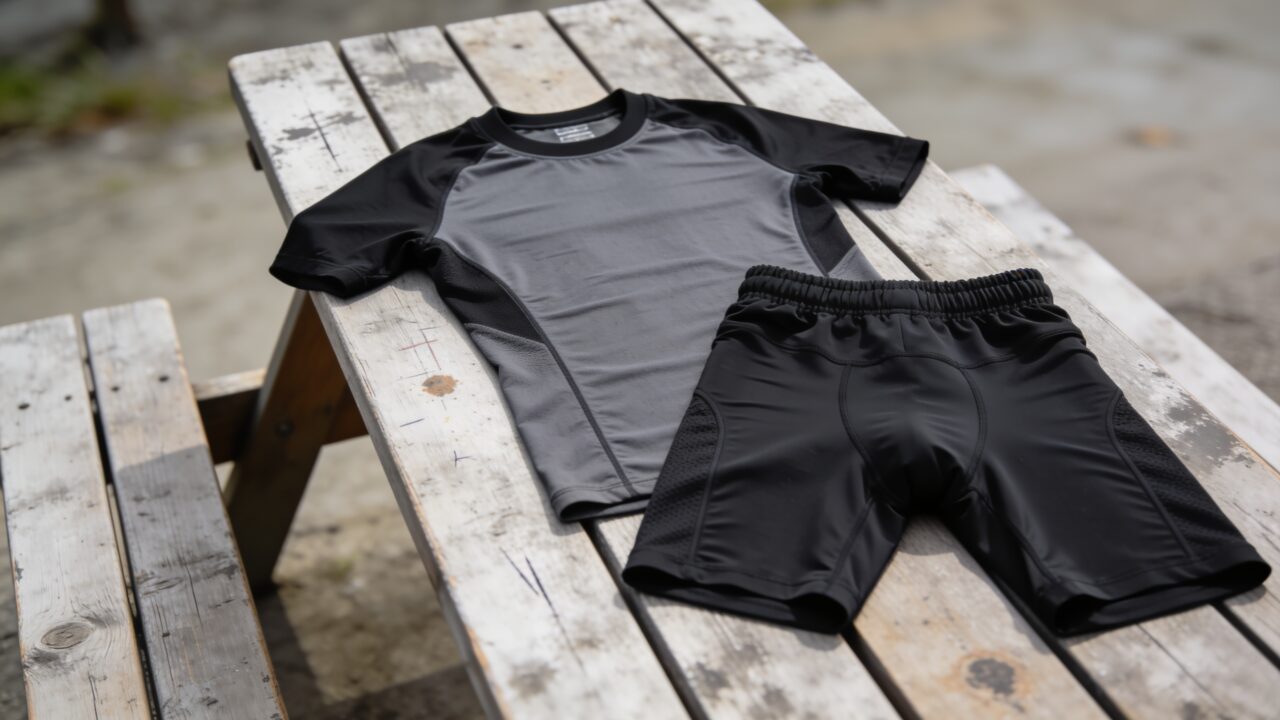
A technical base layer goes directly against your skin, under the jersey and pants. It does two jobs: it pulls sweat outward instead of holding it against you, and it puts a smooth surface between your skin and every hard piece of protection. It’s the cheapest item in the kit, and often the one that decides how you feel an hour into the session.
Why this layer decides your comfort
Riding is continuous effort. You don’t notice it at first, but between drive out of corners, body weight on the pegs and constant work through the arms, sweat arrives fast and never really stops.
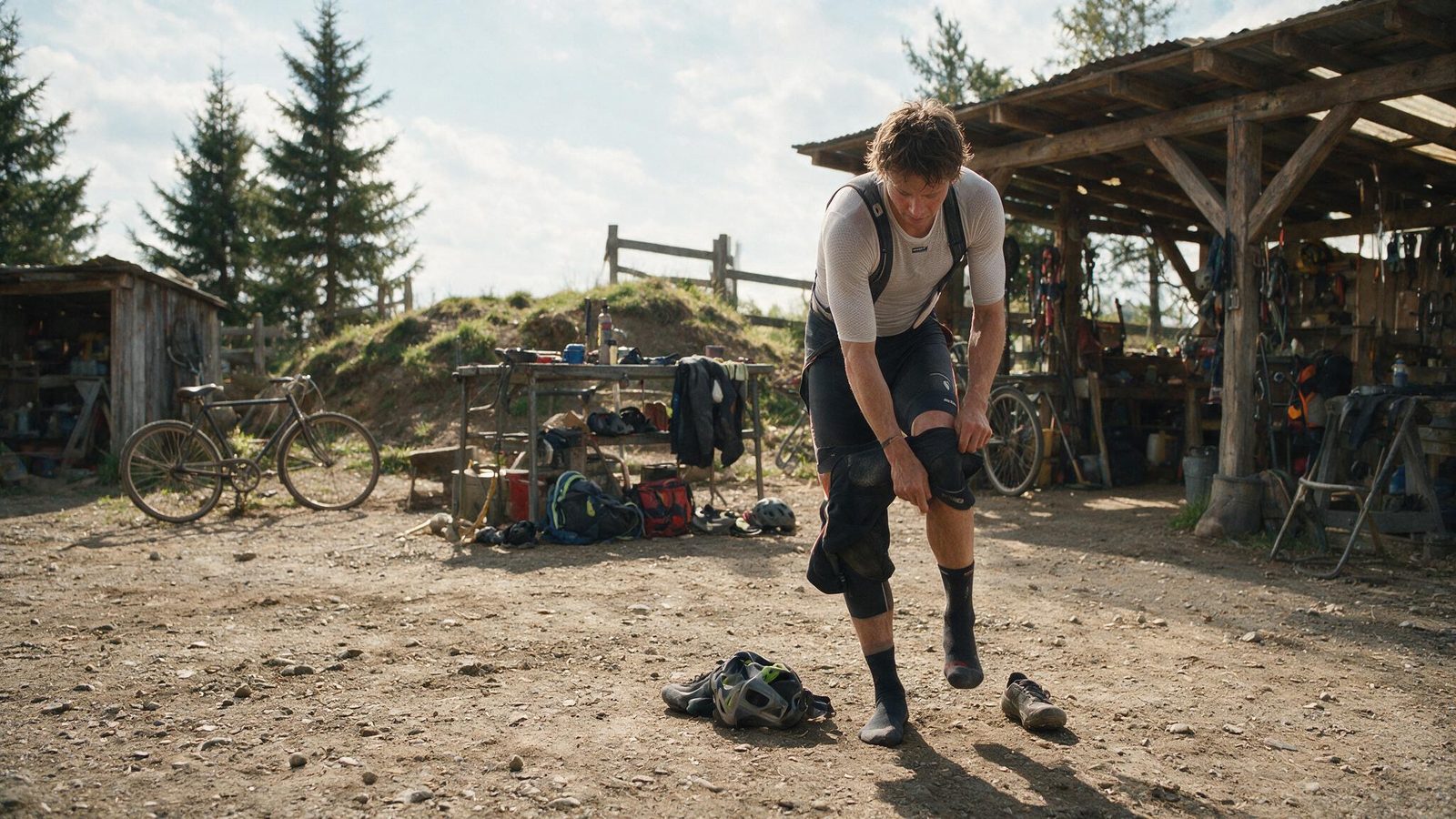
Technical fabric moves that moisture outward, where the jersey and pants take over and let it evaporate. The whole thing works as a system: each layer hands the moisture to the next one.
One layer that refuses to play along stops the entire chain. Put a cotton T-shirt under a technical jersey and the moisture never leaves step one. What you get is a warm sponge stuck to your back, chilling you the moment you roll off the throttle.
Cotton, synthetic, merino: what actually changes
| Material | What it does well | Where it lets you down |
|---|---|---|
| Cotton | Comfortable when dry, costs nothing, already in your drawer | Soaks up sweat and never gives it back; sticks to the skin and stays cold under protection |
| Synthetic (polyester, polypropylene) | Wicks fast, dries fast, survives frequent washing | Picks up odor if you leave it balled up at the bottom of the bag |
| Merino wool | Still feels warm when damp, holds odor far less | More fragile against abrasion under a strap, dries slower, costs more |
The real question isn’t the brand on the label, it’s what sits against your skin. Any technical fabric beats cotton that only feels comfortable while it’s dry. Plenty of riders run both depending on the season: synthetic when it’s hot, merino when it’s cold.
Rubbing, the reason people forget
You buy a base layer for sweat. You end up keeping it for the rubbing. Between knee guards, a chest protector and sometimes a neck brace, your body collects contact points with straps and hard shells.
A continuous, slippery layer between skin and gear changes that completely. Straps slide over fabric instead of dragging on bare skin. Without it, every move of your torso repeats the same friction in the same spot.
It gets serious over consecutive days. Mild irritation on Saturday turns into a raw patch on Sunday, and you spend the day avoiding one position instead of riding. Look closely at the seams: flat and routed away from strap zones, they disappear; thick and badly placed, they become the rub point instead of removing it.
Choosing the top and the bottom
A long-sleeve top covers arms and torso, exactly where the chest protector and elbow guards press. Short sleeves exist, but they leave your forearms bare under the elbow guard straps.
The bottom comes as a legging or a long short. It earns its keep under knee guards, where the brace working back and forth on the thigh eventually leaves a mark. Some models add light compression that supports the muscles a little — a nice bonus on a long day, not the reason to buy.
Don’t skip socks. They run high, above the boot shaft, so plastic never touches your calf directly. A regular sports sock slides down and rolls under your foot by the second climb.
Quick reference
- Against the skin
- technical fabric only, never cotton
- Fit
- close to the body without squeezing your breathing
- Seams
- flat, routed away from strap zones
- Top
- long sleeves under chest protector and elbow guards
- Bottom
- legging or long short under knee guards
- Socks
- high, above the boot shaft
Summer, winter, rain
Heat
Fine mesh, lightest fabric you can find, and still long sleeves if you wear elbow guards. The goal is to get sweat out fast. A thick layer in midsummer cooks you and gives nothing back.
Cold and wet
Denser fabric with a bit of insulation holds body heat without trapping moisture. That’s the first layer of the strategy detailed in the guide to rain and cold-weather gear. The principle doesn’t change when it’s cold: what chills you isn’t the air, it’s your own sweat sitting still.
Two models beat one soft compromise. This is one of the few places where the spend stays small next to the comfort you get back, which makes it a sensible priority even within the logic of the budget gear guide.
Care, wear and the usual mistakes
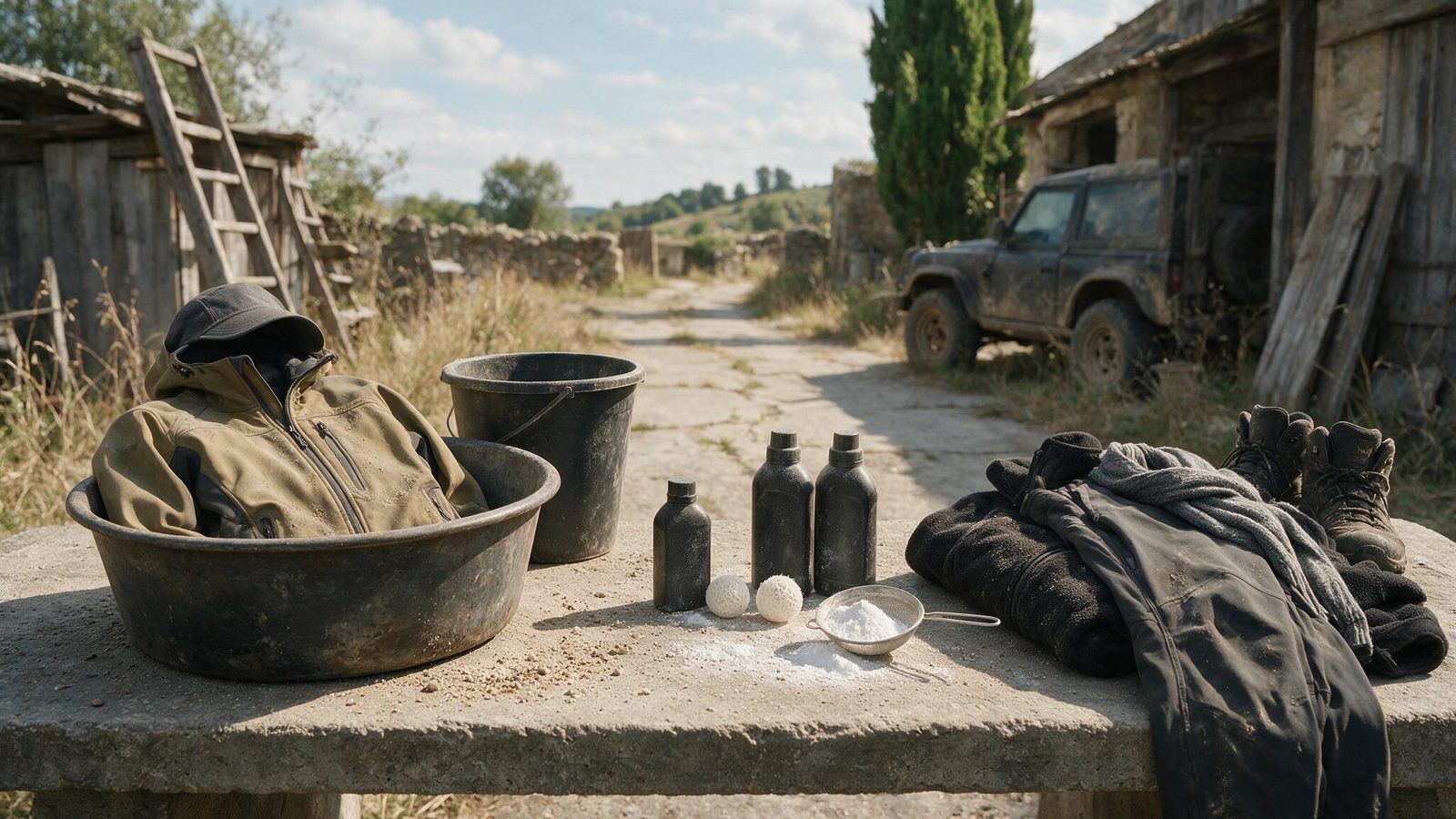
Wash it after every ride. Sweat attacks the stretch fibers, and the smell settles in permanently if you leave the piece damp in your bag until the following weekend.
Follow the maker’s label. Anti-odor treatments and wicking fibers cope badly with hot water, and fabric softener clogs the weave to the point of killing its only function. Same logic as the rest of the kit, covered in the guide to gear maintenance.
For wear, the thing to watch is the stretch. When the fabric no longer snaps back and starts floating on your body, it stops sliding under straps and stops being useful. A piece can look perfectly presentable and have lost the entire point.
Two mistakes come round again and again. Pulling on a cotton T-shirt “just this once”, which cancels out everything worn over it. And keeping a tired piece because it’s still wearable — it is, but it no longer does the job.
FAQ
Is a base layer really worth it for a one-hour ride?
Yes, and that’s exactly where it shows. An hour of dirt bike riding is sustained effort with tight protection strapped over the top. Without a technical layer, sweat builds up and the straps drag straight on skin. On a short, easy session the gap is smaller, but it still runs the same direction.
Can I just wear a cotton T-shirt instead?
Nothing stops you, but cotton loads up with moisture and holds it against your skin. You get a cold feeling every time you stop, fabric that clings and rubs under protection, and a technical jersey with nothing left to move outward. If you paid for technical gear, cotton underneath cancels the benefit.
Do I need a different model for summer and winter?
It’s the easiest comfort you’ll ever buy. A thin, highly breathable model in summer, a denser and lightly insulating one in winter. Plenty of riders run the summer piece all year and compensate with the layers above it, which also works as long as the first layer stays technical.
When should a base layer be replaced?
When it no longer holds to the body. Slack fabric floats, wrinkles under straps and becomes a source of rubbing itself. The other signal is odor coming back on the first sweat even after a wash — the fibers are saturated. How it looks tells you nothing; the fit is what matters.
More gear guidance in the gear section.
Editorial content. PiloteMX offers no on-site service, no parts or gear sales, no quotes and no bike repairs. Working on a bike and riding it carry risk: what you do with this guide is your own responsibility.