Repairs
Fixing a dirt bike after damage or failure: the repair-vs-replace decision, a trailside repair kit, frame straightening, broken plastics, a cracked fuel tank, a dented silencer, a broken chain, fork and shock leaks, steering head and swingarm bearings, a warped rim or broken spoke, brake caliper and master cylinder repair, a warped brake disc, top-end rebuilds, cracked engine cases, crankshaft bearings, clutch plates, shift forks, kickstart springs, stator/CDI failures, wiring harness repair, and plastic/aluminum welding basics.
Les guides du silo
-
Repair or Replace a Dirt Bike Part: How to Decide
Repair a part when the fix fully restores its original mechanical strength, and replace it once the damage touches a structural safety point, or once repair time far exceeds the cost of a new part. That simple rule settles most cases; the rest need a part-by-part call.
-
The Trailside Repair Kit Every Dirt Bike Rider Should Carry
A minimal trailside repair kit for dirt biking fits in a small fanny pack: a master link matched to your chain, wire and zip ties, a multi-bit screwdriver, cutting pliers, gaffer tape, and a pump or CO2 cartridge — enough to handle the most common breakdowns without cutting the ride short.
-
Bent Frame After a Dirt Bike Crash: What to Do
A slightly warped dirt bike frame after a crash can sometimes be straightened by a professional with an alignment table, but a visibly bent frame, or one cracked at a structural weld, needs replacing — no straightening restores the internal stress distribution of a tube deformed past its elastic limit.
-
Repairing Broken Plastics on a Dirt Bike
Cracked or broken dirt bike plastics repair most of the time by plastic welding with a hot iron or hot air, an accessible technique that restores near-original strength when done carefully — far more economical than automatic replacement.
-
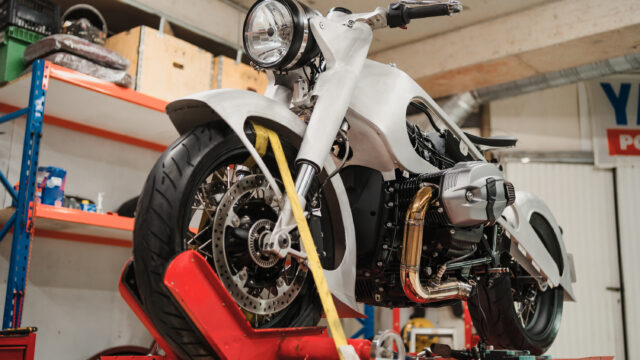
Cracked Dirt Bike Fuel Tank: Repairing a Fuel Leak
A cracked dirt bike fuel tank repairs differently by material: a plastic tank gets welded or glued with a fuel-compatible resin, while a metal tank needs complete purging of residual fumes before any hot work, or it risks exploding.
-
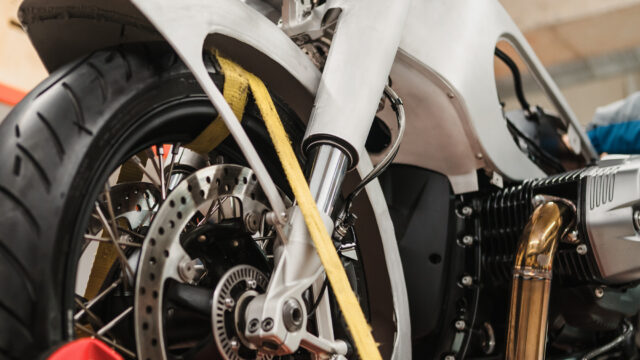
Repairing a Dented Dirt Bike Silencer
A dented dirt bike exhaust silencer repairs by hammering the dent out on a dolly for aluminum, or pushing it back out with internal hydraulic pressure for steel, before checking that no crack has formed on the impact zone.
-
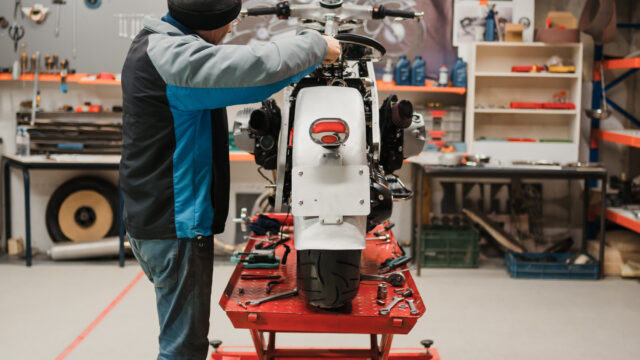
Chain Break Mid-Ride: Trailside Repair
A chain that breaks mid-ride repairs on the spot with a master link matched to your chain's exact pitch: remove the damaged link, bring the two ends together, position the new link, and close its clip or rivet. The job takes five minutes with the right tools.
-
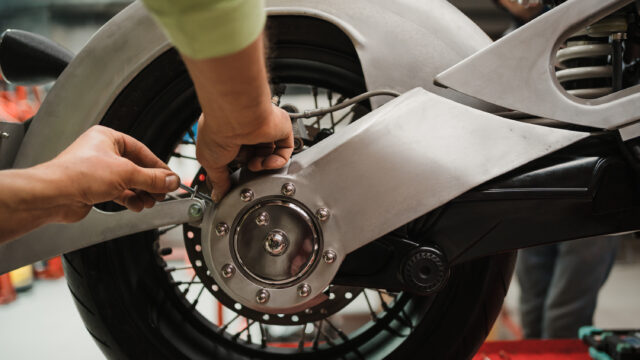
Fork Seal Leak on a Dirt Bike: Diagnosis and Repair
A leak on a dirt bike fork tube almost always comes from a worn oil seal scored by dirt trapped under the dust wiper: replacing the seal, combined with checking the tube for scratches, resolves the leak in the large majority of cases.
-
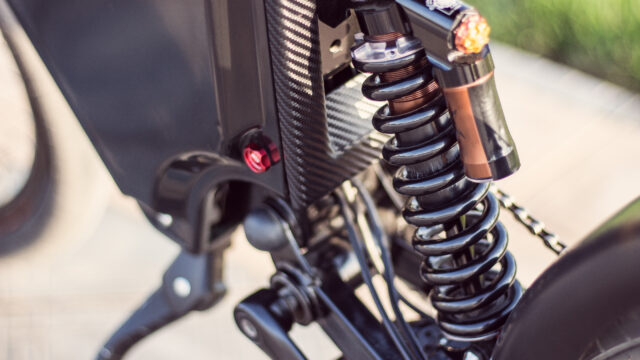
Leaking Dirt Bike Shock: Diagnosis and Repair
A leaking dirt bike shock almost always needs a full rebuild at a specialist shop with a nitrogen charging station, since the oil and pressurized gas inside don't get replaced like on a fork — repair involves controlled-pressure disassembly beyond a standard home garage.
-
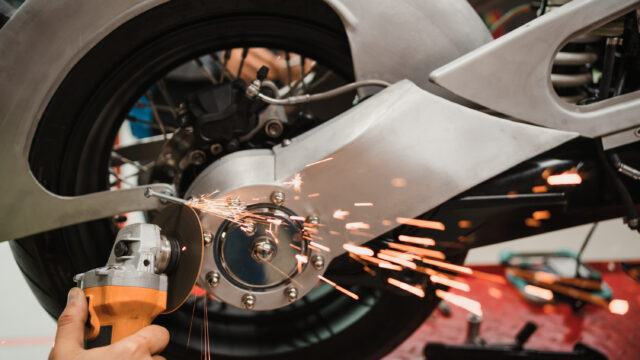
Replacing Dirt Bike Steering Head Bearings
Dirt bike steering head bearings need replacing as soon as play or a tight spot appears while turning the bars lock-to-lock, engine off and bike on a stand — a simple check to run roughly every 40 to 60 hours to keep advanced wear from degrading cornering precision.
-
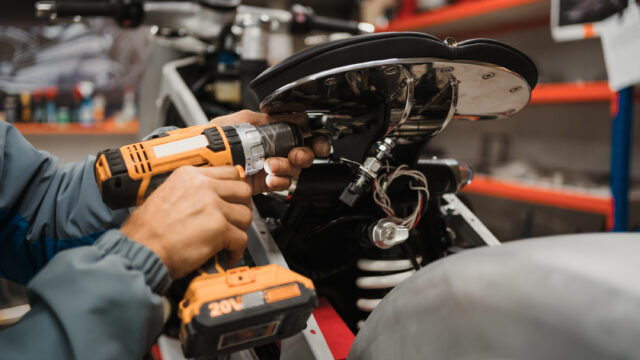
Replacing Dirt Bike Swingarm Bearings
Dirt bike swingarm bearings need replacing as soon as lateral play appears when shaking the rear wheel side to side, bike on a stand with suspension unloaded — play here degrades chassis precision and prematurely wears the chain and tires through misalignment.
-
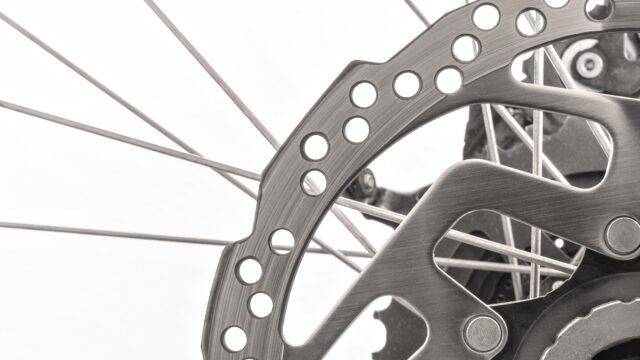
Warped Rim or Broken Spoke on a Dirt Bike: Repairing the Wheel
A broken spoke gets replaced individually and the wheel retensioned on a truing stand, while a warped rim gets corrected through progressive spoke tension adjustment if the warp stays moderate, or replaced entirely if the aluminum shows a sharp crease after a hard hit.
-
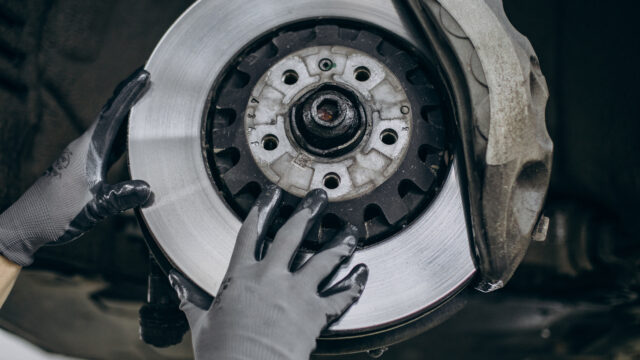
Stuck Dirt Bike Brake Caliper: Freeing It and Repairing It
A stuck dirt bike brake caliper almost always comes from a piston corroded by moisture and mud that got past a fatigued O-ring: full disassembly, cleaning the piston and its bore, then replacing the seals resolves most sticking cases without needing a whole new caliper.
-
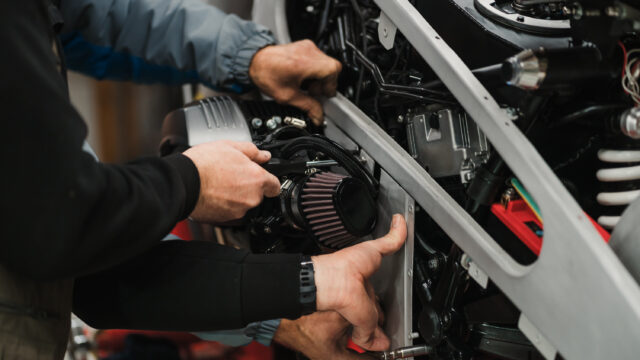
Repairing a Dirt Bike Brake Master Cylinder
A spongy dirt bike brake master cylinder, or one losing pressure, most often repairs with a rebuild kit for the internal seals (piston, cups) paired with a full bleed — but one that's taken a hard hit with a cracked body must be replaced entirely, no exceptions.
-
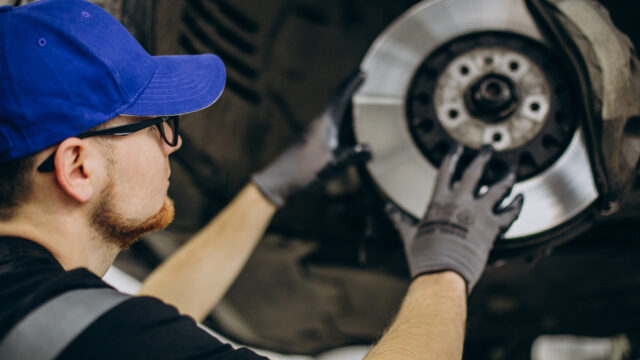
Warped Dirt Bike Brake Disc: Diagnosis and Replacement
A warped dirt bike brake disc gets replaced systematically rather than straightened, since the disc's thin section and hardened steel don't tolerate a reliable correction — a new part beats uneven braking on a critical safety component.
-
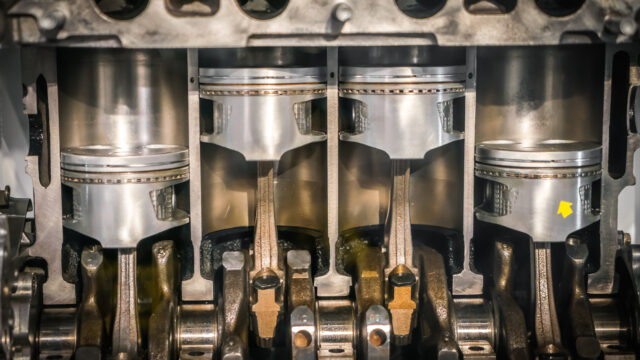
Dirt Bike Top-End Rebuild: When and How
A dirt bike top-end rebuild becomes necessary when a compression test drops well below stock values, or when progressive power loss comes with excess oil consumption — it means replacing cylinder, piston, rings, and head gaskets to restore combustion chamber sealing.
-
Cracked Dirt Bike Engine Case: Repairing Without a Full Teardown
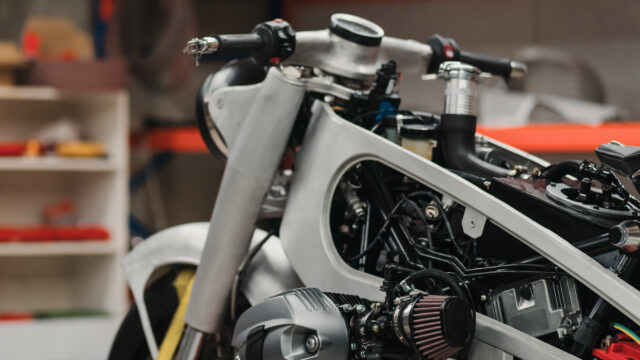
A superficially cracked dirt bike engine case, away from a bearing or seal, repairs with metal epoxy resin for casual use, or aluminum TIG welding for a lasting fix; a crack going through the wall that's actively leaking oil needs a professional opinion before any attempt.
-
Replacing a Dirt Bike Crankshaft Bearing
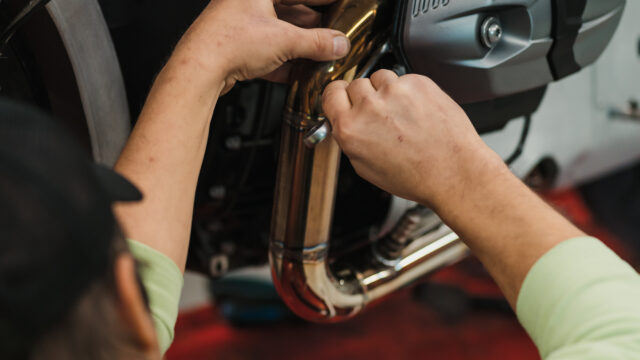
A worn dirt bike crankshaft bearing shows up as a dull, regular metallic noise at idle, often paired with abnormal vibration, and gets replaced by splitting the crankcase halves to extract the complete crankshaft — an operation that touches the engine's core and demands precision and the right tools.
-
Replacing Worn or Stuck Dirt Bike Clutch Plates
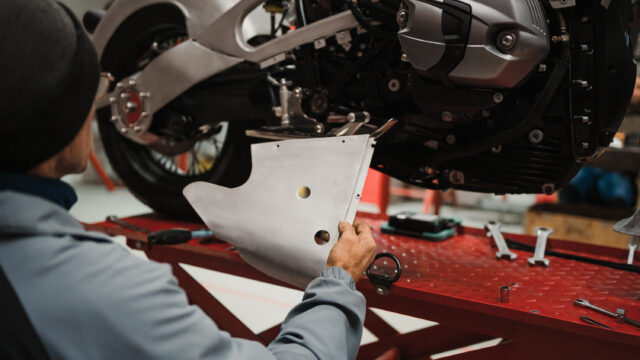
Worn clutch plates show up as progressive slipping under load despite correct free-play adjustment, and get replaced as a complete set (friction plates and steel plates) rather than individually, to guarantee even pressure and grip across the whole pack.
-
Broken Dirt Bike Shift Fork: Symptoms and Repair
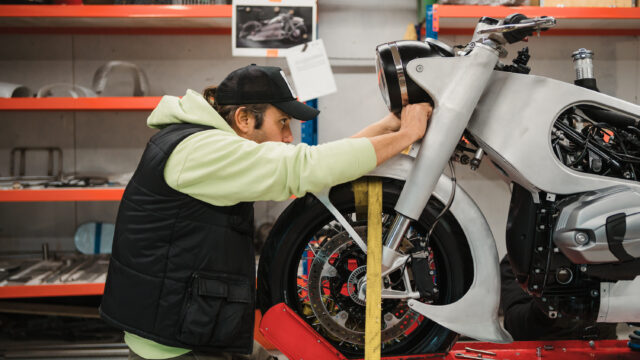
A broken or worn dirt bike shift fork shows up as gears popping out unexpectedly, often mid-acceleration, and requires fully opening the engine case to replace the affected fork along with a systematic check of the associated sliding gear, almost always marked by the same wear.
-
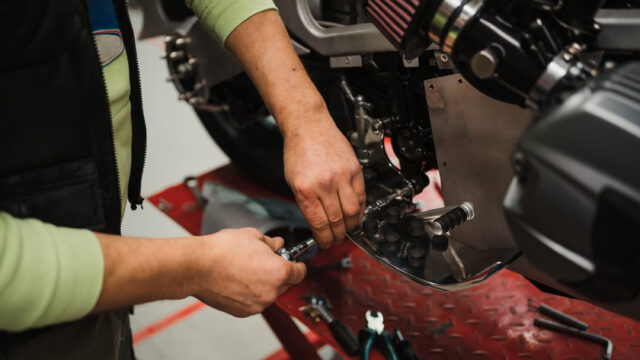
Broken Dirt Bike Kickstart Spring: Diagnosis and Replacement
A broken kickstart spring is immediately recognizable: the pedal no longer returns to its raised position after use, or it falls back limply without the usual tension. Replacement means opening the clutch cover or side cover, depending on the model, to reach the full return mechanism.
-
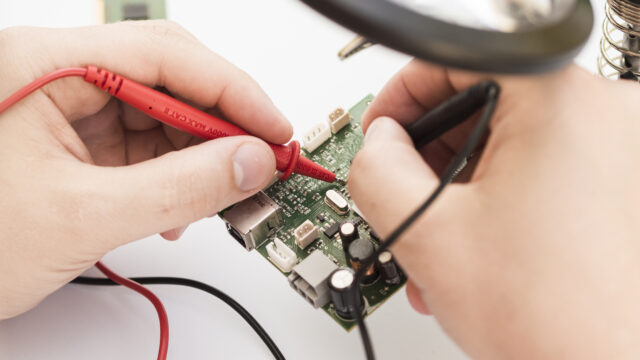
Failed Stator or CDI on a Dirt Bike: Diagnosis and Replacement
A failing stator or CDI box is diagnosed with a multimeter by measuring stator coil resistance against manufacturer values: a stator out of tolerance or open-circuit needs replacing, while a CDI tests more by elimination, lacking easily measurable reference values on this electronic component.
-
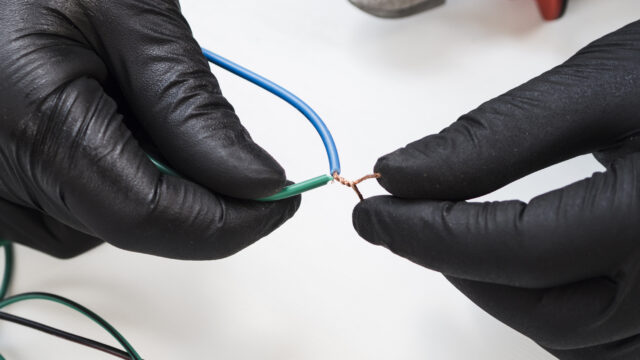
Repairing a Damaged Dirt Bike Wiring Harness
A damaged dirt bike wiring harness repairs by cleanly stripping the affected wires, soldering them back together with staggered connections to avoid a short between neighboring wires, then insulating each repair with individual heat-shrink tubing before rebuilding the harness with fresh outer sheathing.
-
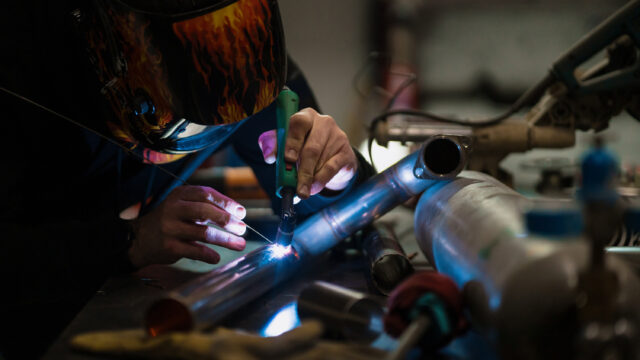
Plastic and Aluminum Welding for Dirt Bikes: The Basics for DIY Repair
Hot-iron plastic welding and TIG aluminum welding answer different needs in dirt bike repair: the first quickly fixes a cracked fairing or fender, the second durably closes a case or frame crack, but demands noticeably more demanding equipment and technique.